
Before you buy padel courts for a new club, choose the supplier that will put four things in writing: who manufactures the structure, what each document actually certifies, what the warranty covers per component, and who is responsible for the foundation and installation. Most first-time owners choose between a local installer, a European brand and a factory-direct manufacturer working with a local crew.
Written by Macy Zhou, Senior Product Manager at PANO (PanoCourt). I have worked in the sports-facility industry for ten years and have led the development of more than ten padel court products at our factory in Handan, Hebei. Last updated: 9 November 2026.
We sell factory-direct, which is only one of the routes below, and I have tried to write this so you can pick the route that suits your club even if it is not ours. Most of the questions here come straight from new club owners I have spoken to this year in Europe, Australia, the Americas and Asia.
In this guide:
- Who to buy from
- The three buying routes
- Local or factory-direct
- Foundations, permits and installation
- What the contract must say
- Checks before a deposit
- Ten questions for every supplier
- How many courts and which types
- Where PANO fits
- Buyer questions
- Getting comparable quotes
Who should you buy padel courts from when opening a club?
Buy padel courts from the supplier whose division of work matches your team. If nobody on your side can manage contractors, one accountable local party is worth paying for. If you have a contractor you trust and want control over specification and documents, factory-direct can work very well. Brand matters less than who owns each risk.
In practice I see clubs get into trouble for the same reasons regardless of route: a quote that did not include what they assumed, a slab nobody formally accepted, or a warranty that turned out to be one line in an email. Every section below is aimed at one of those gaps.
What are the three routes to buy padel courts for a new club?
You can buy padel courts from a local installer or distributor, from a European court manufacturer, or factory-direct with a local contractor. Each route splits the work and risk differently, and that split matters more than the logo on the glass.
| Route | Who makes the court | Who installs | What you coordinate yourself |
|---|---|---|---|
| Local installer or distributor | A partner factory; ask which one | The distributor’s crew | Permits and site access |
| European manufacturer | The manufacturer | Its crew or an approved installer | Groundworks contractor and permits |
| Factory-direct plus local contractor | The factory | A local crew with factory guidance | Groundworks, import (unless DDP), installation crew and permits |
On the distributor route, ask to see the distributor’s back-to-back warranty with its factory. A distributor’s warranty is only as strong as the agreement behind it, and it is the document buyers almost never request.
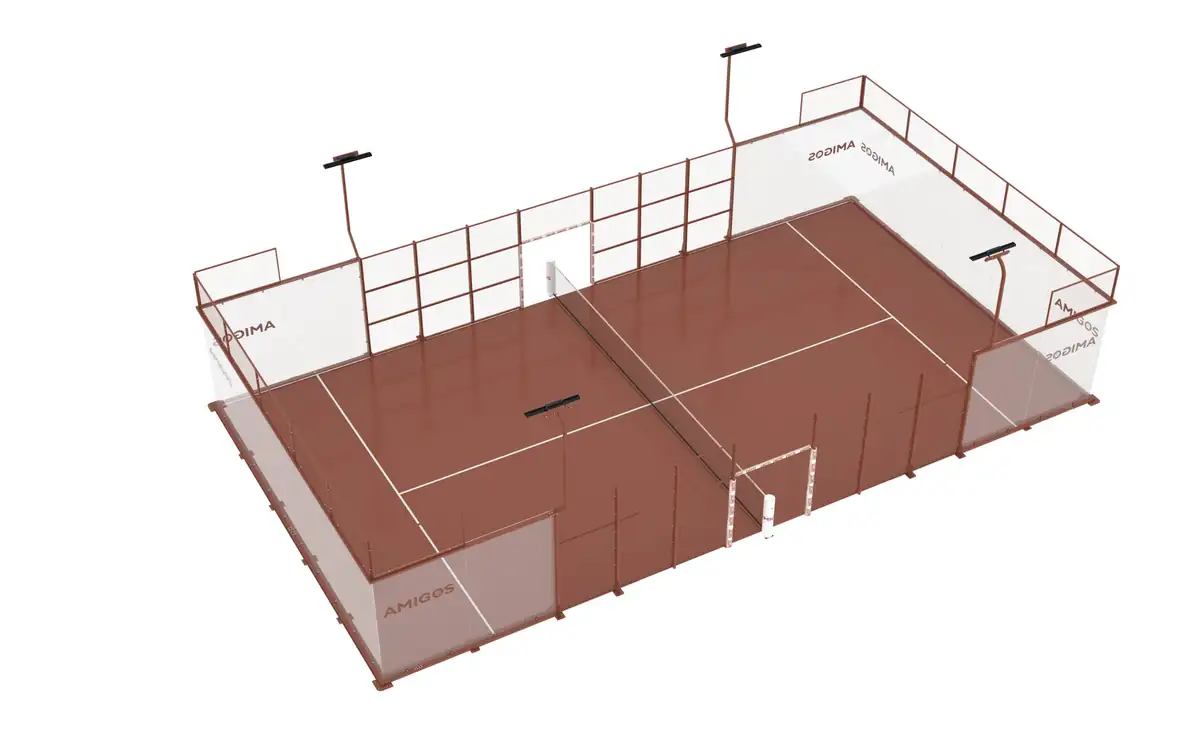
Should you buy padel courts locally or factory-direct?
It depends on five things: your project-management capacity, your permit timeline, site complexity, the number of courts and how you want liability split. Local suits clubs that want one phone number; factory-direct suits clubs that want control and have a reliable contractor. Neither is automatically cheaper once local work is added.
- Project-management capacity: if nobody can manage contractors, one accountable party is valuable.
- Permit timeline: if permits take months, you have time to manage an import and a local contractor in parallel.
- Site complexity: an indoor hall, a roof or an existing slab needs close coordination between the court maker and your engineer.
- Number of courts: larger orders make factory-direct buying and container shipping more practical.
- Liability: decide who you want responsible if something fails, and make sure the contract says so.
When clubs buy padel courts factory-direct, the delivered and installed cost is what counts, not the ex-works figure. Add freight, insurance, import charges, unloading, groundworks, electrics and installation before you compare. Our guide to padel court costs under FOB, CIF, DAP and DDP lays out each line.
Who is responsible for foundations, permits and installation when you buy padel courts?
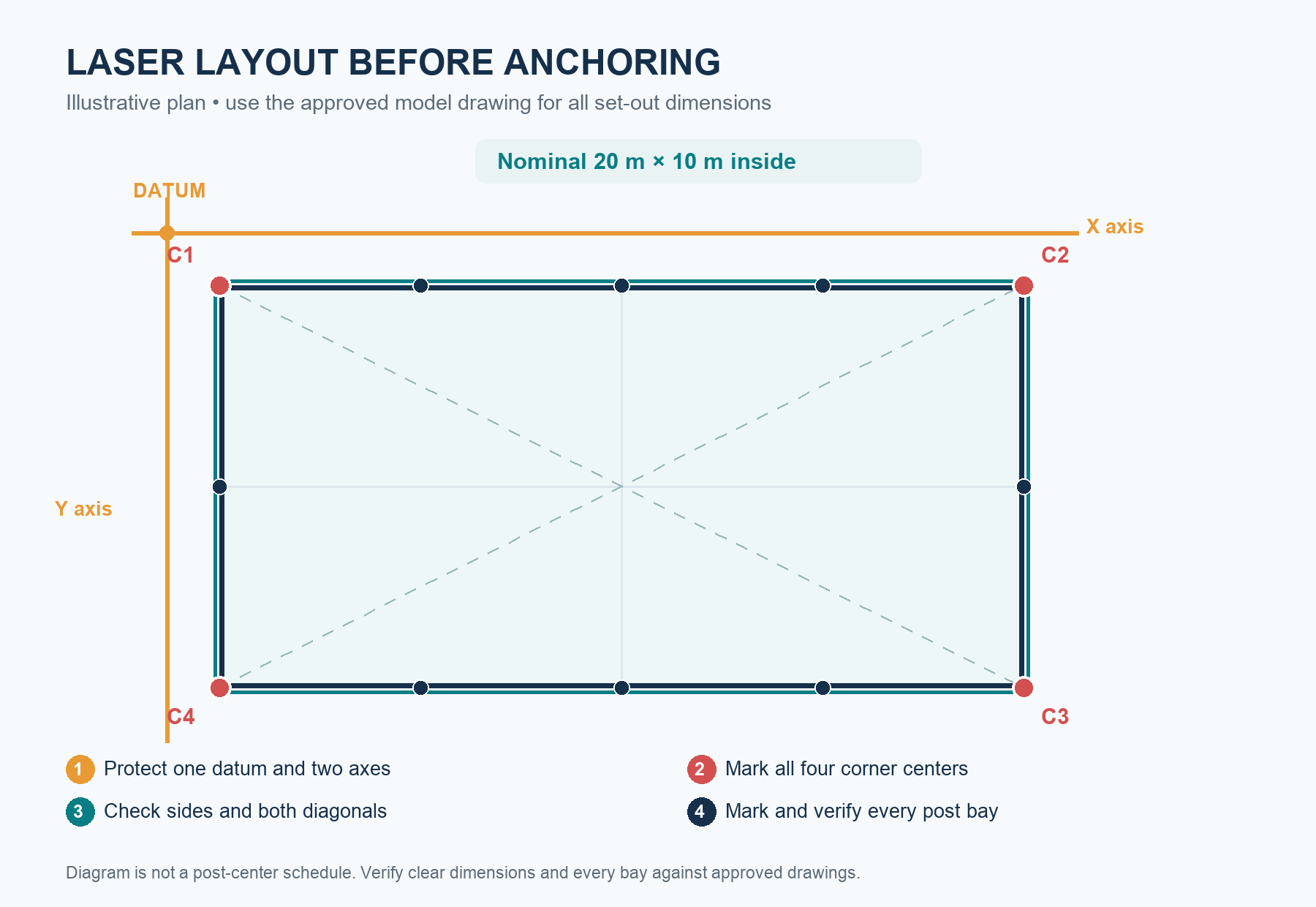
Foundations and permits are local responsibilities on every route. The supplier provides drawings and loads, a local contractor builds the slab, and an installer assembles the court on it. The biggest risk sits exactly where the slab meets the court, so name one party who accepts the slab in writing before the first post goes up.
- Foundations: a local contractor builds the slab to the supplier’s drawings, including drainage; see our padel court foundation requirements.
- Permits: you or your architect apply under local rules.
- Installation: the supplier’s crew, a supervised local crew, or a local crew working from the supplier’s guidance.
In the UK, the LTA padel court construction guidance note says a structural engineer with professional indemnity insurance should design a site-specific foundation, and recommends tendering against a written specification so quotes can be compared fairly. With us, a local crew assembles the court from our approved drawings, labelled parts, installation manual and remote video guidance. For multi-court jobs we can discuss a technician visit to supervise the first court, quoted separately for travel, accommodation and daily work.
What should the contract say before you buy padel courts?
The contract should name exactly what is supplied, who is responsible for each step, and what happens when something is wrong. Scope per component, the Incoterm and named place, inspection before shipment, warranty per component, spare parts and the installation split all belong in writing, not in a sales email.
- Scope per component: structure, glass, mesh, turf, lighting, hardware and packing.
- Delivery term under the ICC Incoterms 2020 rules, with the named port or address where the supplier’s responsibility ends.
- Inspection before shipment: what is checked, by whom, and whether you can appoint an inspector.
- Warranty per component, with start date, exclusions and claim evidence.
- Spare parts included, and how you order more.
- Installation split: who assembles, who accepts the slab, who supervises and who pays for return visits.
A word of honesty about quotations, including ours. A club investor in Victoria, Australia once pointed out that the line totals in one of our early proposals did not add up, that an attachment we referenced had not been sent, and that the tax basis and installation price were incomplete. They were right, and it changed how we check every quotation before it leaves. Before you buy padel courts from anyone, recalculate the totals yourself, open every attachment and confirm the tax basis.
How do you check a padel court supplier before paying a deposit?
Check four things before you pay anything: the supplier’s identities, the scope of each document, a factory visit or live video audit, and a reference. If the brand, the contracting company, the factory and the warranty holder are different companies, you need to know that before money moves.
- Identities: the brand, the company that signs your contract, the factory that makes the steel, and the company that honours the warranty.
- Document scope: for every certificate or report, check the number, issuing body and scope, and note what it does not cover.
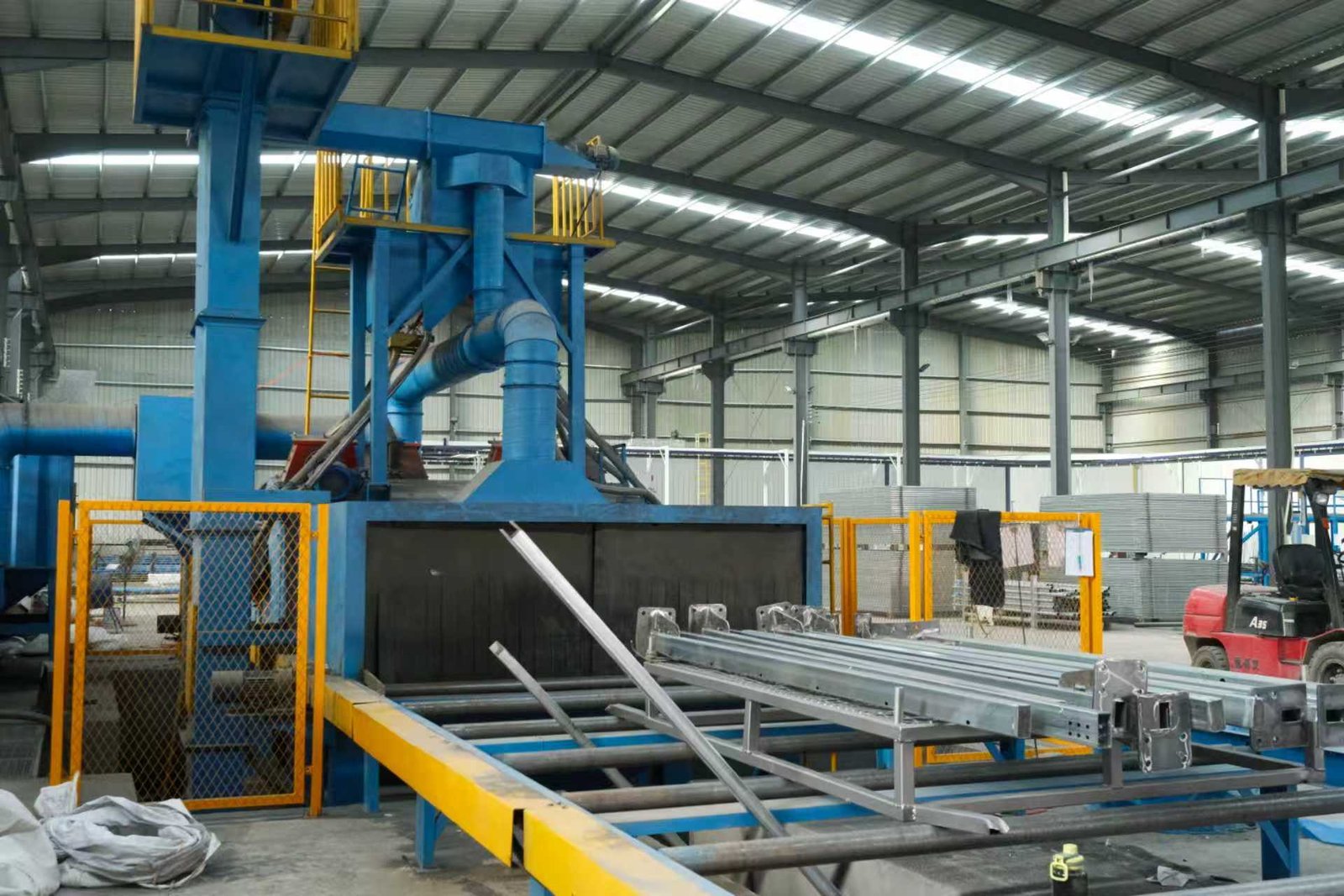
- Factory visit or live video: you choose what the camera shows, from cutting and welding to coating and packing.
- References: a finished court you can visit or a club you can call, with the supplier’s actual scope stated.
For our own documents, I will tell you exactly what they are: a voluntary ECM attestation reviewing the technical construction file of twelve models against EN 1090-1, and a UDEM attestation covering steel wire and welded mesh. Neither is CE marking of a whole court, and neither replaces your local engineer. Confirm any bank-detail change through a separate, known contact before paying. Our factory verification guide lists further checks.
What ten questions should you ask before you buy padel courts?
Ask every supplier the same ten questions in writing and compare the answers side by side. In my experience the answers settle who to buy padel courts from faster than the prices do, because they show who will stand behind the court when something goes wrong.
- What does the warranty cover for structure, coating, glass, turf and lighting, and who pays for a return visit?
- Who signs off the slab before assembly, and what happens if it does not match your drawings?
- What are the post sections and wall thickness for the model you are quoting?
- Who holds the test report for the tempered glass, and to which standard?
- Can you show a coating inspection record from a recent order?
- What are the lead-time stages from order to installation, and which are you responsible for?
- Which delivery term do you quote, and under DDP who is importer of record?
- What installation support is included: your crew, supervision or guidance?
- Which spare parts are included, and how do I order more?
- Which finished court can I visit, or which club can I call?
Question three catches more surprises than any other. Even within one factory, two quotations under the same model name can carry different post walls, so the section schedule attached to your quotation is what you are actually buying.
How many courts and which types should a new club buy?
Decide the number and mix of courts before you decide who to buy padel courts from, because the mix changes which suppliers can quote and how shipping works. Each court type does a different job, and many clubs combine a show court with practical courts for daily play.
- Panoramic: clear sightlines through the glass; a common choice for main courts. See our panoramic padel court page.
- Super panoramic: the most open view; suits a show court for events and filming.
- Classic: a framed structure with posts; practical for training and everyday play.
- Singles, 20 × 6 m: a smaller footprint for coaching, one-on-one play and tight sites.
For indoor sites, measure clear height at the net, back walls and lighting positions before choosing a model. On a Welsh indoor project this autumn, the price conversation ran alongside a roof-height and layout clash that only a measured section drawing could resolve. The business side belongs in your plan; our guide on how to open a padel club covers it.
When is PANO the right place to buy padel courts, and when is it not?
We fit the factory-direct route: you buy from the factory that makes the courts, and a local contractor handles groundworks and assembly with our guidance. We are a good fit if you want direct access to drawings and production and can coordinate local work; we are not the right fit if you need one company to deliver a finished, installed club.
- Production in Feixiang District, Handan, Hebei; panoramic, super panoramic, classic, singles and mobile courts.
- Steel cut on laser equipment and finished on an automated coating line; specialist processes such as hot-dip galvanizing after fabrication are run with named partners.
- Minimum order of one court; FOB, CIF or delivered terms, confirmed per project.
- Installation support through drawings, labelled parts, a manual and remote video guidance.
What we do not do: we do not install with our own crew as a standard service, we do not run a spare-parts depot outside China, and we do not hold a padel federation approval for our courts. If any of those is essential to you, a local installer or a European brand may suit you better, and I would rather you know that now.
What else do new club owners ask before they buy padel courts?
Who should I buy padel courts from for a new club?
Buy from a supplier that puts in writing who makes the structure, what each document certifies, the warranty per component and who handles foundations and installation. Choose a local installer for one accountable party, or factory-direct for more control over specification and documents.
Is it cheaper to buy padel courts directly from a factory?
The equipment price is usually lower factory-direct, but you take on freight, import, unloading and coordination of a local crew. Compare the delivered and installed cost on the same scope and Incoterm before deciding, because local works can narrow the gap considerably.
Do padel court suppliers also install the courts?
Some install with their own crews, others supervise, and others provide guidance only. PANO supplies approved drawings, labelled parts, an installation manual and remote video guidance, and a local crew you contract directly assembles the court.
What do I need on site before the courts arrive?
You need a foundation slab built to the supplier drawings and accepted in writing, working drainage, power for the lighting, and safe access for unloading glass and steel with a forklift or similar equipment.
Can I import padel courts myself?
Yes. Under FOB or CIF you arrange import clearance through your own customs broker and pay duties and taxes. Under DDP the supplier delivers duty paid, but ask who is importer of record and how import VAT or GST is handled before you agree.
What warranty should I expect when I buy padel courts?
Expect separate written terms for the structure and coating, glass, turf and lighting, each with a start date, exclusions and claim evidence. Periods vary between suppliers and quotations, so rely on the signed warranty schedule rather than a headline figure.
What is the minimum order to buy padel courts from PANO?
Our minimum order is one court. Custom items such as artwork or special turf colours may carry their own minimum, which is stated in the quotation. Freight is planned per container, so the cost per court changes with quantity.
What should you send suppliers to get comparable quotes?
Send every supplier the same short brief: site location and drawing, number and type of courts, indoor or outdoor use, clear height for indoor sites, target opening date, who handles the slab, electrics and installation, and your preferred Incoterm. Identical briefs produce comparable quotes, and comparable quotes are the only fair way to buy padel courts.
- Site address, layout or photos, and the existing base if any.
- Court quantity, preferred types and target opening date.
- Who builds the slab, does the electrics, unloads and installs.
- Preferred delivery term and, for DAP or DDP, the importer of record.
If you would like us to be one of the quotes you compare, send your site plan and court count through our contact page. I will reply with a model-specific scope, the section schedule and a list of open questions for your engineer. Our padel court RFQ guide shows how to write the request.