
PANOCOURT · Fabrik-rekta fabrikanto de padelkorteoj
Konstruado kaj instalado de padelkorto
De betona fundamento ĝis la unua servo: la kompleta konstrua procezo, la postuloj de la ejo kaj la realaj instalaĵkostoj — bazitaj sur la inĝenieraj desegnoj, kiujn ni sendas kun ĉiu PanoCourt-korto. Trejnita teamo de kvar homoj instalas unu korton en 3–5 tagoj.
Tagoj por instali unu korton
0
–5
Gvidataj etapoj de instalado
0
Salŝpruca testita tegaĵo
0
h+
PRODUKTA GARANTIO & CE-DOKUMENTOJ
0
-jaro
La granda bildo
Kion implicas la konstruado de padelkorto?
La konstruado de padelkorto havas du apartajn fazojn. Konstruado kovras la civilajn laborojn — betonan fundamenton projektitan de inĝeniero, drenadon kaj antaŭentombigitan elektran kabladon, liveritajn de via loka entreprenisto. Instalo estas la kunigo de la kortstrukturo mem: ŝtala kadro, maŝo, lumigado, temperita vitro kaj reto.
Ĉiu PanoCourt-tribunalo estas tute bolta sistemo — sen surloka veldado — do loka ŝtala aŭ barilkonstrua teamo povas kompletigi la instaladon uzante niajn desegnaĵojn kaj per fora subteno.
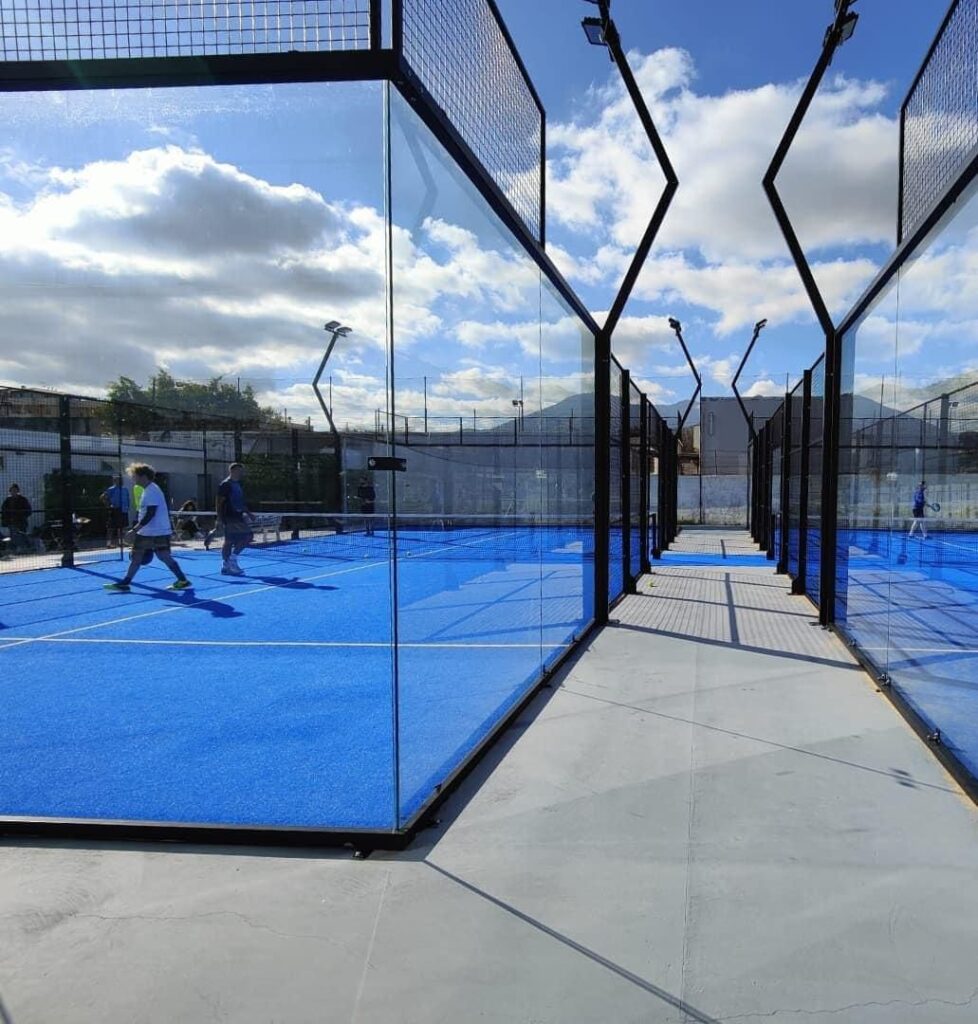
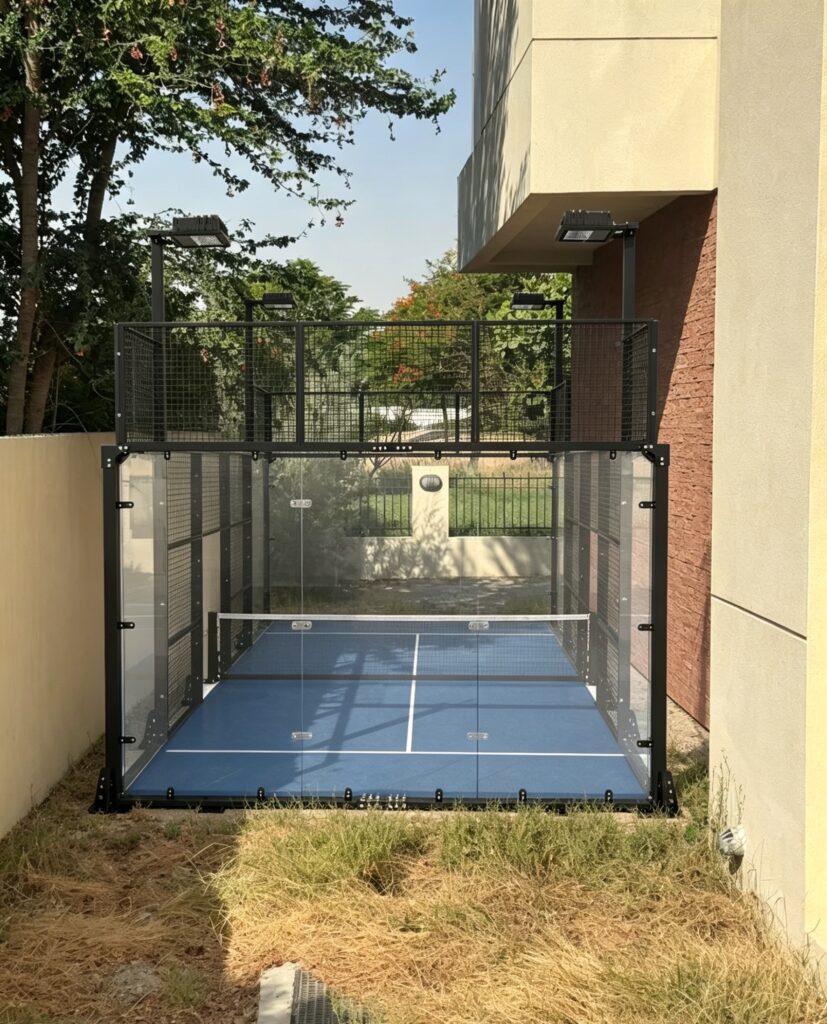
- Entuta piedsigno 20,47 × 10,47 m (ĝis la rando de la flanĝplato) por norma 20 × 10 m korto
- Strukturo pezas proksimume 3–4 tunojn da ŝtalo kaj 12 mm temperita vitro
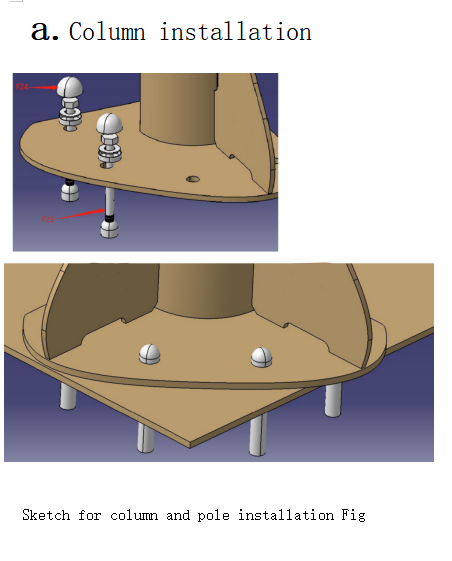
- 100% boltitaj M8/M10-konektoj — nur per normaj iloj, neniu surloka veldado
- Kompletaj instalaj desegnaĵoj, mapoj de fiksiloj kaj etikedita pakaĵo inkluzivita
VIDU LA PROCEZON
Spektu la instaladon de padelkorto de komenco ĝis fino.
Anstataŭigu ĉi tiun lokumilon per via fabrika aŭ surloka instalada video.
Antaŭ ol la ujo alvenas
Kia ejo-preparado estas bezonata?
Instalo povas komenciĝi nur post kiam la fundamento, drenado kaj kabligado estas kompletigitaj. Jen la antaŭ-instalada kontrol-listo, kiun ni sendas al ĉiu kliento:
- Fondaĵo: perimetra ringa trabo (~30×30 ĝis 40×40 cm) aŭ armita plato 15–25 cm, min. 21 × 11 m — projektita de inĝeniero
- Surfaca toleremo: ±6 mm sub 3 m rekta regilo
- Libera alteco: ≥6 m super la tuta korto; 8 m super la reto-linio por konkurso aŭ kanopo
- Elektraj: antaŭentombigita kablo al ĉiu lumstanga pozicio, kondukilo ≥450 mm profunda
- Drenado: pora konstruo aŭ falo de 0,5–11 TP3T kun ĉirkaŭaj dreniloj (eksteraj)
- Aliro: per ĉarelilo aŭ kranilo por malŝarĝi 40-futan konteneron.
La dezajno de fundamento, drenado kaj elektro devas esti aprobitaj de licencita loka inĝeniero. PanoCourt provizas aranĝojn de bazplatoj, poziciojn de ankroj, pezojn de la strukturo kaj la maksimuman projektitan ventrapidecon kiel inĝenierian enigaĵon.
Paŝo post paŝo
Kiel oni instalas padelan korton?
La preciza ok-etapa sekvenco el la instalaj desegnaĵoj kaj manlibro senditaj kun ĉiu kortumo.
01 · Reteja aranĝo kaj markado
Marku la 20,47 × 10,47 m-an areon per angulaj linioj kaj centra linio sur la finita betona plato.
02 · Malpakaĵo kaj subkunigo
Etikedu ĉiun komponenton, poste surtere antaŭmuntu la grupojn de 10 m kaj 20 m krucbalkoj.
03 · Erektado de la ĉefa kadro
Angulpostoj, lumfostoj, transtraboj, maŝkadroj kaj pordoj — ĉiuj M10-ŝraŭbkonektoj.
04 · Kvadrigado kaj Ankrado
Alinigu kaj vertikale niveligu la tutan kadron, poste fiksigu ekspansiajn ankrojn tra la flanĝplatoj en la betonplaton.
05 · Supra maŝo kaj lampaj brakoj
Muntu lumilojn kaj konduku kablojn tra la stangoj ĝis la antaŭe enterigita subtera provizo.
06 · Templigita vitro
Gumaj gasketoj supre kaj malsupre, vitro sur la interna flanko — vitro neniam tuŝas nudan ŝtalon.
07 · Netaj kaj netaj afiŝoj
Streĉu la reton al 905 ± 5 mm ĉe la finoj kaj 865 ± 5 mm ĉe la centro.
08 · Elektra kaj Komisionado
Sub-brekeron por ĉiu korto, RCD por plurkortaj ejoj, ĉiuj konektoj sigelitaj en UV-rezista kondukilo.
Du sekurecaj reguloj el nia manlibro: temperita vitro neniam devas tuŝi nudan ŝtalon — ĉiam uzu gasketon aŭ ŝaŭmtapeton ĉe la junturo — kaj ĉiu elektra konekto devas esti plene fermita kaj veterrezista.
Planado de via malfermo
Kiom da tempo ĝi daŭras?
Unu tribunalo prenas spertan skipon de kvar ĉirkaŭ 3–5 tagoj Post kiam la fundamento solidiĝis. Unufoja loka teamo devus permesi 5–7 tagojn kun nia fora video-subteno.
Tipa dekomenco ĝis fino tempolinio: 25–30-taga produktado en nia fabriko, plus mara transporto al via haveno, plus grundaj laboroj (kiuj okazas paralele kun la produktado kaj la transporto), poste instalado.
Persono skipo
0
Fabrika produktado
0
Tagoj
MAX. Unuafoja instalado
0
Tagoj
Buĝeto, honeste
Kiom kostas konstruado de padel-korto?
Instala laboro estas malgranda parto de la totala buĝeto — la kortostrukturo kaj la civilaj laboroj estas la du ĉefaj eroj. Referencaj intervaloj por unu panoramika korto (konfirmu per detala oferto por via lando):
| Kostero | Tipa gamo (USD) | Notoj |
|---|---|---|
| Kortstrukturo (fabriko-rekta, el-fabrikejo) | $10,000–18,000 | Panorama kontraŭ klasika; vitro- kaj ŝtala specifo |
| Martransporto (1×40’HQ, 1–3 kortoj) | $2,000–5,000 | Dependa de la celloko |
| Terlaboroj kaj fundamento | $8,000–25,000 | Loka entreprenisto; la surloke kondiĉoj regas. |
| Instala laboro (loka teamo, 3–5 tagoj) | $3,000–8,000 | Aŭ via propra skipo kun niaj desegnaĵoj |
| Elektra konekto de lumigado | $,000–3,000 | Loka elektristo |
En Britio kaj Okcidenta Eŭropo, loka turnŝlosila konstruisto tipe taksas la saman amplekson signife pli alte. Aĉeti rekte de ĉina fabriko de padelkortoj kaj instali ĝin per loka teamo tenas la koston de la strukturo travidebla — vi pagas kontraktistajn tarifojn nur por la laboro, kiu vere devas okazi surloke.
Ne estas loka komercisto? Neniu problemo.
Ĉu loka teamo povas instali ĝin?
Jes. Ĉar la sistemo estas tute ŝraŭbita kaj ĉiu komponanto estas etikedita laŭ la desegnoj, klientoj tra la tuta mondo instalas PanoCourt-kortojn kun lokaj ŝtalaj, barieraj aŭ sportaj surfacaj kontraktistoj — gvidataj de nia instalmanlibro kaj viva fora vide-subteno.
Ni rekomendas profesian manipuladon nur por du etapoj: la levado de la temperitaj vitropaneloj kaj la fina elektra konekto fare de licencita elektristo.
- Numeroitaj komponantoj kongruaj kun la desegnaĵoj
- Mapo de fiksiloj: ĉiu bolto laŭ grandeco, konekto post konekto
- Malproksima video-subteno dum instalado
- 5-jara produkta garantio kaj CE-dokumentaro
FABRIKITA EN NIA FABRIKO, PROVITA SUR VIA EJO
Kion PanoCourt provizas?
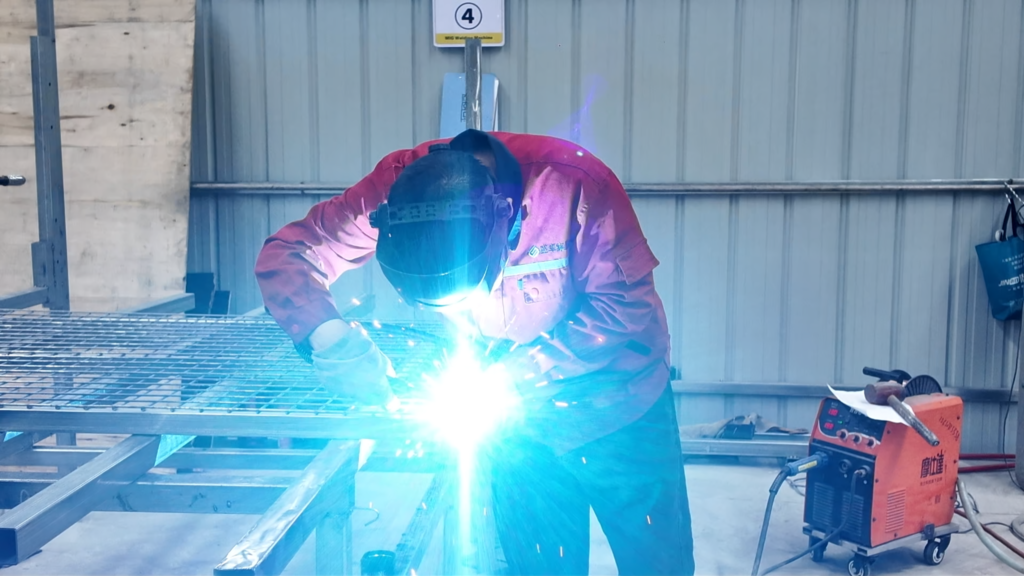
Varma-trempita galvanizita ŝtalo laŭ EN ISO 1461 kun 80–100 µm altkvalita pulvora tegaĵo, lasere tranĉita kaj robote veldita en nia fabriko. 12 mm temperita vitro kun poluritaj randoj, unupeca galvanizita reto kaj kaŝita rustorezista akcesoraĵo — la sama normo kiel ĉe premiumaj eŭropaj markoj, sen marko-aldono.
- Kompletaj instalaj desegnaĵoj kaj manlibroj (EN)
- Skizoj de bazplato kaj ankro por via inĝeniero
- Por eksporto optimizita kaj etikedita pakado en ujoj
- Indikita maksimuma projektita ventrapideco por lokaj ventokalkuloj
- LED-lumigaj pakoj kontraŭ brilo kaj sen tremo (300–500 luksoj)
Respondoj antaŭ ol vi demandas
Oftaj demandoj pri konstruado de padel-korto
Realistika tuta buĝeto por unu kortumo estas proksimume $25,000–55,000 USD: $10,000–18,000 por fabriko-rekta strukturo, $8,000–25,000 por inĝeniero-projektitaj grundlaboroj, plus transporto, instalada laboro kaj elektra konekto. La ejo-kondiĉoj kaj la landaj laborpagoj determinas la plej grandan parton de la variado.
Sperta teamo de kvar homoj instalas unu korton en 3–5 tagoj, post kiam la fundamento estas preta. Unufoja loka teamo devus plani 5–7 tagojn kun nia malproksima subteno. Fabrika produktado daŭras 25–30 tagojn, kaj grundlaboroj povas kuri samtempe kun produktado kaj sendo.
Aŭ perimetra plifortigita ringa trabo (kutime 30×30 ĝis 40×40 cm) aŭ plifortigita plato de 15–25 cm, minimume 21 × 11 m, projektita de licencita loka inĝeniero uzante vian grundesploron kaj lokajn ventajn ŝarĝojn. La toleranco de la surfaco devas esti ±6 mm sub 3 m longa rektangulo.
Jes. La sistemo estas tute boltita per etikeditaj komponantoj, kun kompletaj desegnaĵoj kaj manlibro pri ĉiu fiksilo. Lokaj ŝtalaj aŭ barilaj teamoj instalas niajn kortojn tutmonde, subtenataj per fora video-subteno. Nur la levado de vitro kaj la elektra konekto postulas specialistajn metiojn.
Konstruado estas la civilaj laboroj — fundamento, drenado kaj antaŭentombigita kabligado — liverataj de via loka kontraktisto laŭ la dezajno de via inĝeniero. Instalado estas la muntado de la korta strukturo mem. PanoCourt provizas ĉion por la instalado kaj la teknikajn datumojn, kiujn via inĝeniero bezonas por la konstruado.
Jes. Ĉiu korto estas liverata kun anglaj instalaj desegnoj, paŝo-post-paŝa manlibro, mapo de fiksiloj kovranta ĉiun konekton (M8×30 ĝis M10×75), aranĝoj de bazplatoj kaj ankroj, strukturopezoj kaj la maksimuma projektita ventrapideco de la enfermaĵo.
La brita turnkey-prezo kutime estas multe pli alta ol la kosto de la strukturo mem, ĉar planado, grundlaboroj kaj laboro estas taksitaj laŭ lokaj tarifoj. Aĉeti rekte de la fabriko kaj instali kun brita grundlabora aŭ barilkonstrua entreprenisto kutime reduktas la totalan koston — petu de ni britan detalan oferton.
Kutime jes por eksteraj kortoj: la 3–4 m altaj muroj kaj 6 m altaj lumturoj normale postulas planan aŭ zonan konsenton, kaj brua aŭ luma taksado eble necesos se loĝdomoj troviĝas je ĉirkaŭ 50 m. La konsento estas respondeco de la terposedanto — nia Gvidilo pri Konstruktoj priskribas, kion prepari.
Ĉu vi pretas konstrui vian padelan korton?
Sendu al ni la dimensiojn de via ejo kaj vian landon — ni respondos ene de 24 horoj kun detala prezpropono, la instalmanlibro kaj la gvidlibro pri konstruaj postuloj.