You’ve seen MejorSet. You liked what you saw — the clean corners, the hidden bolts, the way no single screw seems to exist on the surface. Then you got the price. Then you asked around about lead times.
That’s usually when someone tells you: “There’s a China padel court factory that does the same thing for less.” And your first instinct is probably skepticism. Fair enough. This article isn’t going to ask you to trust anyone. Instead, it’s going to show you exactly what to check — and how to check it — before you commit to a single dollar. Before diving in, see our full China vs Spain padel court factory comparison y el top padel court manufacturers in China 2026.
Are the Raw Materials in a Spanish Padel Court Actually Better Than What a China Padel Court Factory Uses?
Short answer: No. The materials are governed by international standards that any factory in any country can buy and certify.
This is the single most important thing buyers misunderstand when comparing padel court Spain manufacturers to Chinese factories. The steel MejorSet uses is classified as S355 under the European standard EN 10025. The steel PanoCourt uses is Q355, classified under China’s GB/T 1591. These two grades are officially equivalent — same 355 MPa minimum yield strength, same 7.85 g/cm³ density, same carbon content ceiling of ≤0.20%.
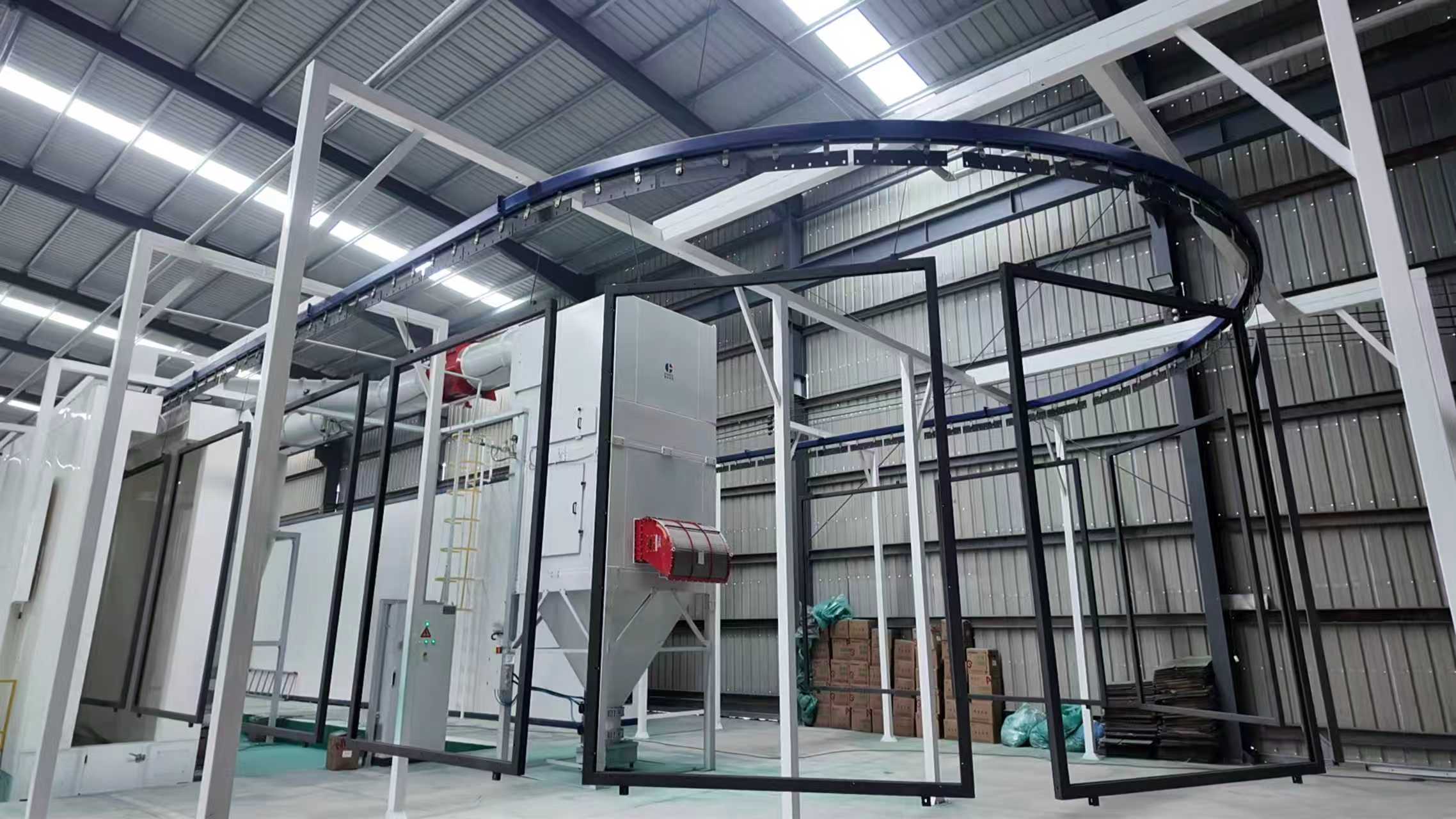
The powder coating brands that appear in high-end Spanish court specifications — AkzoNobel Interpon and Jotun — both have manufacturing and distribution networks in China. When we order Interpon D2 super-durable polyester for a client’s build, we’re buying from the same product line as any European fabricator. There is no “Spanish-exclusive” formula.
The glass standard is even clearer. EN 12150-1 is a single international standard for tempered safety glass, recognised by the Federación Internacional de Pádel (FIP). It doesn’t have a Spanish edition and a Chinese edition. A 12 mm tempered panel that carries an EN 12150-1 certificate is the same product, whether it was installed in Madrid or Melbourne.
| Material | Spanish Standard (MejorSet) | Chinese Equivalent (PanoCourt) | Same? |
|---|---|---|---|
| Structural steel | S355 (EN 10025), 355 MPa yield | Q355B/C (GB/T 1591), 355 MPa yield | Sí |
| Recubrimiento en polvo | AkzoNobel Interpon / Jotun, QUALICOAT | AkzoNobel Interpon / Jotun, same product line | Yes — same brand |
| Vidrio templado | 12 mm, EN 12150-1 certified | 12 mm, EN 12150-1 certified | Yes — one global standard |
| Welded mesh | 50×50×4 mm, hot-dip galvanized | 50×50×4 mm, hot-dip galvanized, ISO 1461 | Identical spec |
| Hardware | Stainless steel, SS304/SS316 | SS304 standard / SS316 coastal | Same grades |
How Do You Actually Verify What a Padel Court Factory in China Is Using?
The answer is documentation — specific documents that exist before production starts, not after.
Here’s what happens in a lot of padel court purchases from China: a buyer gets a brochure, sees the right words (“Q355,” “Interpon,” “EN 12150-1”), places an order, and only finds out the truth when the container arrives. That’s the wrong order of operations. At PanoCourt, we’ve structured our process around one principle: you verify before you pay, not after. Understanding which type of China padel court supplier you’re dealing with is the first step — and our Guía para compradores de fábricas de canchas de pádel en China covers the full screening process.
1. Request the Mill Test Certificate Before Cutting Starts
A Mill Test Certificate (MTC) is issued by the steel mill — not the fabricator. It lists the actual chemical composition and mechanical test results for the specific batch of steel used in your order. Ask for it with the batch number that matches your production run. If a factory can’t provide this, they’re not the one controlling the material. In our independent steel pipe test (reference: TST2024S00056), our Q355 tube came back at 476 MPa tensile strength and 387 MPa yield — both above the 355 MPa minimum.
2. Book a Third-Party Inspection — At Any Stage You Choose
We welcome SGS, Bureau Veritas, TÜV, and Intertek at any production stage. You pick the agency. You pick the timing. The inspector walks the floor, checks the material certificates against the actual stock, measures dry-film thickness with a gauge, and photographs the welds before they’re ground smooth. One of our European clients used Bureau Veritas for a pre-shipment inspection on a five-court project destined for a club in France. The inspector checked 27 individual DFT readings across six panels — all logged between 84 and 97 microns.
3. Send Us Your Sample or Specification Sheet — We Build to It
Several clients have sent us physical hardware samples — a hinge they preferred, a lock mechanism from a local supplier, a powder colour swatch — and asked us to match or incorporate it. We design around the sample, render the joint detail, and send back a confirmation drawing. Production doesn’t start until the client signs off on that drawing. “Concealed fixings” means different things to different factories. When a client sends us a detail photo from a MejorSet court and says “I want this joint,” we produce a cross-section drawing showing exactly how our hidden bolt and internal connection plate replicates that detail.
4. Watch the Factory — Live or Pre-Recorded
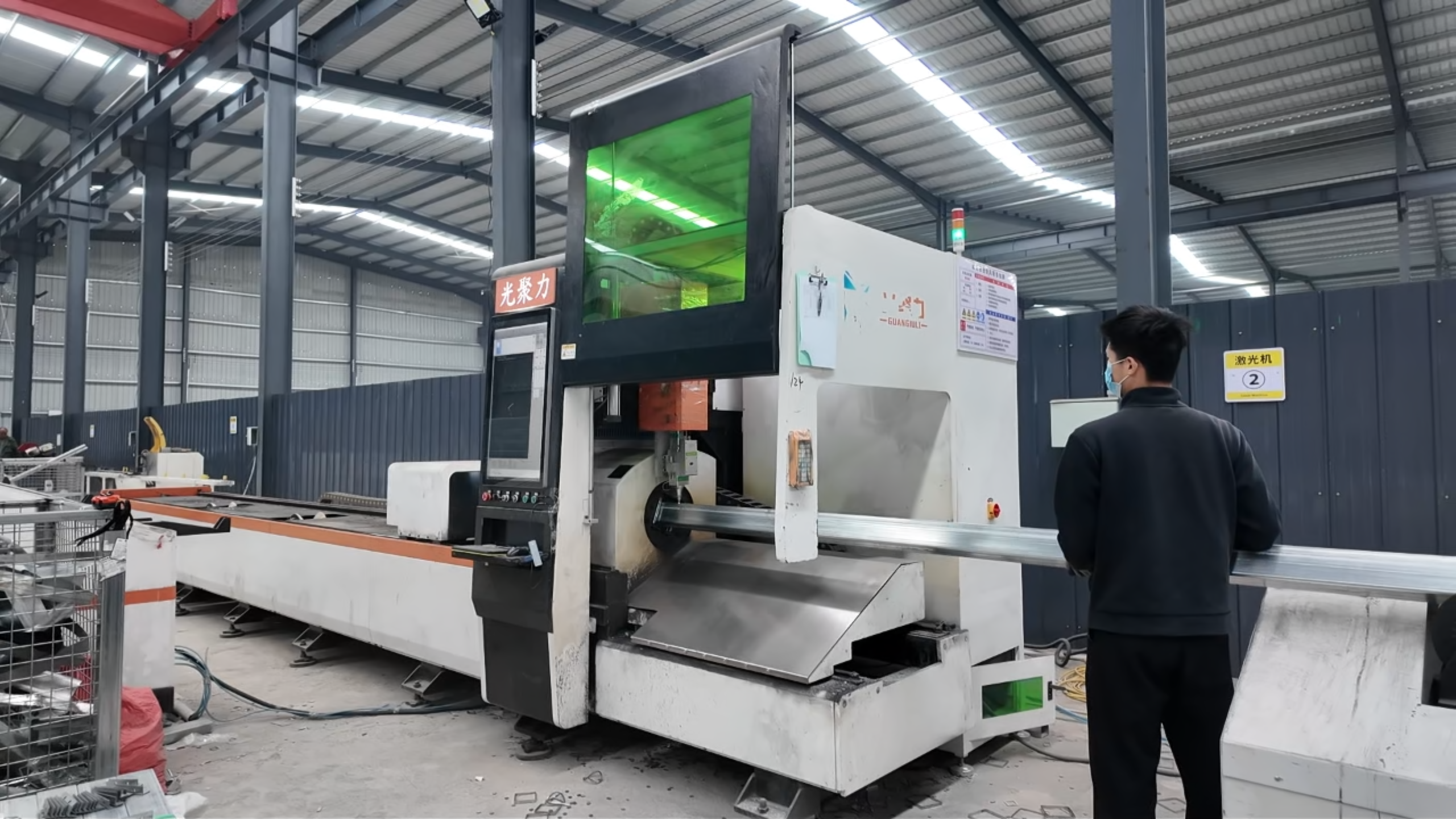
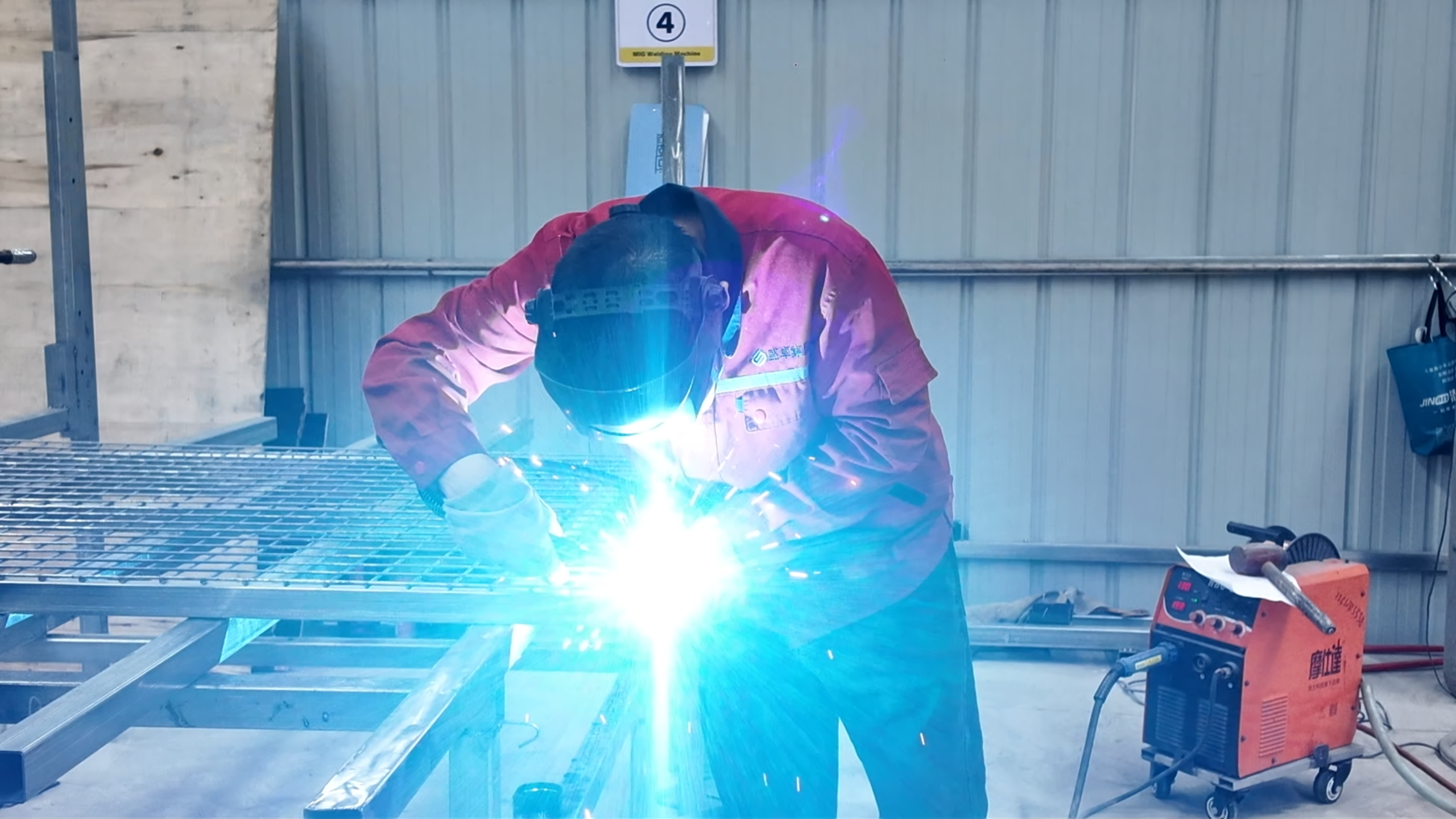
We run video factory tours on request, and for clients who want real-time visibility, we’ll schedule a live walkthrough over video call. You can see the steel stock, the laser cutter, the robotic welding station, the galvanizing bath, the powder coating line, and the glass tempering room. For a multi-court order, we offer weekly video updates shot at each production node.
5. Follow Your Court Through Every Production Stage
We now photograph and timestamp every court at six stages: raw material intake → laser cutting → robotic welding → hot-dip galvanizing → powder coating → pre-shipment assembly check. The photos go into a shared folder with the client’s project manager.
What Does PanoCourt’s Production Quality Actually Look Like on a Real Project?
The France indoor club project is probably our clearest reference for buyers who want MejorSet-level aesthetics.
The client — a premium padel club operator in France — came to us after receiving quotes from two Spanish suppliers and one Italian one. Their brief was specific: they wanted a Super Full-Panoramic court with no visible fixings on the glass, flush mitred corners, and internal cable routing. The powder colour was a custom RAL that their interior designer had specified. Lead time was a hard constraint: 14 weeks to installation.
The client sent us a detail photo from a MejorSet reference court — specifically the corner junction where the glass meets the frame. We produced a cross-section CAD drawing showing our hidden clamp system, the 5 mm neoprene pad seat, and the polymer edge gasket at every fixing point. The client’s structural engineer reviewed the drawing and requested one change — a slightly wider internal connection plate on the upper ring joint. We revised, re-rendered, and got sign-off within three days.
Steel arrived with MTC on day four. The client’s designated inspector (a local BV contact) was on-site at the factory on day eleven. Galvanizing certificate issued — zinc coat measured at 344 g/m² against the ISO 1461 minimum of 275 g/m². Powder coating used AkzoNobel Interpon D2. Post-coating DFT readings ranged from 86 to 99 microns. The courts arrived in France in week ten. Installation was completed in week thirteen — one week ahead of the hard deadline — using our pre-labelled component system, which reduced on-site labour by an estimated 35%.
Why Is a Spain-Built Padel Court So Much More Expensive Than an Equivalent China Padel Court?
The price gap is real, but it’s not coming from the materials — it’s coming from the cost structure around the materials.
For a full breakdown of padel court costs including installation and ROI, see our dedicated guide. On identical premium specification, here’s how the delivered cost breaks down:
| Componente de costo | Spanish-Built Court (MejorSet tier) | PanoCourt (Same Specification) |
|---|---|---|
| Raw materials (same grades & brands) | ~28% of total price | ~48% of total price |
| Labour & fabrication | ~34% | ~22% |
| Brand, certification & margin | ~24% | ~16% |
| Overhead & export logistics | ~14% | ~14% |
EU labour rates are 3–5× higher than Chinese rates. Brand amortisation and multi-tier distribution add another layer. PanoCourt competes on overhead — not on material grade. Specifying genuine Interpon powder, EN-certified glass, and SS316 hardware costs us the same per unit as it costs any manufacturer. The 30–40% price saving goes straight back to the buyer.
Is the Lead Time from a China Padel Court Factory Really That Much Faster?
Yes. Our standard production lead time is 30 days. MejorSet-tier Spanish factories typically run 16–24 weeks.
This matters more than people factor in at the buying stage. A club project with a fixed opening date, a lease that starts on a specific month, or a seasonal window for outdoor installation can’t absorb a six-month lead time with no acceleration option. According to World Padel Tour figures, the sport is adding millions of new players each year — demand for club capacity is outpacing supply in most markets. Speed to open matters commercially.
| Factor | MejorSet / Spanish Factory | PanoCourt (China Padel Court Factory) |
|---|---|---|
| Standard lead time | 16–24 weeks | 30 days |
| Production capacity | Limitado | 500+ sets/year |
| Container efficiency | — | 2 panoramic courts per 40HQ |
| On-site labour saving | — | 30–40% with pre-labelled components |
| Third-party inspection | Possible | Standard — buyer selects agency |
How Do You Work With PanoCourt From First Enquiry to Installed Court?
Six milestones, tied to six payment releases — you approve each stage before the next one starts.
- Stage 1 — Spec Locked: Proforma invoice and full technical specification signed as the contractual document.
- Stage 2 — Materials Proven: Mill certificates, powder batch certificates, and glass certification provided before any cutting starts.
- Stage 3 — Live Production Updates: Timestamped photo and video at laser cutting, welding, galvanizing, and coating.
- Stage 4 — Independent Inspection: Your choice of SGS, Bureau Veritas, TÜV, or Intertek.
- Stage 5 — Pre-Shipment Release: Balance payment released only after inspection pass.
- Stage 6 — Docs, Delivery & Install: Full export documentation, bill of lading, and remote installation supervision.
What Should You Ask Any Padel Court Factory in China Before You Pay a Deposit?
Ask for the documents that can only come from a real factory — not a trader.
Traders can forward photos. They can’t forward a Mill Test Certificate with the batch number matched to your production run. The twelve documents PanoCourt provides before deposit:
- Steel Mill Test Certificate (Q355 / Q235 with chemistry + mechanical report)
- Hot-dip galvanizing certificate (ISO 1461 coating weight)
- Powder TDS + batch certificate (confirming the actual Interpon/Jotun lot)
- DFT dry-film-thickness log (panel-by-panel readings)
- Salt-spray test report (ISO 9227, C4/C5 rating)
- EN 12150-1 glass certificate + fragmentation test
- Joint and hidden-fixing CAD detail drawings
- DIALux lighting simulation (300–500 lux uniformity verified on paper)
- In-production QC photo set (timestamped, stage by stage)
- Macro photos of finished corners (welds, flush joints, mitred corners)
- Installed reference court photos and video (real projects)
- FIP turf compliance certificate
If a supplier can’t produce all twelve, that’s the answer to your question. You can also review our detailed price comparison with MejorSet to understand where the cost gap really comes from.
Ready to See the Specification — Line by Line?
PanoCourt is a direct factory based in Hebei, China — the country’s largest steel-pipe production base. We’ve delivered 300+ padel court sets in 2025 alone, across 30+ countries, with a 5-year structural warranty and a 30-day standard lead time.
If you have a MejorSet specification sheet, a detail photo, or a custom RAL colour — send it. We’ll map it line by line against what we produce, show you the certificates that back each claim, and give you a quote within 24 hours.
panocourt.com · info@panocourt.com · WhatsApp: +86 136 8123 5010
Frequently Asked Questions: China Padel Court Factory vs MejorSet
Is a China padel court factory using the same steel grade as MejorSet?
Yes. PanoCourt uses Q355 steel (GB/T 1591), the official Chinese equivalent of S355 (EN 10025) used in Spain. Both have the same 355 MPa minimum yield strength. We provide a Mill Test Certificate with the batch number matched to your specific order before cutting starts.
How do I verify a China padel court factory before I pay a deposit?
Request the Mill Test Certificate, galvanizing certificate (ISO 1461), powder batch certificate (AkzoNobel Interpon or Jotun lot number), and EN 12150-1 glass certificate before production starts. Book a third-party inspection through SGS or Bureau Veritas. PanoCourt provides all 12 QC documents before the balance is due.
How long does it take a China padel court factory to deliver?
PanoCourt’s standard production lead time is 30 days. MejorSet-tier Spanish factories typically quote 16–24 weeks. Two full panoramic courts fit in one 40HQ container, making shipping straightforward to plan.
What is the price difference between a China padel court and a MejorSet court?
On identical premium specification, a China padel court from PanoCourt is typically 30–40% less expensive than an equivalent MejorSet court. The gap comes from EU labour rates (3–5× higher than Chinese rates) and multi-tier distribution margins — not from any difference in material grade.
Does PanoCourt offer the same concealed fixing system as MejorSet?
Yes. PanoCourt builds courts with hidden bolts and screws wherever structurally possible, concealed glass-fixing clamps, neoprene seats, and edge gaskets. We produce a CAD cross-section drawing of every joint detail and require buyer sign-off before steel is cut. We can also match a MejorSet sample panel — we cover freight both ways.
What warranty does a China padel court factory offer?
PanoCourt offers a 5-year structural warranty, backed by batch-level documentation (mill cert, galvanizing cert, powder batch cert, DFT log). Every warranty claim can be traced to the exact material used in your production run.
Is the padel court glass standard the same in China as in Spain?
Yes. EN 12150-1 is a single global standard for tempered safety glass. It has no separate Chinese edition. PanoCourt uses 12 mm tempered safety glass with polished edges, certified to EN 12150-1, the same standard referenced in MejorSet and FIP specifications.
What is the FIP standard for padel court construction?
The International Padel Federation (FIP) sets specifications for court dimensions (20m × 10m), glass thickness (minimum 12mm tempered), artificial turf performance, and lighting (minimum 300 lux for recreational play, 500+ lux for competitive). PanoCourt builds to all FIP technical standards.
Brand names (MejorSet, Padel Galis, AkzoNobel, Interpon, Jotun) are referenced for technical benchmarking only and remain the property of their respective owners. PanoCourt is an independent manufacturer with no affiliation to these companies. Material grade equivalences (Q355 ↔ S355) follow GB/T 1591-2018 and EN 10025.