
Last updated: August 2026
Six fabricants de terrains de padel, four countries, seven comparison dimensions — and one uncomfortable finding: most of the technical data buyers need to compare padel court manufacturers is not published by anyone.
We compared MejorSet, Padel Tech and Padel Galis (Spain), NXPadel (Italy), Unixpadel (Türkiye) and PanoCourt (China) on raw materials, manufacturing process, cost structure, lead time, capacity, after-sales support and certification. Where one of these padel court manufacturers does not publish a figure, this guide says so rather than guessing.
Disclosure: PanoCourt is one of the six padel court manufacturers compared here. We have not ranked the six from best to worst, because there is no honest way for a manufacturer to do that. Instead we match each company to the project types it genuinely fits, publish our own data at the same level of detail we asked of everyone else, and state plainly in Section 2 where we are not the right choice.
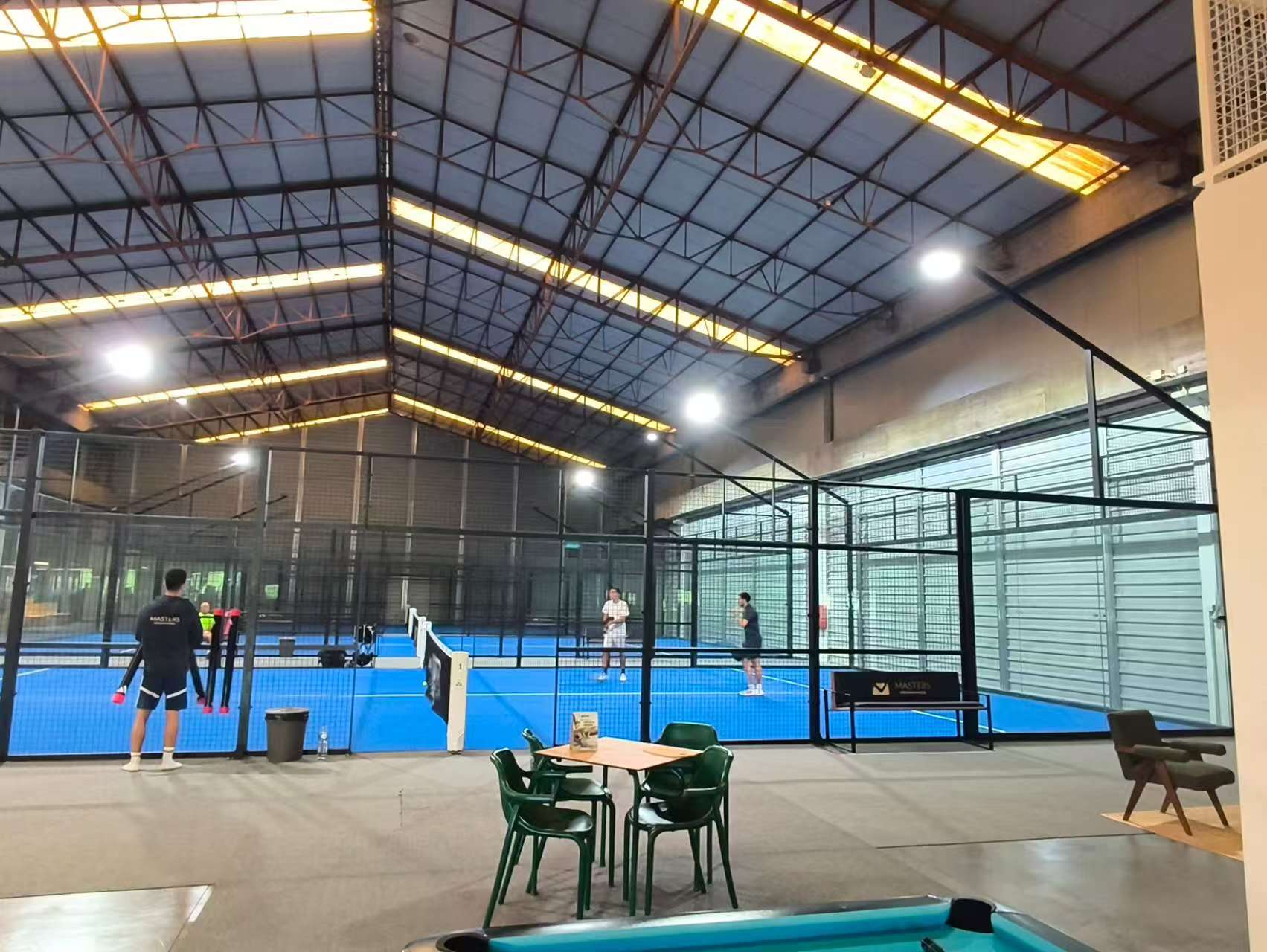
What Does This Padel Court Manufacturers Guide Cover?
- Who are the padel court manufacturers compared here
- How we compared them, and where we are not the best choice
- Manufacturer vs brand vs distributor
- Raw materials and component specifications
- Manufacturing process comparison
- Why prices differ between countries
- Lead time and production capacity
- After-sales support and warranty
- Certifications and what they actually cover
- Structural and wind-load standards by region
- Which manufacturer suits your project
- The 15-question supplier audit
- FAQ
Who Are the Leading Padel Court Manufacturers in 2026?
These six padel court manufacturers represent four production countries and two structural approaches: steel (Spain, Türkiye, China) and fiberglass (Italy). Together they cover the realistic shortlist for most international padel projects in 2026.
| Field | MejorSet | Padel Tech | Padel Galis | NXPadel | Unixpadel | PanoCourt |
|---|---|---|---|---|---|---|
| Pays | Espagne | Espagne | Espagne | Italy | Türkiye | Chine |
| Legal entity | MejorSet (Group LeDap) | Padel Tech | Padel Galis | NXPADEL S.R.L. | Unixpadel Kort ve Zeminleri Üretimi İnş. ve San. A.Ş. | Tianjin PANO Sports Goods Co., Ltd. |
| Head office | Crevillente, Alicante | Griñón, Madrid | Valencia | Presezzo, Bergamo | Eyüpsultan, Istanbul | Wuqing District, Tianjin |
| Production site | Espagne | Own facility, Madrid | Valencia, 15,000+ m² owned | Subcontracted near HQ, using NXPadel moulds and patents | Adıyaman Organised Industrial Zone | 10,000 m² integrated plant |
| Structural material | Steel | Steel | Steel | Fiberglass | Steel | Steel |
| Distribution | Direct + global dealers | Direct (Europe, US, Middle East, Asia) | Direct + agents and dealers | Dealers and partners | Direct + export | Factory direct |
| Circuit status | Official court supplier to Premier Padel and the FIP | Signature model with Juan Lebrón | Official court provider, Premier Padel Valencia P1; Wilson partner | Aucun | States courts suit FIP-sanctioned play | Aucun |
| Best suited to | Tournament venues, luxury resorts | High-end clubs, bespoke projects | High-volume multi-court rollouts | Highly corrosive environments | Middle East, Africa, multi-product projects | Volume export projects |
A note on names. “Padel Tech” is used by at least three unrelated companies, which is a recurring problem when comparing padel court manufacturers. This guide compares padeltech.com, the manufacturer in Griñón, Madrid. It is not padeltech.co.uk, a UK installer that describes itself as the exclusive UK and Caribbean distributor for AFP Courts and installs only AFP courts. Nor is it the US-based “Padel Tech Courts” listed in some industry roundups. Check which entity you are actually quoting before you compare prices.
How Did We Compare These Padel Court Manufacturers?
We used one rule: a claim only enters the tables if it can be verified from a manufacturer’s own published material, a named third-party document, or dated industry coverage. Everything else is recorded as “Not publicly disclosed.”
Sources used, in order of weight:
- Manufacturer websites and published technical pages
- Named third-party documents — test reports and attestations where the issuing body and number are identifiable
- Dated trade-press coverage, cited with its date
- Public statistical sources for macroeconomic inputs
Sources deliberately excluded: self-issued press releases distributed through paid wire services, and third-party business databases publishing unverified headcount or revenue estimates. Both circulate widely among padel court manufacturers and both are unreliable.
No manufacturer prices appear in this guide. None of the six publishes ex-works pricing, and inventing comparative price figures for competitors would be both inaccurate and unfair. Section 6 explains the cost drivers instead, which is the part a buyer can actually act on.
Where PanoCourt Is Not the Right Choice
Since we are one of the six padel court manufacturers being compared, this section is not optional.
- We hold no professional-circuit credentials. MejorSet is the official court supplier to Premier Padel and the FIP; Padel Galis supplied Premier Padel Valencia P1. If your business case depends on hosting sanctioned events, a Spanish supplier with that status is the better fit and we will say so on a call.
- We hold no spare-parts stock in Europe, North America or Australia. A Spanish or Italian supplier can put a replacement glass panel on a truck the same week. We cannot. Our answer is a spares pack shipped inside the original container plus a contractual replenishment clause — mitigation, not parity.
- You handle customs. We ship FOB Tianjin as standard. Duty, VAT recovery and destination charges are your broker’s work. Buyers who want a single invoice through to their gate are usually better served locally.
- Our brand carries no resale premium. A club sold in five years with branded courts may realise more than one with factory-direct courts. That difference is real and belongs in your model.
What Is the Difference Between Padel Court Manufacturers, Brands and Distributors?
Padel court manufacturers own the production; a brand owns the name on the court; a distributor sells and installs someone else’s product in a defined territory. These three roles are frequently held by three different companies, and the marketing language rarely makes that clear.
Chiffres clés
- A court can legitimately carry a brand name that is not the name of the company that built it.
- AFP Courts states it has been the official manufacturer and licensee for adidas padel courts for over a decade — so an “adidas court” is an AFP-manufactured product sold under a licensed name.
- padeltech.co.uk states it is the exclusive AFP Courts distributor for the UK and Caribbean and that its courts can be branded as adidas courts. One court, three company names attached.
- NXPadel’s production runs through manufacturers near its Bergamo headquarters using NXPadel’s own moulds and patents, according to Padel Magazine’s 2023 report — an owner-of-IP model rather than owner-of-factory.
- OEM production is normal and not a defect. What matters is knowing which layer you are buying from.
Deep insight
Every layer between the production line and your site adds margin and adds a handoff. That is not automatically bad. A good distributor carries local warranty risk, holds spares, knows your building control officer and turns up when a panel cracks. Those are real services with a real cost.
The problem is asymmetric information. When you compare a quotation from a factory against a quotation from a distributor of a different factory, you are not comparing like with like, and the distributor’s quote will look expensive for reasons that have nothing to do with steel. Our Guide d'achat pour les fournisseurs de terrains de padel breaks down the supply layers in more detail.
Real-world insight
Ask one question of every supplier before you compare a single number: “Do you own the factory that produces the structure, and if not, who does?”
The answer sorts your shortlist immediately. Genuine padel court manufacturers answer it in one sentence. Distributors answer it honestly if they are good, and evasively if they are not. Then ask the follow-up that decides your warranty position: “If a structural defect appears in year three, who pays — you, or the factory?”
What Raw Materials Do Padel Court Manufacturers Actually Use?
Almost no padel court manufacturers publish material specifications. Across the six compared here, only two disclose a glass thickness and only one publishes steel grade, mechanical properties and coating weight with a test report number. This is the largest information gap in the industry.
| Composant | MejorSet | Padel Tech | Padel Galis | NXPadel | Unixpadel | PanoCourt |
|---|---|---|---|---|---|---|
| Structure | Steel, grade not disclosed | Steel, grade not disclosed | Steel, grade not disclosed | Fiberglass, patented in 30+ countries | Steel, grade not disclosed | Q235B welded tube to GB/T 3091-2015 |
| Mechanical properties | Not publicly disclosed | Not publicly disclosed | Not publicly disclosed | Not publicly disclosed | Not publicly disclosed | Tensile 476 MPa, yield 387 MPa, elongation 25% (tested) |
| Zinc coating | Not publicly disclosed | Not publicly disclosed | Not publicly disclosed | Sans objet | Not publicly disclosed | 343–344 g/m² against a ≥300 g/m² requirement |
| Verre | Recommends EN 12150-1 toughened glass | Not publicly disclosed | Not publicly disclosed | ComfortGlass acrylic composite | 12 mm toughened | 10 or 12 mm toughened, 2/4/8-hole drilling |
| Maille | Not publicly disclosed | Mesh welded in-house | Not publicly disclosed | Fiberglass mesh, returns flat after impact | Electro-welded safety mesh | 50×50×4 mm hot-dip galvanised one-piece mesh |
| Gazon | Not publicly disclosed | Not publicly disclosed | Not publicly disclosed | NXTurf and ZeroS zero-sand system | ADLX3T, ADLX4T, Cleek, ADL KDK — FIP-approved via KIWA | Monofilament + curled hybrid, 12 mm pile, Dtex 9,500, 63,000 stitches/m² |
| Éclairage | Signature half-racket LED | Not publicly disclosed | Not publicly disclosed | NXFlash | 200 W LED | 8×200 W, 4×400 W or halo; 300–500 lux anti-glare |
| Fixations | Not publicly disclosed | Not publicly disclosed | Not publicly disclosed | Not publicly disclosed | Not publicly disclosed | 304/316 stainless steel |
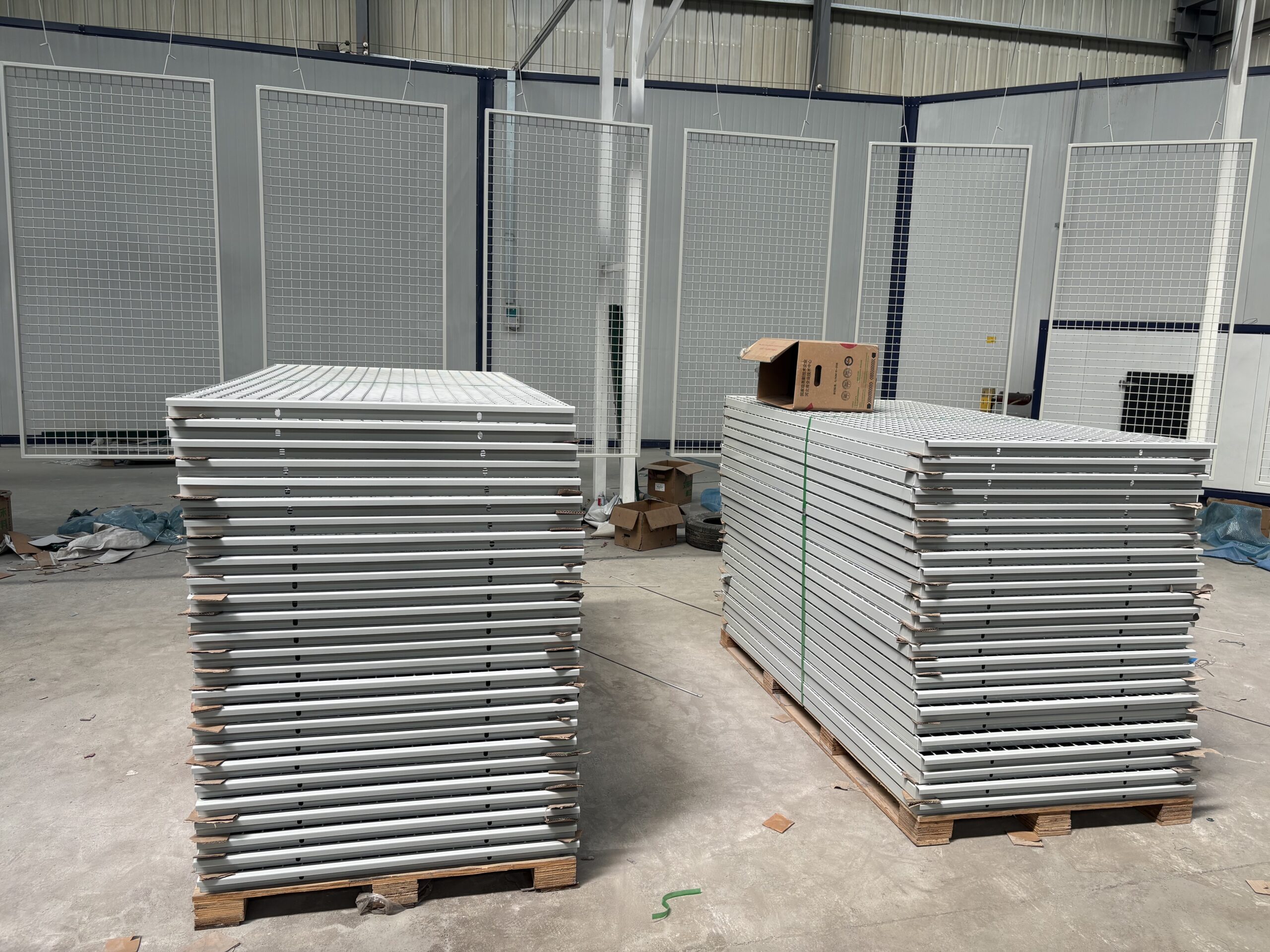
Deep insight: the fiberglass question
NXPadel is the only genuine material outlier among these padel court manufacturers. Its founder Luca Ceresoli developed the concept after recognising the properties of fiberglass in a boat hull, and the company brought its first fiberglass court to market in 2020.
The claimed advantages are specific and testable. Fiberglass mesh flexes and returns flat after impact, where steel mesh gradually deforms and changes the bounce. It does not rust, so it never needs repainting. On a coastal or high-humidity site, that is a serious argument — see our coastal padel court build guide for how corrosion actually behaves near the sea.
The trade-offs are equally real and less discussed. Fiberglass is a younger material in this application with a shorter field-service record than galvanised steel. Repair after impact damage is a different discipline from swapping a steel member. And ComfortGlass, as an acrylic composite, sits outside the EN 12150-1 toughened-glass framework that most European specifiers and insurers write into their documents, which means your specifier needs to accept an alternative evidence route.
Real-world insight: what actually corrodes
In our own production, corrosion protection is applied by component type rather than as a single blanket process. Posts and main tubes are hot-dip galvanised tube purchased to specification; fabricated frames and welded assemblies are shot-blasted in-house and then powder coated on an automatic line.
We publish this split because it is what a technical buyer needs. A supplier who says only “hot-dip galvanised structure” is either describing a duplex system — in which case ask how the zinc survives surface preparation — or is describing the tube and letting you assume it covers the fabrication. Those are very different products, and the difference is invisible on delivery day.
The parts that fail first in practice are almost never the main posts. They are the fixings, the glass clamps and the cut ends of members where coating is thinnest. Ask about those three specifically. Our Guide des matériaux et des caractéristiques techniques des terrains de padel covers each component in depth.
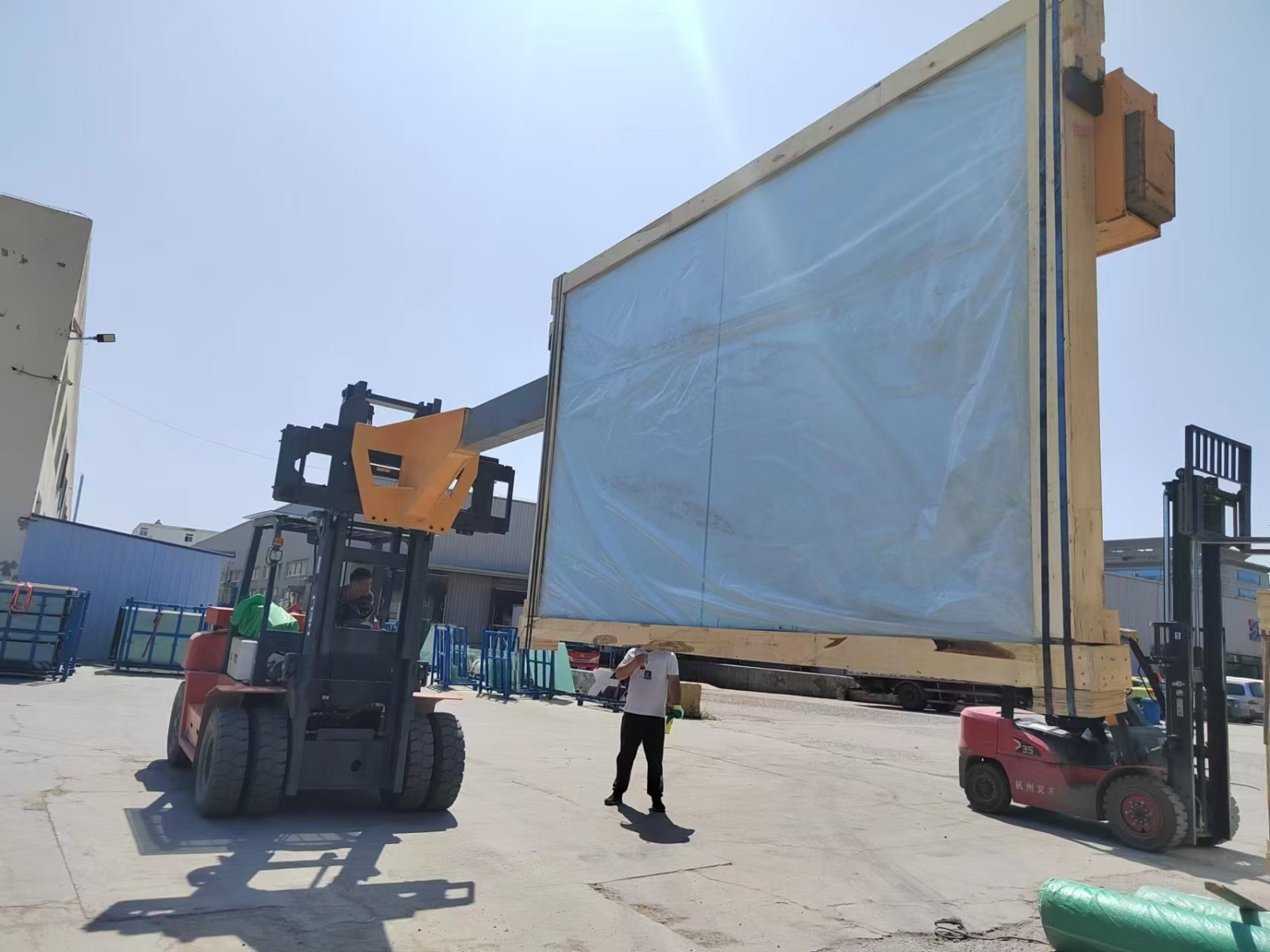
Which Manufacturing Processes Separate Premium Padel Court Manufacturers From Standard Ones?
Four process stages decide whether a court survives fifteen years outdoors: cutting accuracy, weld quality, surface preparation before coating, and coating application. Of the six padel court manufacturers compared, only two publish anything about these stages at all.
| Stage | MejorSet | Padel Tech | Padel Galis | NXPadel | Unixpadel | PanoCourt |
|---|---|---|---|---|---|---|
| Owns its factory | Yes, produces in Spain | Yes, fully integrated | Oui | No — own moulds, subcontracted production | Yes, Adıyaman | Oui |
| Cutting | Not publicly disclosed | Automated machinery shown | Not publicly disclosed | Moulded | Not publicly disclosed | Laser cutting, in-house |
| Soudage | Names weld accuracy as a control point | Mesh welding in-house | Not publicly disclosed | Sans objet | Not publicly disclosed | In-house welding |
| Surface preparation | Names hot-dip galvanising as a control point | Not publicly disclosed | Not publicly disclosed | Sans objet | Not publicly disclosed | In-house shot blasting |
| Coating | Names powder coating as a control point | Not publicly disclosed | 2,000 m² automated paint tunnel, 300+ m line, pieces to 10 m | Sans objet | Not publicly disclosed | Automatic powder coating line, overhead conveyor |
| Coating QC | Not publicly disclosed | Not publicly disclosed | Not publicly disclosed | Sans objet | Not publicly disclosed | 44-point thickness check per batch |
| Management system | Recommends buyers require ISO 9001 | ISO 9001 and ISO 14001 certified | Not publicly disclosed | Not publicly disclosed | Not publicly disclosed | Not currently held |
| Patents | Shock Lock hydraulic compression | Pocketball system, international patent | — | Fiberglass structure, 30+ countries | — | — |
Deep insight
Notice what MejorSet’s own buyer’s guide does. It correctly identifies hot-dip galvanisation, powder coating application, glass tempering and weld accuracy as the four points where quality is won or lost — and then publishes no data about any of them. That is not unusual. It is the norm among padel court manufacturers, and it is why buyers end up choosing on brand.
Padel Galis is the exception among the European suppliers. A 2,000 m² automated paint tunnel with a line over 300 m long, capable of coating pieces up to 10 metres, is a specific, checkable, capital-intensive claim. It tells you something real about consistency.
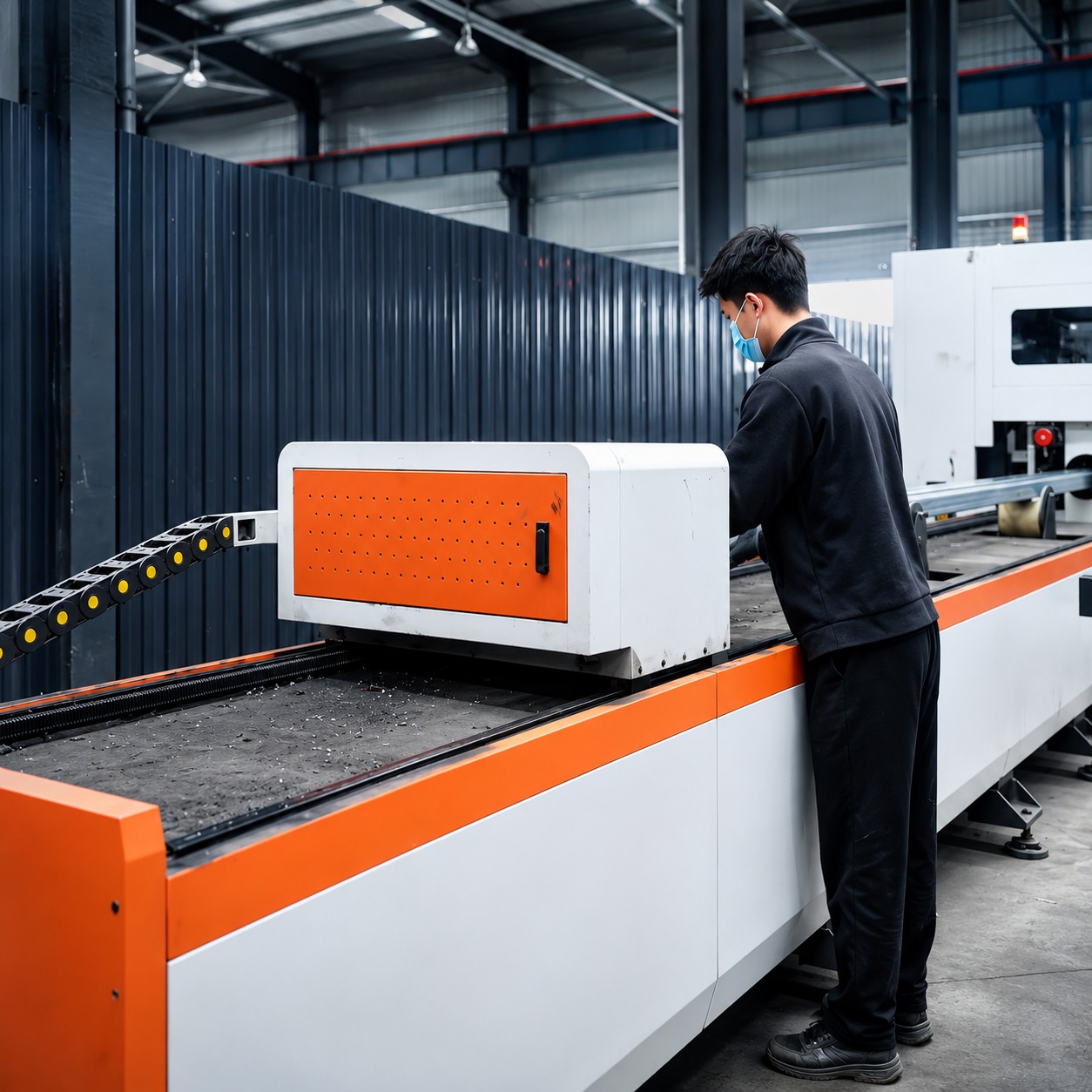
Real-world insight: our own line, stage by stage
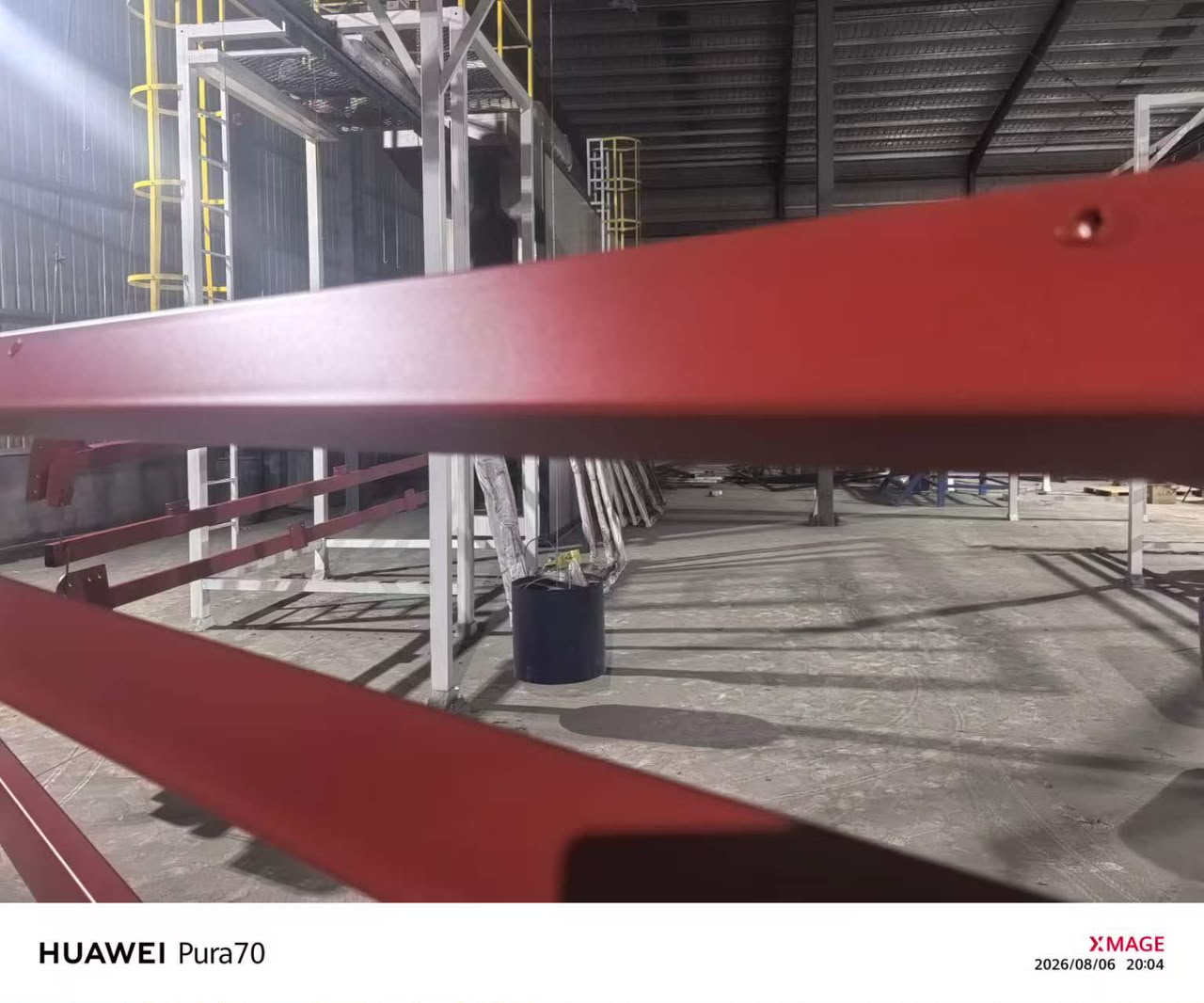
We publish our process as a sequence because individual photographs prove nothing and a sequence proves a lot:
- Laser cutting — profiles cut to drawing, in-house
- Soudage — frames and connection plates welded in-house
- Grenaillage — mechanical surface preparation before coating
- Hanging — components loaded onto the overhead conveyor
- Automatic powder coating — continuous line
- Thickness verification — 44 measurement points per batch
Stage 3 is the one buyers underrate. Powder coating applied over poorly prepared steel looks identical on delivery day and fails in year four. There is no way to inspect it from a photograph of a finished court, which is exactly why you should ask any supplier to show you the preparation stage rather than the finished product.

Why Do Padel Court Prices Differ Between Spain, Italy, Türkiye and China?
Price differences between padel court manufacturers are driven mainly by three structural factors — labour cost, steel purchase price and shipping distance — not by quality gaps. The same specification produced in different countries can differ substantially in ex-works price while the specification itself is unchanged.
| Cost driver | Espagne | Italy | Türkiye | Chine |
|---|---|---|---|---|
| Manufacturing labour cost | High (EU) | High (EU) | Inférieur | Inférieur |
| Reference point | EU average hourly labour cost €34.9; euro area €38.2 (Eurostat, 2025) | Outside euro area | Outside EU | |
| Freight to Europe | Road, lowest | Road, lowest | Short-sea / road | Deep-sea, highest |
| Freight to Middle East / Africa | Modéré | Modéré | Lowest | Modéré |
| Import duty into the EU | Aucun | Aucun | Customs union, none | HS 9506, 2.7% |
Deep insight
Three consequences follow, and all three are actionable.
First, “European quality premium” and “European cost base” are not the same claim. Part of what you pay a Spanish or Italian supplier is genuinely superior engineering and service proximity. Part of it is simply the cost of employing people in the eurozone, as the Eurostat hourly labour cost data shows. Those two components deserve separate scrutiny.
Second, geography beats everything for freight-sensitive projects. A court set weighs roughly 6 tonnes. For a Gulf or North African project, Turkish production has a structural freight advantage that no amount of Chinese cost efficiency offsets. For an Australian or Latin American project, the equation reverses.
Third, the duty line is small. At 2.7% for HS 9506 into the EU, import duty is rarely decisive. VAT recovery timing and destination terminal charges usually move the landed number more than duty does — and neither appears in an FOB quotation. Our landed cost breakdown works through all ten cost layers with a real container example.
Real-world insight: making quotations comparable
The most common costly mistake we see is comparing an EXW quote from one country against a DAP quote from another and concluding one supplier is expensive. Before comparing anything:
- Convert every quotation to the same Incoterm — DAP your site is the most useful for decision-making. Our FOB, CIF, DAP and DDP explainer covers where each scope ends.
- Confirm what is excluded — foundation, drainage, electrical supply and site works are excluded by essentially every manufacturer.
- Ask whether installation labour, travel and accommodation are inside or outside the number.
- Ask for weight and container count, because those determine your freight, not the supplier’s estimate.
Our own installation terms, as a worked reference: four courts require three to four technicians for five site days, with return airfare, accommodation and local transport paid by the buyer and technician time charged at USD 100 per person per day. Whether that is cheaper than hiring a local installer depends entirely on local labour rates in your market — in Western Europe it usually is not.
How Long Do Padel Court Manufacturers Take to Deliver, and What Capacity Do They Have?
Published lead times among padel court manufacturers range from around 25 days ex-works to around 60 days including installation — but only two of the six publish a figure at all, and only two publish production capacity.
| Metric | MejorSet | Padel Tech | Padel Galis | NXPadel | Unixpadel | PanoCourt |
|---|---|---|---|---|---|---|
| Annual capacity | Not publicly disclosed | Not publicly disclosed | Installed capacity for 5,000+ courts/year | Not publicly disclosed | Not publicly disclosed | 600 court sets produced in 2025 |
| Cumulative delivery | 20+ years, 70+ countries | Not publicly disclosed | 10,000+ courts; country count stated variously as 70+ and 75+ | Approx. 800–1,000 units in first two years, 16 countries (trade press, 2023) | Not verifiable from independent sources | 30+ countries |
| Ex-works lead time | Not publicly disclosed | Not publicly disclosed | Not publicly disclosed | Approx. 60 days order-to-installation (2023); a reduction to 15 days was announced, no updated confirmation found | Not publicly disclosed | 25–30 days from confirmed deposit receipt |
| Weight per set | Not publicly disclosed | Not publicly disclosed | Not publicly disclosed | Lighter than steel equivalents | Not publicly disclosed | Approx. 6 tonnes |
| Container loading | Not publicly disclosed | Not publicly disclosed | Not publicly disclosed | Not publicly disclosed | Not publicly disclosed | 2 courts per 20GP, 4 per 40GP |
Deep insight
Capacity matters more than headline lead time for multi-court projects. A four-court club and a twelve-court facility are entirely different production problems, and padel court manufacturers running near capacity will quote a lead time they then cannot hold when a larger order lands ahead of yours.
Ask two questions instead of one: “What is your current lead time?” et “What is your committed slot, in writing, and what happens if you miss it?” The second question separates a schedule from a hope.
Real-world insight
Two clarifications about our own figure, because lead time is where suppliers are most often misleading.
Our 25–30 days runs from confirmed deposit receipt — our finance team confirming funds, not the date you instructed the transfer. International transfers routinely take three to five working days, and that gap has caused more disputes than any other single clause we have seen.
And 25–30 days is ex-works, before ocean transit. Tianjin to Northern Europe is typically 30–40 days port to port, plus destination handling. A realistic total from deposit to site is 70–90 days. Any Chinese supplier quoting a total under 60 days to Europe is quoting the factory stage and letting you assume it covers shipping. Our China factory import guide maps the full timeline.
How Do After-Sales Support and Warranty Compare?
After-sales terms are the least transparent dimension across all padel court manufacturers. None of the six publishes a complete warranty schedule, and only one publishes a spare-parts commitment. This section contains more blank cells than any other, and that is the finding.
| Article | MejorSet | Padel Tech | Padel Galis | NXPadel | Unixpadel | PanoCourt |
|---|---|---|---|---|---|---|
| Garantie structurelle | Not published; describes up to 10 years as an industry benchmark | Not publicly disclosed | Not publicly disclosed | Not publicly disclosed | Not publicly disclosed | 5 ans |
| Turf warranty | Not publicly disclosed | Not publicly disclosed | Not publicly disclosed | Not publicly disclosed | Not publicly disclosed | 3 years |
| Spare parts | States rapid replacement capability | Post-installation support offered | Trained teams, agents and dealers | Not publicly disclosed | Repair and accessories service | Spares pack shipped with order |
| Installation | Certified crews | In-house external installation team | Trained teams and agents | Emphasises easier installation | Installation service offered | Factory technicians; buyer covers travel and accommodation |
| Local stock in Europe | Oui | Oui | Oui | Oui | Oui | Non |
Deep insight
Note the distinction in the MejorSet row, because it recurs across the whole industry: describing what leading padel court manufacturers offer is not the same as committing to it yourself. “Up to 10 years” in a buyer’s guide is a market observation. Get the number into your contract or it does not exist.
Then check what the warranty actually covers. A five-year structural warranty that excludes coating degradation is worth considerably less than a three-year warranty that includes it — because coating is what fails first outdoors, and it is the expensive failure to remedy on an installed court.
Real-world insight: our structural weakness, and what to do about it
We are a Chinese manufacturer with no European, North American or Australian parts depot. If a glass panel cracks in Manchester in November, a Spanish supplier can have a replacement with you inside a week and we cannot.
If you buy from any overseas supplier — us included — put these three things in the contract:
- A spares pack in the original container. Glass panels are the item to over-order; they are the most common breakage and the worst thing to air-freight. Specify quantity in the contract, not in an email.
- A replenishment clause with a stated dispatch deadline and a defined remedy if it is missed.
- A named local installation partner identified before you sign, not after something breaks.
None of that makes remote supply equal to local supply. It makes the gap manageable and priced, which is the honest position.
What Certifications Should You Ask Padel Court Manufacturers For?
Ask for three things every time: the certificate number, the issuing body, and the expiry date. If a supplier cannot give you all three, treat the certification as absent. Equally important — and almost never explained — is the scope: what the document actually covers, and what it explicitly does not.
| Fabricant | Documented conformity evidence | Number | Scope |
|---|---|---|---|
| MejorSet | Florida Building Code 7th Ed. 2020, ASTM E1300, ASCE 7-16, Eurocode (per third-party industry profile) | Not published | Structural / glazing standards |
| Padel Tech | ISO 9001, ISO 14001, CE marking; states compliance with the UNE padel court standard | Not published | Management systems and product |
| Padel Galis | Not publicly disclosed | — | — |
| NXPadel | Fiberglass structure patents in 30+ countries | Patent numbers not published | Structural concept |
| Unixpadel | Structural analysis report by Istanbul Technical University per model; turf FIP-approved via KIWA, Netherlands | Report numbers not published | Structure and turf |
| PanoCourt | ECM attestation, technical construction file reviewed against EN 1090-1:2009+A1:2011 / Regulation (EU) 2024/3110 | 0P260724.TPSTN84, issued 24 July 2026, expires 23 July 2031 | 12 models; voluntary, non-notified, document review only |
| PanoCourt | UDEM technical inspection attestation of conformity | M.2026.206.C144471, expires 15 July 2031 | Steel wire and welded mesh only — EN 10218-1:2012, EN 10223-4:2012 |
| PanoCourt | Steel tube mill test report, CNAS / ILAC-MRA accredited laboratory | TST2024S00056, issued January 2024 | Q235B DN65 galvanised tube — dimensions, mechanicals, zinc coating |
Deep insight: what our own attestation does and does not mean
We publish the limitations of our own document because none of the other padel court manufacturers in this comparison does, and because a buyer who discovers those limitations later will rightly stop trusting everything else we said.
Our attestation was issued by Ente Certificazione Macchine in Italy following a review of our technical construction file against EN 1090-1. The document itself states four things clearly:
- it was issued under a voluntary, non-notified procedure
- the product does not fall within ECM’s notified-body scope
- it is intended for products destined for third countries outside the EU market
- the verification concerned the technical documentation only — no verification was carried out on the product itself — and it cannot replace an EC Declaration of Conformity
So it is not CE certification, and any supplier presenting a document like this as “CE certified” is misrepresenting it. What it is: independent confirmation that a complete technical file exists for twelve named models and has been reviewed against the right standard by a named Italian body, with a QR code on the certificate for online verification.
The same precision applies to our UDEM attestation. It covers steel wire and welded mesh under EN 10218-1 and EN 10223-4. It is a mesh document, not a whole-court document. Anyone presenting it as court-wide certification is overreaching. For how conformity evidence is assessed in a strict jurisdiction, see our Australian certification guide.
Real-world insight: what a mill test report is, and is not
Our steel tube data comes from a mill test report commissioned by our tube supplier, Tianjin Youfa Steel Pipe Group, and issued by Tianjin Taisite Testing — a CNAS-accredited laboratory operating under the ILAC Mutual Recognition Arrangement, which is what makes the report usable as evidence outside China.
It is a supplier report, not our own batch testing, and it dates from January 2024. Both facts matter and we state them rather than let the report imply continuous in-house verification.
What it establishes, against GB/T 3091-2015: tensile strength 476 MPa against a 370 MPa requirement; yield 387 MPa against 235; elongation 25% against 15; and zinc coating weight of 343 and 344 g/m² against a ≥300 g/m² requirement, with uniformity and adhesion both passing.
One honest note on units. A zinc coating weight of roughly 344 g/m² converts to approximately 48 μm. Some padel court manufacturers — and some of our own older material — quote round micron figures without a supporting report. If you are specifying to EN ISO 1461, which sets thickness rather than weight requirements by section thickness, ask specifically for testing against that standard. We do not currently hold an EN ISO 1461 test report and we are not going to imply otherwise. Padel Tech’s ISO 9001 certification is, by the same logic, a management-system credential rather than a product test.
How Do Structural and Wind-Load Standards Differ by Region?
There is no single global structural standard for padel courts. Wind and snow loading are governed by the destination country’s building code, which means the same model must be assessed differently in Valencia, Melbourne and Miami — and the assessment is normally the responsibility of a locally licensed engineer, not the manufacturer.
| Region | Governing framework | What padel court manufacturers supply |
|---|---|---|
| European Union / UK | Eurocode 1 and 3; EN 1090 execution classes | Technical file, structural calculations, material certificates |
| États-Unis | ASCE 7; state and county building codes | Engineering documentation for permit submission |
| Australia | AS/NZS 1170.2 wind regions; AS 4312 corrosion categories; NCC | Product conformity evidence; local engineer certifies the site-specific design |
| Middle East / Africa | Varies; conformity certificates often required at import | Certificate of conformity per destination requirements |
Deep insight
This is where manufacturer and buyer responsibilities are most often confused, and where projects most often stall. A factory can supply a court engineered to withstand a stated wind pressure. It cannot certify that the court, on your slab, in your wind region, with your exposure category, complies with your local code. That certification is site-specific and belongs to a licensed engineer in your jurisdiction.
The practical consequence: budget for local engineering from the start, and choose from padel court manufacturers who can supply calculations and material evidence in a format your engineer can actually use. A supplier that answers a request for structural calculations with a marketing brochure is telling you something important. Our outdoor foundation requirements guide et construction planning guide set out what the engineer will need from your side.
Real-world insight
Our courts are produced to enterprise standard Q/PANO 01S-2019, which sets a wind resistance basis of 0.68 kN/m² derived from the GB 50009-2012 envelope formula. The verification method is specified rather than asserted: six glass ear plates loaded at 680 N each for one minute, with pass criteria of no glass tilt or damage and no visible permanent frame deformation.
That is a Chinese national-standard derivation. For an Australian coastal site in wind region C, or a Florida project under ASCE 7, your engineer will want the calculation re-run against the local code, and we supply the structural inputs for that. Our padel court wind load guide compares the standards side by side.
Which Padel Court Manufacturer Is Right for Your Project?
The right choice among padel court manufacturers depends on four variables: where the courts are going, what the business case depends on, how many courts you need, and who carries the risk if something fails. Below is a scenario match rather than a ranking.
| Your project | Strongest fit | Why | Where it costs you |
|---|---|---|---|
| Tournament venue or professional academy | MejorSet, Padel Galis | Official circuit supply status, documented pro-level installations | Highest cost base; brand premium included |
| High-end club or bespoke architectural project | Padel Tech, MejorSet | Certified management systems, custom design capability | Limited published technical data to compare |
| Coastal, tropical or high-humidity site | NXPadel | Fiberglass does not corrode; mesh keeps its geometry | Younger material record; ComfortGlass sits outside EN 12150-1 |
| Middle East, North Africa and neighbours | Unixpadel | Freight advantage; broad range including covers and portable systems | Limited independently verifiable production data |
| Multi-court rollout, 8+ courts | Padel Galis, PanoCourt | Published capacity at volume | Galis: EU cost base. PanoCourt: no local spares |
| Cost-driven investment, buyer manages logistics | PanoCourt | Factory-direct pricing, published material and process evidence | No circuit status, no local depot, you handle customs |
| First court, no import experience | A local distributor in your market | Single point of accountability; local warranty | Highest total cost per court |
If you have already narrowed the decision to a court type rather than a supplier, our panoramic vs classic vs full panoramic comparison covers the structural differences, and our factory-direct manufacturer page sets out our own model range and specifications.
How Do You Audit Padel Court Manufacturers Before You Order?
Fifteen questions separate suppliers who have the evidence from suppliers who have the brochure. Send this list to every manufacturer on your shortlist, in writing, and compare the replies side by side.
Ownership and structure
- Do you own the factory producing the structure? If not, who does?
- Which components are made in-house and which are bought in?
- If a structural defect appears in year three, who pays — you or the factory?
Matériaux
- What steel grade, and can you provide a mill test report with a laboratory number?
- What is the zinc coating weight or thickness, and tested against which standard?
- What glass thickness, and to which standard — with a test report?
- What is the coating specification, and how is thickness verified in production?
Process
- How is steel prepared before coating?
- Is coating applied on an automatic line or manually?
- What is inspected before shipment, and can I see the inspection record format?
Documentation
- For each certificate: number, issuing body, expiry date, and precise scope?
- Is any conformity document voluntary or non-notified? Which ones?
- Can you supply structural calculations in a format my local engineer can use?
Commercial
- What is your committed production slot in writing, and the remedy if missed?
- What spare parts ship with the order, and what is the guaranteed dispatch time for replacements?
Capable padel court manufacturers answer all fifteen without hesitation. The pattern of which questions get vague answers tells you more than any brochure. Our supplier RFQ guide turns these into a structured request document.
Frequently Asked Questions About Padel Court Manufacturers
Who is the biggest padel court manufacturer in the world?
No independently audited ranking exists. By published figures, Padel Galis states installed capacity for more than 5,000 courts per year and more than 10,000 courts produced. Most padel court manufacturers do not publish capacity or cumulative volume, so “biggest” claims in this industry are generally self-reported and unverifiable.
Are Chinese padel courts as good as Spanish ones?
Quality depends on specification and process control, not country. The material and process gap between a well-documented Chinese factory and a premium Spanish supplier is smaller than most buyers assume. The real gaps are professional-circuit credentials, local spare-parts availability and customs responsibility. Compare documented specifications rather than country of origin.
Should I buy direct from a manufacturer or through a distributor?
Buy direct if you have import experience, a local installer and appetite for managing customs. Buy through a distributor if you want a single point of accountability, local warranty service and someone who knows your building control process. The distributor’s margin buys real services — decide whether you need them.
What is the difference between a panoramic and a full panoramic court?
A panoramic court removes the corner pillars from the glazed area on the sides; a full panoramic removes the vertical posts across the entire glass envelope, giving unobstructed 360-degree visibility. Full panoramic requires heavier structural sections and costs more.
How many padel courts fit in a shipping container?
Roughly two complete court sets in a 20GP and four in a 40HQ, at approximately 6 tonnes per set. Container count drives your freight cost, so request weight and loading plan with every quotation rather than accepting an estimate.
How long does it take to import a padel court from China?
Plan 70 to 90 days from deposit to site: 25 to 30 days production, 30 to 40 days ocean transit to Northern Europe, plus destination handling and inland delivery. Any total under 60 days to Europe is quoting the factory stage only.
Is a fiberglass padel court better than a steel one?
Neither is universally better. Fiberglass does not corrode and its mesh keeps its geometry after impact, a genuine advantage in coastal and humid environments. Steel has a longer field-service record, a mature repair ecosystem, and toughened glass that fits existing European standards. Match the material to the site.
What certifications do padel court manufacturers actually need?
There is no mandatory global certification. Useful evidence includes ISO 9001 for quality management, EN 1090-1 for structural steelwork, EN 12150-1 for toughened glass, and FIP dimensional compliance for sanctioned play. Always request the certificate number, issuing body, expiry date and precise scope.
Can I buy just the structure and source turf locally?
Most padel court manufacturers will supply structure-only, and it can make sense where local turf supply is strong or freight weight matters. Confirm the turf specification is compatible with the court’s drainage and anchoring design, and confirm what the structural warranty covers when a third-party surface is installed.
What is the minimum order quantity for padel courts?
Most suppliers accept single-court orders, though freight economics improve sharply at two courts (one 20GP) and four courts (one 40HQ). For single-court private projects, a local distributor is often cheaper in total than importing directly.
Conclusion: How to Choose Between Padel Court Manufacturers
The hardest part of choosing between padel court manufacturers is not that the options are complicated. It is that most of the technical information you need is not published — by anyone, including several of the most respected names in the industry.
That leaves you two options. Choose on brand, and pay for the certainty that a professional-circuit credential provides. Or ask the fifteen questions above, insist on certificate numbers and test reports, and compare what actually comes back.
Either is a legitimate strategy. What does not work is comparing marketing language across six websites and assuming the differences you can see are the differences that matter.
We have published our own specifications, test report numbers, process photographs and the explicit limitations of our conformity documents — including the parts that do not flatter us. Hold every supplier on your shortlist to the same standard, and the shortlist will sort itself.
If you would like our full technical file — mill test report, conformity attestations, structural calculations and the complete specification sheet — for your own comparison, request it below. We will send the same documents referenced throughout this guide.