Il settore globale della produzione di campi da padel non è più un segmento di nicchia dominato da una manciata di marchi spagnoli. Nel 2026, gli acquirenti che valuteranno produttori di campi da padel si trovano ad affrontare un mercato davvero globale: le fabbriche cinesi forniscono sistemi panoramici certificati FIP a un costo franco a destinazione inferiore del 35–40% rispetto ai concorrenti europei, mentre i marchi europei storici fanno leva sul prestigio dei tornei e sulla notorietà del marchio. La scelta tra l’una e l’altra opzione non è più scontata e comporta conseguenze finanziarie a sei cifre.
Questa guida offre un confronto imparziale, basato sulle specifiche tecniche, dei principali prodotti al mondo fornitori di campi da padel—classificati in base alla provenienza produttiva e valutati in base ai criteri che contano davvero per il ROI a lungo termine. Individueremo inoltre i punti in cui il consenso della SERP si sbaglia e ciò che gli acquirenti nei mercati emergenti del padel tendono sistematicamente a trascurare.
Il mercato globale del padel: perché la scelta del produttore di campi da padel non è mai stata così importante
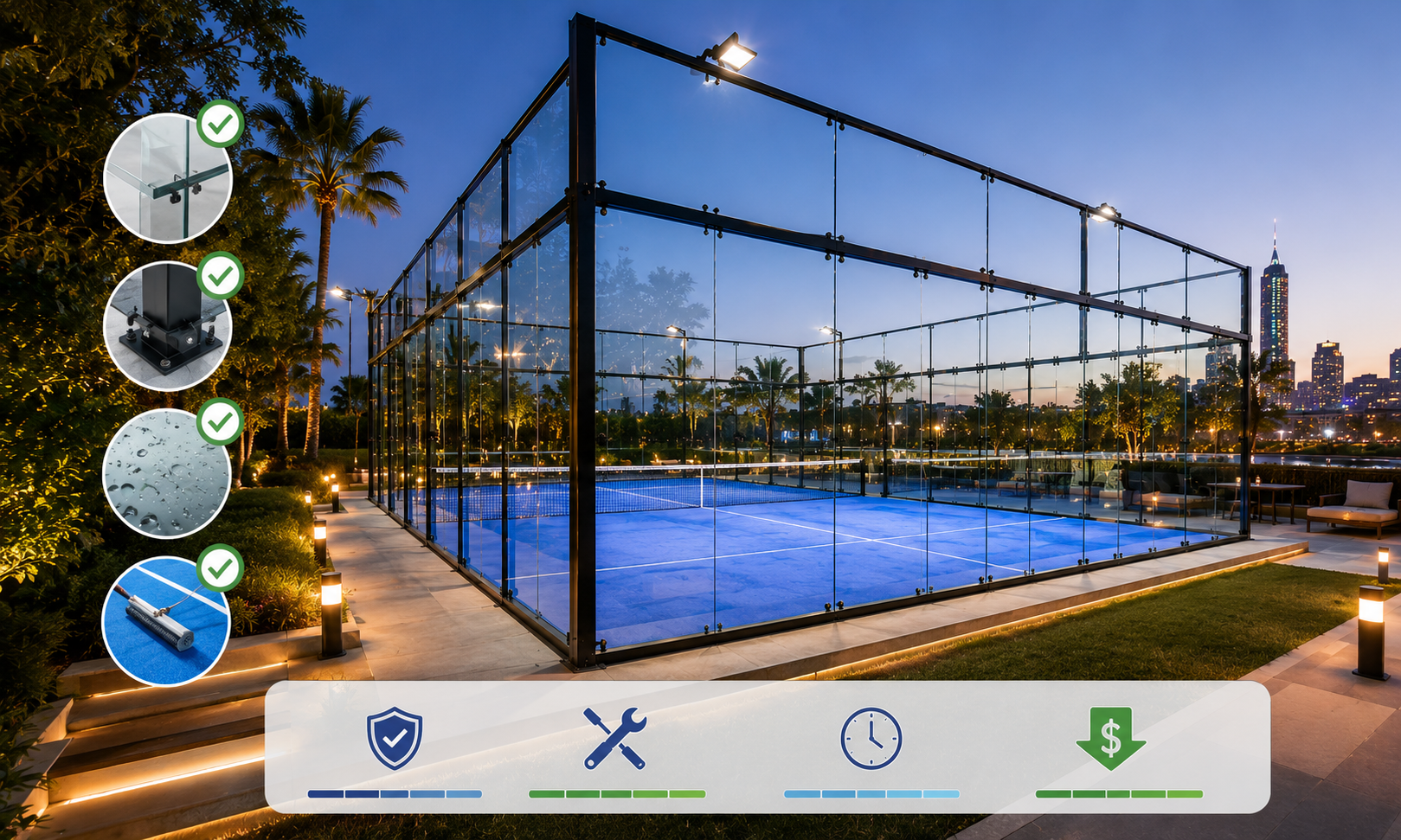
I dati illustrano chiaramente la posta in gioco. Secondo il Rapporto globale sul padel 2025 di Playtomic e PwC, il mercato globale dei campi da padel è stato valutato a circa $163 milioni nel 2023 e si prevede che raggiunga $592 milioni entro il 2031, con un CAGR del 17,5%. Il Internazionale Federazione Padel (FIP) Si stima che ci siano oltre 25 milioni di giocatori di padel in più di 90 paesi, con le aree in più rapida crescita in America Latina, negli Stati Uniti e in Medio Oriente.
Questa crescita ha determinato un problema di proliferazione dei produttori. Il numero di aziende che si posizionano come produttori di campi da padel è triplicato dal 2021. Molte sono società commerciali prive di impianti produttivi, altre sono fabbriche in regola ma senza esperienza nell’esportazione internazionale. Il prezzo da pagare per una scelta sbagliata del fornitore non è solo finanziario, ma anche operativo: certificazioni FIP non superate, cedimenti strutturali in caso di eventi meteorologici e assistenza post-vendita che svanisce una volta effettuato il pagamento.
I 3 principali produttori di campi da padel: come è effettivamente strutturato il mercato globale
Livello 1: Marchi europei di livello agonistico
Questa categoria comprende i produttori che vantano lo status documentato di fornitore ufficiale FIP e Premier Padel: MejorSet (Spagna), AFP (Spagna), Portico Sport (Spagna) e PADEL10 (Spagna). Questi marchi definiscono collettivamente lo standard ingegneristico a cui il settore fa riferimento.
Punti di forza:
- Certificazioni ufficiali come fornitore ufficiale dei tornei Premier Padel e FIP
- Dati relativi alle installazioni raccolti nell'arco di 15–25 anni in diverse condizioni climatiche
- Leadership nell'innovazione (il sistema Shock Lock di MejorSet; lo stabilimento produttivo di Portico Sport, che si estende su una superficie di 110.000 piedi quadrati)
- Certificazione CE europea e profonda conoscenza delle normative
Limitazioni significative per gli acquirenti non europei:
- Prezzi FOB 40–65% superiori a quelli dei prodotti equivalenti fabbricati in Cina
- Tempi di transito di 25–35 giorni dai porti spagnoli verso destinazioni in America Latina o in Asia
- Assistenza post-vendita che richiede il coordinamento con il fuso orario europeo
- Tempi di consegna per la personalizzazione di 12–16 settimane per specifiche non standard
- Condizioni minime di ordine che penalizzano gli acquirenti di un solo lotto
Lo stesso marketing di MejorSet ammette: “Non esiste una risposta valida per tutti. La scelta del fornitore ideale di campi da padel dipende dalla vostra ubicazione, dal clima, dal budget, dagli obiettivi estetici e dal modello operativo a lungo termine”. È vero, e per gli acquirenti al di fuori dell’Europa occidentale e del segmento premium statunitense, ciò significa spesso che la risposta non è un produttore spagnolo.
Livello 2: Produttori cinesi su scala industriale certificati FIP
La Cina produttore di campi da padel L'ecosistema ha registrato una notevole maturazione dal 2020. Le principali fabbriche cinesi (come Pano Court) utilizzano ora sistemi di taglio al plasma CNC, linee automatizzate per la tempra del vetro, impianti di zincatura a caldo e dispongono di team dedicati di ricerca e sviluppo che realizzano sistemi per campi da gioco conformi alle norme FIP destinati ai mercati globali. Fabbriche come PanoCourt, Legend Sports e Super Power Sports hanno esportato in 60–100+ paesi distribuiti su 6 continenti.
Vantaggi concreti per gli acquirenti internazionali:
- Prezzo FOB per prodotti conformi alla normativa FIP campo da padel panoramico: $16.000–$24.000 (rispetto ai 28.000–45.000 € dei produttori spagnoli)
- Tempi di produzione: 6–8 settimane (paragonabili a quelli dei fornitori europei)
- Spedizioni in America Latina: 18–22 giorni via Pacifico (tempi più brevi rispetto ai 28–35 giorni dall’Europa)
- Integrazione verticale = maggiore trasparenza dei costi e controllo della qualità rispetto agli assemblatori europei
- Personalizzazione tecnica per dimensioni non standard, requisiti climatici e zone sismiche
Aspetti legittimi da affrontare nell’ambito della due diligence:
- La differenza di qualità tra i produttori originali e le società commerciali è enorme: l’ispezione in fabbrica è imprescindibile
- La documentazione relativa alla certificazione FIP richiede una verifica; le dichiarazioni di “conformità FIP” non costituiscono un’autocertificazione
- L'infrastruttura di assistenza post-vendita varia notevolmente a seconda del livello
Livello 3: Assemblatori regionali e società commerciali
Questo livello — assemblatori italiani, produttori argentini, fornitori regionali messicani e società commerciali cinesi — rappresenta il segmento a più alto rischio. Queste entità in genere si riforniscono di componenti da produttori di primo o secondo livello, li assemblano o li rimarchiano e li vendono con un controllo di qualità minimo e una garanzia limitata. I loro prezzi possono sembrare competitivi, ma raramente includono impegni post-vendita completi. Gli acquirenti dovrebbero applicare rigorosi requisiti di verifica in fabbrica a qualsiasi fornitore di questa categoria.
Confronto delle specifiche chiave tra i diversi produttori
| Dimensione di valutazione | I migliori marchi spagnoli | Produttori cinesi di secondo livello | Livello regionale/commerciale |
|---|---|---|---|
| Documentazione relativa alla conformità alle norme FIP | Certificato ufficialmente | Certificato (verificare presso il produttore) | Spesso autoproclamati |
| Caratteristiche del vetro: vetro temperato ESG da 12 mm | Standard | Standard (verifica del voto) | Variabile (di solito 8–10 mm) |
| Acciaio: zincato a caldo (85 µm+) | Standard | Standard (verificare i micron) | Spesso zincato a spruzzo (30–50 µm) |
| Prezzo FOB: Corte panoramica | da 28.000 € a 45.000 € | da $16.000 a $24.000 | $12.000–$18.000 (specifiche presunte) |
| Tempi di produzione | 8–14 settimane | 6–8 settimane | 4–6 settimane (spesso indicate in modo errato) |
| Garanzia strutturale | 5–10 anni | 5 anni (aziende leader del settore) | 1–2 anni (in genere) |
| Tempi di consegna in America Latina | 28–35 giorni | 18–22 giorni | Variabile |
| Accesso all'audit di fabbrica | Sì | Sì (aziende in regola) | Spesso limitato |
Cosa non va nei risultati delle SERP sui “migliori” produttori di campi da padel
L'attuale top 10 di Google per la ricerca “migliori produttori di campi da padel” è dominata da due archetipi di contenuti: contenuti promozionali redatti dai produttori stessi (MejorSet si posiziona al #1) e siti aggregatori privi di una reale capacità di verifica tecnica. Nessuno dei due offre un servizio adeguato agli acquirenti. Ecco cosa sfugge al consenso generale:
Errore n. 1: confondere il prestigio del torneo con il valore per chi non partecipa al torneo
Lo status di fornitore ufficiale Premier Padel è davvero significativo per lo 0,1% dei campi che ospiteranno competizioni professionali riconosciute. Per il restante 99,9% — campi di club, campi di resort, impianti comunali — lo standard di riferimento è la conformità alle specifiche dimensionali e ai materiali stabilite dalla FIP, e numerosi produttori in diverse aree geografiche lo soddisfano. Il prestigio di cui godono i marchi fornitori dei tornei non è accompagnato da una maggiore durata o giocabilità per gli utilizzi ricreativi e a livello di club.
Errore n. 2: ignorare il costo totale a destinazione a favore del prezzo FOB
A fornitore di campi da padel L'offerta di un prezzo FOB allettante può tradursi in un costo totale a destinazione significativamente diverso una volta considerati il nolo, l'assicurazione, i dazi all'importazione, le commissioni dello spedizioniere doganale, il trasporto interno e l'installazione. Per un acquirente latinoamericano, il differenziale di costo complessivo tra un produttore cinese e un suo equivalente europeo spesso si riduce da 40% a 25–30%: una differenza ancora sostanziale, ma diversa dal confronto riportato nei titoli.
Errore n. 3: considerare i “produttori cinesi” come una categoria di rischio omogenea
La differenza tra i principali indicatori della Cina produttori di campi da padel e le sue società commerciali di livello più basso è di gran lunga superiore alla varianza riscontrabile tra i marchi spagnoli. Un produttore cinese sottoposto a audit in fabbrica, in possesso della certificazione ISO 9001, con conformità FIP verificabile e referenze documentate relative a installazioni in America Latina, rappresenta un rischio di approvvigionamento inferiore rispetto a un assemblatore europeo non sottoposto ad audit che si affida a componenti esternalizzati. La posizione geografica non è un indicatore della qualità.
I migliori produttori di campi da padel per segmento di mercato
La scelta ideale per i tornei e le strutture di padel di alto livello
Per gli acquirenti il cui utilizzo principale prevede l’organizzazione di eventi omologati dalla FIP o dalla Premier Padel, MejorSet e AFP rappresentano le scelte a minor rischio. Le loro credenziali in ambito agonistico sono autentiche e la loro tecnologia è collaudata ai massimi livelli competitivi. Budget: da $50.000 a $80.000 per campo, compresa l’installazione completa nei mercati occidentali.
La soluzione ideale per gli investitori in club commerciali che desiderano ottimizzare il ROI
Per i costruttori di club che realizzano impianti da 4 a 12 campi destinati al gioco ricreativo e di livello intermedio — che rappresentano la stragrande maggioranza del mercato globale del padel — un produttore cinese sottoposto a controlli in fabbrica produttore di campi da padel conformi alle norme FIP campi da padel panoramici offre un profilo di ROI superiore. Il minor costo di capitale per campo da gioco migliora direttamente il periodo di recupero dell’investimento e il tasso di rendimento interno (IRR). Budget: da $32.000 a $45.000 per campo da gioco, compreso il trasporto e l’installazione in America Latina.
Leggi la nostra analisi dettagliata del campo da padel panoramico Caso ROI: Campo da padel panoramico: un’analisi critica di ciò di cui i proprietari dei club avranno effettivamente bisogno nel 2026.
La soluzione ideale per progetti comunali e comunitari con un budget limitato
Per gli enti sportivi comunali e le strutture comunitarie in cui il budget destinato ai lavori di costruzione rappresenta il vincolo principale, un campo da padel classico Proveniente da uno stabilimento cinese certificato, offre un’infrastruttura conforme agli standard FIP al minor costo di investimento. Budget: da $22.000 a $32.000 per campo, CIF porti dell’America Latina. La configurazione classica rinuncia al vantaggio offerto agli spettatori dal vetro panoramico, ma garantisce una giocabilità equivalente.
Approfondimento tecnico: cosa distingue davvero i migliori campi da padel da quelli mediocri
Ingegneria delle strutture in acciaio
L'integrità strutturale di un campo da padel Si parte dalle specifiche relative all’acciaio. Lo standard minimo FIP prevede l’uso di acciaio zincato a caldo (EN ISO 1461) con uno spessore minimo del rivestimento di zinco pari a 85 micron. Questo è importante perché:
- La zincatura a caldo crea un legame metallurgico con l’acciaio, non è solo un rivestimento superficiale: non può essere raschiata via
- Con uno spessore dello strato di zinco pari a 85 µm, la durata prevista della protezione anticorrosiva è di 15–25 anni in ambienti atmosferici di classe C3
- L’acciaio zincato a spruzzo o verniciato (comunemente utilizzato dai fornitori di fascia bassa) garantisce una durata di 5–8 anni prima che si manifesti una corrosione significativa
Per gli impianti costieri — Guayaquil, Miami, zona costiera di Dubai — specificare la categoria di corrosione C4/C5, che richiede un rivestimento di zinco di almeno 100 µm più una finitura in polvere per uso marino.
Specifiche del pannello in vetro
La FIP prescrive l'uso di vetro di sicurezza temperato (ESG) da 12 mm per campo da padel panoramico pannelli posteriori e laterali. I punti chiave delle specifiche sono:
- Spessore: Minimo 12 mm — talvolta i fornitori, per ridurre i costi, lo sostituiscono con 10 mm
- Norma di tempra: EN 12150-1 (norma europea) o equivalente: garantisce una resistenza alla rottura da 3 a 5 volte superiore rispetto al vetro ricotto
- Modello di rottura: Il vetro temperato certificato FIP, in caso di rottura, si frantuma in piccoli frammenti che causano pochi danni, anziché in grandi schegge
- Coerenza del rimbalzo: Una tolleranza di planarità del vetro pari a ±2 mm per metro influisce sulla prevedibilità del rimbalzo della pallina a livelli agonistici
Specifiche del manto in erba sintetica
Approvato dalla FIP campo da padel Il tappeto erboso richiede:
- Altezza del pelo: 10–12 mm di fibra riempita di sabbia (lunghezza totale del pelo: 60–75 mm)
- Tipo di fibra: polipropilene monofilamento o fibrillato con trattamento stabilizzante ai raggi UV
- Riempimento: sabbia silicea con uno spessore di 8–10 mm, che garantisce un rimbalzo uniforme della palla e stabilità ai piedi dei giocatori
- Stabilità ai raggi UV: almeno 2.000 ore di invecchiamento accelerato secondo la norma ISO 4892-3 (fondamentale per installazioni in zone equatoriali e ad alta quota)
PanoCourt: Produzione diretta di campi da padel per acquirenti di tutto il mondo
PanoCourt è un'azienda con sede in Cina produttore di campi da padel con certificazione FIP campi da padel panoramici e campi da padel classici per gli acquirenti di tutta l'America Latina, del Nord America, dell'Europa e del Medio Oriente.
Ciò che ci distingue nel settore del cinese fornitori di campi da padel si basa su tre pilastri:
- Produzione certificata: Stabilimento produttivo certificato ISO 9001:2015, aperto a verifiche da parte di organismi terzi (SGS, Bureau Veritas) su appuntamento
- Trasparenza totale delle specifiche: Rapporti di prova dei materiali, documentazione relativa alla conformità alle norme FIP e disegni tecnici forniti prima della conferma dell'ordine
- Progettazione adeguata alle esigenze del mercato: Soluzioni strutturali specifiche per le zone sismiche (NEC dell’Ecuador, IBC degli Stati Uniti), carichi eolici elevati, umidità tropicale e corrosione costiera
Per un'analisi completa del confronto tra i produttori a livello mondiale, consultare: I 3 principali produttori di campi da padel nel 2026: guida completa agli investimenti.
Richiedi un preventivo diretto dal produttore a PanoCourt
Ricevi entro 48 ore un preventivo su misura per il tuo progetto, comprensivo di disegni tecnici, specifiche dei materiali, documentazione di conformità FIP e prezzi CIF per il porto di destinazione.
→ Richiedi un preventivo personalizzato per il tuo campo da padel
Domande frequenti: I migliori produttori di campi da padel del 2026
Chi sono i migliori produttori di campi da padel al mondo?
La risposta dipende dal tipo di progetto, dall’ubicazione e dal budget. Per le installazioni da torneo che richiedono la certificazione Premier Padel o il riconoscimento ufficiale della FIP, MejorSet e AFP (Spagna) sono leader del settore. Per i progetti di club commerciali volti a ottimizzare il ROI — che rappresentano la maggior parte del mercato globale — i prodotti cinesi sottoposti a controlli in fabbrica produttori di campi da padel Aziende come PanoCourt forniscono sistemi conformi alle norme FIP a un costo totale di acquisto notevolmente inferiore. La definizione di “migliore” dipende dal contesto; non esiste un unico produttore che sia ottimale per tutti i profili di acquirente.
Un produttore cinese di campi da padel è all’altezza di uno spagnolo?
Per quanto riguarda le specifiche che contano per il 99% degli acquirenti — integrità strutturale, conformità alle norme FIP, qualità del vetro, prestazioni del manto erboso — il principale produttore cinese produttori di campi da padel realizzano sistemi che eguagliano o superano le prestazioni dei marchi europei di fascia media. Il divario tra le migliori fabbriche cinesi e i marchi spagnoli fornitori dei tornei risiede principalmente nel prestigio del marchio e nell’associazione ufficiale con i tornei, non nella scienza dei materiali o nell’ingegneria strutturale. Un produttore cinese sottoposto a audit di fabbrica, in possesso della certificazione ISO 9001 e della conformità documentata alle norme FIP, rappresenta un rischio minore rispetto a un assemblatore europeo non sottoposto ad audit.
Quali certificazioni dovrei richiedere a un fornitore di campi da padel?
Certificazioni minime richieste per un’azienda credibile fornitore di campi da padel: Certificazione di gestione della qualità ISO 9001:2015; documentazione di conformità dei campi da gioco FIP (specifiche dimensionali, certificazione dei materiali); certificazione EN 12150-1 per i pannelli in vetro temperato; certificazione EN ISO 1461 per l’acciaio zincato a caldo; rapporti di prova dei materiali con tracciabilità dei lotti. Per gli impianti da torneo, aggiungere l’approvazione ufficiale della FIP o della Premier Padel. Per mercati specifici, richiedere le certificazioni di ingegneria strutturale pertinenti a livello locale (NEC per l’Ecuador, IBC per gli Stati Uniti, ecc.).
Come posso verificare che un produttore di campi da padel sia affidabile?
Lista di controllo per la verifica: (1) Richiedere la documentazione di registrazione dello stabilimento e verificarne la corrispondenza con il registro delle imprese cinese SAMR o equivalente; (2) Commissionare un audit dello stabilimento da parte di un ente terzo (SGS, Bureau Veritas, Intertek — costo approssimativo: $800–$1.500); (3) Richiedere referenze verificate nella regione di destinazione e contattarle telefonicamente; (4) Verificare che l’indirizzo dello stabilimento, visualizzato nella vista satellitare di Google Maps, corrisponda a un impianto di produzione e non a un ufficio; (5) Richiedere che nel contratto sia prevista l’ispezione pre-spedizione. Un’azienda legittima produttore di campi da padel soddisferà tutte e cinque le richieste senza alcuna difficoltà.
Qual è la differenza tra un campo da padel panoramico e un campo da padel classico?
A campo da padel panoramico utilizza pannelli in vetro temperato da 12 mm a tutta altezza su tutti e quattro i lati, garantendo agli spettatori una visibilità a 360° e massimizzando l'illuminazione naturale. A campo da padel classico prevede pareti posteriori solide (in cemento o mattoni) con pannelli laterali in rete metallica: costo inferiore, minore impatto visivo. Per i club commerciali, dove i canoni di affitto e il marketing sono prioritari, la versione panoramica è lo standard. Per i progetti con budget limitato o quelli comunali, la versione classica offre una giocabilità equivalente a un costo inferiore. Consulta il nostro confronto completo: Come scegliere un campo da padel: guida 2026 per investitori e proprietari di club.
Qual è il costo ottimale di un campo da padel per un progetto di club commerciale?
Per un club commerciale campo da padel Per questo progetto, il costo totale per campo (struttura + vetro + erba sintetica + illuminazione + installazione, escluse la preparazione del sito e le fondamenta) varia da $32.000 a $45.000 CIF nei porti dell’America Latina per i sistemi di produzione cinese, e da $55.000–$80.000 per gli equivalenti di produzione europea. I progetti con più campi (6 o più) beneficiano in genere di sconti sul volume compresi tra l’8 e il 12% da parte dei principali produttori. Consulta la nostra analisi dei costi a livello globale: Quanto costa la costruzione di una corte Padel?
È possibile ottenere assistenza per la realizzazione di campi da padel nei mercati al di fuori dell'Europa?
Aziende cinesi leader produttori di campi da padel dispongono di un’infrastruttura di installazione al di fuori dell’Europa più estesa rispetto ai loro concorrenti spagnoli, avendo fornito i propri prodotti in 60–100+ paesi in America Latina, Medio Oriente, Sud-Est asiatico e Africa. PanoCourt offre adattamenti ingegneristici specifici per ogni mercato (zone sismiche, umidità tropicale, altitudine) e documentazione in lingua spagnola per i progetti in America Latina. La supervisione dell’installazione viene garantita tramite un team tecnico in loco o tramite assistenza remota, a seconda delle dimensioni del progetto.
Articoli correlati
Spagna vs Cina Produttori di campi da padel: Il confronto onesto 2026 per gli acquirenti internazionali
I 3 principali produttori di campi da padel nel 2026: una guida completa agli investimenti per i club di padel