Finding a reliable padel court manufacturer Egypt club investors can actually trust has become the single biggest sourcing decision in the country’s booming padel industry. With roughly 1,500 courts already installed and hourly rentals running 250 to 700 EGP, Egypt is Africa’s largest padel market, and the difference between a well-sourced court and a poorly sourced one can shift your payback period by a full year.
This guide compares Egyptian, Spanish and Chinese suppliers from the perspective that matters most: the club investor’s. It is written by the PanoCourt team, a パデルコートのメーカー based in Hebei/Tianjin, China, exporting panoramic and standard courts to Africa, the Middle East, Latin America and Central Asia. Everything below draws on our factory and export experience, published data from the International Padel Federation (FIP), and the construction standards used in mature padel markets.
Padel Court Manufacturer Egypt: What the 2026 Market Data Says
Before comparing suppliers, it helps to understand how unusual Egypt’s position is. Every serious padel court manufacturer Egypt buyers shortlist should be evaluated against the size and maturity of this market, not against generic global averages.
- によると、 FIP ワールド・パデル・レポート 2025, Egypt now has approximately 1,500 padel courts, ranking 13th in the world and first in Africa, ahead of South Africa (about 1,210). Global court numbers grew 15.2 percent in 2025 alone, passing 77,300.
- その Egyptian Padel Federation, founded in December 2018 and a FIP member since 2019, estimates 300,000 to 400,000 amateur players. Egypt hosts roughly 40 percent of all padel clubs on the African continent.
- Court rental prices in Cairo currently range from about 250 EGP to 700 EGP per hour depending on district and court quality, with premium panoramic courts in New Cairo, Sheikh Zayed and the North Coast commanding the top of that range.
- Growth is no longer only a Cairo story. New clubs are opening in Alexandria, the North Coast resorts (Ras El Hekma, Sidi Abdel Rahman), El Gouna, Hurghada and Ain Sokhna, where tourism traffic supports higher hourly rates.
What this means for an investor: the Egypt padel court market has moved past the “any court will fill up” phase. In saturated districts like New Cairo and 6th of October, players now choose clubs based on glass clarity, surface consistency and lighting. Your supplier decision has become a competitive decision, not just a procurement one.
What You Need to Prepare Before Padel Court Construction in Egypt
Most supplier websites in Egypt jump straight to “contact us for a quote.” In our export experience, projects rarely fail because of the court itself. They fail because of what was skipped before the court arrived. Based on the construction codes used in mature markets, such as the UK’s SAPCA Code of Practice for padel courts, here is the minimum preparation list.
Site and foundation engineering
A padel enclosure is a 4-meter wall of steel and tempered glass, so wind loading is the single biggest structural risk, especially for coastal projects on the North Coast or Red Sea. The foundation, usually a reinforced concrete ring beam, must be designed by a qualified structural engineer for your specific soil and local wind conditions. Any serious manufacturer should state the maximum wind speed their enclosure is rated for and provide anchoring specifications for your engineer.
Drainage, base and glass specification
Outdoor courts need a compacted aggregate sub-base and a level asphalt or concrete base with drainage planned from day one. Sand and dust intrusion is a bigger maintenance issue in Egypt than rain, so plan perimeter detailing accordingly. For glass, 12mm tempered panels are the international benchmark outdoors; 10mm is generally acceptable only for indoor courts. Ask for the tempering certificate for every batch, not a generic brochure.
Steel treatment, lighting and operations
Coastal Egyptian air is corrosive. Hot-dip galvanization applied after fabrication and welding, followed by powder coating, is the correct sequence; pre-galvanized steel that is cut and welded afterwards will rust at the welds within two to three seasons. Plan lighting at 300 lux average for club play or 500 lux for federation events, with LED consumption typically 1.2 to 2.4 kW per court. Finally, budget for operations: sand infill top-ups, monthly bolt torque checks and glass fixing inspections are not optional, and your manufacturer should hand over a written maintenance schedule.
実社会からの知見: the most common dispute we see in Africa and the Middle East is not about the court, it is about the interface between the imported enclosure and the locally built foundation. Insist that your manufacturer provides anchor bolt layout drawings before your contractor pours concrete, and have both parties sign off on the same drawing. This one document prevents most installation delays.
Padel Club ROI in Egypt: A Worked Example
Here is a simplified model for one outdoor panoramic court in Greater Cairo. Adjust the numbers for your district.
Revenue side: assume an average rate of 400 EGP per hour and 6 booked hours per day, a conservative blended figure across strong evenings and weak mornings. That is roughly 2,400 EGP per day, about 72,000 EGP per month, and around 850,000 EGP per year per court (approximately 17,000 to 18,000 USD). Well-run clubs in New Cairo report higher utilization on winter evenings; coastal clubs earn more in summer.
Cost side, per court: a quality China padel court (panoramic, 12mm glass, hot-dip galvanized) typically lands in Egypt at 12,000 to 16,000 USD including sea freight, before customs and VAT. A Spanish premium court such as a MejorSet padel court typically runs 20,000 to 30,000 USD before shipping. Local civil works usually add 8,000 to 15,000 USD depending on site conditions, and lighting, netting and accessories add 2,000 to 4,000 USD. A full factory cost breakdown is available in our パデルコート製造業者価格表 2026年版.
The takeaway: with sensible sourcing, a single court’s equipment plus civil works can pay back in roughly 18 to 30 months at Cairo utilization rates. The equipment choice alone can move total per-court investment by 8,000 to 15,000 USD, which is why the manufacturer question deserves more analysis than most local supplier websites give it. One caution for honest modeling: hourly rates in oversupplied districts are already compressing, so build your model at the low end of your district’s rate range.
Padel Court Manufacturer Egypt vs Spain vs China: An Honest Comparison
Most content ranking for padel court manufacturer Egypt queries today is written by suppliers praising themselves. As a manufacturer, we will do something different and compare the three sourcing routes the way we would advise a friend investing his own money.
Route 1: Egyptian local suppliers and contractors
Companies like IM Trust, Turkan and Goal Sport handle civil works, speak Arabic, know local planning and can be on site quickly for after-sales visits. Turkan, for example, operates its own artificial grass factory in Egypt. For single-court projects where speed and single-point responsibility matter more than unit cost, a local turnkey contractor is a reasonable choice. The weakness: most are sports construction contractors rather than true manufacturers. Steel enclosures, tempered glass and often the padel-specific turf are imported (frequently from China or Turkey) and resold with a margin, while technical documentation, wind load calculations and batch certificates are often thin and warranties short.
Route 2: Spanish manufacturers (MejorSet, Padel10, AFP Courts)
Spain is the home of padel manufacturing. A MejorSet padel court carries genuine brand prestige, tournament pedigree, mature engineering documentation and long structural warranties. If your positioning is ultra-premium, or you plan to host international FIP events, the European brand on the glass has marketing value. The weakness is price: European courts commonly cost 60 to 100 percent more than an equivalent-specification Chinese court, and shipping from Spain adds cost and lead time. For a multi-court club, choosing a European brand throughout can add 50,000 to 100,000 USD, capital that could fund two extra courts or a clubhouse. We analyze this trade-off in depth on our MejorSet alternative ページ。.
Route 3: Chinese manufacturers (PanoCourt and other export factories)
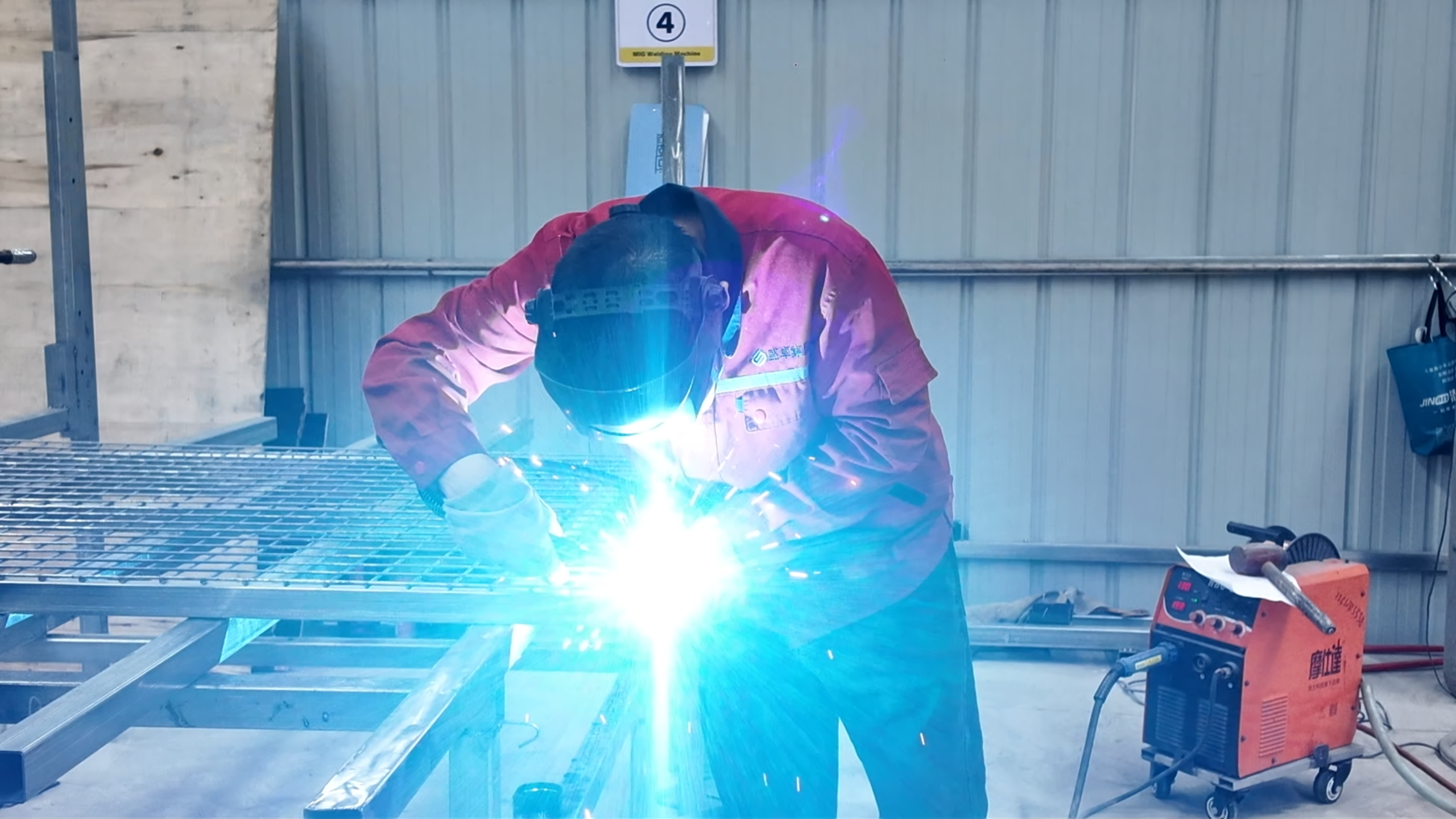
China manufactures a large share of the steel, glass and turf used in padel courts globally, including many components resold under other flags. Buying directly from a factory removes one or two layers of margin. Good factories offer 12mm tempered glass, hot-dip galvanization after welding, FIP-standard dimensions, custom RAL colors and OEM branding, and containerized shipping to Alexandria or Port Said in four to six weeks. The weakness: quality varies enormously between factories, from excellent to dangerous. The lowest quotes usually mean thinner steel, pre-galvanized treatment, 10mm glass and no engineering support, and you must manage import logistics yourself. Our guide on how to verify a China padel court manufacturer covers the audit process step by step.
Comparison table: Egypt vs Spain vs China sourcing routes
| 基準 | Egypt local supplier | Spanish manufacturer | Chinese factory |
|---|---|---|---|
| Equipment price per panoramic court | 15,000–22,000 USD equivalent | 20,000–30,000 USD + freight | 10,000–16,000 USD landed |
| Lead time to site | 3–6 weeks | 8~12週間 | 5–8 weeks incl. sea freight |
| Customization / OEM branding | 数量限定 | Moderate, expensive | High, standard practice |
| Documentation and certificates | Weak to moderate | 素晴らしい | Varies; good factories provide full reports |
| After-sales presence in Egypt | 強い | Weak to moderate via agents | Remote support + installation supervision |
| 最適なサイズ | Single-court, speed-first projects | Ultra-premium flagship and FIP venues | Commercial clubs of 2+ courts, ROI-driven |
A realistic hybrid, and the one we most often recommend, is Chinese-manufactured courts combined with an Egyptian civil works contractor. You get factory pricing and customization plus local hands for concrete, drainage and assembly.
How to Vet a Padel Court Factory: A 7-Point Checklist
Whether you shortlist a Spanish brand or a Chinese factory, run every padel court manufacturer Egypt candidate list through the same filter:
- Ask for the glass tempering certificate and confirm 12mm for outdoor courts.
- Ask whether galvanization is hot-dip after fabrication; request photos of the galvanizing bath process, not just finished courts.
- Request the stated maximum wind speed rating and the anchor bolt layout drawing.
- Ask for a written structural warranty; ten years on the structure is a reasonable minimum, and beware warranties covering only paint and components.
- Request two or three client references in Africa or the Middle East and actually call them.
- Confirm what is in the container: net posts, gates, lighting brackets, fasteners and spare glass panels are the items most often “forgotten” in cheap quotes.
- Agree in writing on installation support: supervisor on site, video-guided installation, or full crew.
A real procurement example from our export work: a club developer in Southern Africa initially shortlisted a European brand at nearly double our quotation, then a very cheap Chinese offer 20 percent below ours. When he requested wind load documents and hot-dip galvanization evidence from the cheapest supplier, the conversation went silent. He ultimately combined our courts with a local installation company, and the project’s per-court cost came in about 35 percent below the European route with the same 12mm glass specification. The lesson is not “China is always right.” The lesson is that documentation requests are the fastest, cheapest due-diligence tool an investor has.
Final Advice for Egyptian Padel Investors
Egypt’s padel boom is real, federation-backed and still growing, but the easy phase is ending. The clubs that will win the next five years treat padel court construction as an engineering and ROI decision rather than a branding shortcut. Define your positioning first, budget civil works honestly, and then choose the sourcing route, Egyptian contractor, Spanish brand, or Chinese factory, that fits your court count and payback target. Whichever padel court manufacturer Egypt project you are planning ends up with, insist on the seven documents above before paying a deposit.
If you are evaluating a China padel court for a project in Egypt, PanoCourt provides full technical documentation, 12mm tempered glass, hot-dip galvanized structures, anchor layout drawings for your local engineer, and installation supervision for African projects. Send us your site plan and we will return a landed-cost quotation for Alexandria or Port Said, along with every certificate on the checklist above, before you commit to anything.
FAQ: Padel Court Manufacturer Egypt
How much does a padel court cost in Egypt in 2026?
A complete outdoor panoramic court, including imported equipment and local civil works, typically ranges from about 20,000 to 45,000 USD depending on whether you source from a padel court manufacturer Egypt contractor, a Spanish brand, or a Chinese factory, and on your site conditions. Equipment from China lands at roughly 12,000 to 16,000 USD per court, while European brands run 20,000 to 30,000 USD before freight.
Is a MejorSet padel court worth the premium in Egypt?
For a flagship venue hosting FIP-level events, possibly yes: the brand carries real tournament pedigree. For a commercial multi-court club, an audited Chinese factory delivering the same 12mm tempered glass and hot-dip galvanized specification usually produces meaningfully better ROI, often saving 8,000 to 15,000 USD per court.
How long does padel court construction take in Egypt?
Civil works usually take three to five weeks. Equipment production and sea freight from China take four to eight weeks and can run in parallel with the foundation work. Enclosure assembly takes about five to ten days per court with an experienced crew, so a two-court club can realistically open within three months of signing.
What is the payback period for a padel club in Egypt?
At Cairo rates of 250 to 700 EGP per hour and around six booked hours per day, a single court generates roughly 850,000 EGP per year. With disciplined sourcing, equipment plus civil works typically pay back in 18 to 30 months. Oversupplied districts are seeing rate compression, so model conservatively.
What glass and steel specification should an Egypt padel court use?
Outdoor courts should use 12mm tempered glass with batch tempering certificates, and steel that is hot-dip galvanized after welding, then powder coated. This matters especially for North Coast and Red Sea sites where wind loading and salt corrosion are the two main failure risks.