
The padel sports industry in North America is no longer an emerging curiosity — it is a capital-intensive market where every decision around court infrastructure directly impacts ROI, player retention, and long-term brand positioning. Yet, when you search for a panoramic padel court online, what you encounter is a sea of nearly identical product pages, each recycling the same vague claims about “premium quality” and “international standards” without addressing the granular concerns that club owners and investors actually carry into the buying process. This article dissects the panoramic padel court market with surgical precision, identifying what matters, what doesn’t, and where the real differentiation lies for anyone serious about building a padel facility in the United States.
What Defines a Panoramic Padel Court — And Why the Distinction Matters
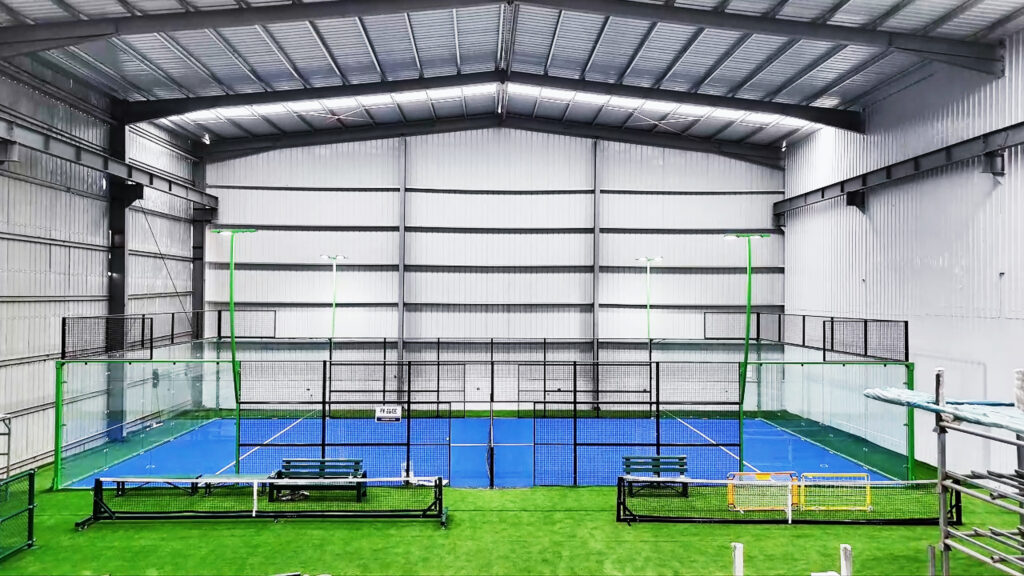
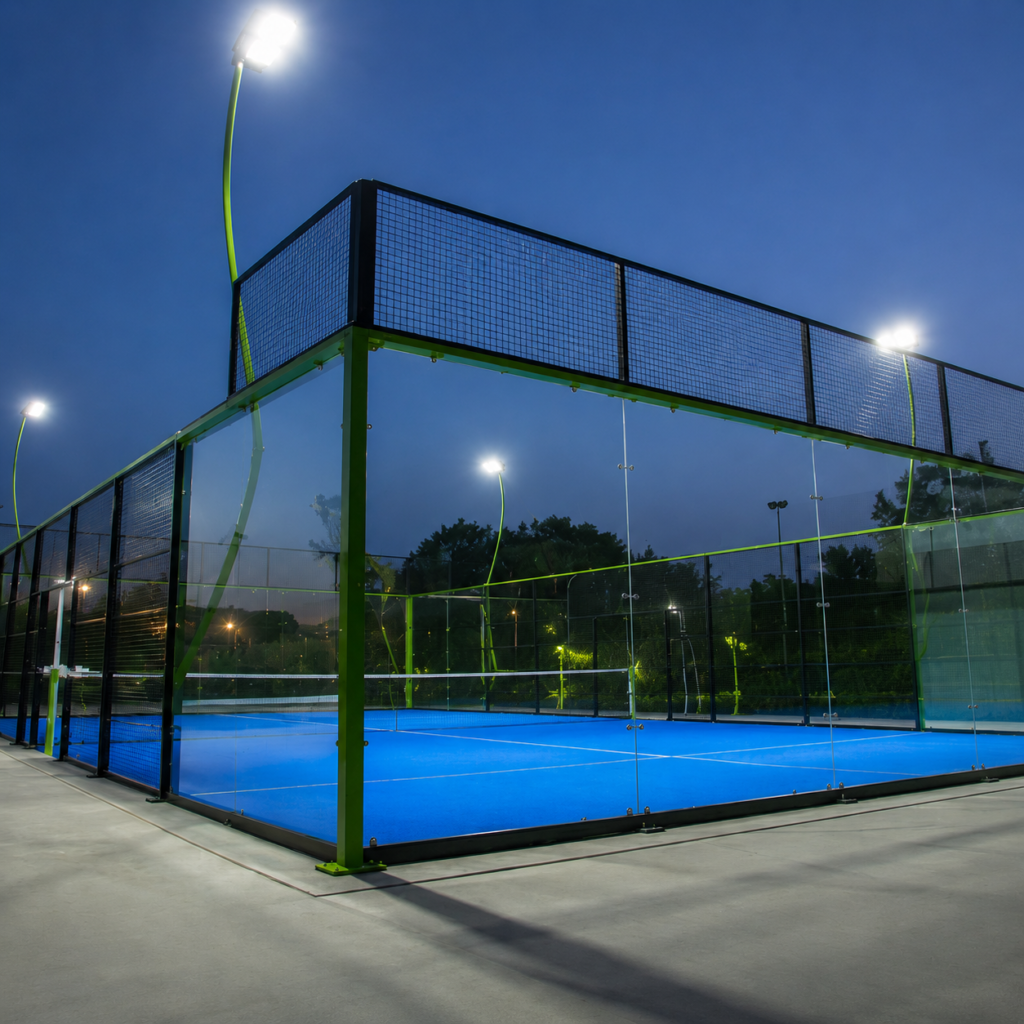
A padel court, at its most fundamental, is a 20m × 10m enclosed playing surface with walls made of glass and metallic mesh. The panoramic variant replaces the traditional concrete or opaque back walls with full-height tempered glass panels, typically 12mm thick, creating an unobstructed 360-degree viewing experience. This is not merely an aesthetic upgrade. For club operators, the panoramic padel court transforms spectator dynamics, enables better video broadcasting angles, and aligns the facility with FIP (International Padel Federation) tournament standards — a prerequisite for hosting sanctioned events.
The distinction between a standard padel court and a panoramic padel court goes beyond glass coverage. Standard courts use glass only on the back walls (typically 3 meters high), with metallic mesh filling the remaining enclosure. A full panoramic court extends glass panels along the lateral walls as well, sometimes up to 2 meters on each side. This difference has structural implications: more glass means more weight, more precise engineering tolerances, and fundamentally different wind load calculations — a factor that becomes critical in hurricane-prone regions of the southern United States.
The Real Pain Points of Padel Court Club Owners and Investors
After analyzing forums, investor groups, and direct feedback from padel club operators across Texas, Florida, California, and New York, a clear pattern of concerns emerges that most padel court manufacturers fail to address head-on.
Total Landed Cost Opacity
The number one frustration is pricing ambiguity. When a potential buyer searches for “panoramic padel court price” or “panoramic padel court cost,” they expect transparency. Instead, they encounter “request a quote” forms with no baseline figures. The reality is that a single panoramic padel court, fully installed in the USA, ranges from $28,000 to $55,000 depending on specifications, shipping terms, and whether the quote is FOB or DDP. Club owners need to understand this range upfront, not after three weeks of email exchanges. The difference between FOB (Free on Board, typically from a Chinese port) and DDP (Delivered Duty Paid, to a US address) can represent a $6,000–$10,000 delta per court — a figure that dramatically alters business plan projections.
Installation Complexity and Downtime
Panoramic padel court installation is not a weekend project. A professional installation team requires 4–7 days per court, assuming the foundation slab is already cured and level to within 3mm tolerance. Many first-time investors underestimate site preparation costs — concrete slabs, drainage systems, lighting infrastructure, and local permitting — which can add $15,000–$25,000 per court to the total project budget. The manufacturers who win long-term loyalty are those who provide detailed installation guides, remote engineering support, and ideally, a US-based technical team or certified installer network.
Certification Confusion
The term “FIP certified panoramic padel court” gets thrown around liberally, but few buyers understand what it actually entails. FIP certification is not a blanket stamp on a manufacturer — it is granted per court model after rigorous testing of dimensions, glass specifications, mesh tension, surface bounce characteristics, and structural integrity. A manufacturer may produce ten different court models, but only two might hold current FIP certification. Buyers should demand the specific FIP certificate number and verify it against the International Padel Federation’s official registry. Anything less is marketing, not compliance.
Weather Resilience — The Hurricane Factor
For anyone looking to buy a panoramic padel court in the USA, particularly in Florida, the Gulf Coast, or the Carolinas, wind resistance is not optional — it is existential. A hurricane resistant panoramic padel court must be engineered to withstand sustained winds of at least 140 mph (Category 4). This requires reinforced steel profiles (typically 100mm × 120mm rectangular hollow sections with minimum 4mm wall thickness), anchor bolt systems rated for uplift forces, and tempered glass panels with laminated interlayers that prevent catastrophic shattering. Most Chinese and European manufacturers design for European wind codes (EN 1991), which max out around 90–100 mph. The gap between that standard and Florida Building Code requirements is where facilities get destroyed — and insurance claims get denied.
Panoramic Padel Court vs Standard: An Honest Comparison
The decision between a panoramic padel court and a standard configuration is not purely about budget. It is a strategic choice that affects revenue potential. Here is the unvarnished comparison:
Spectator experience: Panoramic courts generate 30–40% more spectator engagement at events. Glass walls allow viewers to watch from any angle, which is essential for tournaments, corporate events, and social media content creation — all revenue drivers.
Player preference: Competitive players overwhelmingly prefer panoramic courts. The visibility, the sense of openness, and the alignment with professional tournament conditions make panoramic the default for serious padel facilities.
Maintenance cost: More glass means more potential replacement panels. A single cracked 12mm tempered glass panel costs $400–$800 to replace, plus labor. Standard courts, with their greater reliance on metallic mesh, have lower glass replacement frequency but higher mesh retensioning needs over time.
Resale and brand value: Facilities with panoramic courts command higher hourly rental rates — typically $10–$20 more per hour than standard courts in the same market. Over a five-year period, this premium easily offsets the higher initial investment.
What Competitors Get Wrong — And Where the Opportunity Lives
A critical review of leading panoramic padel court suppliers reveals consistent gaps. Major players like AFP Courts, MejorSet, and Portico Sport all present polished websites with professional imagery, but their product pages share a common weakness: they sell features, not outcomes.
AFP Courts leads with construction details and glass specifications — useful for engineers, less compelling for a club investor trying to model a five-year P&L. MejorSet emphasizes customization options but buries pricing signals so deep that a prospective buyer must navigate multiple pages before understanding cost structure. Portico Sport offers strong visual design but lacks the technical depth that serious B2B buyers require — wind load ratings, foundation specifications, and shipping logistics are either absent or vaguely referenced.
The differentiation opportunity is clear: the manufacturer or supplier that combines transparent DDP pricing, verified FIP certification documentation, hurricane-rated engineering specifications, and a clear ROI framework — all on a single, well-structured product page — will capture the highest-intent commercial traffic in this market.
Indoor Outdoor Panoramic Padel Court: Configuration Decisions That Impact Revenue
The indoor versus outdoor debate is more nuanced than climate alone. An indoor panoramic padel court eliminates weather cancellations (the single largest revenue leak for outdoor facilities) but requires minimum ceiling clearance of 8 meters (FIP regulation) and adequate HVAC for player comfort. Construction costs for indoor facilities run 2–3x higher due to building envelope requirements.
Outdoor panoramic padel courts offer faster deployment and lower capital expenditure but demand weather-resistant specifications: hot-dip galvanized steel frames (minimum 80 microns zinc coating), UV-stabilized artificial turf, and drainage-integrated slab design. The hybrid model — a tensile fabric canopy over outdoor panoramic courts — is gaining traction in markets like Southern California and Arizona, offering weather protection at roughly 40% of full indoor construction costs.
Panoramic Padel Court Dimensions and Specifications: The Non-Negotiables
Every panoramic padel court must conform to these dimensional standards to be considered regulation-compliant:
Playing area: 20.00m × 10.00m (±0.01m tolerance for FIP tournaments). Back wall glass height: 4.00m. Side wall glass panels: 3.00m high, extending 2.00m from each back corner, with the remaining lateral enclosure in metallic mesh up to 4.00m. Glass specification: 12mm tempered safety glass, heat-soaked tested to EN 14179 to eliminate nickel sulfide inclusion risk. Mesh: Electro-welded steel mesh, 70mm × 70mm grid, 4mm wire diameter minimum. Surface: Artificial turf with silica sand infill, pile height 12–15mm, certified to ITF Padel Surface Classification.
These are not suggestions — they are requirements. Any panoramic padel court supplier in China or elsewhere that offers “close to regulation” dimensions is selling a liability, not a product.
The Supplier Question: Panoramic Padel Court Supplier China vs. European Manufacturers
The B2B procurement landscape for panoramic padel courts has shifted dramatically since 2022. Chinese manufacturers now produce approximately 60% of all padel courts installed globally, driven by aggressive pricing ($18,000–$25,000 FOB for a full panoramic court) and improving quality standards. European manufacturers — primarily Spanish and Italian — retain an edge in brand prestige and FIP relationships but typically price 40–70% higher for comparable specifications.
The critical evaluation criteria for a panoramic padel court supplier from China should include: factory audit reports (ISO 9001 minimum), third-party glass testing certificates, previous US installation references, and — crucially — after-sales support infrastructure. A factory that ships 200 courts per year but has no spare parts inventory in North America is a risk, not a partner. The best operators in this space maintain bonded warehouses in California or Texas with replacement glass panels, mesh sections, and hardware kits available for 48-hour domestic shipping.
Pricing Transparency: What a Panoramic Padel Court Actually Costs in 2026
Let’s break the industry’s silence on numbers. For a single FIP-standard panoramic padel court delivered DDP to a US address in 2025, expect the following cost architecture:
Court structure (steel + glass + mesh + turf): $12,000–$32,000 depending on specification tier. Ocean freight + customs + last-mile delivery (DDP): $2,500–$8,000 per 20GP or 40GP (economies of scale apply for multi-court orders). Foundation slab (concrete, drainage, electrical conduit): $8,000–$15,000 per court. Professional installation: $3,000–$6,000 per court. Lighting (LED, 400+ lux at playing surface): $2,500–$5,000 per court. Total all-in cost per court: $39,500–$66,000.
For a four-court facility — the minimum viable commercial operation — total project cost ranges from $160,000 to $265,000 before soft costs (permitting, insurance, marketing). These numbers should be the starting point of every investor’s feasibility analysis, not a surprise discovered midway through the project.
FAQ Panoramic Padel Courts
How long does it take to manufacture and deliver a panoramic padel court to the USA?
Production typically requires 20–30 days after design confirmation and deposit. Ocean shipping from China to US West Coast ports takes 18–22 days; East Coast ports require 28–35 days. Total lead time from order to delivery: 45–65 days. Installation adds 5–7 days per court.
What is the difference between a panoramic padel court and a standard padel court?
The primary difference is glass coverage. A panoramic padel court uses full-height glass panels on back walls and extended glass on lateral walls, providing 360-degree visibility. Standard courts use glass only on back walls with metallic mesh elsewhere. Panoramic courts are required for professional tournaments and command higher rental rates at commercial facilities.
Are panoramic padel courts suitable for hurricane zones?
Yes, but only when specifically engineered for high-wind environments. A hurricane resistant panoramic padel court requires reinforced steel profiles, enhanced anchor systems, and laminated tempered glass. Standard panoramic courts designed for European wind codes are insufficient for Florida Building Code or Texas Windstorm Insurance Association requirements. Always request wind load engineering calculations specific to your installation site.
Can I install a panoramic padel court both indoors and outdoors?
Absolutely. Indoor outdoor panoramic padel court configurations require different material specifications. Outdoor courts need hot-dip galvanized steel, UV-resistant turf, and drainage provisions. Indoor courts require standard powder-coated steel but demand minimum 8-meter ceiling clearance. Many manufacturers offer dual-specification options for facilities planning mixed configurations.
What certifications should a panoramic padel court have?
At minimum, seek FIP certification for the specific court model (not just the manufacturer), CE marking for European safety standards, and glass certification to EN 12150 (tempered) and EN 14179 (heat-soak tested). For US installations, structural engineering certification by a licensed PE in the installation state is strongly recommended.
The panoramic padel court market in North America is entering its most consequential phase — the transition from novelty to infrastructure. The investors who succeed will not be those who bought the cheapest court or the one with the most impressive brochure. They will be the ones who demanded transparency on total landed cost, verified every certification claim, stress-tested their supplier’s after-sales capability, and designed their facility around five-year revenue models rather than day-one aesthetics. In padel, as in any capital-intensive sport infrastructure play, the quality of your questions determines the quality of your investment. The court is just glass and steel. The business you build around it — that is where the real game is played.