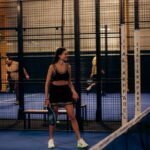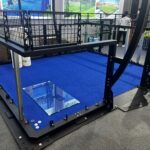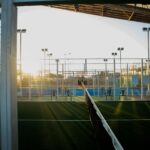
I’ve spent the last few years helping clubs, developers and first-time investors plan padel court projects, and the same question comes up on almost every first call: “Which padel court should I actually build?” It sounds simple, but it’s the decision that quietly sets your build cost, your maintenance bill and how fast you get your money back. Padel is now the fastest-growing racquet sport on the planet — the International Padel Federation’s World Padel Report 2025 counted 77,300 courts worldwide by year-end, with 14,355 new courts built in 2026 alone — a 15.2% jump in twelve months. The United States has announced that it will build 1,000 new padel courts by 2026. With demand like that, plenty of people rush in and order the wrong padel court system for their site. This guide is here to fix that.
How many padel court styles are there worldwide?
Here’s the honest answer most suppliers won’t give you: structurally there are only a handful of padel court styles, and they all share the same regulated footprint. The FIP sanctions a single official competition size — a 20m × 10m doubles court (about 200 m²) — so the overwhelming majority of those 77,300 courts on the map are built to exactly that padel court dimension. Europe alone accounts for around 48,000 of them, roughly 62% of the global total, according to figures from the FIP via Padel Business Magazine. The narrower 20m × 6m singles court is the only other regulation size, and it stays a small niche.
Where courts genuinely differ is in their wall structure and intended setting. In practice you’ll be choosing between five real-world options: the classic court, the panoramic court, the single court, the junior court, and roofed or covered variants of each. Let me walk through which one fits which scenario — because the right choice is almost always dictated by where you’re putting it.
Outdoor padel court
If you’re building an outdoor padel court, my default recommendation is the classic padel court. It’s the original design — back and side glass panels held by visible steel corner posts — and outdoors those posts are a feature, not a flaw. They give the structure better wind-load resistance, they age more gracefully, and they keep the whole system safe and stable when it’s exposed to the elements year-round.
A quick refresher on padel court dimensions so the rest of this makes sense: a regulation court is 20m long by 10m wide, enclosed by walls 3m high at the front rising to 4m at the back, with a net 0.88m high at the centre and 0.92m at the posts. Add the mandatory run-off zones and you need a clear site of roughly 24m × 14m per court. Classic courts are what you’ll find in most public clubs, schools and municipal sports parks.
When you choose an outdoor padel court, three things matter more than anything else — and each has a number attached:
- Climate. Galvanised + powder-coated steel is non-negotiable outdoors. In coastal or high-humidity sites — think Jakarta, a seaside resort, or anywhere near salt air — corrosion will wreck a cheap frame within a few seasons, so the steel spec feeds straight into your padel court construction cost.
- Surroundings. Wind exposure is the silent killer. On rooftops or open fields those classic corner posts are what stop the structure from flexing — which is exactly why I steer exposed and rooftop sites toward classic rather than fully cornerless designs.
- Foundation. The court sits on a 400mm-wide reinforced ring beam with proper drainage. A structural engineer should size the slab to your soil; weak ground or poor drainage can add $50–$100 per m² before you’ve even bought the court kit — one of those padel court construction details that quietly blows budgets.
| Classic padel court | What it means for your project |
| Structure | Steel corner posts support back and side glass — proven, robust, easy to service. |
| Glass | 10–12mm tempered safety glass; posts share the load so panels can be standard spec. |
| Durability | Best-in-class wind and impact resistance; ideal for year-round outdoor use. |
| Cost | The most affordable full-size system — the value benchmark every other court is judged against. |
| Maintenance | Modular panels make repairs cheap and fast, protecting long-term ROI. |
| Best for | Public clubs, schools, municipal parks, rooftops and any windy or exposed site. |
If your site gets strong sun or heavy rain, add a canopy. A roofed padel court keeps play going in bad weather and shields both the turf and your players from UV. That extends the life of the surface and — more importantly — pushes up your usable hours per week, which is the single biggest lever on outdoor ROI.
Indoor padel court
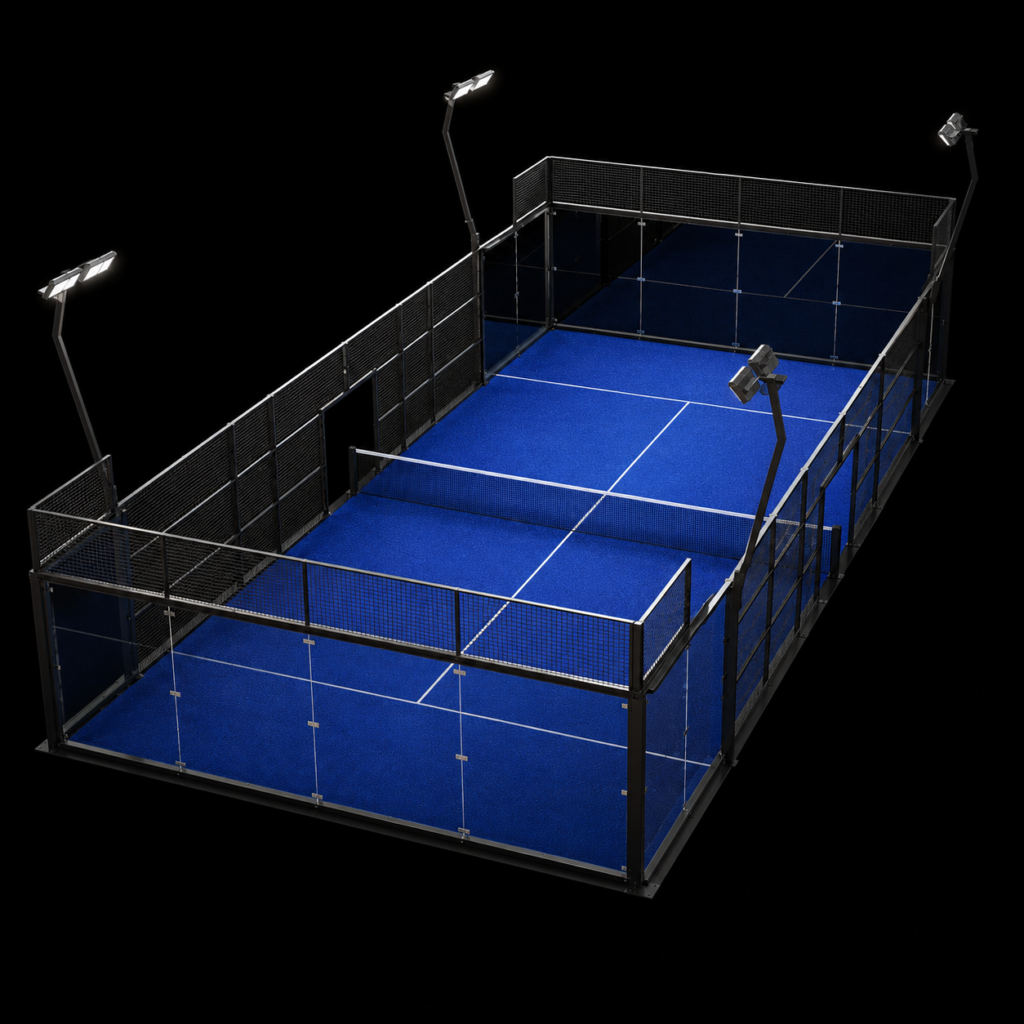
For an indoor padel court, go panoramic. A panoramic padel court removes the bulky corner posts on the back wall and replaces them with large-format tempered glass — typically 12mm rather than the 10mm used on classic backs, with reinforced corner joints carrying the load. Indoors the payoff is big: a wider, uninterrupted sightline, a far more premium look, and better use of your floor area because the structure reads as visually lighter. That “wow” factor matters when you’re selling an experience and increasingly streaming or filming matches.
One detail people miss: indoor padel court construction lives or dies on ceiling height. FIP sets a 6m minimum, but I tell every client to aim for 7–8m — and 9–12m if you ever want to host serious matches, because the lob is a core padel shot and a low roof ruins it. Indoor builds also carry the cost of the building envelope, lighting design and often ventilation, which is why an indoor court usually runs 20–40% more than the same court outdoors.
| Panoramic padel court | What it means for your project |
| Structure | Cornerless / reduced-post back wall — seamless wall of glass, modern and open. |
| Glass | 12mm tempered safety glass with reinforced joints; same strength, far better visibility. |
| Sightlines | Unobstructed views from every angle — ideal for spectators, tournaments and broadcast. |
| Aesthetics | The premium, “Instagrammable” look that attracts members and justifies higher pricing. |
| Space use | Lighter visual footprint makes tight indoor halls feel larger and more usable. |
| Best for | Premium indoor clubs, event venues, flagship facilities and sheltered locations. |
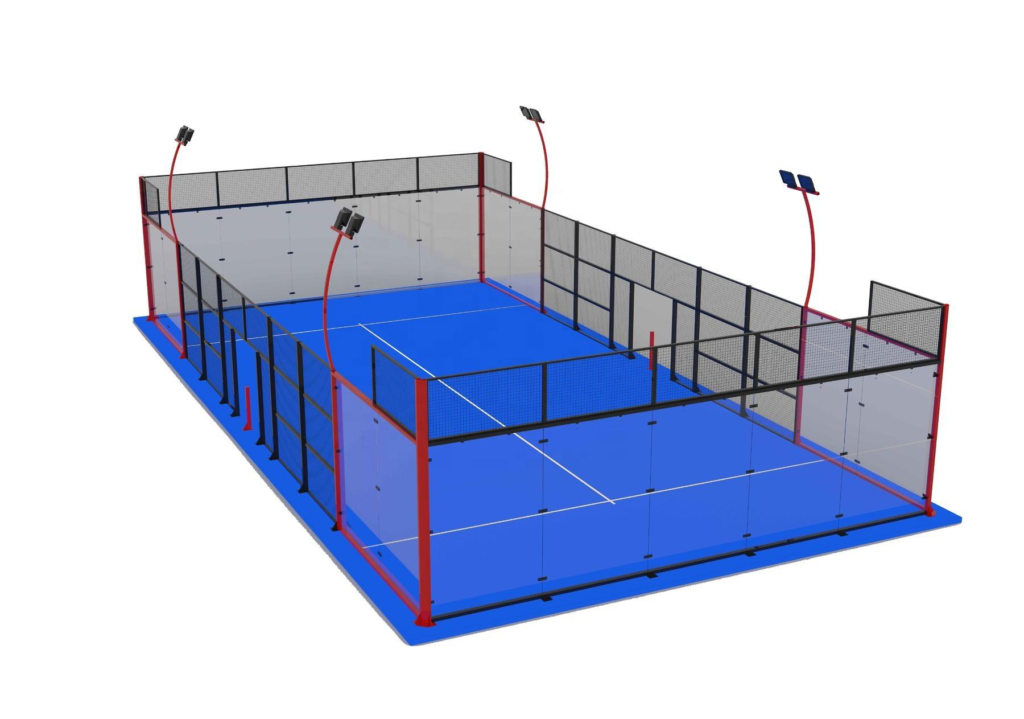
Residential padel court
For a home or private estate, a single padel court is usually the smart call. At 20m × 6m it’s narrower than a full doubles court, so it fits on plots where a 10m-wide court simply won’t — and it suits what home owners actually do: family games, one-on-one matches and solo practice against the back glass. You get a genuine padel experience without committing to a club-sized footprint or budget.
| Single (residential) court | Key details |
| Footprint | 20m × 6m playing area; ~24m × 10m including run-off — fits most large gardens. |
| Use case | Family fun, 1v1 matches, and at-home training and drilling. |
| Cost | The lowest-cost way to build a padel court — typically $20k–$35k installed. |
| Upgrade path | Add a canopy or lighting later; some clients still opt for a full court for resale value. |
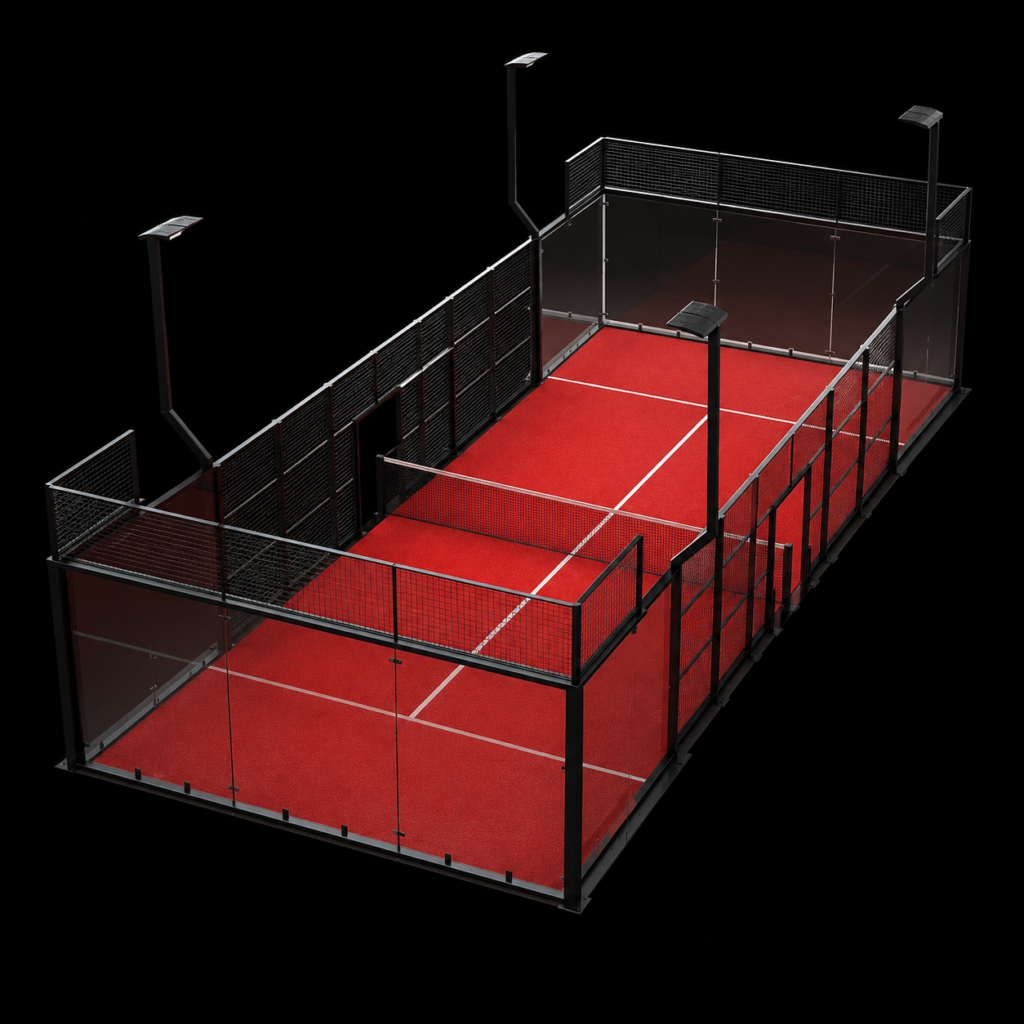
Hotel padel court
Hotels are a different animal, because the court has to do two jobs at once — look spectacular for guests and stay commercially busy. My usual recommendation is a panoramic court for the visual impact (it photographs beautifully, and “Instagrammable” genuinely drives bookings), but the right answer depends entirely on your available court dimension and footprint. On a tight rooftop or courtyard, a single court — or a multi-purpose court that doubles for other racquet sports — will protect your utilisation rate far better than a half-empty full court. The metric to optimise is occupied hours per day, not square metres of glass.
Junior / youth padel court
The junior court is increasingly the backbone of youth training centres. These are built smaller — commonly around 10m × 6m — which keeps rallies tighter and far more child-friendly than chasing a ball across a full 200 m² court. When we customise a kids’ court, safety leads every decision: I specify soft-padded posts and edges, laminated rather than only tempered glass so panels hold together on impact, and playful custom colours that make the space feel welcoming. We also add a little more sand infill to the turf, which raises friction and reduces slips for smaller, lighter players.
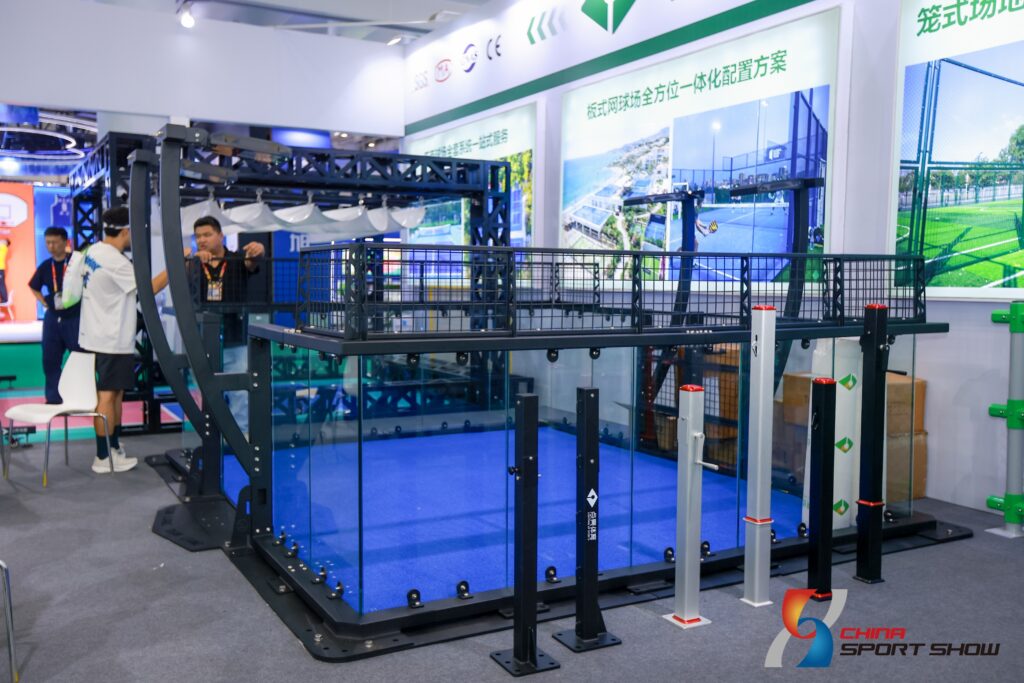
Here’s how the five court types stack up side by side:
| Classic (Outdoor) | Panoramic (Indoor) | Single (Home) | Hotel | Junior | |
| Scene | Clubs, schools, parks | Premium clubs, events | Homes, estates | Resorts, rooftops | Academies, schools |
| Target users | Clubs & councils | High-end clubs, broadcast | Families, hobbyists | Guests, members | Children, beginners |
| Climate fit | Excellent (wind/UV) | Indoor / sheltered | Any (sheltered ideal) | Indoor or rooftop | Indoor / supervised |
| Build cost / court (US) | $24k–$45k | $40k–$100k | $20k–$35k | $40k–$80k+ | $25k–$45k |
| Price level | $$ | $$$$ | $ | $$$ | $$ |
| Aesthetics | Functional | Premium | Compact, neat | Showpiece | Bright, custom |
| ROI potential | High | High | Personal use | Medium–High | Medium (lessons) |
Who makes the best padel court systems?
The supply side has changed fast. Of the 14,355 courts added in 2025, the manufacturing behind them is concentrated in two places: Spain, padel’s traditional home, and China, which has become the volume engine of the industry. Cross-checked against the Playtomic Global Padel Report, the picture is consistent — Spain still leads on installed base with nearly 17,000 courts, followed by Italy (~9,700) and Argentina (~7,000), but a growing share of the steel-and-glass systems shipping into those markets now comes out of Chinese padel court factories.
The reason is structural. A china padel court manufacturer sits right next to the raw materials — galvanised steel, tempered glass, synthetic turf — which is a real capacity and price advantage European fabricators struggle to match. That’s why output from the Chinese padel court factory base has been climbing at double-digit rates year after year, and why so many new clubs in the US, UK, France and Southeast Asia now source direct. Encouragingly, padel court construction cost per court has held broadly steady from 2024 into 2025, even as volumes exploded — a sign the supply chain is maturing rather than overheating.
Among those manufacturers, Pano Court is one I’d point investors to. They run a full range — classic, panoramic and full-panoramic — all built to FIP-compliant 20m × 10m geometry, with 12mm tempered safety glass and hot-dip galvanised, powder-coated steel for genuine corrosion resistance. The line covers outdoor, indoor, residential, hotel and junior configurations from a single source, with OEM/ODM customisation on colours, layout and branding, and a turnkey export workflow that runs from design and production through packing and on-site installation guidance.
For a buyer weighing a European padel court construction company against a direct factory, the maths is usually straightforward: similar or better material spec, a meaningfully lower landed cost per court, and the flexibility to spec for any of the five scenarios above. That combination — the fundamentals of padel construction done properly, at factory pricing — is exactly why China has become the default sourcing choice for fast-growing markets.
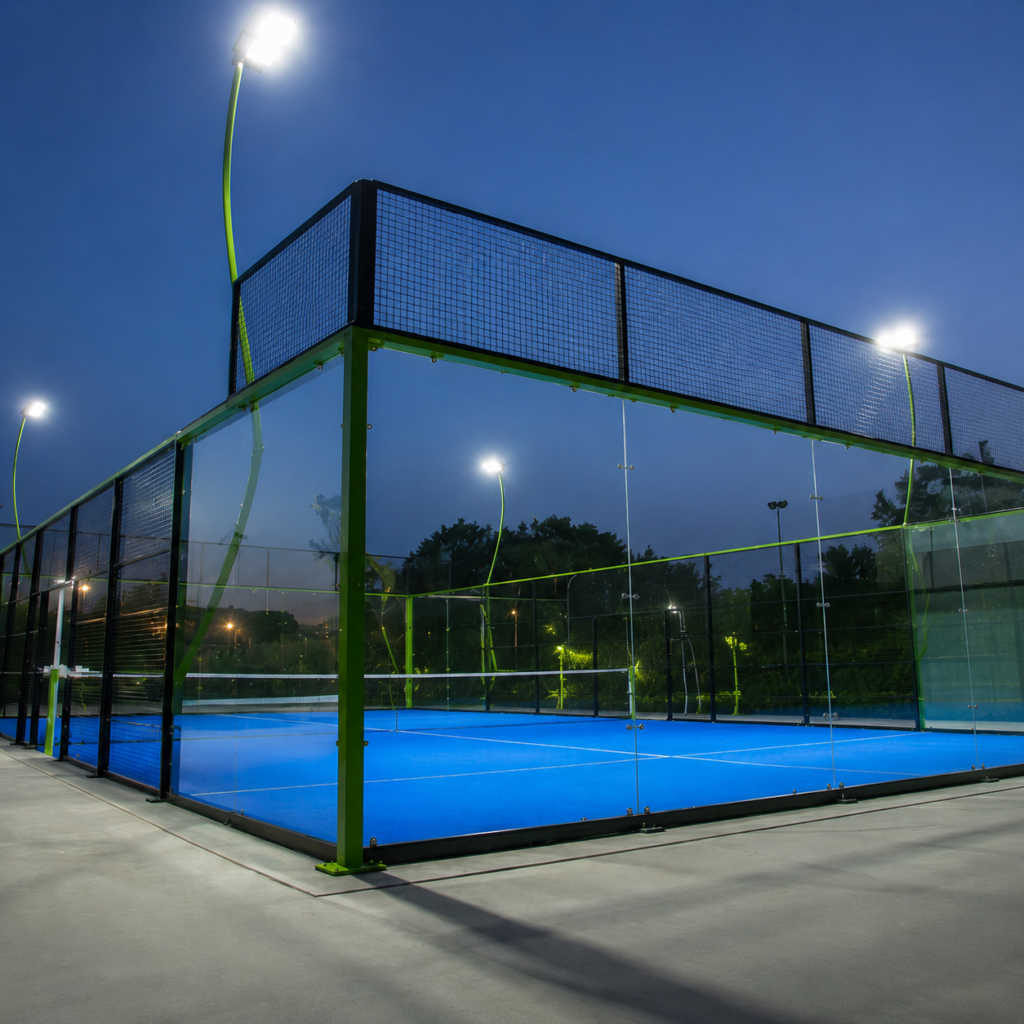
padel court cost and ROI
Before you sign anything, get clear on padel court construction cost for your specific market. In the States, padel court construction cost USA generally lands between $24,000 and $65,000 per court for a quality build, with premium indoor projects reaching $50,000–$100,000 — roughly $120–$350 per square metre, per the Sports Venue Calculator cost guide. In Britain, padel court construction cost UK runs higher once groundwork and drainage are in: the LTA’s 2025 padel construction guidance puts a delivered single court near £71,000, two courts around £148,000 and four around £268,000.
Whatever market you’re in, remember the headline “per court” figure is never the whole story — site prep, drainage, lighting and freight are where padel tennis court construction quietly adds up. Get those right, choose the court that matches your setting rather than the one with the flashiest brochure, and padel’s demand curve does the rest. If you’d like a tailored quote or a site-specific spec, that’s exactly the kind of thing the Pano Court team builds for a living.
FAQ
How Long Does Padel Court Construction Take?
A standard padel court project usually takes 6 to 10 weeks from order confirmation to final installation.
The actual timeline depends on four critical stages:
| Stage | Typical Duration |
| Engineering & Design | 3-7 Days |
| Manufacturing | 3-5 Weeks |
| International Shipping | 2-6 Weeks |
| Installation | 3-7 Days |
Many delays occur because contractors underestimate site preparation and foundation curing times.
Industry experience shows that planning civil works before court delivery can shorten the overall project timeline by several weeks.
Pano Court provides foundation drawings, installation manuals, and pre-engineered court systems, allowing customers to prepare the site while manufacturing is underway.
What Foundation Is Required for a Padel Court?
Most professional padel courts are installed on a reinforced concrete slab with integrated drainage systems.
SAPCA guidelines and leading European padel construction practices recommend a stable and level concrete base to ensure:
- Consistent ball bounce
- Structural stability
- Proper drainage
- Long-term turf performance
A typical concrete slab thickness ranges from 150mm to 200mm depending on local soil conditions.
Poor foundations are one of the most common reasons for court performance issues and premature maintenance costs.
Every Pano Court project includes detailed foundation drawings prepared by our engineering team to ensure compatibility with local construction standards and site conditions.
What Is the Difference Between a Panoramic and Super Panoramic Padel Court?
A panoramic court removes rear steel corner posts, while a super panoramic court minimizes visible structural elements even further to maximize visibility.
Professional tournaments increasingly favor panoramic and super panoramic designs because they:
- Improve spectator experience
- Enhance live streaming quality
- Increase sponsorship visibility
- Create a premium club appearance
Many new commercial clubs choose panoramic systems because visually attractive courts generate stronger social media engagement and higher booking rates.
Pano Court manufactures standard, panoramic, and super panoramic court systems, enabling club owners to select the right balance between investment level and premium positioning.
How Much Land Is Needed for Padel Court Construction?
A single padel court requires approximately 300–400 square meters when including safety zones and circulation areas.
Although the official playing area is only 20m × 10m (200m²), successful clubs require additional space for:
- Player circulation
- Seating areas
- Clubhouse access
- Coaching zones
- Spectator viewing
Many profitable clubs allocate 20%-40% additional space beyond the minimum court footprint.
Our design team helps investors optimize site layouts to maximize the number of courts while maintaining a comfortable player experience.
Is Building a Padel Club a Good Investment?
Yes. Padel is currently one of the fastest-growing sports globally, making padel clubs one of the most attractive sports facility investments.
According to the International Padel Federation, global participation has expanded rapidly, with tens of thousands of courts now operating across Europe, Latin America, the Middle East, and North America.
Industry benchmarks indicate that a single court can generate revenue from:
- Court rentals
- Memberships
- Coaching programs
- Corporate events
- Tournaments
- Sponsorships
Many operators report annual court utilization rates above 60% once clubs become established.
Pano Court not only supplies court equipment but also assists investors with layout planning, court selection, and project feasibility recommendations based on local market conditions.