
The padel court supply chain has a quality gap that costs buyers millions of dollars annually—not because high-quality موردو ملاعب البادل don’t exist, but because buyers lack a rigorous framework for distinguishing them from traders and assemblers presenting as manufacturers. This guide provides that framework: a systematic RFQ (Request for Quotation) and supplier evaluation process that surfaces the real differences between padel court manufacturers before you commit capital.
As a factory-direct شركة مصنعة لملاعب البادل ourselves, we know exactly what separates a verified factory from a trading company posing as one.
The stakes are concrete: the padel court market will reach $592 million by 2031 (Playtomic/PwC Global Padel Report 2025). At $25,000–$55,000 per court, a six-court club facility is a $150,000–$330,000 procurement decision. An RFQ process that takes an extra two weeks and costs $1,500 in third-party audit fees can prevent a $30,000–$80,000 quality failure.
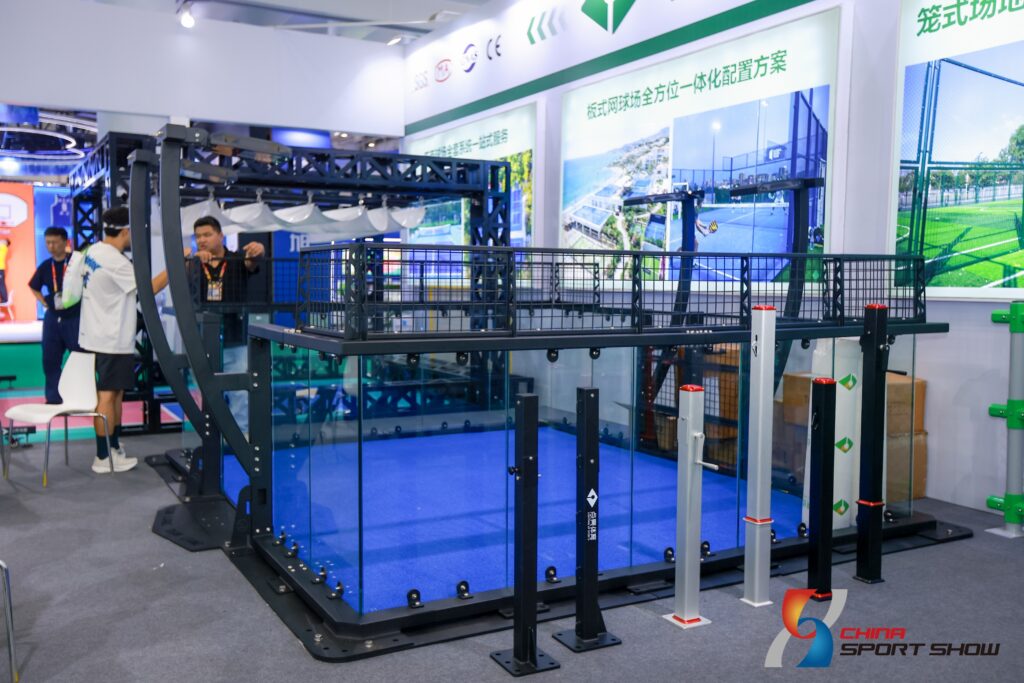
Why Most Padel Court Supplier RFQ Processes Fail Buyers
The standard approach most buyers take—contact 3–5 suppliers found via Google, request pricing, choose the best price with acceptable-sounding specifications—has a structural flaw: it relies on supplier self-reporting for the information most critical to quality assessment. A trading company and a genuine manufacturer give almost identical responses to a standard RFQ because the information the RFQ requests—pricing, lead time, general specifications—doesn’t expose the differences that matter.
A well-designed RFQ for مصنعو ملاعب البادل is structured to expose differences in manufacturing capability, quality documentation, after-sales infrastructure, and risk allocation—not just pricing. The questions below are designed to do exactly that.
Phase 1: Padel Court Supplier Identification and Initial Qualification
Where to Find Legitimate Padel Court Manufacturers
Start with sources that provide some level of verification beyond Google rankings:
- World Padel Tour / FIP official supplier lists: Confirms tournament-level supply credentials (primarily European brands)
- Alibaba Gold Supplier verification: Basic Chinese manufacturer credentialing (not sufficient alone, but filters obvious frauds)
- Industry trade fairs: World Padel Summit, Sportel, Interbad—verified exhibitors have physical presence and credentialing
- Reference from existing installations: Ask padel club operators in your target market who they used
- Third-party directories: SportVenueCalculator, GlobalGrowthInsights—aggregators with some verification
Initial Qualification Questions (Before Full RFQ)
Send these five questions to all prospective موردو ملاعب البادل before investing in full RFQ preparation:
- “Please provide your factory address and business registration number.”
- “How many padel courts have you exported to [your target country/region] and can you provide 3 reference contacts?”
- “Are your courts FIP-compliant? Please provide your FIP compliance documentation.”
- “Is factory visit/third-party audit possible before order placement?”
- “What is your current production capacity (courts per month)?”
Disqualify any supplier who: cannot provide a verifiable factory address; refuses factory audit access; cannot provide regional reference contacts; provides FIP compliance claims without supporting documentation.
Phase 2: The Full Technical RFQ
For suppliers who pass initial qualification, issue a structured technical RFQ. This document defines your project and requires specific information that distinguishes genuine manufacturers from traders.
Project Information to Provide
- Court type requested: ملعب الباديل البانورامي or ملعب بادل كلاسيكي (or request both options)
- Quantity: number of courts in current order; potential expansion in 12–24 months
- Destination: specific port (CIF pricing), country, and inland delivery point
- Site conditions: altitude, climate zone (coastal/tropical/arid/mountain), seismic zone if applicable
- Timeline: required delivery date at destination port
- Certification requirements: FIP compliance, local structural engineering requirements, CE marking if EU market
- Budget range (optional but accelerates meaningful responses)
Technical Specification Requirements to Request
Require suppliers to provide complete specification sheets covering:
- الهيكل الفولاذي: Grade (S355 or equivalent), section dimensions (column cross-section, beam dimensions), hot-dip galvanizing standard (EN ISO 1461) and specified zinc coating thickness (state: must be minimum 85µm), powder coating specification (if applicable)
- Glass panels: Thickness (state: must be 12mm minimum), tempering standard (EN 12150-1 or equivalent), glass brand/origin, whether Heat Soak Tested (HST) is standard or optional
- Artificial turf: Pile height specification, fiber type and polymer (polypropylene minimum), UV stabilizer treatment standard (ISO 4892-3 hours), sand infill depth specification
- الإضاءة LED: Fixture efficacy (lm/W), lux output per court (state: minimum 300 lux average), IP rating (IP65 minimum for outdoor), driver warranty period
- Door and hardware: Material (stainless or galvanized), hinge specification, lock mechanism
Documentation Requirements to Request
Require suppliers to confirm availability and provide samples of:
- ISO 9001:2015 quality management certification (current, valid)
- FIP court compliance documentation
- Glass tempering test report (batch-traceable, EN 12150-1)
- Steel galvanizing test report (batch-traceable, EN ISO 1461)
- Turf UV stability test report (ISO 4892-3)
- LED photometric report (IES format preferred)
- Engineering drawings (CAD format, adaptable to local structural engineer review)
- Foundation specification drawing (including anchor bolt layout and specification)
- Installation manual (confirm language availability: English, Spanish, French, Arabic)
Commercial Terms to Request
- FOB price per court (itemized: structure, glass, turf, lighting, accessories separately)
- CIF price to your destination port
- Payment terms (standard: 30% deposit, 70% against B/L copy or LC at sight)
- Production lead time from deposit receipt
- Warranty terms (structural warranty period, glass warranty, turf warranty)
- Pre-shipment inspection: confirm buyer’s right to commission third-party inspection at factory before shipment
- Spare parts: lead time and pricing for common replacement components (glass panel, door hinge, net post)
Phase 3: RFQ Response Evaluation Matrix
Score each supplier response using a weighted evaluation matrix. Recommended weighting for commercial club projects:
| Evaluation Category | الوزن | Key Scoring Criteria |
|---|---|---|
| Technical specification compliance | 30% | 12mm glass, 85µm galv., EN standards, FIP compliance documentation |
| Manufacturing credentials | 25% | ISO 9001, factory audit access, production capacity, export history |
| Total landed cost | 20% | FOB + freight + duties + installation (per court, all-in) |
| After-sales support | 15% | Warranty terms, spare parts lead time, regional reference quality |
| Project documentation | 10% | Engineering drawings, installation manual, language availability |
Phase 4: Factory Audit and Reference Verification
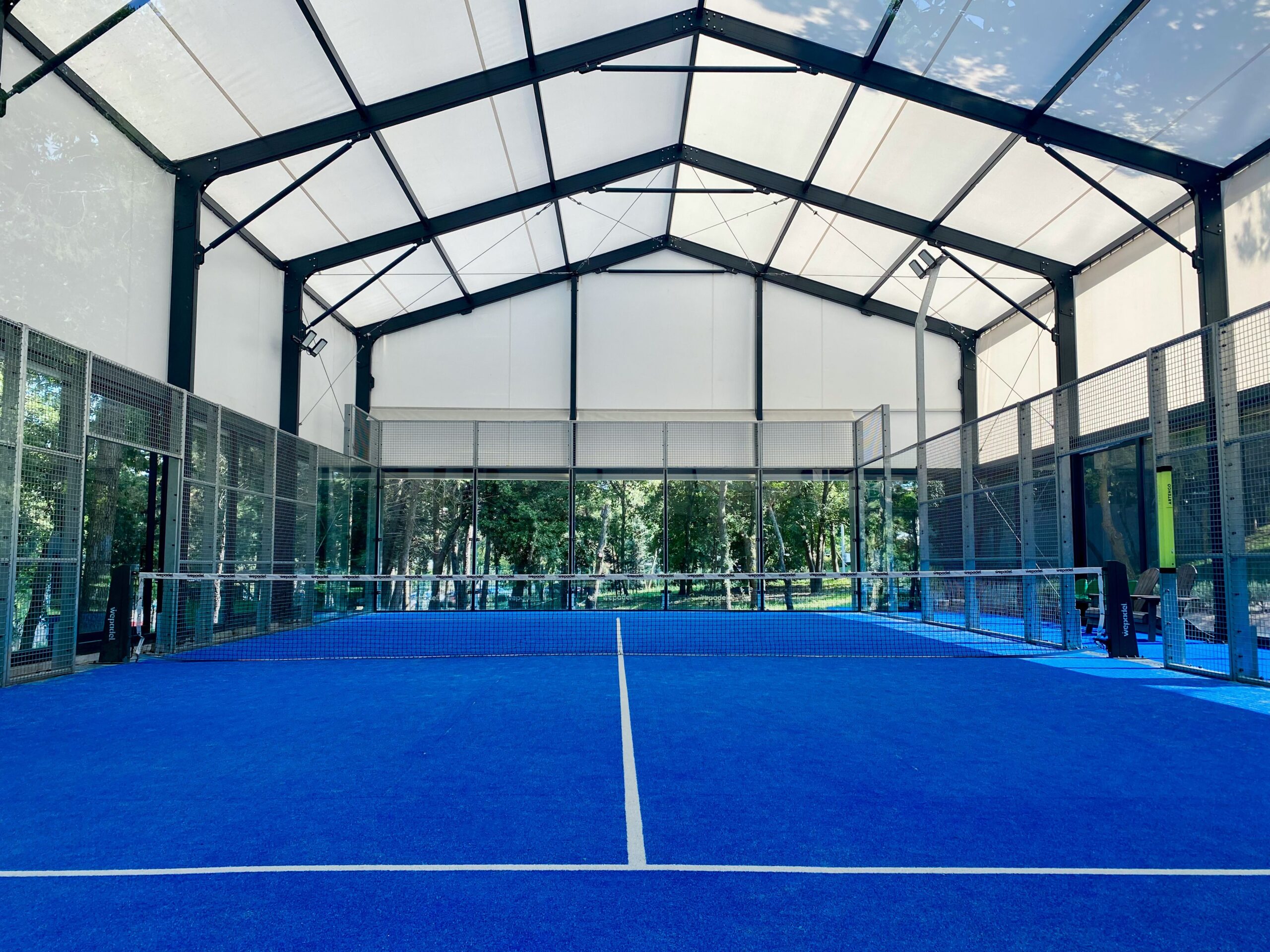
Factory Audit: When and How
For orders above $100,000 USD total value, a factory audit is strongly recommended. Options:
- Buyer visit: Arrange a factory visit prior to order placement. PanoCourt accommodates visits by appointment; any legitimate manufacturer does the same
- Third-party audit: Commission SGS, Bureau Veritas, or Intertek to conduct a factory capability assessment (approximately $800–$1,500 per audit). This confirms manufacturing assets, quality management systems, and production capability without requiring buyer travel
- Pre-shipment inspection: Commission third-party inspection of completed goods before shipping (approximately $400–$800). This does not verify manufacturing capability but confirms the specific goods match specifications before they leave the factory
Reference Verification Protocol
Contact minimum 2 reference clients per shortlisted supplier. Ask specifically:
- “What was the actual delivery timeline vs. what was promised at order placement?”
- “Were the courts delivered matching the specifications quoted in the RFQ?”
- “Have you experienced any warranty claims? How were they handled?”
- “What were the hidden costs you didn’t anticipate from the original quote?”
- “Would you use this supplier again? Would you recommend them to a peer?”
A supplier who provides reference contacts who answer these questions negatively—or who provides contacts who cannot be independently verified—should be eliminated from consideration.
Phase 5: Contract Negotiation and Payment Structure
Payment Terms
Standard payment structure for international padel court procurement:
- 30% deposit upon purchase order confirmation (production initiation)
- 70% balance against copy of Bill of Lading (B/L) by bank wire transfer, or Letter of Credit at sight
- Never agree to 100% upfront payment under any circumstances
- For orders above $200,000: consider Letter of Credit (LC) with document verification for full payment security
Key Contract Clauses
Ensure your purchase contract with the شركة مصنعة لملاعب البادل explicitly includes:
- Complete material specification schedule (glass thickness, steel grade, galvanizing microns—not just “FIP standard”)
- Buyer’s right to commission pre-shipment inspection at factory expense or shared cost
- Delivery timeline with liquidated damages clause for significant delays (industry standard: 0.5% per week of delay, max 5% of contract value)
- Packing list requirement: itemized quantities per component, tied to commercial invoice
- Warranty terms with explicit remedy (replacement component vs. full court replacement)
- Governing law and dispute resolution mechanism (arbitration preferred for cross-border disputes)
For a list of top-verified مصنعو ملاعب البادل in China: أفضل 3 مصانع لملاعب البادل في الصين: دليل المشتري لعام 2026.
Common Procurement Mistakes and How to Avoid Them
Choosing on FOB Price Without Total Landed Cost
A مورد ملاعب البادل with a $2,000 lower FOB price may cost $5,000 more per court when freight routing, import duty classification, and customs broker costs are properly modeled. Always compare total landed cost, not FOB only.
Accepting “FIP Standard” Without Documentation
“FIP standard” as a standalone claim is meaningless without supporting documentation. Require specific material test reports and engineering drawings. A glass panel labeled “12mm tempered” should come with a mill certificate showing actual tempering process, residual stress measurements, and EN 12150-1 compliance statement.
Skipping Pre-Shipment Inspection
Pre-shipment inspection is the single highest-ROI quality assurance step available to international buyers. At $400–$800 per inspection, it provides an independent verification that the goods about to be shipped match your purchase order. Defects caught pre-shipment cost a factory conversation; defects discovered at your job site 12 weeks later cost $15,000–$30,000 in re-shipment, re-inspection, and project delay.
See our buyer’s guide for the full procurement framework: How to Choose a Padel Court: 2026 Guide for Investors and Club Owners.
PanoCourt’s RFQ Response Commitment
PanoCourt responds to complete RFQs within 48 hours with: itemized FOB and CIF pricing; full material specification sheets; FIP compliance documentation; engineering drawing samples; ISO 9001 certification; 3+ reference contacts in your target region; warranty terms in writing.
We welcome third-party factory audits, pre-shipment inspection, and buyer site visits. Our procurement process is designed to provide the documentation that sophisticated buyers require—not to obscure differences that matter.
Submit Your RFQ to PanoCourt
Ready to run a rigorous RFQ process for your padel court project? PanoCourt provides complete technical responses to structured RFQs. Send us your project details—court type, quantity, destination, timeline, and any special site requirements—and receive a complete specification package within 48 hours.
Frequently Asked Questions: Padel Court Supplier Procurement
How many padel court manufacturers should I include in my RFQ?
Include 4–6 suppliers in initial qualification, narrowing to 2–3 for full technical RFQ. More than 6 suppliers creates evaluation overhead without proportional benefit; fewer than 4 risks missing the optimal supplier. Ensure your shortlist includes at least one European brand and one Chinese manufacturer for genuine cost and specification benchmarking—comparing only within one geographic category doesn’t give you the full market picture.
How long should the padel court RFQ process take?
A rigorous RFQ process for a 4–8 court project: initial qualification 1 week, technical RFQ response 2 weeks, reference checks 1 week, factory audit (if commissioned) 2–3 weeks, contract negotiation 1–2 weeks. Total: 7–9 weeks from first supplier contact to signed purchase order. For single-court projects, a streamlined process can complete in 3–4 weeks. Do not compress below 3 weeks—quality due diligence cannot be meaningfully rushed.
What is the most reliable way to verify a Chinese padel court manufacturer?
The combination of: (1) factory registration verification against the Chinese SAMR (State Administration for Market Regulation) national business registry; (2) independent factory audit by SGS or Bureau Veritas; (3) reference verification with direct phone calls to 2+ Latin American or target-region clients; and (4) pre-shipment inspection of first order. This four-point verification process eliminates all but the most sophisticated frauds and provides strong protection for orders of any size.
Can I use the same RFQ for both panoramic and ملعب بادل كلاسيكيs?
Yes, and you should. Requesting pricing for both ملعب الباديل البانورامي and ملعب بادل كلاسيكي configurations in a single RFQ gives you a real-data cost differential from each supplier rather than relying on published benchmarks. The actual cost gap between configurations varies by manufacturer—some offer relatively smaller panoramic premiums (15–20%) while others have larger differentials (30–40%). This information is valuable for final configuration decisions.
What should I do if a supplier refuses pre-shipment inspection?
Refuse the order. There is no legitimate reason for a genuine manufacturer to refuse buyer-commissioned pre-shipment inspection. Refusal signals either quality non-compliance concerns (the goods don’t match specifications), fraudulent claims about factory capabilities, or extraordinary inexperience with international B2B procurement standards. In any of these scenarios, the supplier is not appropriate for your project regardless of their price. The right to pre-shipment inspection should be a non-negotiable clause in any international ملعب البادل purchase contract.
Should I use a freight forwarder or the manufacturer’s logistics?
Use your own freight forwarder for orders above $30,000. While manufacturers often offer CIF pricing (cost, insurance, freight) as a convenience, using your own freight forwarder gives you: independent control over shipping schedule and carrier selection; your own insurance policy (not manufacturer-arranged); direct visibility into shipment tracking; and the ability to negotiate rates independently. CIF convenience pricing from manufacturers typically embeds 8–15% freight markup. Your own forwarder eliminates this markup on repeat orders.