
Padel court certification Australia: the short answer. There is no single Australian certificate a China padel court factory can buy. Certification splits in two — a local Australian engineer certifies the design for your specific site, and the factory supplies evidence of suitability for the products. Get that split right and padel court certification Australia costs around AUD 3,000–8,000 per court. Get it wrong and it can stop a project for months.
I run export projects for a China padel court factory. Over the past two years we have supplied Australian buyers in Victoria, New South Wales, Queensland and Western Australia, and I have worked through the document list with Australian structural engineers and registered building surveyors on live projects. This guide to padel court certification Australia is written from that experience — not from a standards summary. It explains exactly which Australian standards apply, what an Australian engineer will and will not certify, what we as a factory can and cannot promise, and the practical route Australian clubs are actually using to get China-made courts approved.

What Does This Padel Court Certification Guide Cover?
- Does an imported padel court need Australian certification?
- Who certifies — the factory or a local engineer?
- The nine approval steps
- Which Australian standards apply
- Is ACRS compulsory for the steel?
- Proving AS/NZS 2208 Grade A glass
- Evidence of suitability — the route that solves it
- A Victorian club case study
- What padel court certification Australia costs
- The document pack to demand from your factory
- How to split responsibility in the contract
- Mistakes that stall projects
- Preguntas frecuentes
Does Padel Court Certification Australia Apply to Courts Imported from China?
Almost always, yes — but not in the form most buyers imagine. A padel court is a permanent steel and glass structure fixed to a concrete foundation, so in most Australian jurisdictions it is building work. That means local approvals: potentially a planning permit, almost certainly a building permit, and structural design certified by a registered Australian engineer.
What it does no need is a national import certificate for the court itself. There is no CE-equivalent mandatory mark for padel courts in Australia, and no government scheme certifies a Chinese padel court factory as a whole. Buyers who ask us for “Australian certification” are usually asking for a document that does not exist.
Key facts
- Padel courts are typically classified as building work, not sporting equipment, because they are fixed structures with wind-loaded glass panels.
- Approval is a state and local process. Victoria, NSW, Queensland and WA all differ, and the council and building surveyor for your specific address have the final word.
- The National Construction Code (NCC) sets the performance requirements; Australian Standards are the deemed-to-satisfy route to meeting them.
- A factory test report on its own is never an approval. It is input to an approval.
- An indoor court inside an existing warehouse is not automatically exempt — anchorage, slab capacity, clear height, egress and change of use can all trigger requirements.
Deep insight. The most useful thing an Australian buyer can understand is that Australia regulates outcomes at a site, not products at a border. Two identical courts from the same container can face different requirements in Geelong and in Cairns, because wind region, corrosion zone, soil class and building classification differ.
That is why no honest fabricante de pistas de pádel will tell you their court is “fully Australian certified” before knowing your address. If a supplier tells you that, treat it as a commercial red flag rather than a technical claim.
Real-world insight. On our first Australian project the client asked for “the Australian certificate” and we sent our EN 1090-1 attestation and our ISO 9001. The building surveyor rejected both — correctly. EN 1090 is a European fabrication conformity route and carries no standing under the NCC.
What the surveyor actually wanted was much narrower: mill certificates traceable to the sections in the shipment, coating thickness records, and glass test evidence against an Australian standard. We already had two of the three. The problem was never capability — it was that we were sending the wrong documents.
Who Certifies a Padel Court in Australia — the Chinese Factory or a Local Engineer?
Both, in separate lanes. An Australian structural engineer certifies the design — footings, anchorage, wind loading and verification of your court system for that site. The China padel court factory supplies product conformity evidence — drawings, bill of materials, steel traceability, glass test evidence and coating records. Neither can do the other’s job.
This is the point Australian engineers make most bluntly: no engineer can certify around missing product certification. If the steel grade cannot be traced and the glass cannot be evidenced, the engineer has nothing to base a calculation on, and the building surveyor has nothing to accept.
Conversely, no Chinese factory can issue a Regulation 126 design certificate, because that is a statement made by a registered Australian building practitioner to the relevant building surveyor. Understanding this division is the whole of padel court certification Australia in one sentence.
Who does what
- Owner or club — holds ultimate project compliance responsibility, appoints consultants, signs contracts, holds insurance.
- Australian structural engineer — footing and anchorage design, wind verification, design certificate, structural inspections.
- Registered Building Surveyor (RBS) — reviews the whole package, sets mandatory inspection stages, issues the building permit and final certificate.
- Geotechnical consultant — bearing capacity and site classification. An existing slab is never assumed adequate.
- The factory — court manufacture to the approved bill of materials, plus truthful, traceable technical evidence and remote support.
Deep insight. The reason this split exists is liability, not bureaucracy. An Australian engineer signs a certificate with their registration number on it and carries professional indemnity for that signature.
They cannot extend that signature over a supply chain they cannot audit. That is exactly why the product evidence has to arrive in a form they can independently verify: mill certificates with heat numbers, laboratory reports with accreditation numbers, coating readings with instrument records.
Real-world insight. The most efficient projects we have supplied all did the same thing: they appointed the Australian engineer antes placing the order, not after. That way the engineer’s document list becomes the factory’s production brief.
On a Queensland project the engineer asked for a specific hollow-section grade and a minimum galvanizing mass before we cut a single tube. It cost the client nothing extra, because we selected the material at procurement stage instead of trying to justify it afterwards.
What Are the Nine Approval Steps for a Padel Court in Australia?
There are nine steps, and only one of them is the factory’s job. The sequence below is the Victorian pathway described to us by an Australian structural engineer on a live project; other states follow the same logic with different names. Steps 4 to 9 happen in Australia and cannot be shortened from China.
| # | Paso | Who does it | What it produces | What the factory supplies |
|---|---|---|---|---|
| 1 | Permit check | Owner + town planner + building surveyor | Confirms which approvals the site and zone trigger | Nothing |
| 2 | Planning permit | Owner’s architect or designer; council decides | Site plan, elevations, setbacks, lighting, acoustic, parking | Court dimensions, overall heights, lighting data |
| 3 | Appoint building surveyor | Owner | Municipal or private RBS engaged | Nothing |
| 4 | Geotechnical investigation | Owner + geotechnical consultant | Boreholes or test pits, bearing capacity, site class | Nothing |
| 5 | Structural engineering | Australian structural engineer | Footing design, wind verification, drawings, calculations, design certificate | Layout and assembly drawings, steel and coating specs, glass specs, connection and anchor details |
| 6 | Product conformity evidence | The factory | Steel, glass and coating evidence; mill certificates | This is the factory’s obligation |
| 7 | Building permit | Registered Building Surveyor | Permit issued, council and regulator notified | Nothing further if step 6 is complete |
| 8 | Construction and inspections | Builder + RBS + engineer | Mandatory inspection stages, structural inspections | Installation instructions, torque specifications, assembly supervision |
| 9 | Completion | Building surveyor | Occupancy permit or certificate of final inspection | As-built product data, warranty, spare parts list |
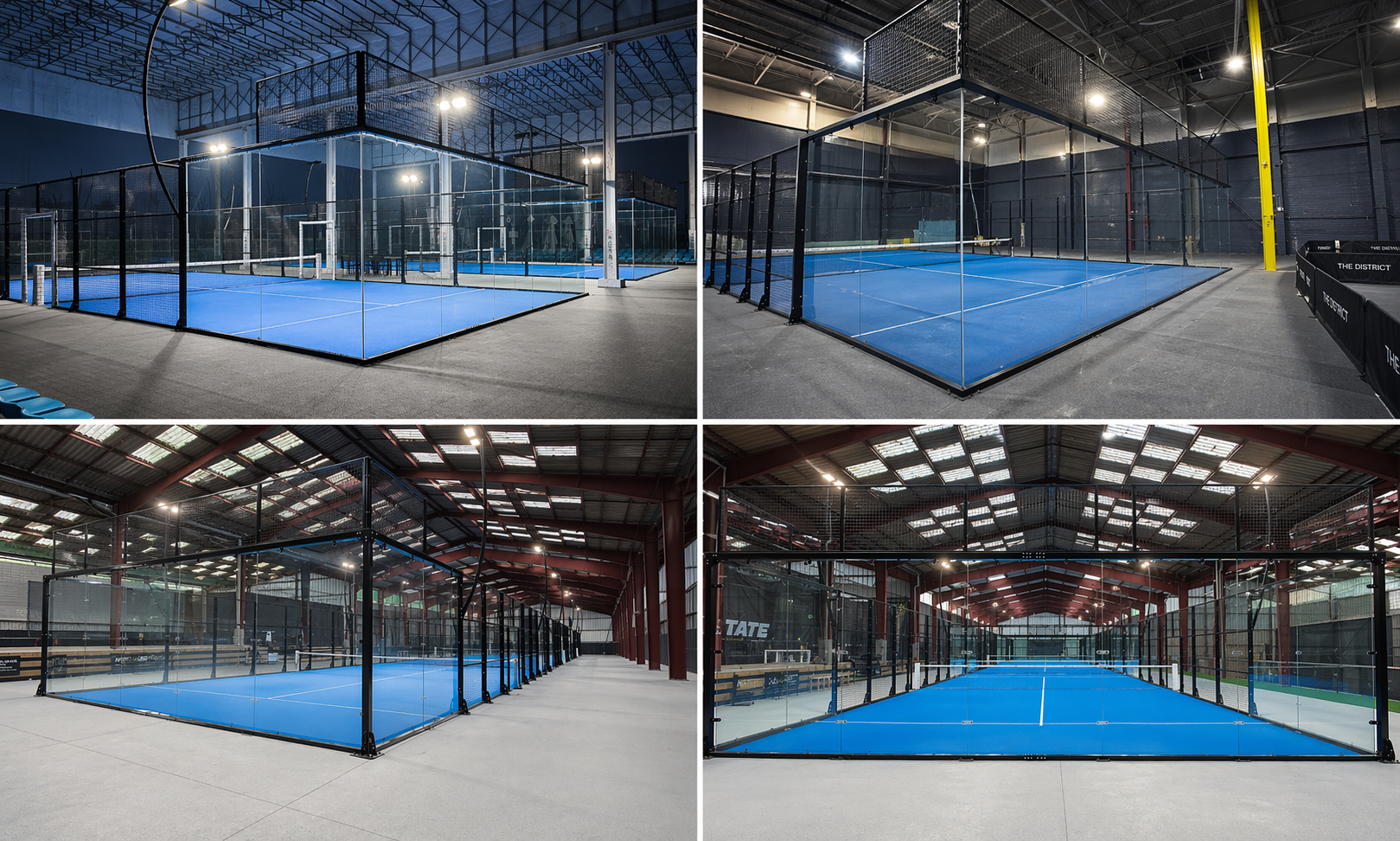
Deep insight. Look at the table again and notice where the risk sits. Step 6 is the only box the factory controls, and it is also the box that most often derails Australian projects — because a court already in a container at the port cannot be re-certified retrospectively.
Steel that arrived without traceable mill certificates cannot acquire them later. Glass without compliant marking cannot be marked at the site. This is why we now treat step 6 as a pre-production gate, not a shipping document.
Real-world insight. Our internal rule is that we do not start purchasing for an Australian order until six things are confirmed in writing: the final court model and layout; the engineer’s confirmed footing and anchorage interface; the steel and glass evidence requirements; whether lighting and any techo de la cancha de pádel are in this approval round; the surveyor’s document list; and who the importer, installer and after-sales party are. Clients sometimes find that slow. It has never once been slower than a rejected permit.
Which Australian Standards Actually Apply to an Imported Padel Court?
The core set is short. Wind loading comes from AS/NZS 1170.2, steelwork from AS 4100, concrete footings from AS 3600, galvanizing from AS/NZS 4680, glass from AS 1288 and AS/NZS 2208, and lighting from AS 2560 and AS 4282. All of them sit under the NCC, which is the legal instrument behind padel court certification Australia.
| Element | Estándar | What it governs | Who evidences it |
|---|---|---|---|
| Wind actions | AS/NZS 1170.2 | Wind region A–D, terrain category, design gust for the site | Australian engineer |
| Estructura de acero | AS 4100 | Structural design of the steel frame | Australian engineer |
| Concrete footings | AS 3600 | Slab, ring beam, reinforcement, anchorage into concrete | Australian engineer |
| Steel products | AS/NZS 1163, 3678, 3679 | Grade, mechanical properties, traceability of sections | Factory (mill certificates, testing) |
| Galvanizing | AS/NZS 4680 | Hot-dip galvanized coating mass and finish | Factory (coating records, testing) |
| Paint / duplex systems | AS/NZS 2312.2 | Corrosion protection by durability category | Factory (process records, DFT readings) |
| Safety glass | AS 1288 + AS/NZS 2208 (now AS 2208:2023) | Grade A safety glazing, impact classification, marking | Factory (accredited test report + marking) |
| Sports lighting | AS 2560.2.1, AS 4282 | Illuminance levels and obtrusive light control | Lighting designer + factory data |
| Overall compliance | NCC / National Construction Code | Performance requirements and evidence of suitability | Building surveyor accepts |
Deep insight. Notice how the table splits. Everything in the “Australian engineer” rows is site-dependent and cannot be pre-certified in China. Everything in the “factory” rows is product-dependent and can — and should — be locked before production.
Corrosion category is the one that catches people out. A court 400 metres from the surf in Wollongong and a court in inland Bendigo need different coating systems, and that decision has to be made at order stage, not on site. We cover the selection logic in our padel court Australia guide and the load side in our padel court wind load article.
Real-world insight. Australian engineers rarely ask us to redesign the court. What they ask for is verification data — section sizes, steel grade, connection detail and the glass fixing arrangement — so they can check the system against AS 4100 and AS/NZS 1170.2 for that site. On every Australian project so far the structural frame has been accepted as supplied. What changed was the footing design, and occasionally the glass thickness.
Is ACRS Certification Compulsory for Imported Padel Court Steel?
No — ACRS is a voluntary third-party scheme, not a legal requirement. But it becomes contractually compulsory the moment your engineer or specification calls for it, and by then it is very hard to add. Understanding this distinction is worth thousands of dollars on a padel court certification Australia project.
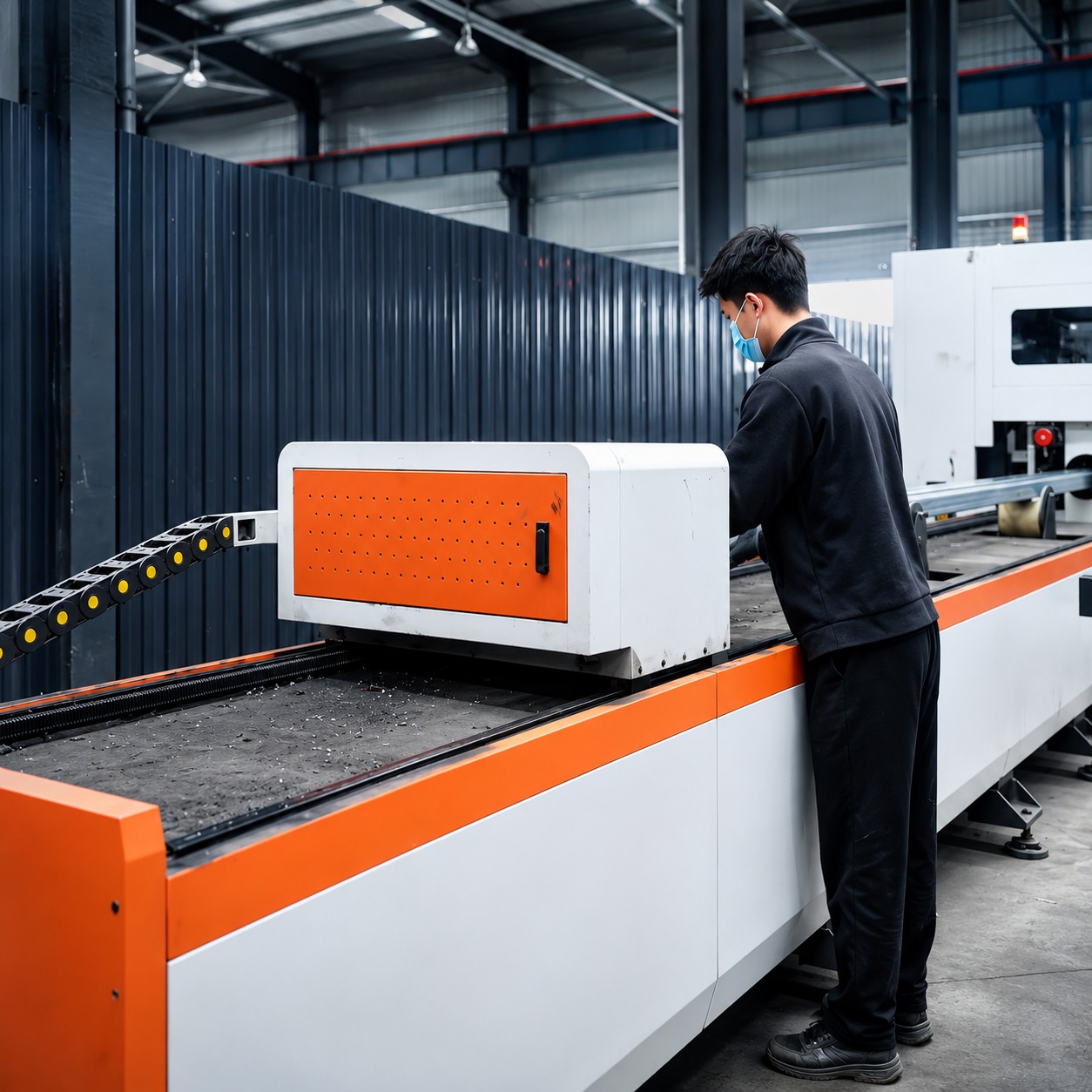
ACRS (the Australasian Certification Authority for Reinforcing and Structural Steels) certifies specific steel mills and processors against AS/NZS standards such as AS/NZS 1163 for cold-formed hollow sections. It is a two-stage scheme: the mill is certified, and downstream processing is certified separately, so the chain from mill to fabricated member stays traceable.
Key facts
- ACRS certificates attach to a named mill, product type, grade, size range and validity period — not to a padel court factory as a company.
- There is no such thing as “PanoCourt is ACRS certified”. A factory can only supply ACRS-certified steel and prove the chain to your members.
- ACRS is voluntary. Where it is not held, the specification normally requires the contractor to demonstrate compliance with the relevant AS/NZS standard by other means, with the principal’s prior written approval.
- Concrete reinforcement is a separate question — your Australian builder buys the rebar locally, so ACRS on rebar is a local supply issue, not an import issue.
Deep insight. Three supply strategies work in practice, in descending order of certainty.
First, source the sections from an ACRS-certified mill at procurement stage and maintain a purchase-order → heat number → mill test certificate → member mark traceability table. This is the cleanest route and the only one that never gets argued about.
Second, where the engineer agrees in advance and in writing, evidence the existing supply chain with mill test certificates plus independent sampling and testing to the relevant AS/NZS standard. This route works but is not guaranteed to be accepted.
Third, a hybrid: the factory supplies the court system while critical steel, anchors or glass are procured locally in Australia — with the contract stating clearly who owns the interface, the cost and the warranty.
Real-world insight. The mistake we see most often is a supplier presenting a generic material certificate as if it were ACRS certification. Building surveyors in Australia are actively trained to spot fake and mismatched steel test certificates, because non-conforming imported steel has been a live policy issue there for a decade.
If your quotation says “ACRS certified steel”, ask for the ACRS certificate number, the mill name on it, and the heat numbers that will appear on your shipment. A supplier who can answer that in a day is telling the truth. A supplier who goes quiet is not — and our guide on how to verify a China padel court manufacturer covers the rest of that test.
How Do You Prove AS/NZS 2208 Grade A for Chinese Tempered Glass?
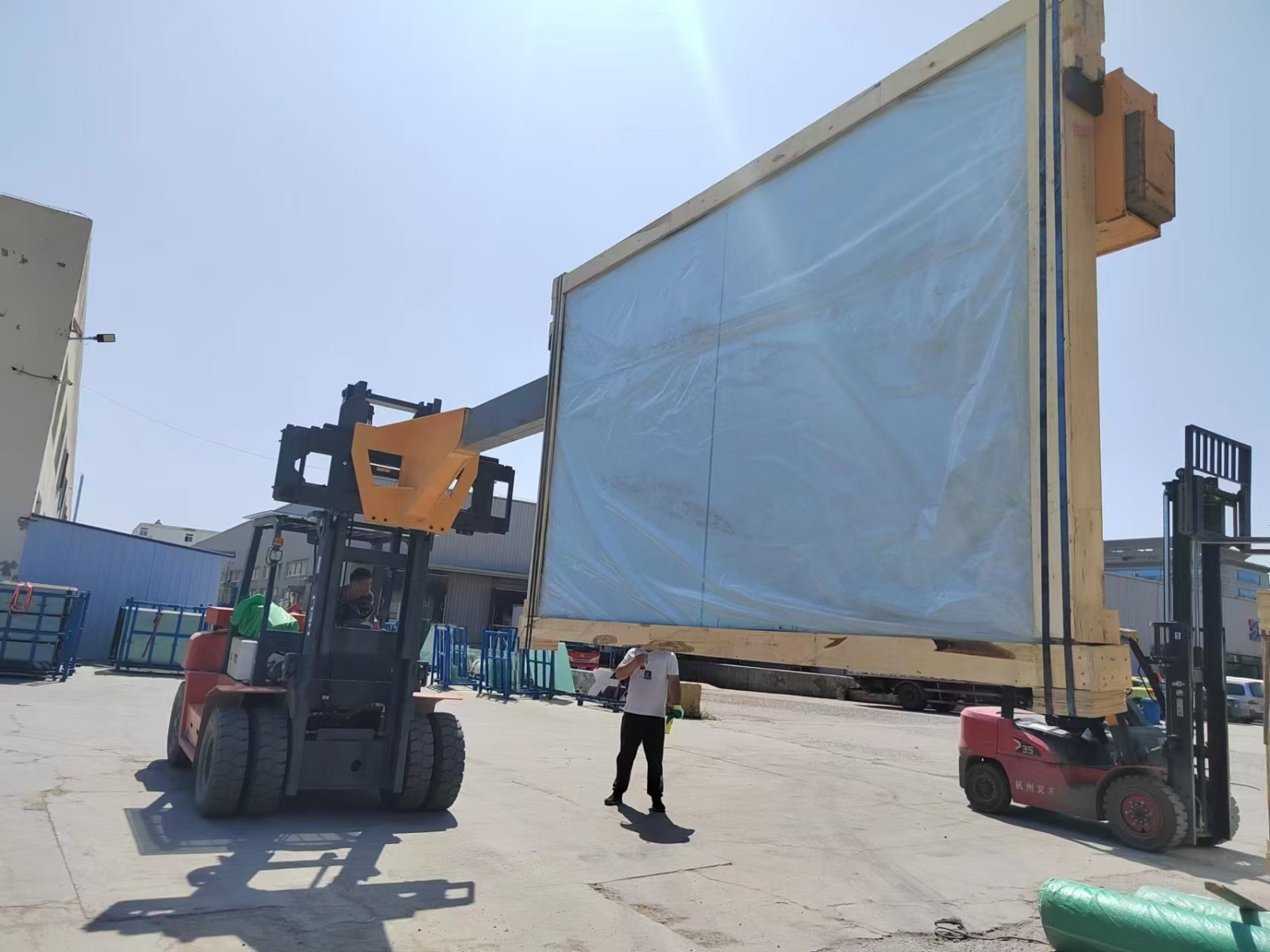
With a test report from an accredited laboratory plus compliant per-pane marking. Proving the glass is “tempered” is not enough. Australian surveyors want the glass classified as Grade A safety glazing material, evidenced by testing, and identifiable pane by pane on site.
AS 1288 sets out the minimum marking content, and this is what an inspector physically looks for on the glass: the manufacturer’s name, trademark or code; the type of safety glazing material (T for toughened); the standard it was tested to (AS/NZS 2208); the grade classification (A); and a number for the nominal thickness.
In practice, a mark reading something like [maker] T AS/NZS 2208 A 12 on the corner of each 12 mm panel is what makes a site inspection painless. Note also that the standard de-jointed in 2023 and is now published as AS 2208:2023 — confirm with your surveyor which edition they are applying.
Key facts
- Chinese CE or ISO documents for tempered glass are generally no accepted as evidence against an Australian standard.
- A GB 15763.2 certificate proves tempering to a Chinese standard; it does not classify the glass as Grade A under AS/NZS 2208.
- The test evidence must correspond to your project’s actual thickness, maximum pane size, hole pattern and edge treatment.
- The fragmentation test in AS/NZS 2208 covers thicknesses up to and including 12 mm — which happens to cover standard padel glass.
- Heat-soak testing is a separate, optional risk-reduction step against nickel sulphide inclusions. Some Australian engineers request it on overhead or high-consequence glass.
Deep insight. Here is the practical solution most buyers miss. The NCC does not require the testing to be done in Australia. It requires a report from an Accredited Testing Laboratory — and accreditation includes laboratories accredited by bodies that are signatories to the ILAC Mutual Recognition Arrangement.
China’s national accreditation body, CNAS, is an ILAC MRA signatory. That means a CNAS-accredited ISO/IEC 17025 laboratory report, testing your actual glass specification to AS/NZS 2208, is capable of being accepted as evidence of suitability. The report must name the accreditation body, the certificate number, a scope that covers the test method, and the specific product tested. Always have your engineer confirm acceptance antes you commission the test.
Real-world insight. Testing glass to AS/NZS 2208 in China through an accredited laboratory typically costs a fraction of shipping panels to Australia for local testing, and it can be done during the 25–30 day production window rather than after arrival.
On one project this single decision — test in China against the Australian standard rather than assume the CE document would pass — saved roughly six weeks and a container of glass that would otherwise have been unusable.
What Is “Evidence of Suitability” and Why Does It Solve the Certification Problem?
Evidence of suitability is the NCC’s own mechanism for proving a product is fit for purpose, and it deliberately allows several routes — not just one certificate. For an imported court, it is the mechanism that makes padel court certification Australia solvable at all.
Part A5 of the NCC lists the acceptable forms of documentary evidence. In plain terms, these are:
| Route | What it is | Realistic for a padel court? |
|---|---|---|
| CodeMark Certificate of Conformity | Highest-level national product certification | Rarely — cost and scope are aimed at mass-market building products |
| State or Territory Certificate of Accreditation | Jurisdictional accreditation where it exists | Rara vez |
| Certificate from a JAS-ANZ accredited certification body | Third-party product certification | Sometimes, for specific components |
| Report from an Accredited Testing Laboratory | Test report to the relevant standard from an ISO/IEC 17025 accredited lab (NATA, or an ILAC MRA signatory such as CNAS) | Yes — the main route for glass, steel and coatings |
| Certificate or report from a professional engineer | An Australian engineer’s assessment that the product or system is fit for purpose | Yes — the main route for the court system as a whole |
| Product Technical Statement | Structured documentary statement of product characteristics | Yes — as supporting evidence, not standalone |

Deep insight. The combination that works, and that Australian surveyors are used to seeing on offshore-manufactured structures, is the last two rows together: accredited laboratory test reports on the materials, plus an Australian professional engineer’s certificate on the system.
That is the answer to “how do we certify a Chinese padel court in Australia”. You are not buying a certificate. You are assembling a package: verifiable material evidence from the factory, wrapped in an Australian engineer’s signature.
Real-world insight. When we explain this to Australian clubs, the objection is usually cost — they assume engaging a local engineer is expensive enough to erase the price advantage of factory-direct supply. It is not, and the next two sections show the numbers. Engaging one competent local structural engineer, and giving them a factory that answers document requests within 48 hours, is the cheapest compliance strategy available.
How Did One Australian Club Solve the Certification Problem?
A three-court indoor project in regional Victoria is the clearest example. The details below are anonymised at the client’s request, but the sequence and the outcome are real.
The club leased a 1,400 m² warehouse with a 9.5 m clear height and an existing 20-year-old concrete slab. They wanted three indoor courts and had already received a landed-cost estimate from us. Their first instinct was the common one: ask the factory for “Australian certification” and treat approval as a formality once the container arrived.
Their building surveyor stopped that immediately. The warehouse conversion was a change of use, the courts were fixed structures anchored into a slab of unknown reinforcement, and a building permit was required. Here is what they actually did.
What the club did, in order
- Engaged a private registered building surveyor first, and asked one question: what documents will you need to issue this permit? They got a written list.
- Engaged a local structural engineer on a fixed fee, before placing the order. The engineer’s brief was footing and anchorage design plus verification of our court system for that building.
- Commissioned slab investigation — core sampling and a scan for reinforcement — because the existing slab could not be assumed adequate. It was 120 mm, unreinforced in the relevant zones, and would not take the anchors.
- Sent us the engineer’s document list. We supplied assembly drawings, section sizes and grades, connection details, anchor bolt loads at the base plate, coating specification and glass specification. That took four working days.
- Commissioned an accredited laboratory report for the 12 mm glass to the Australian safety glazing standard, and confirmed acceptance with the engineer antes testing.
- Received the engineer’s design documentation and design certificate, which the surveyor added to the permit file.
- Built new isolated pad footings tied into the existing slab, per the engineer’s design, rather than anchoring into the old slab.
- Installed with a local crew under our remote supervision, with the engineer attending the structural inspection stages.
The outcome. The permit was issued without a request for further information. The total local consultant and testing cost was in the mid-five-figure range in Australian dollars across three courts — including the slab investigation, which had nothing to do with us and would have been required for any brand of court.
The club’s own assessment afterwards was that the slab discovery alone justified the process. Anchoring three courts into a 120 mm unreinforced slab would have been a serious safety problem, and no factory in the world could have warned them of it from 8,000 kilometres away.
The lesson. They did not solve padel court certification Australia by finding a more certified factory. They solved it by hiring the right local professional early and making the factory work to that professional’s list. Every Australian project we have supplied since has followed the same order of operations.
Planning an Australian club? Send us your building surveyor’s document list before you place an order. We will map each item to what we can already evidence from production records, and flag anything that needs a testing route — while there is still time to fix it at procurement stage.
How Much Does Padel Court Certification Australia Actually Cost?
Budget roughly AUD 10,000–25,000 in local consultant and testing fees for a two to four court project without a planning permit, y AUD 16,000–45,000 where a planning permit is triggered. Per court that is usually AUD 3,000–8,000 — a real cost, but a small share of total project value.
| Artículo | Indicative AUD range | Notas |
|---|---|---|
| Geotechnical investigation | 2,500 – 6,000 | Boreholes or test pits; more for difficult access |
| Slab investigation (indoor conversions) | 1,500 – 4,000 | Coring and reinforcement scanning |
| Structural engineering + design certificate | 3,500 – 9,000 | Footing design, anchorage, wind verification |
| Structural inspections during construction | 1,000 – 3,000 | Per the surveyor’s inspection stages |
| Building surveyor, permit and levies | 2,500 – 6,000 | Varies by state and project value |
| Town planner and planning permit (if triggered) | 4,000 – 15,000 + council fees | Lighting and acoustic reports add cost |
| Accredited product testing (if factory evidence is insufficient) | 1,500 – 6,000 | Glass and steel; avoidable with the right factory |
| Lighting and acoustic assessment (if required) | 2,000 – 6,000 | Common for outdoor courts near residential zones |
These are indicative market ranges and vary significantly by state, council, site and project value. Always obtain written quotes from local consultants — we do not quote Australian professional fees and neither should any factory.
Deep insight. Compare that against the cost of getting it wrong. Re-testing glass after arrival, replacing non-compliant panels, air-freighting substitute components, holding a container at a port, or re-doing footings designed on a wrong assumption will each individually exceed the entire consultant budget above.
The most expensive scenario we have seen quoted — a full glass replacement plus freight for a small project — was roughly four times the cost of doing padel court certification Australia properly from the start.
Real-world insight. The compliance cost per court also drops sharply with volume. Engineering, geotechnical and surveyor fees are largely fixed per site, so a six-court club pays roughly the same as a two-court club.
This is one reason phased club builds in Australia often end up more expensive per court than a single larger build. It is worth modelling alongside your landed cost, your total commercial cost y el Calculadora de costos de canchas de pádel before deciding on phasing.
What Documents Should You Ask the China Padel Court Factory For?
Ask for a single, numbered evidence pack tied to your final model, your final bill of materials and your actual shipment batch. Generic brochures and unlinked certificates are the warning sign.
| Module | What the factory should supply | What to check |
|---|---|---|
| General arrangement | Court model, plan dimensions, overall height, post, glass and light pole layout | Must match the final contract and production version |
| Structure and connections | Assembly drawings, member sizes, steel grade, connection nodes, bolt specs, torque table | Generic drawings are not a site footing design |
| Steel traceability | Purchase source, mill test certificates, heat numbers, batch-to-member mapping, ACRS evidence if specified | Certificate must match the actual mill, grade and size |
| Glass conformity | Thickness, max pane size, hole positions, edge treatment, accredited test report, per-pane marking sample | “Tempered” alone is insufficient; check the marking content |
| Coating and corrosion | Galvanizing or paint system, process description, measured thickness readings, inspection records | Verify the standard’s applicability before claiming compliance |
| Anchorage and installation | Installation sequence, anchor data, torque values, glass handling and lifting instructions | Anchor type, edge distance and embedment are the engineer’s call |
| Quality and after-sales | Factory inspection records, packing list, installation manual, warranty scope, spare parts list | Warranty must be separated from local installation liability |
Real-world insight. Ask for this pack antes you pay a deposit, not after. Our Guía para compradores de canchas de pádel sets out how to test whether a supplier can actually produce it, and the China padel court factory import guide covers the commercial documents that sit alongside it.
A factory that has genuinely shipped to a regulated market will send a structured pack within days. A trading company will send a folder of PDFs that do not reference each other.
How Should the Contract Split Responsibility Between Factory and Buyer?
In one paragraph, written into the contract, so that no one argues about it during a permit review. This is the wording we use, and Australian buyers are welcome to adapt it:
PanoCourt is responsible for supplying the court and its technical and product documentation. Site approvals, soil investigation, footing and anchorage design, local engineering certification, permits, construction and inspections must be completed locally in Australia by the buyer and its qualified consultants and contractors.
Key facts
- Name the importer of record, the builder, the installer and the after-sales party explicitly. A distributor cannot verbally assume the owner’s obligations.
- State that the factory does not certify site compliance, footings, anchorage, wind loading for the site, existing slabs or local permits.
- State that the factory does warrant supply to the approved bill of materials and the truthfulness of its evidence pack.
- Separate the product warranty from installation liability — if a local crew installs, the factory cannot warrant workmanship. Our padel court installation service page explains where the boundary usually falls.
- Tie the payment schedule to the pre-production document gate, so production does not start before the engineer’s requirements are confirmed.
Deep insight. This clause protects the buyer as much as the factory. A supplier who promises “full Australian compliance” is making a promise they cannot keep, and when the permit stalls the buyer has a worthless contractual remedy and a delayed club opening.
A supplier who states the boundary clearly is telling you where you need local help — which is exactly the information you need at contract stage. Victorian buyers can verify practitioner registration and permit obligations directly with the Building and Plumbing Commission.
What Mistakes Make Australian Padel Court Projects Stall?
Five, and all five are avoidable.
- Ordering before appointing the engineer. The engineer’s document list should be the production brief. Reversed, it becomes a retrofit exercise.
- Assuming an existing slab is adequate. Thickness, reinforcement, strength, cracking, edge distance and anchor conditions all have to be confirmed. This is the most common indoor surprise, and it drives warehouse padel court requirements more than any other factor.
- Treating CE or ISO documents as Australian evidence. They are evidence of something else. Test to the Australian standard, through an accredited laboratory.
- Assuming a fence exemption applies. Some jurisdictions exempt tennis court chain-mesh fencing. A padel court made of glass, structural steel, fixed anchors and lighting is not the same thing and should not be assumed exempt.
- Leaving lighting and roofing out of the first approval round. Adding floodlighting or a canopy later can re-trigger planning assessment. Decide the full scope before the permit application, and check the outdoor padel court foundation implications at the same time.
Preguntas frecuentes
Is there a single Australian certificate for an imported padel court?
No. Padel court certification Australia is a package, not a certificate: an Australian engineer certifies the site-specific design, and the factory supplies product conformity evidence. Anyone selling you a single “Australia certified padel court” document is misrepresenting how the system works.
Do I need a building permit for a padel court in Australia?
In most cases, yes, because a padel court is a fixed structure with wind-loaded glass anchored to a foundation. Whether a planning permit is also needed depends on your zone, overlays, lighting, acoustics and intended use. Confirm both with your council and a registered building surveyor before ordering.
Can a Chinese factory issue a Regulation 126 certificate?
No. A Regulation 126 certificate of compliance is issued in Victoria by a registered Australian building practitioner — typically a structural engineer — and addressed to the relevant building surveyor. Overseas manufacturers cannot issue it, and a supplier who claims otherwise does not understand the Victorian system.
Is ACRS certification mandatory for imported padel court steel?
ACRS is voluntary in law but becomes mandatory in practice when your engineer specifies it. If it is specified, source from an ACRS-certified mill at procurement stage and maintain traceability from purchase order to heat number to member mark. Retrofitting ACRS after production is not possible.
Will Chinese CE-marked tempered glass be accepted in Australia?
Generally not on its own. Australian surveyors want the glass classified as Grade A safety glazing under AS/NZS 2208 with compliant marking under AS 1288. A CE or GB certificate proves conformity to a different standard, so plan for testing to the Australian standard at production stage.
Can the glass be tested in China rather than Australia?
Yes, if the laboratory is accredited under ISO/IEC 17025 by an accreditation body that is an ILAC MRA signatory — CNAS in China qualifies. The report must cover your actual thickness, size and hole pattern. Always confirm acceptance with your engineer in writing before commissioning the test.
How much does padel court certification Australia cost?
Local consultant and testing fees typically run AUD 10,000–25,000 for a two to four court project without a planning permit, or AUD 16,000–45,000 where a planning permit is triggered. Fees are largely fixed per site, so cost per court falls sharply as court count rises.
Does an indoor padel court in a warehouse avoid these requirements?
No. Indoor padel court construction can trigger change of use, slab capacity checks, anchorage design, clear height, fire and egress requirements. An existing concrete slab must never be assumed adequate — core sampling and reinforcement scanning are routine and often decisive.
What are padel court dimensions in Australia?
The playing area is the international 20 m × 10 m, matching the world standard, so dimensions are not the Australian variable. What changes locally is wind region, corrosion zone, run-off and clear height requirements, and the setbacks and heights your council will accept.
How long does Australian approval take?
Allow eight to sixteen weeks from appointing consultants to permit issue for a straightforward building permit, and considerably longer where a planning permit with lighting and acoustic assessment is required. Run it in parallel with the 25–30 day factory production window rather than after it.
Conclusion: Certification Is a Sequence, Not a Certificate
Padel court certification Australia is not a barrier to importing from China. It is a division of labour. The factory’s job is to produce a court to the approved bill of materials and supply evidence an Australian engineer can independently verify: traceable steel, accredited glass test reports, real coating records, honest drawings.
The Australian engineer’s job is to design footings and anchorage for your soil, verify the system for your wind region, and put a signature on it. The building surveyor’s job is to check that both were done.
Clubs that understand this order of operations get approved without drama and keep the cost advantage of factory-direct supply intact. Clubs that treat approval as something to sort out after the container lands pay for it twice. Start with the building surveyor’s document list, appoint your engineer before you order, and choose a cancha de pádel con vistas panorámicas supplier that can answer that document list within days rather than weeks.
Get Your Australian Document List Reviewed — Free, Within 48 Hours
Send us your engineer’s or building surveyor’s document list and we will tell you within 48 hours which items we can already evidence from existing production records, and which items need a testing route — before you pay a deposit.
Useful details to include: your state and council, indoor or outdoor, number of courts, whether lighting or a canopy is in scope, and whether your engineer has been appointed.
Prefer to talk first? Email info@panocourt.com or message us on WhatsApp.