Dernière mise à jour : 4 juin 2026 | Par l'équipe d'ingénierie et d'exportation de PanoCourt — fabricant de courts de padel panoramiques conformes aux normes FIP, exportés dans plus de 20 pays
Si vous êtes en train d'évaluer Coût de construction d'un terrain de padel en Équateur pour 2026, vous vous lancez sur l'un des marchés des sports de raquette qui connaît la croissance la plus rapide d'Amérique latine, et ce au moment idéal. Selon le Rapport mondial sur le padel 2026 Selon Playtomic et PwC Strategy&, le monde a vu s’ajouter 7 898 nouveaux terrains et 4 969 nouveaux clubs rien qu’en 2025, portant le total mondial à 58 334 terrains — soit six fois plus qu’en 2016. L’Équateur s’inscrit dans cette tendance : selon les estimations du secteur, le pays comptera environ 250 courts répartis dans plus de 70 clubs d’ici fin 2025, principalement à Quito, Guayaquil, Cumbayá, Samborondón, Cuenca, Manta et Ambato.
Ce guide présente en détail les véritables Coût de construction d'un terrain de padel pour un projet prévu en Équateur en 2026 — ligne par ligne, en incluant le coût CIF à quai à Guayaquil, les droits d’importation équatoriens prévus par l’accord de libre-échange Chine-Équateur, l’installation, la maintenance et le retour sur investissement. Les chiffres ci-dessous proviennent de nos propres tarifs d’usine, des normes techniques FIP et des données de marché publiées ; il ne s’agit pas d’estimations génériques.
Coût de construction d'un terrain de padel en Équateur en 2026 : chiffres clés
Pour les investisseurs qui souhaitent avant tout connaître le résultat net, voici une estimation réaliste Coût de construction d'un terrain de padel (par terrain) livrés et installés en Équateur en 2026 :
- Court de padel classique en extérieur (clé en main, installé en Équateur) : 28 000 à 38 000 dollars américains par terrain
- Court de padel panoramique en extérieur (clé en main, installé en Équateur) : 36 000 à 48 000 dollars américains par terrain
- Court de padel en salle (cour uniquement, hors bâtiment) : 34 000 à 52 000 dollars américains par terrain
- Court de padel couvert avec auvent/toiture en acier : 70 000 à 110 000 dollars américains par terrain
- Court de padel modulaire / temporaire (semi-permanent) : 22 000 à 32 000 dollars américains par terrain
Ces chiffres sont conformes aux références internationales. Le guide des coûts pour 2026 publié par Calculateur de capacité des installations sportives estime que la moyenne mondiale se situe entre 24 000 et 65 000 dollars par tribunal, et 3B Padel indique qu'en 2026, un centre de padel couvert haut de gamme coûtera entre 70 000 et 90 000 € par terrain, structure comprise (soit environ 75 000 à 97 000 USD). Selon des informations locales spécifiques à l'Équateur provenant de En avant-première confirme que les courts de niveau professionnel dans l'agglomération de Guayaquil nécessitent déjà un investissement de 30 000 à 40 000 dollars américains par « cancha » — et ce, sans tenir compte de la mise à niveau vers de véritables courts panoramiques en verre que les tournois internationaux exigent désormais.
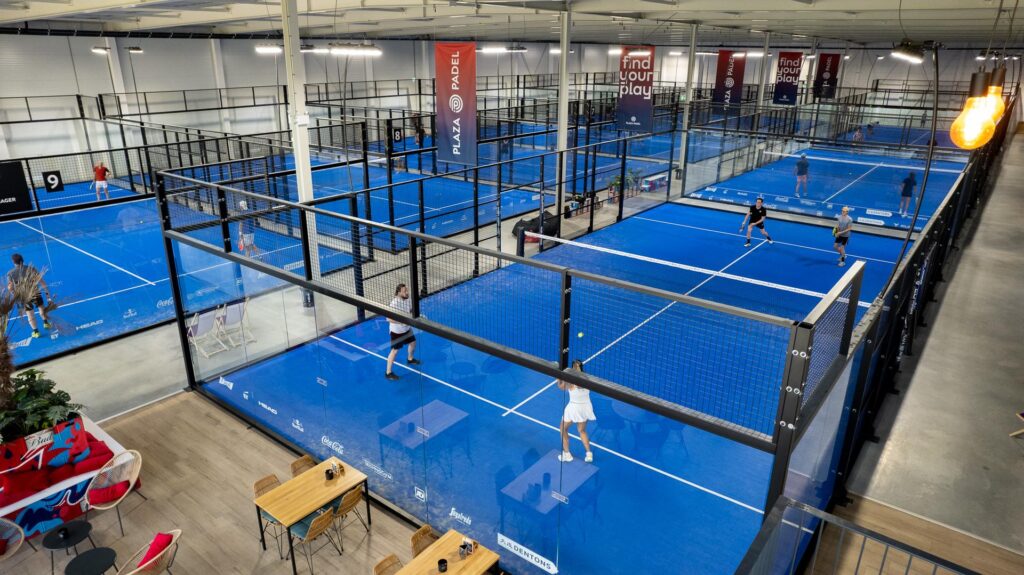
Pourquoi l'Équateur est-il le marché idéal pour la construction de terrains de padel en 2026 ?
Données sur la demande : le boom du padel en Équateur en chiffres
Le padel a fait son apparition en Équateur vers 2016 et a connu un essor fulgurant après la pandémie. La presse sportive locale (Diario Expreso, janvier 2026) indique que l'Équateur compte désormais plus de 70 clubs et entre 200 et 250 courts enregistrés, avec des zones à forte concentration à Quito (notamment à Cumbayá, Puembo et Tumbaco — plus de 60 courts rien que dans cette vallée), Guayaquil, Samborondón, Manta, Ambato, Ibarra et Cuenca. En avant-première On recense au moins 14 complexes de padel rien que dans l'agglomération de Guayaquil, dont beaucoup ont ouvert leurs portes au cours des 24 derniers mois et augmentent déjà le nombre de courts pour répondre à une demande qui, selon eux, ne semble pas avoir de limite.
En prenant un peu de recul, le tableau est encore plus saisissant. Le Rapport mondial 2025 de la FIP sur le padel a enregistré plus de 35 millions de joueurs à l'échelle mondiale, avec une hausse de 15,21 TP3T du nombre de courts et une augmentation de 421 TP3T du nombre de membres affiliés par rapport à l'année précédente. Perspectives sur la recherche en entreprise Selon les prévisions, le marché mondial du padel devrait passer de 0,38 milliard de dollars en 2026 à 1,13 milliard de dollars d’ici 2035, soit un TCAC de 12,93%. L'Amérique latine compte déjà environ 23% des courts mondiaux, et l'Équateur reste relativement sous-équipé par rapport au Chili et à l'Argentine — ce qui signifie que la rentabilité par court en 2026 sera exceptionnellement favorable pour les premiers exploitants.
Guide complet pour la conception, la construction, l'achat, l'exploitation et l'entretien d'un terrain de padel en Équateur
Étape 1 : Guide de sélection d'un emplacement pour un club de padel (marché équatorien)
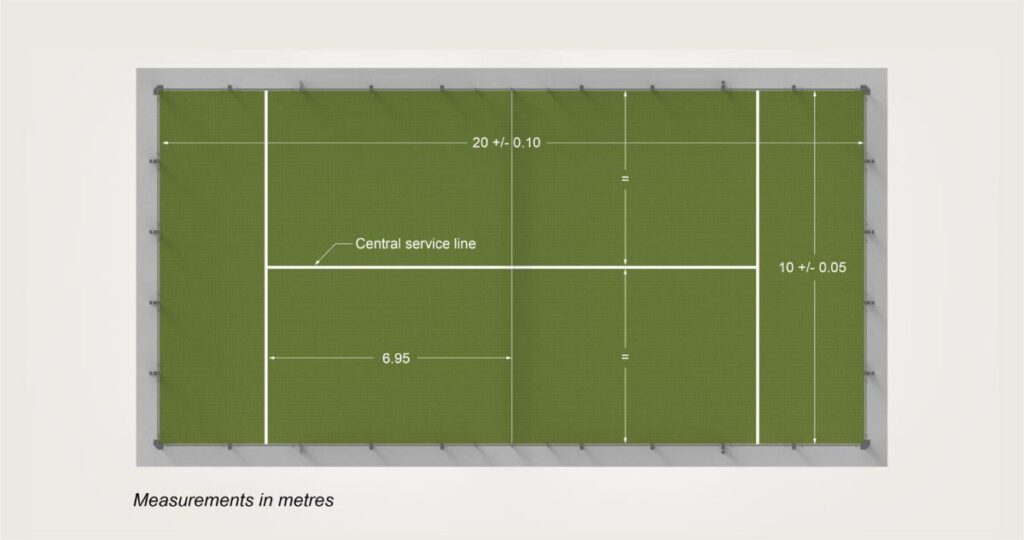
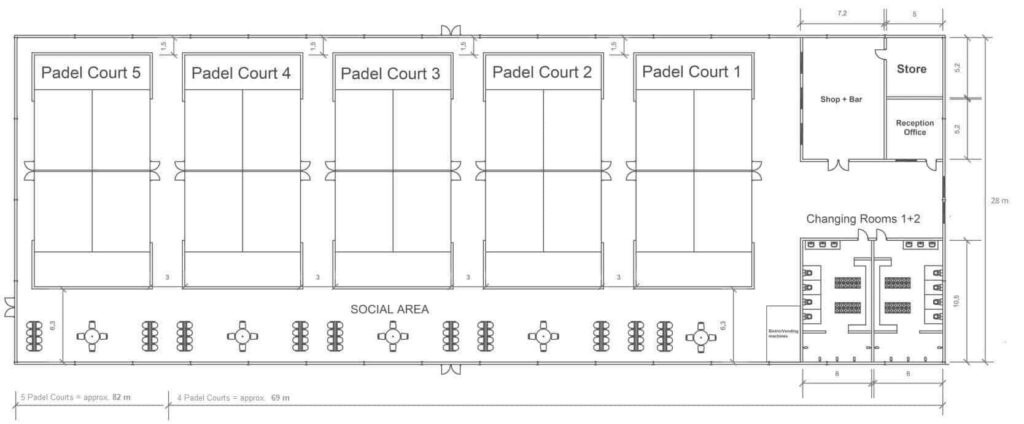
Bien que le terrain de tennis occupe à lui seul 200 m², les investisseurs doivent prévoir un espace supplémentaire pour :
- Distance de sécurité
- Voies d'accès
- Zone réservée aux spectateurs
- Poteaux d'éclairage
- Système de drainage
- Accueil
- Vestiaires
- Café
- Parking
Surface recommandée par terrain
| Article | Zone |
|---|---|
| Aire de jeu du terrain | 200 m² |
| Distance de sécurité | 30 à 50 m² |
| Espace de circulation | 20 à 30 m² |
| Zone réservée aux spectateurs | 20 à 40 m² |
| Accès pour la maintenance | 10 à 20 m² |
| Superficie totale recommandée | 280 à 350 m² |
Par conséquent : règle empirique
1 terrain de padel = surface minimale requise de 300 m²
Tailles de clubs recommandées
| Type de club | Tribunaux | Terrains recommandés |
|---|---|---|
| Villa privée | 1 | 300 à 500 m² |
| Hôtel-resort | 1-2 | 500 à 1 000 m² |
| Club Boutique | 2-3 | 1 000 à 1 500 m² |
| Club commercial | 4 | 1 800-2 500 m² |
| Académie professionnelle | 6-8 | 3 000 à 5 000 m² |
| Centre sportif de padel | 10+ | plus de 6 000 m² |
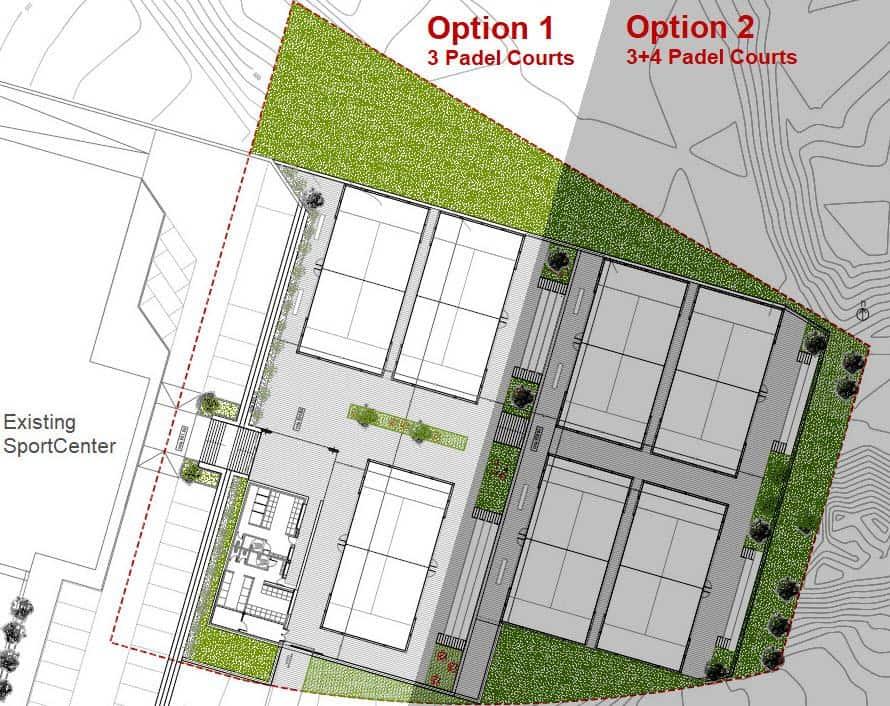
Où s'implanter : choix d'un site en Équateur
En Équateur, l'activité judiciaire s'articule autour de trois axes :
- Agglomération de Quito — Cumbayá, Tumbaco, Puembo, Valle de los Chillos et l'axe Interoceánica. Une zone de chalandise caractérisée par un revenu disponible élevé, une forte culture des clubs et un climat doux toute l'année (la présence d'un toit n'est pas strictement nécessaire pour jouer en plein air).
- Agglomération de Guayaquil / Samborondón — La Aurora (Daule), La Puntilla (Samborondón), Vía a la Costa. Le climat côtier, chaud et humide, rend construction d'un auvent ou d'un terrain de padel couvert une stratégie à long terme plus solide dans ce domaine.
- Villes secondaires — Cuenca, Manta, Ambato, Ibarra, Portoviejo. Coût foncier moins élevé, concurrence moindre, mise en service plus rapide si le projet est bien positionné.
Les meilleurs emplacements pour les clubs de padel
Toutes les parcelles disponibles ne constituent pas forcément un emplacement idéal pour un terrain de padel. La clientèle cible doit pouvoir rejoindre le club en moins de :À 5-15 minutes en voiture .Matrice de sélection des sites
| Type d'emplacement | Circulation | Potentiel d'adhésion | Coût de la location | Note d'investissement |
|---|---|---|---|---|
| Communautés résidentielles | Élevé | Élevé | Moyen | ⭐⭐⭐⭐⭐ |
| Appartements haut de gamme | Élevé | Très élevé | Moyen | ⭐⭐⭐⭐⭐ |
| Centres commerciaux | Très élevé | Élevé | Élevé | ⭐⭐⭐⭐ |
| Quartiers d'affaires | Élevé | Moyen | Élevé | ⭐⭐⭐⭐ |
| Parcs publics | Moyen | Moyen | Faible | ⭐⭐⭐ |
| Hôtels et complexes touristiques | Moyen | Élevé | Moyen | ⭐⭐⭐⭐ |
| Universités | Élevé | Moyen | Faible | ⭐⭐⭐⭐ |
| Complexes sportifs | Élevé | Élevé | Moyen | ⭐⭐⭐⭐⭐ |
| Zones industrielles | Faible | Faible | Faible | ⭐⭐ |
| Terres lointaines | Faible | Faible | Faible | ⭐ |
Ventilation des coûts de construction d'un terrain de padel, par élément
Pour comprendre Combien coûte la construction d'un terrain de padel ?, il faut aller au-delà du chiffre annoncé et examiner la nomenclature détaillée. Un terrain de padel conforme à la norme FIP repose essentiellement sur cinq systèmes techniques fonctionnant de concert : l’acier de construction, le verre trempé, le treillis métallique, le revêtement en gazon synthétique et l’éclairage LED — le tout soutenu par des fondations et (éventuellement) un toit ou un auvent.
1. Châssis en acier et quincaillerie structurelle (35–45% de frais de justice)
La FIP et les normes de construction en vigueur pour 2026 exigent l’utilisation de tubes en acier d’une épaisseur minimale de 3 mm, galvanisés à chaud afin de résister aux combinaisons de charges spécifiées par la FIP — des charges de vent d’au moins 500 N/m², voire supérieures pour les installations situées sur le littoral de Guayaquil. Les courts panoramiques utilisent des poteaux d’angle plus lourds et des contreventements renforcés pour soutenir les grands panneaux de verre sans cadre qui confèrent au court sa visibilité à 360°. Prix départ usine en Chine : 7 500 à 12 000 USD par terrain selon qu'il s'agit d'un modèle classique ou panoramique, et d'un renfort PREMIUM pour l'extérieur.
2. Parois en verre trempé (15–22%)
Les terrains conformes aux normes de la FIP utilisent du verre trempé de 10 mm ou 12 mm de hauteur, conforme aux normes ANSI Z97.1 / ASTM C1048 (ou à la norme équivalente EN 12150). Un terrain standard comprend 18 panneaux de verre, soit un total d'environ 72 m² de verre trempé. Les modèles panoramiques remplacent les piliers d'angle par des panneaux sans cadre de 12 mm, ce qui augmente à la fois la qualité visuelle et le coût des matériaux. Prix départ usine : entre 4 500 et 7 800 dollars américains par terrain.
3. Système à treillis métallique (3–5%)
Un treillis soudé galvanisé recouvre le mètre supérieur des parois latérales et arrière, portant la hauteur totale des parois à environ 4 m. La qualité du treillis est plus importante que ne le pensent les acheteurs : un treillis de qualité inférieure aux spécifications se déforme en moins de 18 mois dans les climats côtiers humides. Départ usine : 1 200 à 1 800 USD par terrain.
4. Surface de jeu en gazon synthétique (12–18%)
Le Rapport mondial sur le padel Il convient de noter que plus de 90% de courts de padel à travers le monde sont équipés de gazon synthétique, et que le choix entre un gazon fibrillé et un gazon monofilament a une incidence significative sur la rentabilité à long terme. Le gazon fibrillé (film fendu) est l’option d’entrée de gamme, moins coûteuse, mais nécessite un remplissage d’environ 15 kg/m² de sable de silice et un brossage plus fréquent. Le gazon monofilament offre des performances haut de gamme et une durée de vie de 5 à 8 ans en cas d’utilisation régulière. Une surface de court de 200 m² (20 m × 10 m), au prix moyen européen/nord-américain de 14 à 22 €/m², revient à 2 800 à 4 400 dollars américains par terrain avec coussin amortisseur.
5. Système d'éclairage à LED (5–8%)
Les normes de la FIP exigent un éclairage minimal de 300 lux pour les matchs amicaux et de plus de 500 lux pour les compétitions de niveau tournoi. La configuration type comprend 4 à 8 luminaires LED de 200 à 400 W chacun, installés à une hauteur de 6 m ou plus, avec une température de couleur comprise entre 5 000 et 6 000 K. Coût : entre 1 500 et 2 800 dollars américains par terrain pour un kit LED complet assorti d'une garantie de 5 à 7 ans.
6. Fondations et dalle en béton
C'est le seul poste important qui ne peut pas être importée. Une dalle en béton conforme à la norme FIP doit comporter une couche de béton armé de 10 à 15 cm avec un treillis métallique, une pente maximale de 1% pour le drainage, et une surface entièrement durcie avant la mise en place de l'ossature métallique. Padel N Play‘Selon la ventilation de 2026, le coût des fondations s'élève à 5 000–9 000 € par terrain. En Équateur, compte tenu des prix locaux du béton et de la main-d'œuvre, ce coût se situe entre 4 500 à 7 500 dollars américains par terrain, en fonction des conditions du sol et de la nécessité ou non de réaliser des travaux de drainage.
7. En option : auvent / toiture pour terrain de padel
Une verrière en acier ou une structure tendue pour un complexe de 4 courts coûte entre 120 000 et 250 000 euros, selon 3B Padel‘Données de 2026 : environ 30 000 à 65 000 dollars US par court, une fois amortis. En Équateur, l’installation d’auvents se justifie surtout d’un point de vue économique à Guayaquil, à Samborondón et dans d’autres localités côtières où, sans cela, la pluie et la chaleur de l’après-midi entraîneraient la fermeture des courts pendant les heures de pointe.
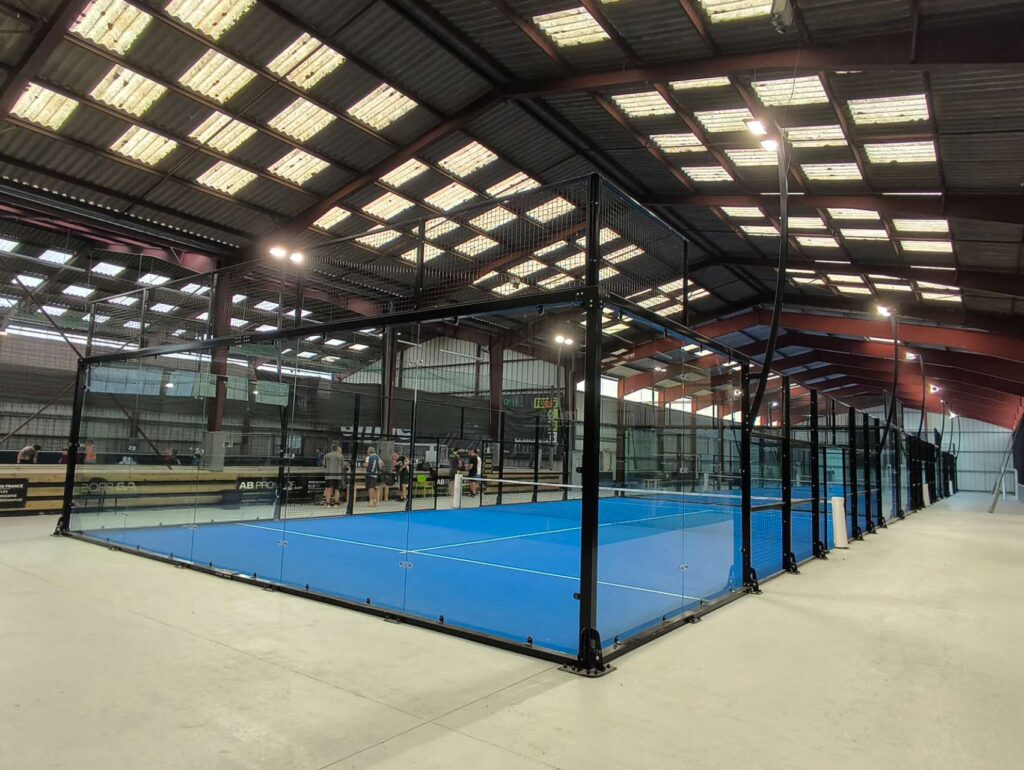
Coût d'un terrain de padel en salle par rapport à un terrain en plein air en Équateur
L'une des questions les plus fréquemment posées lors des recherches — Combien coûte un terrain de padel en salle par rapport à un terrain de padel en plein air ? — la réponse à cette question est plus claire en Équateur que sur la plupart des marchés :
- Coût d'un terrain de padel en plein air (Équateur, 2026) : Entre 28 000 et 48 000 dollars US, clé en main. Idéal pour les villes de la Sierra et des Andes (Quito, Cuenca, Ambato, Ibarra) où le climat est clément toute l'année.
- Tarif du court de padel en salle / couvert : Entre 70 000 et 110 000 dollars US par terrain, structure métallique de soutien ou couverture tendue comprise. Ce surcoût se justifie par un taux d’utilisation annuel supérieur de 25 à 35% dans les villes côtières et par la possibilité de facturer des tarifs horaires propres aux tournois.
Les données du secteur le confirment : une étude de marché datant de janvier 2026 indique que l'installation de terrains de padel en salle coûte environ 45% de plus que celle de terrains en plein air à l'échelle mondiale, ce qui freine son adoption dans les régions où le prix est un facteur déterminant. Le climat de Quito, en Équateur, situé à moyenne altitude, rend les terrains en plein air particulièrement économiques par rapport aux projets d’Europe du Nord ou du Moyen-Orient, où les installations en salle sont obligatoires.
Coût d'achat d'un système de terrain de padel
| Article | Coût estimé par terrain |
|---|---|
| Système classique de terrain de padel | 6 000 à 9 000 dollars américains |
| Système de terrain de padel panoramique | 7 500 à 12 000 dollars américains |
| Court panoramique haut de gamme | 12 000 à 18 000 dollars américains |
| Gazon synthétique | 1 200 à 2 500 dollars américains |
| Éclairage LED | 800 à 2 000 dollars américains |
| Accessoires | 300 à 800 dollars américains |
Droits d'importation, logistique et coût total à l'arrivée : de la Chine à l'Équateur
L’Équateur ne produisant pas de terrains de padel à grande échelle sur son territoire, la quasi-totalité des terrains installés dans le pays sont importés, principalement de Chine et d’Espagne. Les facteurs économiques favorisent désormais largement les terrains d’origine chinoise en raison de la Accord de libre-échange entre la Chine et l'Équateur, entré en vigueur le 1er mai 2024. Dans le cadre de cet accord de libre-échange, environ 90% de lignes tarifaires seront supprimées au cours de la période de transition, et environ 60% l'ont été dès le premier jour.
Fret maritime (par mer, conteneur complet)
Un terrain de padel complet est généralement expédié dans un conteneur HQ de 40 pieds (ou à raison de deux terrains par conteneur pour optimiser les coûts). La durée du transport depuis Shanghai, Ningbo ou Shenzhen jusqu’à Puerto Bolívar ou Posorja, à Guayaquil, est comprise entre 28 et 45 jours. Il faut compter des tarifs de fret maritime FCL de 2 800 à 4 500 dollars américains par conteneur de 40 pieds HQ aux conditions de 2026, en fonction de la saison et des tarifs du carburant.
Pour les projets entre la Chine et l'Équateur, le transport maritime représente un facteur de coût important, car les terrains de padel comportent des éléments lourds en acier et en verre. Les investisseurs doivent effectuer leurs calculs en tenant compte du volume des conteneurs, du port, du transport terrestre, des formalités douanières et de la livraison sur place.
| Article | Coût estimé |
|---|---|
| Fret maritime par conteneur | 1 500 à 3 500 dollars américains |
| Douanes, TVA, frais portuaires, documents | Cela dépend de la valeur CIF |
| Livraison en France métropolitaine | 300 à 1 500 dollars américains |
| Service de dédouanement | 200 à 800 dollars américains |
Douanes et taxes en Équateur
Selon PwC, Aperçus fiscaux mondiaux — Équateur (mise à jour 2026), les importations sont classées selon la nomenclature NANDINA. Les biens industriels et intermédiaires sont généralement soumis à des droits de douane compris entre 10 et 15%, tandis que de nombreux biens d’équipement bénéficient de taux compris entre 0 et 5%. Toutes les importations sont également soumises à une TVA (IVA) de 15%, à une contribution au Fonds équatorien pour le développement de l’enfance de 0,5% sur la valeur CIF, ainsi qu’à l’ICE le cas échéant. Les composants d’infrastructures sportives importés de Chine bénéficient de taux préférentiels au titre de l’accord de libre-échange (ALE) sur présentation d’un certificat d’origine valide. Pour un conteneur complet (FCL) de composants de terrain de sport, il faut s’attendre à un montant total de droits de douane + TVA + frais d’environ 18% – 25% de valeur CIF en 2026, selon la classification HS.
Installation sur place et main-d'œuvre
L'installation d'un terrain de padel standard prend entre 2 et 3 semaines une fois que la dalle a pris, et nécessite 4 à 6 ouvriers ainsi qu'un technicien chargé de la supervision. En Équateur, le coût de la main-d'œuvre locale pour l'installation complète d'un terrain s'élève à 2 500 à 4 000 dollars américains par terrain. Nous vous recommandons de superviser la première installation sur le terrain, soit en personne, soit par l'intermédiaire d'un technicien formé par le fabricant : un serrage incorrect des colliers de fixation du verre est la cause principale des réclamations au titre de la garantie à l'échelle mondiale.
| Article | Coût estimé par terrain |
|---|---|
| Fondations en béton | 6 000 à 15 000 dollars américains |
| Système de drainage | 1 000 à 4 000 dollars américains |
| Frais de main-d'œuvre pour l'installation sur place | 2 000 à 6 000 dollars américains |
| Grue / chariot élévateur / outils | 500 à 2 000 dollars américains |
| Travaux d'électricité | 1 000 à 4 000 dollars américains |
| Toit/auvent, en option | 15 000 à 45 000 USD et plus |
Estimation de l'investissement total
| Type de projet | Coût estimé par terrain |
|---|---|
| Court classique d'extérieur basique | 18 000 à 30 000 dollars américains |
| Court panoramique en plein air | 25 000 à 45 000 dollars américains |
| Court panoramique couvert haut de gamme | 45 000 à 80 000 USD et plus |
Pour un club commercial de 4 courts en Équateur, le budget total réaliste du projet pourrait se situer entre De 120 000 USD à plus de 300 000 USD, en fonction du terrain, du club-house, de la toiture, du parking, du café et de la décoration.
Coût annuel d'entretien d'un terrain de padel
Le coût de construction ne représente que la moitié du sujet. Les frais d'entretien annuels — souvent négligés lors de l'élaboration initiale du budget — s'élèvent, selon les sources, à 1 500–3 000 € par terrain à l'échelle mondiale, selon Padel N Play, soit environ 1 600 à 3 200 dollars américains par tribunal et par an en Équateur pour une installation bien exploitée. Cela comprend :
- Nettoyage trimestriel du gazon et redistribution du sable
- Inspection des vitres et vérification du couple de serrage des colliers de serrage
- Nettoyage des luminaires à LED et remplacement des ampoules
- Remplacement des mailles et des filets (les filets sont généralement remplacés tous les 12 à 18 mois)
- Nettoyage des canalisations avant la saison des pluies
Il convient de prévoir dans le budget le remplacement complet du revêtement (gazon synthétique) tous les 5 à 8 ans, pour un coût compris entre 2 200 et 4 500 dollars US par terrain, en fonction de la qualité du gazon. Le verre trempé, s'il est correctement posé, peut durer pendant toute la durée de vie structurelle du terrain, soit 15 à 20 ans.
Retour sur investissement : en combien de temps un court de padel est-il rentabilisé en Équateur ?
Tarifs horaires des courts dans les clubs de Quito et de Guayaquil, selon les informations fournies par Diario Expreso (novembre 2025) varient entre 18 et 36 dollars américains de l'heure pour les parties en double en heures creuses et en heures de pointe. En se basant sur une estimation prudente de 8 heures d'utilisation moyenne par jour (la moyenne mondiale Rapport Playtomic 2026 (les chiffres indiquent que sur des marchés matures comme le Royaume-Uni, le taux d'occupation aux heures de pointe atteint 85%), une seule salle génère environ :
- Chiffre d'affaires quotidien : 200 à 280 USD
- Chiffre d'affaires mensuel : 6 000 à 8 400 dollars américains
- Chiffre d'affaires annuel (brut, un seul terrain) : 65 000 USD – 95 000 USD
Même après déduction des frais d'exploitation (loyer, personnel, charges, entretien, frais de plateforme), un complexe de 4 courts bien situé en Équateur peut, de manière réaliste, être rentabilisé en 18 à 28 mois — comparable aux marchés les plus performants figurant dans l'ensemble de données Playtomic/PwC.
Comment PanoCourt optimise les coûts de construction des terrains de padel pour les projets en Équateur
PanoCourt est un fabricant basé en Chine, spécialisé dans terrains de padel panoramiques et super-panoramiques conçus conformément aux normes FIP 2026. Nous avons livré des terrains à des clients partout en Europe, au Moyen-Orient, en Asie du Sud-Est et en Amérique latine — notamment en Équateur, où l'accord de libre-échange entre la Chine et l'Équateur rend désormais nos tarifs structurellement plus compétitifs que ceux de nos concurrents espagnols ou italiens.
Pour les investisseurs basés en Équateur, notre offre standard comprend :
- Terrains panoramiques conformes aux normes de la FIP avec du verre trempé de 12 mm et de l'acier galvanisé à chaud d'une épaisseur minimale de 3 mm
- Devis CIF Guayaquil accompagnée d'une facture pro forma bilingue et d'une pré-classification selon les codes SH pour le dédouanement auprès de la SENAE
- Optimisation des conteneurs — 2 terrains par siège social de 40 pieds pour les projets comprenant au moins 2 terrains, ce qui réduit les frais de transport par terrain de 30%
- Manuels d'installation bilingues (espagnol + anglais) et assistance technique à distance via WhatsApp
- Prépositionnement des pièces de rechange pour les pièces soumises à une forte usure (filets, pinces, alimentations LED)
- Couleurs et identité visuelle personnalisables en accord avec l'identité du club
Si vous envisagez de mener un projet à Quito, Guayaquil, Cuenca, Cumbayá, Samborondón ou ailleurs en Équateur, demandez un Devis CIF Guayaquil personnalisé directement auprès de notre équipe chargée des exportations à l'adresse panocourt.com. Nous vous ferons parvenir un pro forma détaillé, poste par poste, dans les 24 heures afin que vous puissiez modéliser la situation réelle Coût de construction d'un terrain de padel (par terrain) en fonction de votre site et du nombre de terrains.
FAQ sur les terrains de padel en Équateur
Combien coûte la construction d'un terrain de padel en Équateur en 2026 ?
En Équateur, en 2026, le coût total de construction d’un terrain de padel varie entre 28 000 USD pour un terrain classique de base en extérieur et 110 000 USD pour un terrain panoramique entièrement couvert en intérieur. L'investissement type pour un terrain panoramique extérieur de niveau professionnel — la configuration la plus populaire pour les clubs commerciaux — se situe entre 36 000 et 48 000 USD clé en main, comprenant les composants importés, les droits de douane équatoriens, les fondations et l'installation sur place.
Combien de temps faut-il pour construire un terrain de padel en Équateur ?
Le transport maritime depuis la Chine vers l'Équateur prend entre 28 et 45 jours ; le dédouanement par le SENAE dure généralement entre 5 et 10 jours ouvrés ; le coulage et le durcissement des fondations prennent entre 14 et 21 jours (en parallèle avec le transport maritime) ; et le montage sur site des éléments préfabriqués dure entre 14 et 21 jours. Durée totale du projet, de la commande à la première mise en service : 10 à 14 semaines pour un seul terrain, et un peu plus longtemps pour les projets comprenant plusieurs terrains.
Ai-je besoin d'un terrain de padel certifié FIP pour organiser des tournois ?
Pour la pratique récréative et les championnats locaux, un terrain conforme aux spécifications techniques de la FIP (20 m × 10 m, tolérance de 0,51 TP3T, hauteur des murs de 4 m, verre et gazon certifiés) est suffisant — l’homologation officielle de la FIP n’est requise que pour les tournois internationaux officiellement reconnus. Tous les terrains PanoCourt sont construits conformément aux normes techniques de la FIP et peuvent être homologués sur demande pour les clients souhaitant accueillir des tournois Premier Padel ou APT.
Quelle est la durée de vie d'un terrain de padel ?
La structure en acier et les parois en verre trempé d’un terrain de padel de bonne qualité ont une durée de vie de 15 à 20 ans, voire plus. Le gazon synthétique doit être remplacé tous les 5 à 8 ans, en fonction de la fréquence d'utilisation et des conditions climatiques. L'éclairage LED bénéficie d'une garantie de 5 à 7 ans. Les filets, les fixations pour le verre et le remplissage en sable de silice font partie des éléments d'entretien courant et sont remplacés tous les 1 à 3 ans.
En Équateur, un court de padel couvert vaut-il le surcoût ?
Cela dépend de l'emplacement. À Quito et à Cuenca, le climat permet une exploitation en plein air rentable toute l'année et l'installation d'un auvent est rarement justifiée d'un point de vue économique. À Guayaquil, Samborondón et dans le corridor côtier, un toit ou un auvent représente un surcoût de 30 000 à 65 000 USD par court, mais permet généralement d’augmenter le taux d’utilisation annuel de 25 à 35%, ce qui assure un retour sur investissement en 24 à 36 mois.
Quelle est la différence entre un terrain de padel classique et un terrain de padel panoramique ?
Les courts classiques utilisent des poteaux d’angle en acier qui obstruent les lignes de vue et limitent la visibilité des spectateurs. Les courts panoramiques remplacent ces poteaux par du verre trempé sans cadre, offrant ainsi une visibilité à 360° — une solution privilégiée par les clubs commerciaux modernes, car elle améliore l’expérience des spectateurs, la qualité du contenu publié sur les réseaux sociaux et la retransmission des tournois. Les courts panoramiques coûtent environ 20 à 30% de plus, mais permettent d’appliquer des tarifs horaires plus élevés et de renforcer le positionnement de la marque.
Puis-je importer un terrain de padel directement de Chine en Équateur ?
Oui. L'accord de libre-échange entre la Chine et l'Équateur étant entré en vigueur le 1er mai 2024, l'importation directe constitue désormais la solution la plus rentable. Vous aurez besoin d’un importateur équatorien disposant d’un RUC valide, inscrit sur ECUAPASS, ainsi que d’un courtier en douane connaissant bien les codes SH relatifs aux infrastructures sportives. Un certificat d’origine délivré par le fournisseur chinois est indispensable pour bénéficier des taux de droits de douane préférentiels prévus par l’accord de libre-échange.
Quel budget dois-je prévoir pour l'entretien annuel d'un terrain de padel ?
Prévoir un budget de 1 600 à 3 200 USD par terrain et par an pour l'entretien courant (brossage du gazon synthétique, appoint de sable, remplacement des filets et des mailles, vérification du couple de serrage des fixations des vitres, entretien des LED). Prévoir un montant supplémentaire de 2 200 à 4 500 USD par terrain tous les 5 à 8 ans pour le remplacement complet du gazon synthétique.
Combien de terrains de padel dois-je construire pour créer un club en Équateur ?
Quatre courts, c'est le nombre idéal pour un club privé. Le Rapport mondial sur le padel 2026 Il convient de noter qu’un centre couvert de 4 courts bien géré peut générer environ 350 000 € par an sur les marchés matures — et, surtout, 4 courts permettent d’organiser en parallèle des tournois de double, des événements conviviaux et des stages pour débutants. Pour un nouvel exploitant qui se lance dans une ville secondaire, 2 courts plus un espace d’entraînement constituent un minimum viable.
Obtenez votre devis sur mesure pour un terrain de padel en Équateur
Chaque projet est unique : les conditions du sol, le nombre de terrains, le choix entre un terrain en intérieur ou en extérieur, entre un terrain panoramique ou classique, ainsi que la date d’achèvement prévue, sont autant de facteurs qui influencent considérablement le coût final de construction d’un terrain de padel. Les chiffres présentés dans cet article correspondent à des références précises du secteur pour 2026, mais pour votre site en particulier, le seul chiffre qui compte est le devis que nous établissons en fonction de votre cahier des charges réel.
Demandez un devis gratuit et sans engagement pour le CIF de Guayaquil auprès de PanoCourt en vous rendant sur panocourt.com ou en envoyant un message directement à notre équipe chargée des exportations sur WhatsApp. Nous vous répondrons dans les 24 heures en vous fournissant une facture pro forma détaillée, un plan de chargement du conteneur et une liste de contrôle des documents relatifs à l'accord de libre-échange, adaptés à votre projet en Équateur.
Sources citées : Rapport mondial sur le padel 2026 de Playtomic & PwC Strategy& ; Rapport mondial sur le padel 2025 de la FIP ; Résumés fiscaux mondiaux de PwC — Équateur 2026 ; base de données COMTRADE des Nations Unies ; Diario Expreso (Équateur) ; Primicias (Équateur) ; Analyse des coûts 3B Padel 2026 ; Ventilation des coûts Padel N Play 2026 ; Sports Venue Calculator 2026 ; Rapport sur le marché du padel de Business Research Insights ; Normes de construction 2026 de la Fédération internationale de padel (FIP).