I remember standing in a packed padel facility in Sandton in 2022, watching four courts run back-to-back sessions with a three-hour waitlist. The sport was fast, social, and addictive — and every padel court Johannesburg had to offer was fully booked from 5pm to 10pm, six days a week. That observation became the starting point for my own padel court investment in Johannesburg, and this guide is everything I learned through that process.
Whether you are a first-time investor, a property developer adding a premium amenity, or an experienced sports facility operator, the padel court Johannesburg market has specific characteristics that demand specific preparation. This guide covers the market opportunity, what makes Johannesburg uniquely demanding as an installation environment, how the supply chain works, and what a padel court investment in Johannesburg actually costs and returns in 2026.
Why Johannesburg Is South Africa’s Most Compelling Padel Court Market
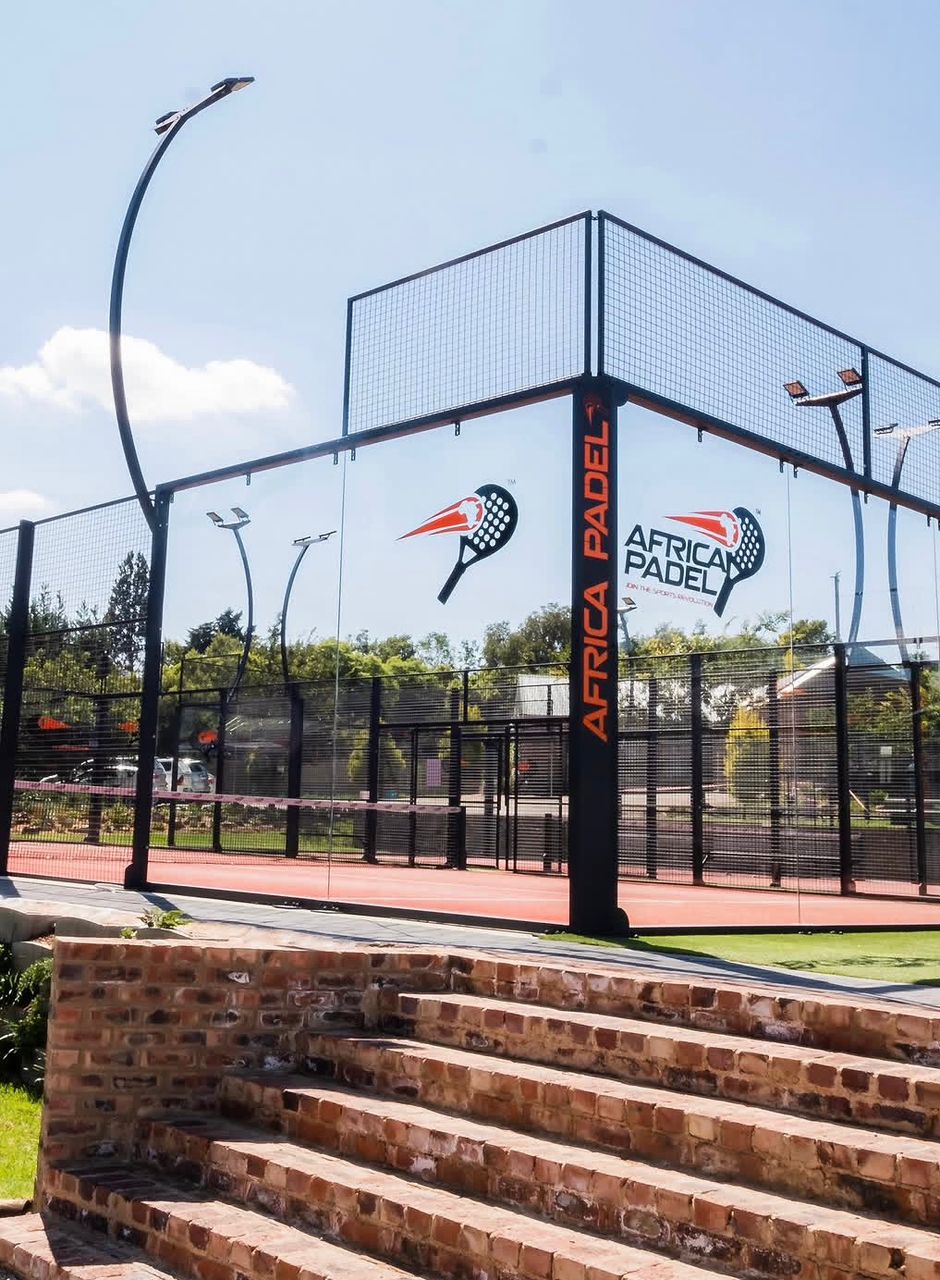
Johannesburg is the economic capital of the African continent. The metropolitan area exceeds 10 million people, and the target demographic for padel — urban professionals aged 25 to 55 with disposable income and appetite for social, competitive sport — is concentrated in exactly the northern suburbs that define the city’s premium real estate corridor. Sandton, Fourways, Rosebank, Morningside, Bryanston, Hyde Park, and Rivonia together form an investment-grade padel court Johannesburg market that rivals high-growth European cities.
The Demand Data Is Unambiguous
According to the South African Padel Association, registered padel players in South Africa more than doubled between 2021 and 2024, with Gauteng accounting for the majority of that growth and momentum continuing through 2025 and into 2026. Johannesburg alone represents an estimated 60 percent of all padel court booking revenue nationally. Playtomic data from the South African market consistently shows court utilisation rates above 70 percent during the 5pm to 10pm prime window in Johannesburg — an exceptional figure by any sports facility benchmark.
The International Padel Federation (FIP) now counts more than 90 national federations worldwide, and its global growth reporting has repeatedly identified South Africa as one of the top growth markets globally — with Johannesburg as the continent’s highest-potential padel investment destination. This is not speculation. This is a sport with documented demand that has been growing for five consecutive years with no signs of plateauing.
The Supply Gap Has Not Closed
When I mapped the Johannesburg padel court market before my investment, I found a city of several million affluent residents served by a fraction of the courts you would find in a comparable European city. The Sandton corridor alone — home to Africa’s highest real estate values — was dramatically undersupplied. New openings are happening, but key sub-markets remain essentially unserved: the East Rand (Bedfordview, Edenvale, Boksburg), parts of the South (Alberton, Germiston), and even some Northern Suburbs pockets are still first-mover territory for a well-planned padel court in Johannesburg.
For investors evaluating entry timing, 2026 remains a window of genuine first-mover advantage in specific Johannesburg neighbourhoods. For a complete financial picture before committing capital, the guide on how much a padel court costs in South Africa provides the full cost breakdown including court supply, civil works, and projected returns across different project types.
What Makes the Padel Court Johannesburg Environment Different From Every Other Market
This is where most investors and most suppliers make the first mistake. Johannesburg is not a standard padel environment. It presents a combination of environmental factors that fundamentally change how a padel court must be specified, sourced, and installed. A court built to standard European specifications and installed by a supplier who hasn’t thought through these factors will cost significantly more in the medium term than the money saved upfront.
Altitude: 1,753 Metres Above Sea Level
Johannesburg sits on the Highveld plateau at 1,753 metres above sea level — the highest major city on the African continent. UV radiation intensity increases by approximately 10 percent for every 1,000 metres of elevation gain above sea level. At Johannesburg’s altitude, UV exposure on your court’s artificial turf, glass coatings, and structural paint finish is 17 to 18 percent more intense than at sea level — more intense than any major European padel market.
Artificial turf with inadequate UV stabilisation will fade and degrade visibly within four to five years in Johannesburg conditions. The minimum specification is ISO 105-B02 UV resistance Grade 4, with Grade 5 preferred for exposed outdoor courts. Demand documentary evidence — a test certificate, not a verbal assurance.
The Hail Reality on the Highveld
Johannesburg’s summer thunderstorm season, running from October through February, produces some of the most intense hailstorms in the world. For padel court investors, hail creates three non-negotiable engineering requirements. Glass panel impact resistance is the first. Standard tempered glass meets IPF performance specifications but can crack under repeated severe hail impacts over seasons. Laminated safety glass — two tempered layers bonded with a polyvinyl butyral (PVB) interlayer — provides substantially better hail resistance, and if a panel cracks, the interlayer holds fragments in place rather than scattering glass across the court.
Roof structure hail load design is the second. Any covered facility in Johannesburg must be structurally engineered to handle Johannesburg’s recorded hail loads. Drainage capacity is the third: Johannesburg receives approximately 713mm of rainfall annually as intense summer storms, and drainage coefficient minimums of 250mm per hour under the court surface prevent waterlogging and turf failure.
Temperature Cycling: From Below Zero to 35 Degrees
The Highveld’s continental climate creates significant temperature variation. Winter nights can fall below zero Celsius; summer days regularly exceed 35 degrees. This thermal cycling stresses structural steel connections, adhesive bonds, and infill compaction in the turf system. Courts designed without adequate thermal expansion provisions will develop alignment issues and joint failures within a few years. For detailed technical specifications covering UV resistance, glass standards, and structural steel requirements, the padel court materials and specifications guide provides the complete technical reference.
Who Is Investing in Padel Courts in Johannesburg
Understanding where serious capital is moving in the Johannesburg market helps benchmark your own project and identify which investment model fits your resources and objectives.
Golf Clubs: The Most Active Segment
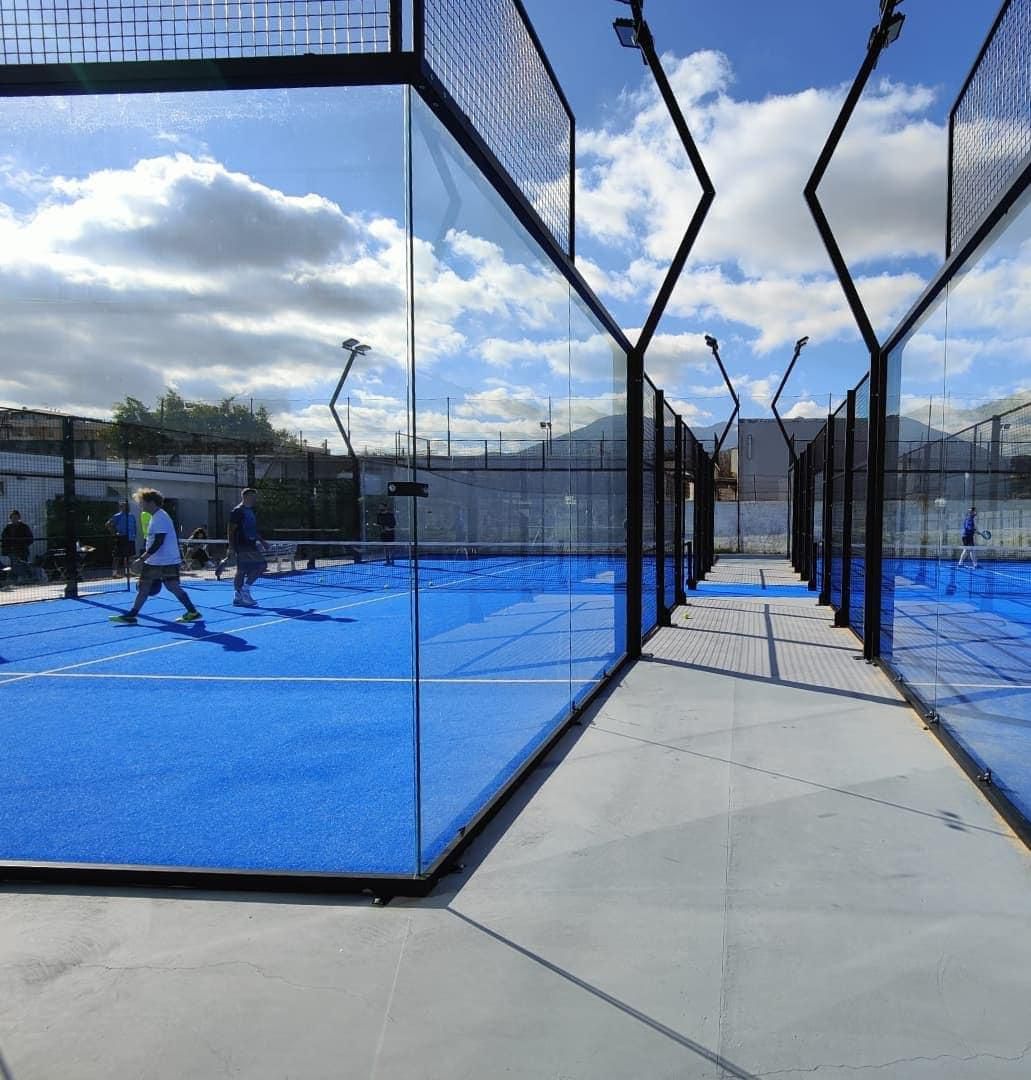
Golf clubs across Johannesburg have been among the most active padel investors for the past three years. The strategic logic is compelling: padel solves the golf club’s most persistent problem — engaging a younger membership demographic without the time commitment that golf demands. A padel session runs 90 minutes including warm-up; a round of golf takes 4 to 5 hours. The sport appeals to exactly the 30 to 45-year-old professional who has the income for a golf club membership but not always the schedule for 18 holes.
A two-court padel facility at a Johannesburg golf club can generate R40,000 to R70,000 per month in direct court revenue from hire, coaching, and inter-club events — a meaningful contribution to any club’s fixed-cost base.
Residential Estates and Hotel Developers
Luxury residential estate developers and hotel operators have identified padel as the amenity differentiator that no longer requires explanation. Unlike a gym or pool — now baseline expectations in premium developments — padel courts are still rare enough to function as a genuine selling point. For hotel developers, padel courts attract leisure guests, drive corporate event bookings, and generate ancillary F&B spend.
Dedicated Padel Club Operators
The most ambitious model is the purpose-built padel destination: four to six courts, professional coaching, a clubhouse with food and beverage, and a membership community. This requires the largest capital — typically R4 million to R7 million for a well-equipped six-court facility — but delivers the highest returns and builds genuine long-term business value. The complete step-by-step guide is covered in how to build a padel club in Johannesburg.
The Real Cost of a Padel Court in Johannesburg
One of South Africa’s leading padel court suppliers publishes single-court pricing starting at R498,000. This is a useful market anchor, but it excludes civil works, VAT at 15 percent, site establishment, and electrical infrastructure — all components that add substantially to the true project cost. A realistic all-in budget for a single covered padel court in Johannesburg — court structure, slab and drainage, lighting, VAT — runs R750,000 to R1.1 million depending on site conditions and specification.
A four-court padel club with covered structure, professional lighting, and a basic clubhouse realistically requires R3.5 million to R6 million in total capital. For the full itemised cost breakdown including factory-direct versus dealer pricing comparisons, see the dedicated guide on padel court costs in Johannesburg.
ROI Benchmarks Johannesburg Operators Are Actually Achieving
At prime-time rates of R400 to R550 per court per 90-minute session and off-peak rates of R250 to R350, a well-located court running 6 to 8 booked hours per day generates R55,000 to R85,000 per month. Add coaching clinics (typically a 20 to 30 percent revenue share to the facility), corporate events, equipment retail, and F&B margin, and mature Johannesburg facilities report blended revenue of R70,000 to R110,000 per court per month. Against operating costs — rent or land amortisation, electricity (with load-shedding backup), staffing, booking platform fees — well-run facilities reach operational break-even within the first 6 months and full capital payback in 24 to 36 months.
Factory Direct vs Local Dealer: The Sourcing Decision That Changes Your Project Economics
Every padel court installed in South Africa was manufactured in Spain or China. The local companies offering padel court installation are distributors and integration contractors, not manufacturers. They add a distribution margin of typically 25 to 45 percent on top of the factory price. On a four-court development, the difference between local dealer pricing and factory-direct pricing can represent R500,000 to R900,000 in project cost.
PanoCourt is a professional padel court manufacturer based in China, producing courts in its own factory and selling directly to investors, club operators, and contractors globally. Factory-direct pricing means no distributor margin between you and the product. Engineering documentation comes directly from the design team. The supply relationship covers spare parts and technical support for the full operational life of your investment.
The padel court manufacturer guide for Johannesburg covers how to identify real manufacturers versus distributors and what procurement framework to use. For the broader global context, the Spain vs China padel court manufacturer comparison provides an honest dimension-by-dimension analysis that every serious Johannesburg investor should read before making a sourcing decision.
Selecting the Right Court Type for a Johannesburg Padel Facility
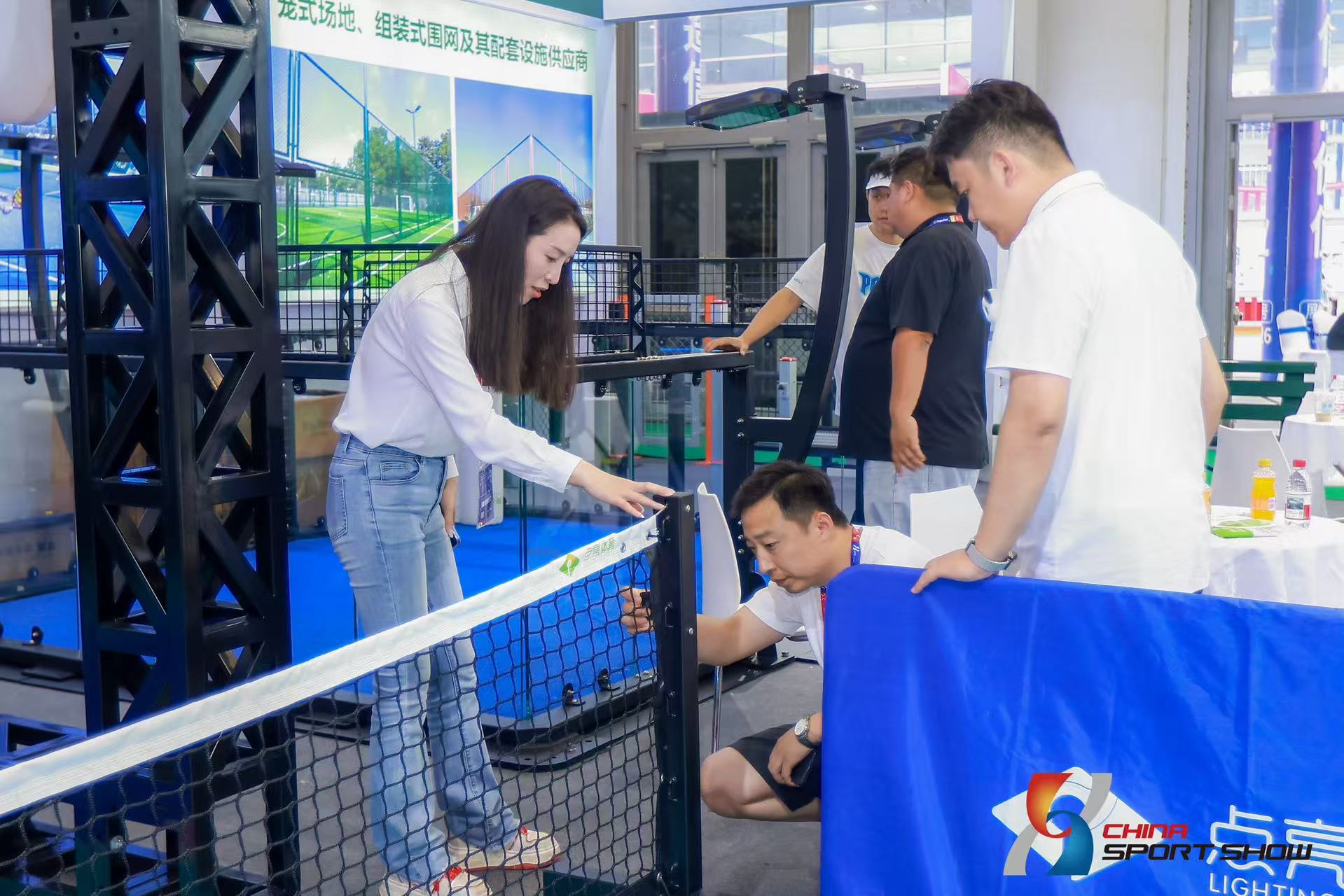
The padel court type decision — panoramic, classic, or full panoramic — interacts directly with Johannesburg’s climate considerations. Panoramic courts with fully glazed perimeters are the tournament-standard specification and command the highest session rates from serious players. Classic courts with solid back walls are 15 to 20 percent less expensive and are well-suited for recreational facilities.
The indoor versus outdoor question in Johannesburg is less ambiguous than in other markets: Johannesburg’s UV intensity, hail exposure, and summer storm pattern make covered courts a strong recommendation. The capital premium of R150,000 to R350,000 per court for a covered structure is typically justified by extended asset life and the ability to operate at full capacity through the summer storm season. Load-shedding is the other Johannesburg-specific operational factor: specify LED court lighting (around 8 x 200W fixtures per court) compatible with inverter or generator backup so evening prime-time revenue is never interrupted.
Permits and Compliance for a Padel Court Johannesburg Project
Any fixed padel court structure requires approved building plans from the City of Johannesburg under SPLUMA and the National Building Regulations. A complete submission includes structural drawings signed off by an ECSA-registered professional engineer, a site development plan, zoning confirmation (sports use or consent use depending on the erf), and — for larger commercial facilities — parking and stormwater management plans. Standard approvals take 8 to 14 weeks. A manufacturer that supplies full engineering documentation, foundation load drawings, and wind-load calculations as part of the supply package will materially shorten this process; PanoCourt provides council-ready documentation with every South African project.
Frequently Asked Questions: Padel Courts in Johannesburg
Start Your Johannesburg Padel Court Project
Johannesburg is one of the most compelling padel court investment markets in the world right now. The demographic is right, the demand is real and growing, and the supply gap remains open in enough Johannesburg neighbourhoods to support well-planned new entries through 2026 and beyond.
PanoCourt is a professional padel court manufacturer supplying courts factory-direct to investors, club operators, and EPC contractors across Africa, the Middle East, and Europe — with completed installations in South Africa engineered specifically for Highveld conditions. We manufacture in China and sell direct: no distributor markup, full engineering access, and a supply relationship built for the full lifetime of your investment.
Contact the PanoCourt project team today for a factory-direct consultation and an engineering cost proposal tailored to your Johannesburg site. Visit panocourt.com/contact to request your quotation, or explore our panoramic padel court range to compare specifications.