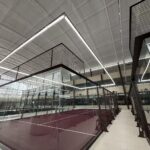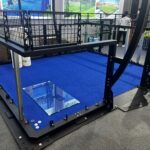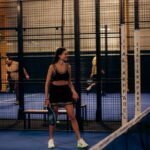
Across three years of on-the-ground research and visits to more than 100 padel clubs on five continents, one question comes up before any other: how much does padel-korto construction cost? Here is the direct answer. In 2026, the turnkey cost to build a single FIP-compliant padel-korto — structure, tempered glass, artificial turf, lighting, foundation and installation — ranges from roughly US$22,000 to US$91,000 per court depending on the country, the climate and whether the court is indoor or outdoor. Land, design and operating capital sit on top of that hardware figure.
To put real numbers behind the global headline, the table below summarizes the kosto de konstruado de padel-korto we see today in five representative markets — the United States, Ecuador, South Africa, the UAE and Indonesia. These figures align with the Playtomic × PwC Strategy& Global Padel Report, International Padel Federation (FIP) construction standards, and live 2025–2026 contractor quotations gathered during our field visits.
| Market | Turnkey cost / court (USD) | Local currency | Local currency Typical best-fit system |
| United States | $24,000 – $65,000* | USD | Indoor / covered, P02Q–P03 |
South Africa | $32,000 – $55,000 | R600k – R1.0m | Wind-rated outdoor / indoor, P01–P02Q |
UAE | $33,000 – $68,000 | AED 120k – 250k | Indoor climate-controlled, P02Q–P03 |
Indonesia | $36,000 – $91,000 | IDR 600m – 1.5b | Indoor / roofed panoramic, P02Q |
*A complete U.S. project including difficult site preparation, freight, permitting and a roof can reach US$100,000 per court. Ranges exclude land acquisition and club fit-out.
What Is Included in Padel Court Construction Cost?
Before comparing countries, it helps to understand what you are actually paying for. A padel court is an engineered structure, not a surface. The FIP fixes the playing area at 20 m × 10 m (200 m²) with a ±0.5% tolerance, back walls of 3 m glass topped by 1 m of mesh, 10–12 mm tempered safety glass, a minimum 6 m free height (8 m+ recommended indoors), and lighting of 300 lux for recreation rising to 500+ lux for competition. Those standards drive most of the cost, and they are non-negotiable if you ever want to host sanctioned play.
On a per-square-metre basis, kosto de konstruado de padel-korto typically lands between US$120 and US$350/m² for the built court. The major line items behave consistently across markets:
- Steel structure (Q235 / galvanized): ≈ 20–25% of the build. Hot-dip galvanizing is essential in coastal and tropical climates.
- Tempered glass walls (10–12 mm): the single most expensive component, ≈ 25–30%. Panoramic, frameless designs cost more but command higher court-hour pricing.
- Artificial turf + silica infill: ≈ 15–20%. Monofilament competition turf lasts longer and bounces truer than cheaper fibrillated grades.
- LED lighting: ≈ 8–12%. Energy-efficient, flicker-free fixtures lower lifetime operating cost.
- Foundation, drainage and civil works: the most location-sensitive item, from 30% on a clean slab to 50% of total cost when new groundwork is required.
- Freight, customs, permits and design: variable, but the silent margin-killer in import-dependent markets.
The McKinsey-style lesson from our club visits is that the cheapest court is rarely the cheapest project. Investors who model the full lifecycle — design, site selection, business-model positioning, construction, and operation — consistently outperform those who optimize only the sticker price of the hardware.
How Much Does Padel Court Construction Cost in the USA?
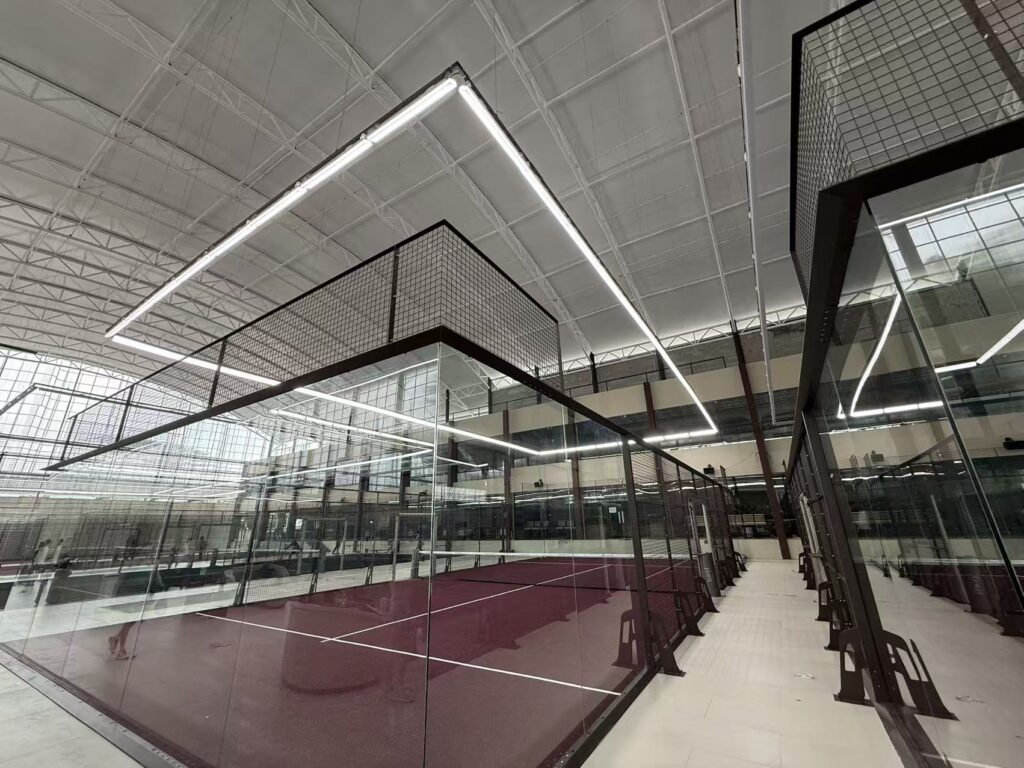
Direct answer: In the United States, padel court construction cost runs from about US$24,000 to US$65,000 for a turnkey single court, and US$50,000–US$100,000 for a complete project once site preparation, freight, permitting and a roof or canopy are included. A rooftop installation in a market like Manhattan can reach roughly US$98,500.
Key cost drivers in the U.S. market
Three forces push U.S. padel court construction cost above the global average: labour rates, fragmented local permitting, and freight on imported hardware. In hurricane- and salt-exposed states such as Florida, contractors add corrosion-resistant finishes and wind-rated engineering (ASCE 7-22), which raise the upfront figure but materially extend court life. Glass must meet ANSI Z97.1 or ASTM C1048; steel tubing must satisfy local wind and seismic codes.
Recommended court system for the U.S.
With padel concentrated in Florida, California and Texas and emerging in colder northern states, climate dictates the system. For year-round revenue in the Sun Belt or any indoor facility, we recommend a premium panoramic build such as the PANO P02Q Panoramic Court — its frameless sightlines let operators charge a higher court-hour rate and sell group bookings. For broadcast-grade or flagship venues, the PANO P03 Full Panoramic (360°) delivers the unobstructed spectator experience U.S. tournament organizers increasingly demand.
Expert takeaway: In the U.S., do not compete on lowest cost — compete on durability and experience. The clubs paying themselves back fastest are multi-court, climate-protected facilities where premium glass and lighting justify $40+ court-hour pricing. Build for corrosion and code from day one.
How Much Does Padel Court Construction Cost in Ecuador?
Direct answer: In Ecuador, padel court construction cost typically falls between US$22,000 and US$40,000 per turnkey court. Because Ecuador has used the U.S. dollar as its official currency since 2000, investors enjoy something rare in emerging markets — pricing transparency with no exchange-rate risk on quotations.
Key cost drivers in Ecuador
Ecuador shares the Latin American cost structure that makes the region so attractive: comparatively low local labour and civil-works costs partly offset the price of imported steel, glass and turf. A useful regional benchmark from our research is a two-court facility in São Paulo built for about US$55,000 total — owners saved roughly US$10,000 by using local construction crews while importing the specialized turf and glass panels. Ecuador’s deep, Argentina-influenced racket-sport culture means demand and player retention are strong, shortening payback.
Recommended court system for Ecuador
Climate splits the country: the humid coast (Guayaquil) and the temperate Andean highlands (Quito) behave very differently. For most outdoor club and resort projects where budget discipline matters, the durable, cost-effective PANO P01 Classic Court is the workhorse choice — robust Q235 structure, FIP-compliant geometry, and a price point that respects a dollarized cost base. Coastal sites should specify galvanized steel against humidity.
Expert takeaway: Ecuador rewards the lean, validation-first operator. Start with high-quality outdoor classic courts, prove occupancy, then reinvest into a covered or panoramic phase. Local labour is your cost advantage; protect it with imported components engineered for the coast.
How Much Does Padel Court Construction Cost in South Africa?
Direct answer: In South Africa, a single outdoor padel court costs roughly R600,000 to R1,000,000 including civil works — about US$32,000–US$55,000 — while premium indoor installations exceed R1.2 million (US$65,000+). Court hardware sourced directly from a Chinese factory can land near R170,000 (≈ US$9,000), a significant saving versus European supply.
Key cost drivers in South Africa
Wind is the defining engineering variable. South Africa enjoys a moderate, sunny climate, but coastal gusts — the Cape Doctor reaches 160 km/h — mean outdoor courts need additional steel reinforcement that indoor courts do not. The second big lever is sourcing: imported European courts carry 12-week lead times plus shipping, customs and duties, whereas direct China supply or local manufacturing compresses both cost and timeline. Foundations and drainage are non-negotiable given regional rainfall.
Recommended court system for South Africa
For high-wind coastal and estate locations, a reinforced configuration of the PANO P01 Classic Court with upgraded corner posts gives the structural margin those sites require. For commercial clubs and the booming indoor segment (South Africa now hosts large indoor centres), the PANO P02Q Panoramic Court lifts perceived value and supports premium membership pricing.
Expert takeaway: South African operators report that most courts have already paid themselves off. The winning formula is direct factory sourcing to cut the import premium, paired with wind-rated structures so the asset survives the Cape Doctor for a decade or more.
How Much Does Padel Court Construction Cost in the UAE?
Direct answer: In the UAE, padel court construction cost ranges from about AED 120,000 to AED 250,000 per court (≈ US$33,000–US$68,000), with outdoor builds on raw land from AED 90,000–180,000 once civil works are included. Panoramic and rooftop courts sit at the top of that range, and professional-grade premium courts can exceed AED 250,000.
Key cost drivers in the UAE
The Gulf climate dominates the cost equation. Extreme summer heat makes night play and indoor, climate-controlled courts the commercial norm — and air-conditioned enclosures add to both capex and opex. On the coast (Dubai Marina, Saadiyat), salt air forces hot-dip galvanized steel and 12 mm tempered glass to resist corrosion. Civil works typically absorb 30–40% of the total on undeveloped land, and most municipalities require permits for any permanent structure, including private villas.
Recommended court system for the UAE
The UAE is a premium, design-led market, so the system should match it. For indoor clubs and luxury venues, the PANO P02Q Panoramic Court balances structural strength with the frameless aesthetic Gulf operators expect. For flagship and tournament facilities chasing maximum visibility and broadcast value, the PANO P03 Full Panoramic (360°) is the statement product. Both should be specified with anti-corrosion galvanizing for the climate.
Expert takeaway: In the UAE you are selling an experience, not a court. Climate-controlled, panoramic, beautifully lit indoor courts justify the region’s high court-hour rates. Budget for cooling and corrosion protection up front — retrofitting either is far more expensive.
How Much Does Padel Court Construction Cost in Indonesia?
Direct answer: In Indonesia, the initial investment for one standard padel court is commonly IDR 600 million to IDR 1.5 billion — roughly US$36,000 to US$91,000 — with high-end indoor projects costing more. A typical four-court venue requires IDR 4.2–6 billion. Most Indonesian operators import key materials (turf, glass, lighting, fencing) from China to secure quality at a competitive cost.
Key cost drivers in Indonesia
Two factors shape Indonesian padel court construction cost. First, the tropical, high-humidity, monsoon climate strongly favours indoor or roofed courts that shield steel and glass from corrosion and rain — protecting the asset and enabling year-round play. Second, groundworks can reach up to 50% of total cost where new construction is needed, so reusing an existing slab or tennis court is the fastest way to cut the budget. Demand economics are exceptional: Jakarta expanded from 27 courts in early 2024 toward 200 by end-2025, court rentals fetch IDR 250,000–700,000 per hour, and operators report payback in 1.5–3 years.
Recommended court system for Indonesia
For Indonesia’s climate and fast-growing premium urban scene, an indoor or roofed PANO P02Q Panoramic Court is the strongest fit — the panoramic glass elevates the social, highly Instagrammable experience that is driving the Jakarta boom, while the enclosed setting defends the structure against humidity. Budget-led or multi-court community projects can anchor on the PANO P01 Classic Court to stretch capital across more courts.
Expert takeaway: Indonesia is arguably the world’s most attractive padel ROI story right now. Source from China to control cost, build indoor to beat the humidity, and design for the camera — social media is the real growth engine in this market.
Indoor vs. Outdoor Padel Court Cost: Which Should You Build?
Indoor padel court cost typically runs 20–40% higher than an equivalent outdoor court, because of the building envelope, roofing, lighting and (in hot or cold climates) climate control. Yet indoor courts win on three fronts: they enable all-weather, year-round revenue; they protect steel and glass from corrosion in tropical and coastal markets; and they support premium pricing. Outdoor courts are faster and cheaper to deploy and ideal for sunny, moderate climates and demand-validation phases. A common, capital-efficient strategy our clients use is to open with high-quality outdoor courts that are pre-engineered for a future roof or enclosure once occupancy is proven.
What Is the Annual Padel Court Maintenance Cost?
Construction is the capital cost; maintenance is the cost that protects your return. Budget on the order of €2–3 per square metre per year for routine turf care on a quality artificial-grass court — substantially less than hard or natural surfaces. Routine maintenance means regular brushing, silica-sand redistribution, cleaning, drainage checks, tightening structural fixings, and inspecting glass. Plan for turf replacement roughly every 5–10 years depending on usage and grade, and treat it as a scheduled capital item rather than a surprise.
Padel Court Construction Cost by Country (2026)
| Country | Climate | Suitable PANO model | Turnkey cost / court (USD) |
| United States | Varied; hurricane & salt zones (Florida) | PANO court P02 / P03 (indoor / covered) | $24,000 – $65,000 (up to $100k full project) |
| Ecuador | Tropical coast / temperate Andean highlands | PANO court P01 Classic (outdoor) | $22,000 – $40,000 |
| South Africa | Sunny; high coastal wind (up to 160 km/h) | PANO P01 reinforced / P02Q | $32,000 – $55,000 (R600k – R1m) |
| UAE | Extreme heat; coastal salt air | PANO P02Q / P03 (indoor, climate-controlled) | $33,000 – $68,000 (AED 120k – 250k) |
| Indonesia | Tropical / monsoon; high humidity | PANO P02Q (indoor / roofed) | $36,000 – $91,000 (IDR 600m – 1.5b) |
How Can You Optimize Your Padel Court Construction Cost?
After 16 years manufacturing padel courts and studying clubs worldwide, the levers that move padel court construction cost the most are remarkably consistent:
- Manufacturer-direct supply can cut hardware cost dramatically versus European brands — in South Africa, a China-sourced court can land near US$9,000 against far higher European pricing — while shortening lead times.
- Build multiple courts at once. Shared mobilization, freight and site setup lower the per-court cost meaningfully.
- Commission a geotechnical survey early. A US$1,500–3,000 soil report routinely prevents five-figure excavation surprises.
- Reuse existing slabs where possible. Building over a sound tennis-court base or existing slab can remove the single largest civil-works line item.
- Specify for climate, not just price. Galvanized steel and 12 mm glass cost more up front but avoid premature replacement in coastal and tropical markets.
- Choose the right system per market. Match panoramic vs. classic to the revenue model — premium glass earns premium court-hour rates only where the market will pay for it.
PADEL COURT FAQ
Kio estas padel-korto?
A padel court is an enclosed racket-sport court measuring 20 m × 10 m, surrounded by tempered glass and metal-mesh walls that are an active part of play — the ball can be played off them, much like in squash. It is roughly 25% smaller than a tennis court and is almost always played in doubles. The walls and the artificial-turf surface are what make padel distinct: rallies last longer, the game is more social, and the learning curve is gentle. Expert insight: padel’s enclosed design is precisely why it monetizes so well — the glass turns every court into a spectator product, not just a playing surface.
How big is a padel court?
A regulation padel court is exactly 20 m long and 10 m wide (200 m²), with a ±0.5% tolerance under International Padel Federation (FIP) rules. You should plan for more than the playing area, though: a minimum free height of 6 m (8 m+ recommended for indoor courts) and clearance around the structure, giving a realistic footprint of roughly 260–280 m² per court. Expert insight: the single most common planning mistake we see is budgeting only for the 200 m² playing box and forgetting vertical clearance — ceiling height kills more indoor projects than cost does.
What surface is used on a padel court?
Padel courts use specialized artificial turf with a silica-sand infill, engineered for a true, consistent ball bounce and safe player movement — over 90% of new courts worldwide are built this way. Monofilament competition-grade turf lasts longer and plays truer than cheaper fibrillated grades, with a typical lifespan of 5–10 years depending on usage. Expert insight: turf is where players physically feel quality, so it’s the worst place to cut corners. At PANO Court we specify monofilament turf with calibrated infill because inconsistent bounce is the fastest way to lose repeat bookings.
Kiom kostas konstrui padelkorton?
Building a single FIP-compliant padel court typically costs between US$24,000 and US$65,000 turnkey — covering the steel structure, 10–12 mm tempered glass, artificial turf, LED lighting, foundation and installation. A complete project with difficult site preparation, freight, permits and a roof can reach US$100,000 per court, while emerging markets like Ecuador can start nearer US$22,000. Expert insight: the cheapest court is rarely the cheapest project — investors who model the full lifecycle (land, civils, operation) consistently outperform those who chase only the hardware sticker price.
What factors influence the cost of building a padel court?
The biggest cost drivers are foundation and civil works (30–50% of the total when new groundwork is needed), tempered glass (25–30%), the steel structure (20–25%), and then turf, lighting, freight and permits. Climate matters enormously: coastal salt air and tropical humidity demand hot-dip galvanized steel, while high-wind zones require reinforced structures. Expert insight: specify for your climate first and price second — a galvanized PANO Court structure costs slightly more upfront but avoids premature replacement that wipes out years of margin in corrosive or coastal markets.
How much does it cost to install a padel court?
Installation labour for the court itself usually runs 1–2 weeks once the foundation is ready, and is generally bundled into a turnkey quote rather than priced separately. The larger variable is the civil works beneath it — site clearing, leveling, drainage and the concrete slab — which can account for up to half the total project cost. Expert insight: reusing a sound existing slab or an old tennis court is the single fastest way to cut installation cost, often removing the largest line item entirely.
How much does an indoor padel court cost?
An indoor padel court typically costs 20–40% more than an equivalent outdoor court, because of the building envelope, roofing, enhanced lighting and — in hot or cold climates — climate control. In return, indoor courts deliver all-weather, year-round revenue and protect glass and steel from corrosion. Expert insight: in humid or extreme-heat markets like Indonesia or the UAE, indoor isn’t a luxury — it’s asset protection. For these climates we steer clients toward an enclosed PANO panoramic system that both defends the structure and supports premium court-hour pricing.
How do you build a padel court?
Building a padel court follows six stages: site selection and a geotechnical survey, foundation and drainage, erecting the galvanized steel structure, mounting the tempered glass panels, laying the turf with sand infill, and finally installing the LED lighting. The full process generally takes 6–8 weeks including groundwork. Expert insight: the precision of glass and post alignment is what separates a court that lasts a decade from one that rattles loose in two years — which is why PANO Court can dispatch experienced engineers to supervise the critical installation steps on site.
How much does it cost to open a padel court business?
Opening a commercial padel facility costs far more than a single court, because you are funding land or lease, multiple courts, and amenities like changing rooms, a café and a booking system. As a benchmark, a four-court venue in Indonesia commonly requires US$250,000–500,000, with operators reporting payback in 1.5–3 years thanks to strong demand. Expert insight: courts are the easy part — your real moat is location, court density and a great social atmosphere. Build fewer courts beautifully rather than many cheaply.
How much does it cost to rent a padel court?
Court rental rates vary widely by market and are usually charged per court for 60–90 minutes, then split between four players. In the UAE, peak rates run roughly AED 200–340 per hour; in Jakarta, Indonesia, courts fetch IDR 250,000–700,000 (about US$15–45) per hour. Expert insight: these rental economics are exactly why padel pays back so fast — a well-located court booked at near-capacity recovers its construction cost in well under three years, which is the core of the investment case we build with every PANO Court client.
Legi plu: How Much Does Padel Court Construction Cost?