
An outdoor padel court in the USA has to survive four forces that an indoor court never meets: wind on the glass walls, water on the surface, corrosion on the steel and the local building code. Specify the court against your site’s wind speed, rainfall and exposure first, and against the catalogue second. Most disappointing outdoor courts I hear about trace back to one of those four being treated as an afterthought.
Written by Macy Zhou, Senior Product Manager at PANO (PanoCourt). I have worked in the sports-facility industry for ten years and have led the development of more than ten padel court products at our factory in Handan, Hebei. Last updated: 9 November 2026.
We make the court itself. Foundations, drainage, electrics, permits and stamped drawings are designed by licensed professionals where the court stands, and I flag that split wherever it matters. When a buyer in San Juan, Puerto Rico asked us this year for CIF pricing on four panoramic courts, our first conversation was about hurricane exposure and import duties, not price, and that is the order I recommend for every American project.
In this guide:
- What an outdoor court must survive
- The specification, part by part
- Stopping the steel from rusting
- Glass thickness and wind
- Foundation and drainage
- US codes and wind speeds
- Open court or canopy
- Turf and lighting
- Season-by-season maintenance
- Ordering and shipping to the USA
- Buyer questions
- Getting started
What does an outdoor padel court in the USA have to survive?
Wind, water, corrosion and code. The 4 m glass end walls act like sails, so wind usually governs the structure. Standing water makes a court unplayable long before anything breaks. Corrosion is slow but decides whether a court looks five or fifteen years old. And US building codes decide what your engineer must prove before you can open.
A standard court is 20 × 10 m, enclosed by 4 m glass end walls and 3 m mesh side walls, with the net at 0.88 m in the centre. Indoors, that enclosure only has to contain the game. Outdoors it is a structure in the weather. A sheltered inland site, a coastal site in salt air, a northern site with snow and frost, and a hurricane-exposed site in Florida do not need the same steel, coating or foundation, which is why an outdoor padel court in the USA should be specified from the site outwards.
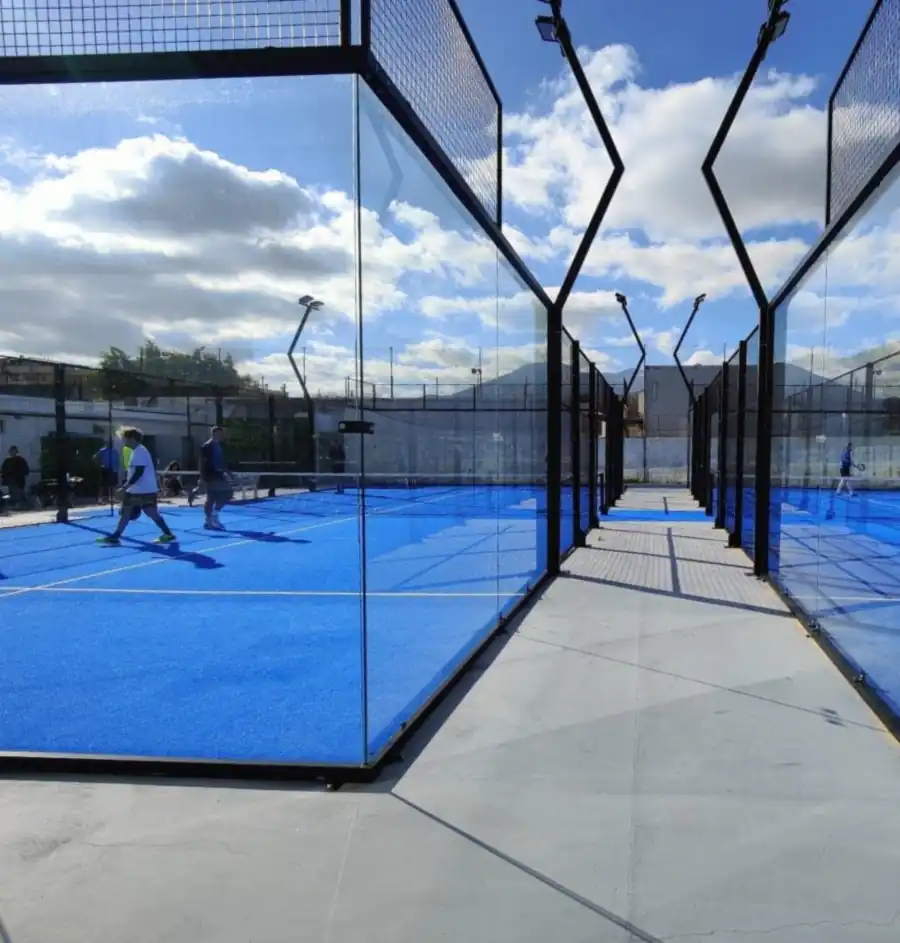
Which specification should an outdoor padel court in the USA use?
Settle seven lines before you compare quotations: steel frame, corrosion route, glass, mesh and isolation, turf, lighting and hardware. Each line should be written for outdoor exposure and your site’s wind load. If a quotation does not name the corrosion route and the wind basis, it has not specified an outdoor court yet.
| Part | What to specify outdoors | Why it matters |
|---|---|---|
| Steel frame | Post profile and wall thickness checked against your site wind load | Wind, not appearance, sizes the frame |
| Corrosion route | Weld first, then hot-dip galvanize, then powder coat for outdoor and coastal sites | Pre-galvanized tube alone is an indoor or dry-inland route |
| Vitro | 12 mm tempered safety glass as the outdoor starting point | Glass carries wind load and takes ball impact all day |
| Mesh and isolation | Galvanized welded mesh; fixings that keep glass off bare steel | Glass touching steel chips, and chips become cracks |
| Turf | Padel turf with sand infill, UV-stabilized fibre, draining backing | Controls grip, ball roll and drying time |
| Lumigo | LED floodlights with an agreed evening lighting level | Outdoor courts earn most hours after dark |
| Hardvaro | Stainless fittings, grade confirmed line by line; spare-parts list at order | Ordinary fixings rust first and stain everything around them |
I always add an eighth line in the RFQ: what the quotation excludes. Foundation, drainage, electrics, permits, installation labour and local taxes normally sit outside a factory price, and an outdoor padel court in the USA almost always needs all of them.
How do you stop the steel of an outdoor padel court from rusting?
Specify the corrosion route by name, not just the words galvanized or powder coated. For outdoor and coastal sites the route I recommend is to weld first, hot-dip galvanize the fabricated parts, then powder coat. That way zinc covers cut edges and welds, which is exactly where water sits and where cheap outdoor courts start rusting in their second season.
- Pre-galvanized tube plus powder coating suits indoor halls and dry inland sites; zinc is lost at cuts and welds.
- Post-fabrication hot-dip galvanizing plus powder coating is the outdoor and coastal route; galvanizing after fabrication is usually specified to EN ISO 1461 or ASTM A123.
- An e-coat primer plus powder gives the finest finish and can be combined with hot-dip galvanizing outdoors.
- We run hot-dip galvanizing after fabrication with a named specialist partner and say so in the quotation.
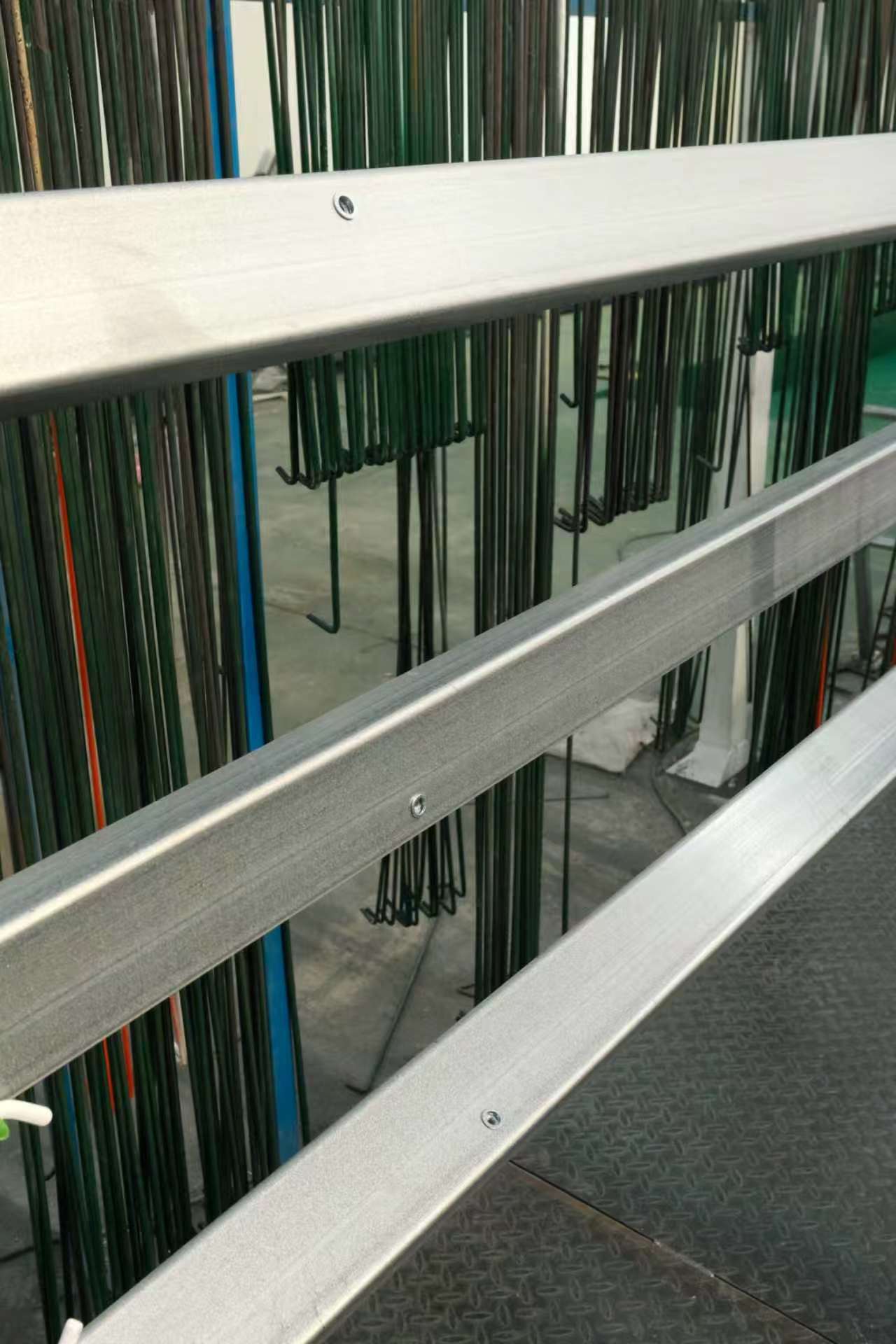
Ask for per-batch coating inspection records, the steel mill test report, and how cut edges, welds and base plates are treated. I would also ask for the coating system and target thicknesses to be written into the technical schedule for your order. A rust-free promise or a fixed design life means nothing unless it is tied to a defined coating system, your exposure and a maintenance plan. Our coastal padel court guide covers salt-air sites in more depth.
What glass thickness does an outdoor padel court in the USA need?
Start from 12 mm tempered safety glass and let your site wind load confirm it; never let preference push it down. Thinner glass belongs indoors or on sheltered sites, and only where your engineer agrees. The glass also needs countersunk fixings, edge protection and isolation so it never touches steel directly.
Our factory test basis for a standard panoramic court is a design wind pressure of 0.68 kN/m² under our company standard Q/PANO 01S-2019. That suits many inland and urban sites; hurricane-exposed coasts can need considerably more. It is a factory test figure, not a permit rating for your address. Your engineer sets the site value, and the frame, glass connections and anchors are re-checked against it before production. Where a higher load is needed, the usual measures are thicker tube walls, larger posts, extra intermediate posts and more or larger anchors on an engineered foundation. Our padel court wind load guide explains the test.
What foundation and drainage does an outdoor padel court need?
An engineered reinforced concrete slab or ring-beam foundation, designed locally for your soil, frost depth and wind region, plus drainage that gets water off the surface and away from the perimeter. We supply the anchor layout and the loads; your engineer owns the slab, its thickness, concrete grade, reinforcement and falls.
Our foundation guidance asks for the surface to be flat within 3 mm under a 2 m straightedge, with gentle falls and drainage outside the safety zone; your engineer sets the final tolerance and falls for your site. Do not copy another country’s base build. A solid slab that works in a dry climate can hold water in a wet one, which is why UK guidance prefers a free-draining sub-base for British rain. Confirm in writing who owns the drainage design before any concrete is poured, because concrete poured wrong is the most expensive mistake on an outdoor project.
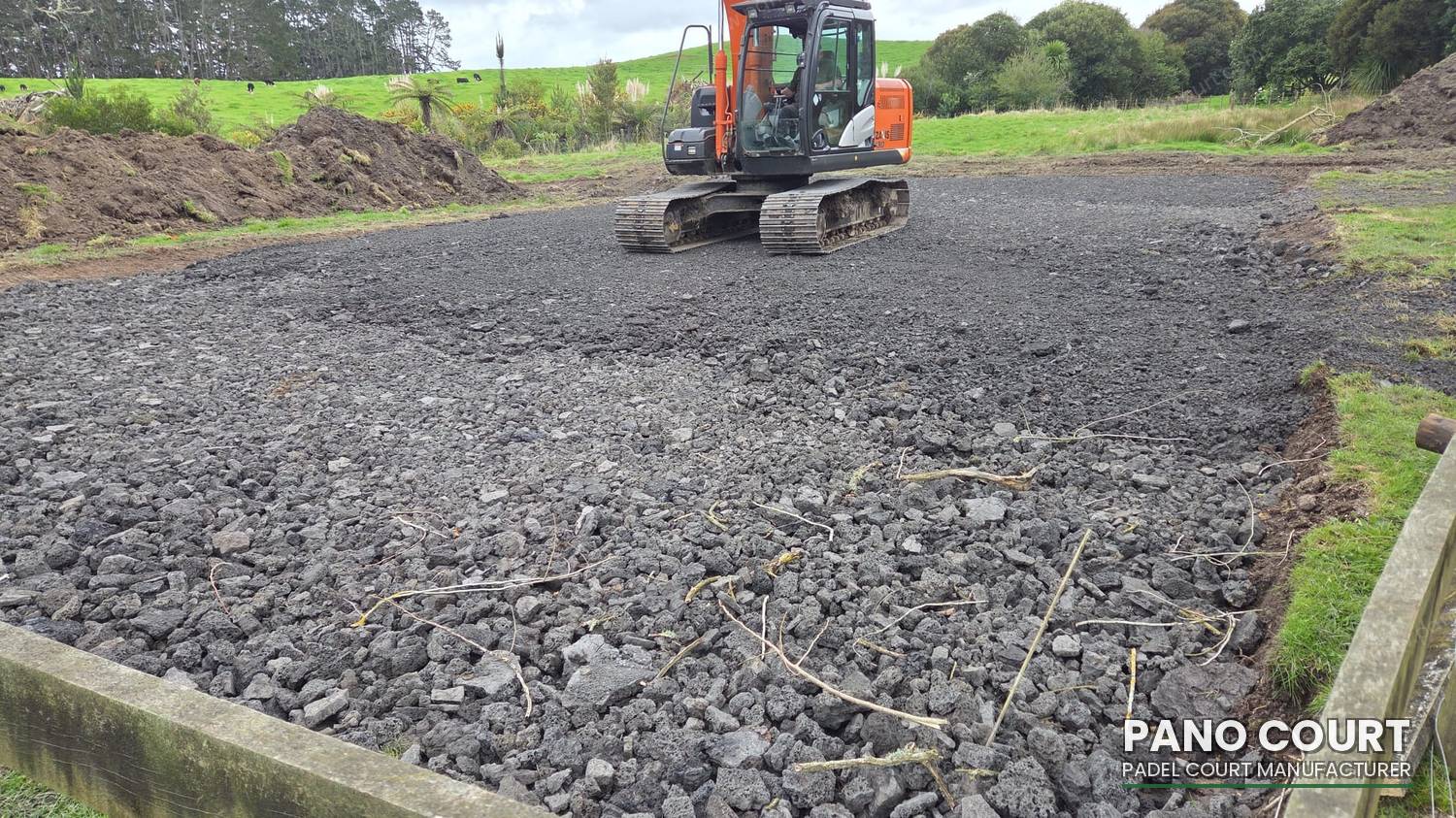
Our outdoor padel court foundation guide covers slabs, anchors, tolerances and drainage in detail, and the padel court foundation requirements article compares concrete, asphalt and floating bases.
Which US codes and wind speeds apply to an outdoor padel court in the USA?
Outdoor structures in the United States fall under the International Building Code as adopted by your state and city, and the IBC points to ASCE 7 for design loads. Your engineer looks up the design wind speed for your address, designs the foundation and stamps the drawings. A European certificate does not satisfy US requirements on its own.
- ASCE 7 uses a 3-second gust speed, while Eurocode and Chinese codes use a 10-minute mean, so wind figures on different bases cannot be compared without conversion.
- La ASCE Hazard Tool gives site-specific wind, snow and seismic values for an address.
- Parts of Florida and the Gulf Coast have basic wind speeds far above sheltered inland sites, and add salt-air corrosion.
- Northern states add snow load, especially on any canopy, and frost depth for foundations; parts of the West Coast add seismic design.
A permit alone is not proof of compliance: a building department may process an application without reviewing every calculation, so the stamped design is what protects you. Engineering Express has a useful article on designing padel and outdoor sports courts in the United States, and our own guide to building a padel court in the USA covers zoning, permits and the order of work.
Should an outdoor padel court in the USA be open or covered?
Decide on playing days, not build price. An open court costs less to build, but rain, snow and strong wind stop play. A canopy protects bookings and gives consistent conditions, but adds structure, wind uplift and snow load that must be in the original calculation. Many buyers add a canopy after one season of lost bookings, which costs more than planning it upfront.
| Question | Open court | Canopy or roof |
|---|---|---|
| Upfront cost | Pli malalta | Higher: roof structure and heavier foundations |
| Playing days | Dependa de la vetero | Far more reliable year-round |
| Structural design | Wind on glass governs | Wind uplift plus snow load govern |
| Prizorgado | More glass, turf and drainage work | Less weather exposure, plus roof upkeep |
A club in a mild, dry region selling summer play can run open courts profitably for years. A club that depends on winter evening bookings in a rainy region will lose the revenue that pays for a canopy many times over. If you choose one, see our padel court roof guide kaj tegmento de padel-korto paĝo.
Which turf and lighting suit an outdoor padel court?
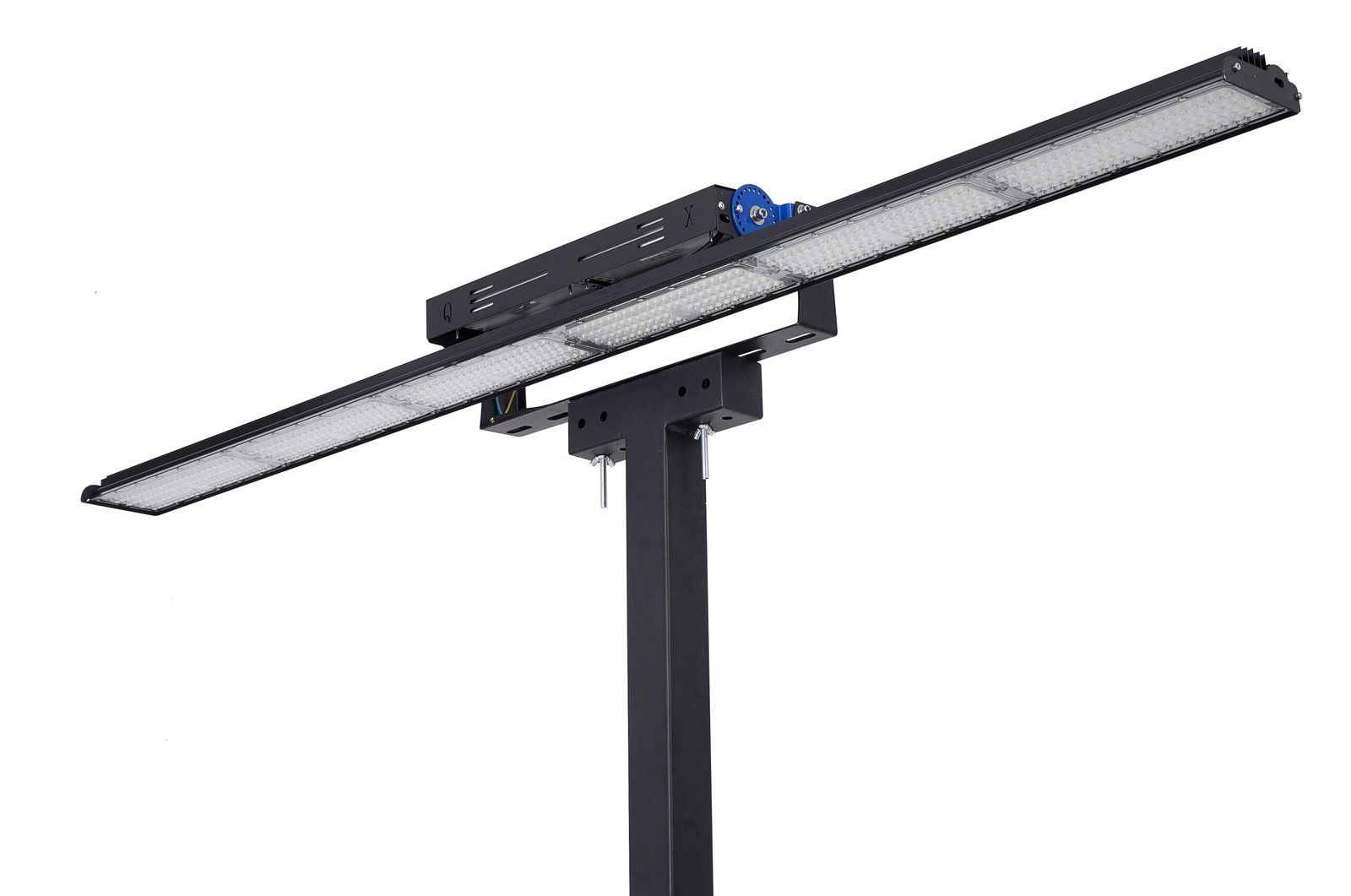
Choose a padel-specific turf with sand infill, UV-stabilized fibre and a backing that drains, and LED floodlights that limit glare on the glass. Agree the evening lighting level in writing. Players judge a court by the turf underfoot, the glass in front of them and the light at night, in that order.
The sand is part of the playing surface: it controls grip and ball roll, and it moves, so regular brushing keeps fibres standing and drainage holes clear. For lighting, UK LTA guidance gives 500 lux with 0.7 uniformity at competition level and 300 lux with 0.5 uniformity for recreational play. A luminaire count alone does not prove either; ask for photometric data and a project calculation. On an imported court, the electrical design, connection and testing sit with your local electrician. Our padel court LED lighting guide kaj padel turf guide go further.
How do you maintain an outdoor padel court season by season?
Brush the turf, clear leaves and drains, wash the glass, check bolts and base plates after storm season, and inspect the coating at welds and ground level where corrosion starts. Keep a dated log with photos. When a warranty question comes up, that log is worth more than any argument about what was promised.
- Weekly: brush turf, clear debris, look for chips or cracks in the glass.
- Monthly: check glass fixings, anchors and base plates; touch up coating damage early.
- After storms: inspect anchors, glass and drainage before reopening.
- Every season: control vegetation at the perimeter, because roots and trapped damp work on foundations quietly.
Agree spare parts at order, not after something breaks. A spare glass panel, a set of fixings and a turf repair allowance cost little when they travel with the first shipment and a great deal when they travel alone later.
How do you order and ship an outdoor padel court to the USA?
Plan the shipment around the container and the import rules. A typical complete court set weighs roughly six tonnes packed; the exact weight, volume and container plan come from the final packing list. Padel courts are normally classified as sports goods under HS heading 9506, but the tariff line and any additional duties on goods of Chinese origin must be confirmed by your customs broker before you order.
- Ask your broker for the duty on your exact shipment and date of entry, including any additional tariffs.
- Confirm unloading equipment before the truck is booked: glass travels in heavy crates and needs a forklift or crane of the right rating.
- Inspect goods on arrival, note any damage on the carrier’s proof of delivery before signing, and photograph it the same day.
- Choose the Incoterm deliberately: under FOB or CIF your broker handles US import clearance.
Two honest notes. First, we are not an FIP-certified factory; our standard court is built to the 20 × 10 m FIP playing dimensions, which is not the same thing. Second, a voluntary technical-file review against a structural steel standard is not a US approval. Ask every supplier, including us, what each document actually covers. Our guide on vetting a padel court manufacturer for the USA lists the questions.
What else do buyers ask about an outdoor padel court in the USA?
Is an outdoor padel court cheaper than an indoor one?
Usually yes at build stage, because there is no roof or hall to pay for. The comparison that matters is playing days against maintenance: an open court that loses weeks to weather can cost more per playable hour than a covered court, so decide on your climate and booking pattern.
What glass thickness should an outdoor padel court have?
Start from 12 mm tempered safety glass and let the site wind load and local code confirm it. Thinner glass belongs indoors or on sheltered low-wind sites, and only where the engineer agrees after checking the frame and fixings.
Does an outdoor padel court need a permit in the USA?
There is no single national padel permit. Your city or county sets zoning, site plan and building approval, and courts often need a building permit with stamped drawings. Ask the planning department first and budget time for the engineer to prepare the design.
How do you stop an outdoor padel court frame from rusting?
Specify the corrosion route, not just the coating name: weld first, then hot-dip galvanize, then powder coat for outdoor and coastal sites, with stainless fixings and regular inspection at welds and base plates. No coating lasts if water sits against bare steel at a cut edge.
What drainage does an outdoor padel court need?
Falls on the surface, a sub-base suited to your rainfall, and perimeter drainage outside the safety zone, all designed by your local engineer. Do not copy another country’s base build, because rainfall, soil and frost change the answer.
Can a canopy be added to an outdoor padel court later?
It can, but it changes wind uplift and snow load on every post and anchor, so the frame and foundation must be checked for canopy loads first. Designing for the canopy from the start is usually cheaper than retrofitting it.
How long does an outdoor padel court last?
It depends on the corrosion route, the climate and whether maintenance is actually done. A court with post-fabrication galvanizing, 12 mm glass and regular turf, glass and drainage care will outlast a cheaply coated court by years, which is why the specification matters more than the headline price.
What should you send the factory before specifying an outdoor padel court in the USA?
Send your site address, climate and exposure, the number of courts, whether you want an open court or a canopy, and who will handle the slab, electrics and installation. With that, we can work through the steel and corrosion route, glass, turf, lighting and the drawings your engineer needs, before any price comparison starts.
If an open outdoor court is not the right answer for your site, I will say so, and if a covered or mobile padel court fits better, I will show you why. Send your project details through our contact page to start the specification for your outdoor padel court in the USA.