Choosing the wrong padel court model is one of the most expensive mistakes a padel court builder or club investor can make. The structural decision locks in your cost, maintenance burden, and spectator experience for 10–15 years.
according to the FIP Monda Padela Raporto 2025, global padel courts exceeded 77,300 — with 14,355 new courts installed in 2025 alone. Of all new commercial installations, panoramaj padel-kortoj now account for approximately 30% of global builds and represent the fastest-growing court segment.
Klasikaj padelaj kortoj still hold the largest installed base (~70%), but in high-traffic commercial markets — Europe, Canada, and Southeast Asia — new build specifications have shifted firmly toward panoramic models.
The short decision guide:
– Panorama padel-korto → Best for most commercial projects. Modern look, full glass side walls, 18-panel configuration, competitive price point.
– Klasika padel-korto → Best for high-wind coastal or mountain regions where structural solidity and wind-pass-through matter more than aesthetics.
– Full panoramic padel court → Best for flagship clubs where 360° visual branding, social media impact, and spectator experience justify a 30–50% cost premium.
– Custom panoramic (e.g. kids court) → For specific site or demographic requirements.
What Is a Panorama padel-korto — and Is It Right for Your Project?
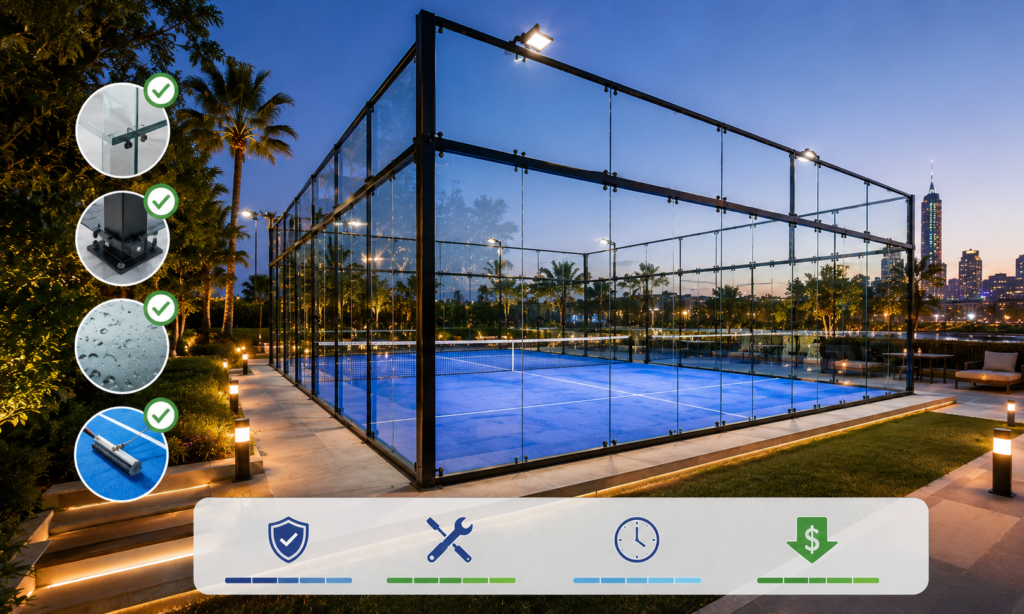
A panoramic padel court replaces the traditional wire mesh side walls with 12mm tempered glass panels on all four sides, giving players and spectators unobstructed sightlines. It is the most widely specified model for new commercial padel facilities in 2025.
Key product parameters:
– Playing area: 10m × 20m (ITF standard)
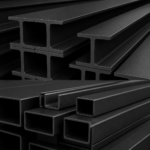
– Steel structure: S235/S355 hot-dip galvanized square tube, 120mm × 120mm × 3mm wall thickness
– Glass panels: 18 panels × 12mm tempered ESG glass, 2,000mm × 3,000mm per panel
– Total height: 6m (side fencing) / 4m (back glass walls)
– Surface: 12mm artificial grass padel turf with quartz sand infill
– Finish: powder-coated steel frame (RAL color, client specified)
Main features and advantages:
– 18-panel glass configuration = fewer vertical steel posts compared to older 20+ panel designs → wider spectator sightlines
– Consistent 12mm glass rebound surface on all sides → predictable ball behavior throughout the court
– Hot-dip galvanized S235/S355 steel → 25+ year corrosion resistance without repainting
– Lower annual maintenance than classic mesh courts — no mesh panel sagging or wire corrosion
– Compatible with LED flood lighting systems for evening commercial use
– Social media-friendly design: clean lines, full-glass aesthetic performs well in club marketing content
Suitable projects:
– Commercial padel clubs (4+ court facilities)
– Hotel and resort sports amenities
– Municipal multi-sport complexes
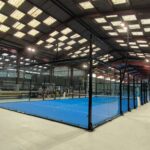
– Indoor padel centers
Expert insight: When specifying steel grade, request S355 rather than S235 if the project site is coastal or high-humidity. S355 has a higher yield strength (355 MPa vs 235 MPa) and better fatigue resistance under repeated wind and ball impact loading. Over a 10–15 year asset life, this difference is significant.
| Komponanto | panoramic padel court Specification | Quantity | ||
| Court Dimensions | Court size: 20m (L) × 10m (W) — Standard FIP-compliant padel court | — | ||
| Corner Posts | Square steel tube 100 × 100 × 3mm × H3000mm, 4 pcs | 4 pcs | ||
| Intermediate Posts | Rectangular tube — long-side posts: 50 × 100 × 3mm × H3000mm, 12 pcs | 12 pcs | ||
| Upper Crossbeams | Rectangular tube — long-side upper crossbeam: 50 × 100 × 3mm × L4000mm, 4 pcs; short-side upper crossbeam: 50 × 100 × 3mm × L5000mm, 4 pcs | 4 pcs | ||
| Lower Crossbeams | Rectangular tube — long-side lower crossbeam: 50 × 100 × 3mm × L4000mm, 4 pcs; short-side lower crossbeam: 50 × 100 × 3mm × L5000mm, 4 pcs | 8 pcs | ||
| Light Poles | Square steel tube — light pole: 50 × 100 × 3mm × H3000mm, 4 pcs | 4 pcs | ||
| Welded Wire Mesh Panels | 20 × 40 × 2mm steel tube frame; 4mm wire, 50 × 50mm mesh opening; panel size 2000 × 1000mm; 46 panels per set. | 46 pcs | ||
| Net Posts | Rektangula ŝtala tubo 80 × 160 × 2,75 mm; enkonstruita tensiigilo por pura kupro-kablo; kovrilo kaj kranka tenilo el gisita aluminialojo; 1 aro | unu aro | ||
| Center Net | PE-plektita reto, 3 mm ŝnuro, 45 × 45 mm maŝotruo; sesmaŝa duobla-tavola supra bendo; PVC-kovrita sandviĉa ŝtofo ĉirkaŭanta 6 mm PVC-kovritan ŝtalan dratŝnuron | unu aro | ||
| Tempered Glass Panels | 12 mm temperita sekureca vitro, pakado en lignaj kesto — 18 paneloj (108 m² entute) Panel size: 1995mm × 2995mm | 19 panels (extra +1 ) | ||
| LED Court Lighting | 200W LED sports floodlight, 8 fixtures total , | 8 fixtures | ||
| Artificial Turf/Padel Turf Special glue /tape | Pile height: 12mm; stitch gauge: 3/16″; stitch density: 52,500/m²; yarn denier (Dtex): 8,000; white court line marking; 210 m² total | 210 sqm | ||
| Hardware & Fittings | Varm-mergitaj galvanizitaj stangoj kaj tubklampaj ŝraŭboj; 304-rustorezista ŝtala ŝraŭboj kaj rigliloj kun Dacromet-kovraĵo; rustorezista ŝtala ekspansia ŝraŭboj; PE-vitraj gasketoj; vitraj konektiloj el ŝtalplato | 2set | ||
| Net Logo | Covered on top of the net, removable and replaceable at any time. Each piece is 10m long | extra Price: $30 per piece | ||
| Entrance door protection pad | 3cm Thickness LOGO can be printing ( need meet MOQ demand) Different colors can be choosed | extra Price : 285 USD for each court | ||
Comparison data point: A standard panoramic padel court weighs approximately 3,500–4,200 kg total structure. Classic courts with mesh run 10–15% lighter due to less glass — but glass adds rigidity that mesh cannot replicate.
What Is a Classic Padel Court — and When Should You Specify It?
A classic padel court uses hot-dip galvanized steel wire mesh on the side walls and tempered glass only on the two back walls. This is the original padel court design and remains the most structurally resilient option for exposed, high-wind outdoor sites.
Key product parameters:
– Side walls: 4mm hot-dip galvanized wire mesh, 50mm × 50mm aperture
– Back walls: 12mm tempered glass, 2 panels per end (3,000mm × 2,000mm each)
– Steel frame: S235/S355, 80mm × 80mm × 3mm square tube
– Total glass panels: 4 (back walls only)
– Height: 6m mesh section / 4m glass section
– Surface: 12mm padel turf with quartz sand infill
Key characteristics and advantages:
– Mesh side walls allow wind to pass through — critical for coastal, mountain, or exposed open-plan sites
– Lower total glass area = reduced risk of panel damage from hail, UV degradation, or airborne debris
– Simpler on-site assembly — fewer precision-fit glass components reduces installation error risk
– 15–20% lower cost per court vs equivalent panoramic specification
– Easier to source replacement components in markets where padel supply chains are still developing
Suitable projects:
– Outdoor municipal courts in high-wind or high-altitude zones
– School and community sports facilities with strict budget caps
– Early-stage padel markets with longer ROI timelines
– Temporary or relocatable padel installations

Expert insight: If site wind data shows sustained speeds above 80 km/h (Beaufort Scale Force 9), wire mesh is not just a design preference — it is an engineering requirement. Glass side panels under repeated high-wind load create stress concentration at the fixing points. Obtain a site wind study before specifying panoramic in exposed locations.
Comparison data point: Classic courts produce approximately 30–40% more maintenance labour-hours annually than panoramic courts due to mesh inspection, wire tension checks, and galvanic corrosion monitoring at wire/frame junctions.
What Is a Plena panorama padela korto — and Who Should Build It?
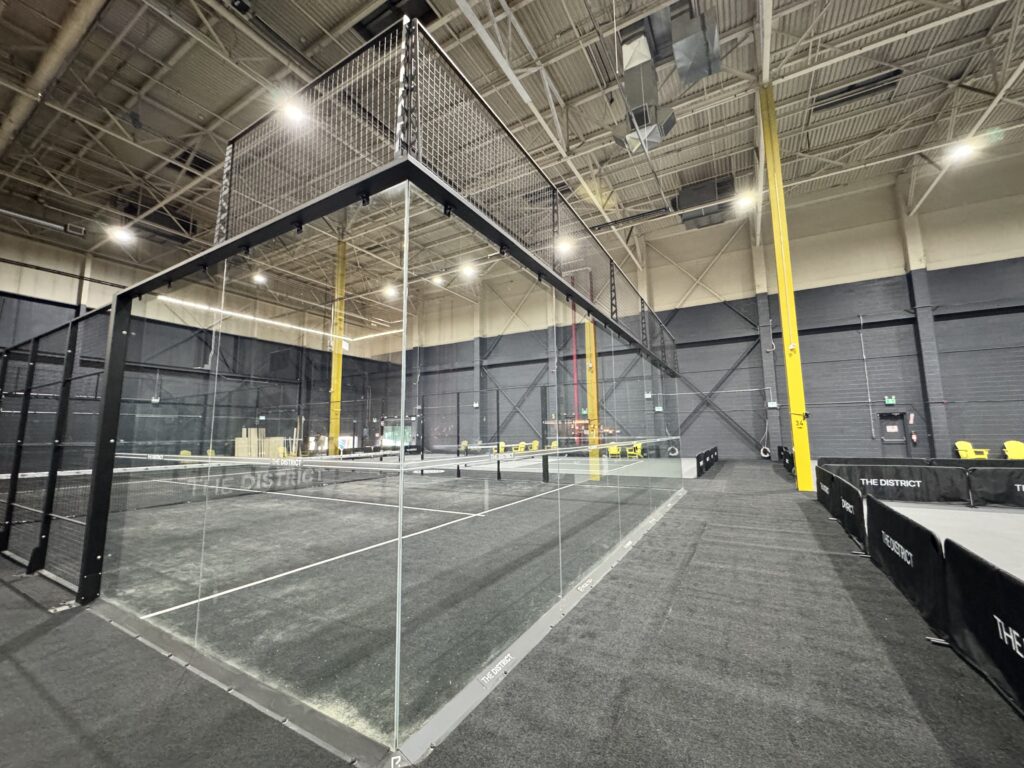
A full panoramic padel court (also marketed as ultra-panoramic or super panoramic) replaces all wall surfaces — including corners — with continuous glass, eliminating structural corner posts entirely. This creates a 360° unobstructed viewing experience and the highest-impact visual design in the padel court market.
Key product parameters:
– Glass coverage: 100% — no wire mesh on any wall surface
– Glass thickness: 12mm tempered ESG or 12mm laminated safety glass (VSG) at corners
– Corner design: post-free — engineered glass-to-glass mitred or curved joints
– Glass panels: 22–26 panels depending on configuration
– Steel structure: heavier-gauge frame to accommodate cantilevered corner glass loads
– Weight (structure): approximately 4,800–5,500 kg
– Installation tolerance: ±1mm on corner joints (vs ±5mm for standard panoramic)
Key characteristics and advantages:
– Zero corner posts — the defining visual and structural feature
– All glass rebound surfaces → consistent ball behavior on every wall, including corners
– Best spectator experience in any padel court format — fully unobstructed sightlines
– Dominant choice for social media-driven club branding (Instagram, TikTok, media coverage)
– Post-free corner design positions the court as a visual landmark in the facility
Suitable projects:
– Flagship commercial padel clubs in major urban markets
– Hotel and resort luxury sport facilities
– Indoor padel centers with controlled climate and sheltered environment
– Brand-anchor installations designed for media and sponsorship visibility
Expert insight: Full panoramic corner joints require silicone structural bonding systems with certification to EN 13022 or equivalent. Before accepting a supplier quote, verify that the corner glass connection detail includes full structural engineering documentation — not just a product photo. This is the most common quality gap in budget full panoramic tenders.
Comparison data point: For a 4-court facility, the cost difference between standard panoramic and full panoramic is typically USD $50,000–$80,000. Unless the project brief explicitly demands post-free corners, standard panoramic delivers approximately 95% of the visual impact at significantly lower cost and installation risk.
What Is a Custom Panoramic Padel Court — and What Configurations Are Available?
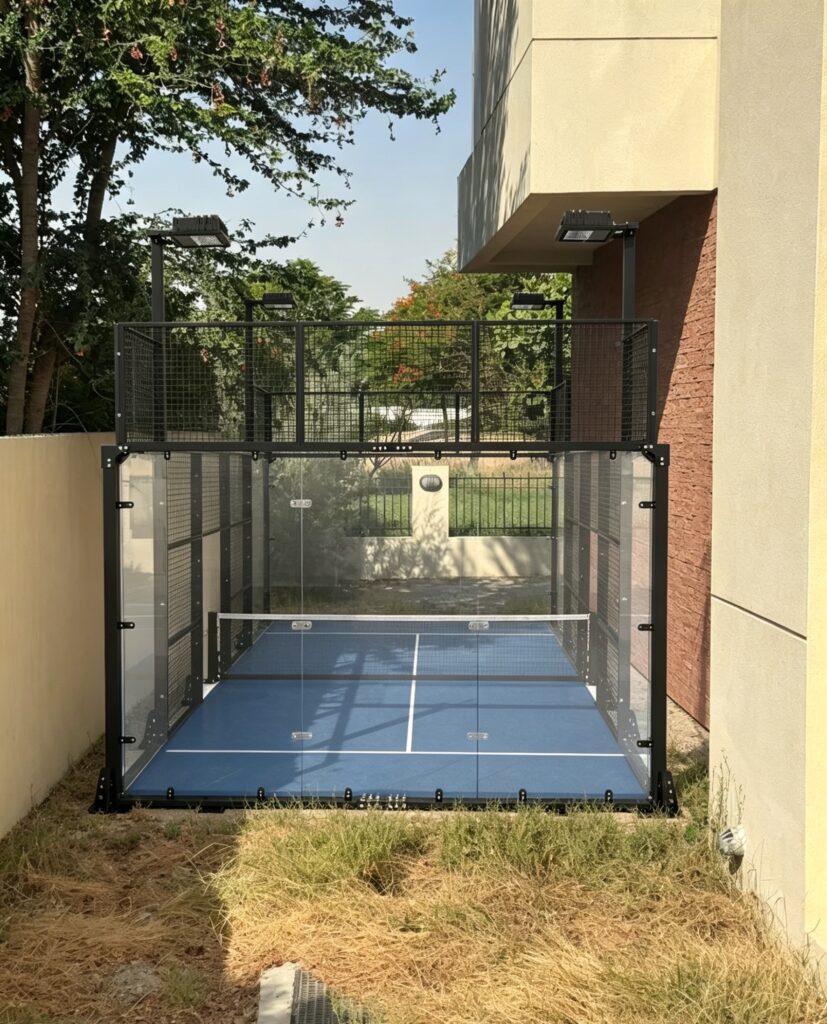
Custom panoramic padel courts are non-standard configurations engineered for specific site constraints, user demographics, or brand requirements. The kids panoramic padel court is the most common example, but the category includes several distinct build types.
Kids panoramic padel court specifications:
– Playing area: 6m × 10m (50%) or 8m × 16m (80% junior size)
– Glass height: 2.5m–3.0m (reduced for junior safety standard)
– Net height: 0.88m at center
– Steel tube: 100mm × 100mm × 2.5mm
– Surface: same 12mm padel turf, reduced sand infill depth for softer bounce
Other custom configurations available:
– Hybrid court (single-end panoramic): Glass back wall only, mesh sides — budget option for space-constrained or budget-constrained builds
– Roofed panoramic: Full glass side walls with polycarbonate or tensile fabric roof — converts an outdoor court to year-round indoor use
– Branded/signature court: RAL-matched powder-coated frame, custom logo integration, coloured turf — used for club identity or sponsor activation
– Double-court module: Factory-engineered shared-wall system for two adjacent courts — reduces steel tonnage and foundation cost by approximately 18% vs two independent courts
Expert insight: For kids courts, verify the glass panel fixing specification before ordering. Junior courts generate higher ball impact frequency per surface area than adult courts. Specify countersunk A4-grade stainless steel fixings at glass panel connections — not standard zinc-plated hardware.
Side-by-Side Comparison: Classic vs Panoramic vs Full Panoramic vs Custom
| Kriterioj | Classic | Panorama | Plena panoramo | Custom / Kids |
|---|---|---|---|---|
| Ludejo | 10m × 20m | 10m × 20m | 10m × 20m | Variable (6×10 to 8×16) |
| Side wall material | 4mm wire mesh | 12mm tempered glass | 12mm tempered/VSG glass | Mixed or reduced glass |
| Total glass panels | 4 (back walls only) | 18 panels | 22–26 panels | 6–14 (configuration dependent) |
| Corner posts | Jes | Jes | Ne | Jes |
| Min. steel wall thickness | 3mm | 3mm | 3mm (heavier gauge frame) | 2.5mm |
| Steel grade | S235/S355 | S235/S355 | S355 minimum | S235 |
| Approx. factory price (USD, FOB China) | $12,000–$18,000 | $8,000–$14,000 | $8,000–$14,000 | $8,000–$14,000 |
| Installed cost estimate (USD) | $28,000–$45,000 | $35,000–$65,000 | $65,000–$110,000 | $18,000–$35,000 |
| Installation time (4-person team) | 3–5 tagoj | 4–6 days | 6–10 days | 2–4 days |
| Installation skill level | Malalta | Meza | High (specialist) | Malalta–Meza |
| Wind resistance | High (mesh) | Medium (glass) | Low (all glass, indoor preferred) | Meza |
| Annual maintenance cost (USD) | $600–$1,000 | $800–$1,500 | $1,200–$2,500 | $400–$800 |
| Spectator sightlines | Partial | Good | Bonega | Lima |
| Social media / brand impact | Malalta | Alta | Very High | Meza |
| Best climate / environment | All, including exposed | Temperate, semi-sheltered | Indoor or sheltered outdoor | All |
| Recommended application | Municipal, budget, wind-exposed | Most commercial projects | Flagship clubs, luxury resorts | Schools, junior programs |
What Specification Do Padel Court Experts Recommend?
For the majority of commercial padel court builds — whether you are constructing 2 courts or 20 — the 3mm steel wall S235/S355 panoramic padel court with 18 × 12mm tempered glass panels is the benchmark specification.
Here is the engineering rationale:
- 3mm tube walls (vs the cheaper 2mm alternative) provide a meaningfully higher section modulus. Under wind load calculations to Eurocode 1, 3mm walls perform significantly better over a 10–15 year operational cycle.
- 18-panel glass configuration reduces the number of vertical steel posts compared to older 20+ panel designs. The result: approximately 200–300 kg less steel per court, lower shipping cost, easier site assembly — and better spectator sightlines.
- S235/S355 to EN 10219 is the certification benchmark to request from any supplier. Reject quotes that cannot produce mill certificates.
- Panoramic vs full panoramic cost delta: For a 4-court project, the price difference between standard panoramic and full panoramic is typically USD $50,000–$80,000. Unless the client brief explicitly demands post-free corners, the standard panoramic delivers 95% of the spectator and branding impact at a fraction of the additional cost.
The panoramic court also wins on total cost of ownership: lower annual maintenance than classic mesh courts, better player retention (improved sightlines improve perceived facility quality), and stronger club branding ROI — all at a price point that now competes directly with high-specification classic builds from European suppliers.
Who Are the Leading Panoramic Padel Court Manufacturers?
The panoramic padel court supply chain is distributed across Spain, Italy, China, and Turkey. For construction companies procuring 10 or more courts per project, Chinese manufacturers now represent the primary cost-competitive supply chain — offering factory prices 30–45% below equivalent European-manufactured product at comparable specification.
Pano Court (China) is among the highest-volume panoramic court manufacturers operating in export markets. In 2025, Pano Court produced and shipped over 1,000 panoramic padel court units, with export distribution concentrated in:
- France — 200+ courts installed across commercial padel club networks
- Canada — Growing volume in Quebec and Ontario as padel infrastructure scales
- Indonesia — Multi-court indoor facilities in Jakarta and Bali resort complexes
For padel court builders evaluating Chinese manufacturers, the key due diligence checklist:
– Steel mill certificates — EN 10219 or GB/T 6728 equivalent, issued by the steel mill (not the court manufacturer)
– Glass test report — EN 12150 for tempered safety glass, or EN ISO 12543 for laminated VSG
– Fixing specification — A4 stainless steel for coastal sites, zinc-plated acceptable for inland
– Reference installations — Minimum 3 completed projects with verifiable GPS location and photo documentation
– Warranty terms — Structural warranty of 5 years minimum; glass warranty of 2 years minimum
FAQ: 10 Questions Padel Court Builders Ask About Panoramic Courts
1. What is the standard size of a panoramic padel court?
The ITF-standard playing area is 10m × 20m, with a total structural footprint of approximately 11m × 21m including the perimeter frame. Side wall height is 6m; back glass wall height is 4m.
2. How many glass panels does a panoramic padel court have?
A standard panoramic padel court uses 18 tempered glass panels, each measuring 2,000mm × 3,000mm at 12mm thickness. Full panoramic configurations use 22–26 panels, depending on corner treatment.
3. How much does it cost to build a panoramic padel court in 2025?
FOB factory cost from a Chinese manufacturer: USD $16,000–$24,000 per court (structure, glass, turf, net post). All-in installed cost including foundations, LED lighting, and perimeter fencing: USD $35,000–$65,000, depending on site conditions and local labour rates. [Internal link: panoramic padel court cost breakdown]
4. How long does it take to install a panoramic padel court?
A standard panoramic court takes 4–6 days for a 4-person installation team, assuming the concrete foundation is pre-cured (minimum 28-day cure time before steel fixing). Full panoramic courts require 6–10 days due to the precision tolerance required at glass corner joints.
5. What steel grade should I specify for a panoramic padel court?
Specify S235JRH or S355J2H to EN 10219, with a minimum tube wall thickness of 3mm. Always request the steel mill certificate — not just the manufacturer’s product declaration. For coastal environments, specify hot-dip galvanized finish to EN ISO 1461.
6. Can panoramic padel courts be installed in cold climates?
Yes. 12mm tempered glass performs reliably from -40°C to +120°C. The primary cold-climate risk is thermal expansion and contraction at the glass-to-steel fixing points. Specify EPDM rubber gaskets or structural silicone compression seals to accommodate movement.
7. What is the difference between a panoramic and a full panoramic padel court?
The defining structural difference is the corner post. Standard panoramic courts retain steel corner posts. Full panoramic courts use engineered glass-to-glass corner joints with no posts, providing 360° unobstructed sightlines. Full panoramic costs 30–50% more and requires specialist installation. For most commercial projects, standard panoramic is the correct specification.
8. What annual maintenance does a panoramic padel court require?
– Glass panel inspection for micro-cracks: annually
– Fixing bolt torque check: annually
– Turf brushing and sand top-up: quarterly
– Steel structure corrosion inspection: every 2 years
Budget USD $800–$1,500 per court per year for routine maintenance on a panoramic court.
9. How do I verify a panoramic padel court supplier from China?
Request steel mill certificates, glass EN 12150 test reports, minimum 3 reference installations with verifiable location data, and a complete FOB shipping quotation with itemised packing list. Reject any supplier that cannot produce third-party test documentation on request. [Internal link: china padel court manufacturer guide]
10. Are junior / kids panoramic padel courts available?
Yes. Junior courts are available in 6m × 10m kaj 8m × 16m configurations with reduced glass height (2.5m–3.0m), lower net height (0.88m at center), and lighter steel gauge (100mm × 100mm × 2.5mm tube). Glass specification remains 12mm tempered — do not accept thinner glass for junior courts.