
The real china padel court factory cost is never the number on the quotation. A court quoted at US$9,850 FOB Tianjin does not arrive on your site at US$9,850. In the four-court European project modelled below, the true cash landed figure was US$14,098 per court — about 54% above FOB — and US$11,651 per court once recoverable import VAT was stripped out. That gap is not a hidden fee. It is customs duty, VAT, terminal charges, inland trucking and clearance, and it is entirely predictable if you model it before you sign.
This guide breaks down every layer of china padel court factory cost between a workshop in Tianjin and a finished project site, using a real July 2026 landed-cost worksheet we prepared for a Romanian buyer (anonymised). It also compares that total against sourcing the same courts from a Spanish manufacturer, so you can see where a China padel court factory actually wins and where it does not.
Key Takeaways
- Budget FOB × 1.5. Total china padel court factory cost landed into the EU runs 45–60% above the FOB equipment price, before any foundation or installation work.
- VAT beats freight. Import VAT was 17.4% of the total in our worked example; ocean freight was only 12.4%.
- Weight, not volume, is the constraint. Four panoramic courts in one 40HQ weigh 22–25 tonnes, and many EU inland trucking tariffs cap at 23 tonnes.
- The number is stable. Across a low-to-high freight scenario range, the per-court total moved only ~7.5%.
- China is 35–50% cheaper than Spain on net economic cost for equivalent specification — but Spain wins on cash flow, lead time and after-sales speed.
- Site works are never included in any equipment quotation, from any country, and commonly add another 30–60%.
Table of Contents
- What is the real china padel court factory cost per court?
- The ten layers of china padel court factory cost
- FOB vs CIF vs DAP: what each term actually includes
- How many padel courts fit in a 40HQ container?
- A real landed-cost worksheet: Tianjin to Bucharest
- Which costs does the factory handle, and which stay with you?
- China vs Spain: a like-for-like landed cost comparison
- Costs excluded from every padel court quotation
- How to choose a China padel court factory that can handle logistics
- Foire aux questions
- Conclusion: model the total, not the quotation
All figures below are budget estimates as of July 2026. Ocean freight, local charges, duty rates and exchange rates change constantly. Treat this as a modelling framework, not a quotation. Confirm every number with your factory, your freight forwarder and your local customs broker before committing capital.
What Is the Real China Padel Court Factory Cost Per Court?
Expect the total china padel court factory cost to run 45% to 60% above the FOB equipment price for a European destination, before any foundation or installation work. In the worked example below, FOB was US$9,150 per court and total cash landed in Bucharest was US$14,098 per court. Roughly 65% of that total was the court itself; the other 35% was freight, taxes and destination logistics.
That ratio is the single most useful planning number in this article. If a supplier gives you an FOB price and you budget your project on that number, you will be short by roughly half again. If you budget FOB × 1.5 for an EU destination, you will be close enough to make a go/no-go decision and refine later. If you want to sanity-check your own project before reading further, our Calculateur de coût d'un terrain de padel runs the same arithmetic against your destination and court count.
Chiffres clés :
- Equipment (FOB) typically represents 60–70% of total cash landed cost into the EU
- Import VAT is usually the second-largest line — larger than ocean freight
- Customs duty on padel court structures into the EU is comparatively small (around 2.7% under HS 9506919000, subject to broker confirmation)
- Destination port charges and inland trucking together are often only 3–5% of the total
- Foundation, civil works, crane/forklift, unloading and installation labour are never included in an equipment quotation
Analyse approfondie : buyers consistently over-worry about ocean freight and under-model import VAT. Freight was 12.4% of the total in our example; import VAT was 17.4%. The critical difference is that VAT is usually recoverable for a VAT-registered importer, while freight is a permanent cost. So the number you use for investment return analysis and the number you need in the bank on clearance day are two different numbers — and you need both.
What Are the Ten Layers of China Padel Court Factory Cost?
There are ten. Five sit between the factory and the destination port, and five sit between the port and your site. A complete Coût de construction d'un terrain de padel model has to account for all of them, because the ones nobody quotes are the ones that break budgets.
| # | Cost layer | What it covers | Who normally pays | Typical share of landed cost (EU) |
|---|---|---|---|---|
| 1 | Factory equipment (FOB) | Steel structure, tempered glass, mesh, turf, net, lighting, hardware, packing | Buyer, to factory | 60–70% |
| 2 | Ocean freight | Port-to-port container carriage, surcharges, BAF/CAF | Buyer or seller, by Incoterm | 10–15% |
| 3 | Marine cargo insurance | All-risk cover, usually 110% of CIF value | Seller under CIF | 0.3–0.5% |
| 4 | Destination terminal charges | THC, carrier local charges, scanning, seal, inspection, container maintenance | Buyer | 1–2% |
| 5 | Customs brokerage | Import declaration, EORI handling, classification, documentation | Buyer | 0.3–0.8% |
| 6 | Customs duty | Tariff on customs value, HS-code dependent | Buyer | 2–3% (EU) |
| 7 | Import VAT | Charged on customs value + duty + incidental costs | Buyer (often recoverable) | 15–20% |
| 8 | Inland transport | Port to project site, weight-capped trucking | Buyer or seller, by Incoterm | 1–3% |
| 9 | Unloading & handling | Crane or forklift, labour, temporary storage | Buyer | Excluded from quotations |
| 10 | Civil works & installation | Foundation slab, drainage, electrical supply, assembly labour | Buyer | Excluded from quotations |
Perspective tirée de la réalité : layers 9 and 10 are where most first-time buyers lose control of the budget. A container arrives, and there is no forklift on site rated for a 1,200 kg glass crate. Demurrage starts. Storage starts. Ask your factory for the packing list with individual package weights before the vessel sails, and book the handling equipment against that list — not against an assumption.
What Is the Difference Between FOB, CIF and DAP for Padel Courts?
FOB ends when the goods are loaded at the origin port. CIF ends when the vessel arrives at the destination port — it does not mean delivered to your site. DAP means the seller delivers to a named place ready for unloading, but the buyer still handles import clearance, duty and VAT. None of the three includes installation. The full definitions are published by the International Chamber of Commerce, and it is worth reading them before you sign anything.
This is the single most expensive misunderstanding in padel court importing. A buyer sees “CIF Constanța” and assumes the courts turn up at the club. They do not. They sit at the terminal accruing charges until an importer of record clears them. We walk through the mechanics end to end in our guide on how to import a China padel court.
| Cost item | FOB Tianjin | CIF destination port | DAP project site |
|---|---|---|---|
| Court equipment | Included | Included | Included |
| Export clearance & origin charges | Included | Included | Included |
| Ocean freight | Buyer | Included | Included |
| Marine insurance | Buyer | Included | Included |
| Destination THC & local charges | Buyer | Buyer | Included |
| Inland transport to site | Buyer | Buyer | Included |
| Import declaration & brokerage | Buyer | Buyer | Buyer |
| Customs duty | Buyer | Buyer | Buyer |
| Import VAT | Buyer | Buyer | Buyer |
| Unloading from truck | Buyer | Buyer | Buyer |
| Foundation & installation | Buyer | Buyer | Buyer |
Practical advice: if you want a single number to compare suppliers, ask for FOB and build the rest yourself with a local forwarder quote. FOB is the only term that isolates the china padel court factory cost of the equipment itself, and it is the only way to compare a Chinese factory against a Spanish one on equal footing. A “DDP delivered price” from any supplier bundles assumptions about duty and VAT that may not match your tax position.
How Many Padel Courts Fit in a Container, and Why Does Weight Matter More Than CBM?
Four panoramic padel courts fit in one 40HQ container, at approximately 24 tonnes gross. Volume is rarely the constraint — weight is. A padel court is steel and tempered glass, so a container hits its payload and road-tariff weight limits long before it runs out of cubic metres.
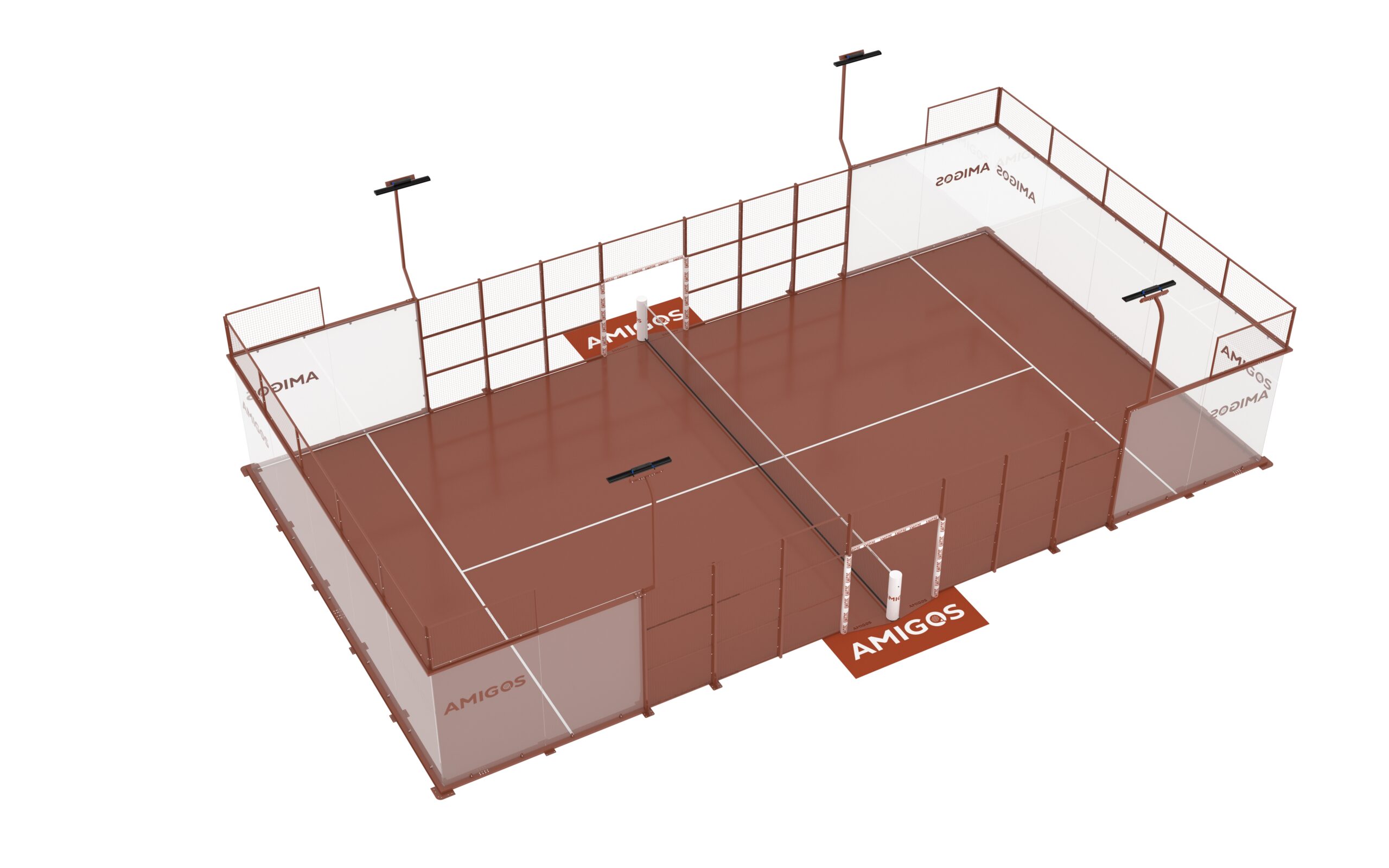
- 1 × 40HQ typically carries 3–4 panoramic courts depending on model, glass thickness and whether turf ships in the same box
- Gross weight for 4 panoramic courts runs roughly 22–25 tonnes
- Glass crates ship on dedicated A-frames or steel racks and are the heaviest single packages
- Turf rolls are volumetric, not heavy — they are what usually forces a second container
- Many European inland trucking tariffs are capped at 23 tonnes, below what a fully loaded padel court container weighs
Perspective tirée de la réalité : in the project modelled below, the published Constanța–Bucharest trucking tariff of €675 per 40′ unit had a hard 23-tonne cap, and our cargo estimate was 24 tonnes. That one tonne is not a rounding error — it triggers a re-quote, an overweight permit, or a repack, and each of those raises the china padel court factory cost you actually pay. We flagged it as a decision gate before the order, not after the container landed. Ask any China padel court factory for a controlled packing list with a SOLAS-compliant verified gross mass (VGM) and a loading diagram. An estimate is not a substitute.
What Does a Real Padel Court Landed-Cost Worksheet Look Like?
Below is a real budget model prepared in July 2026 for a European buyer purchasing four panoramic courts, shipped Tianjin → Port of Constanța → Bucharest in one 40HQ container. Customer details are anonymised. Every figure is a budget reference as of that date.
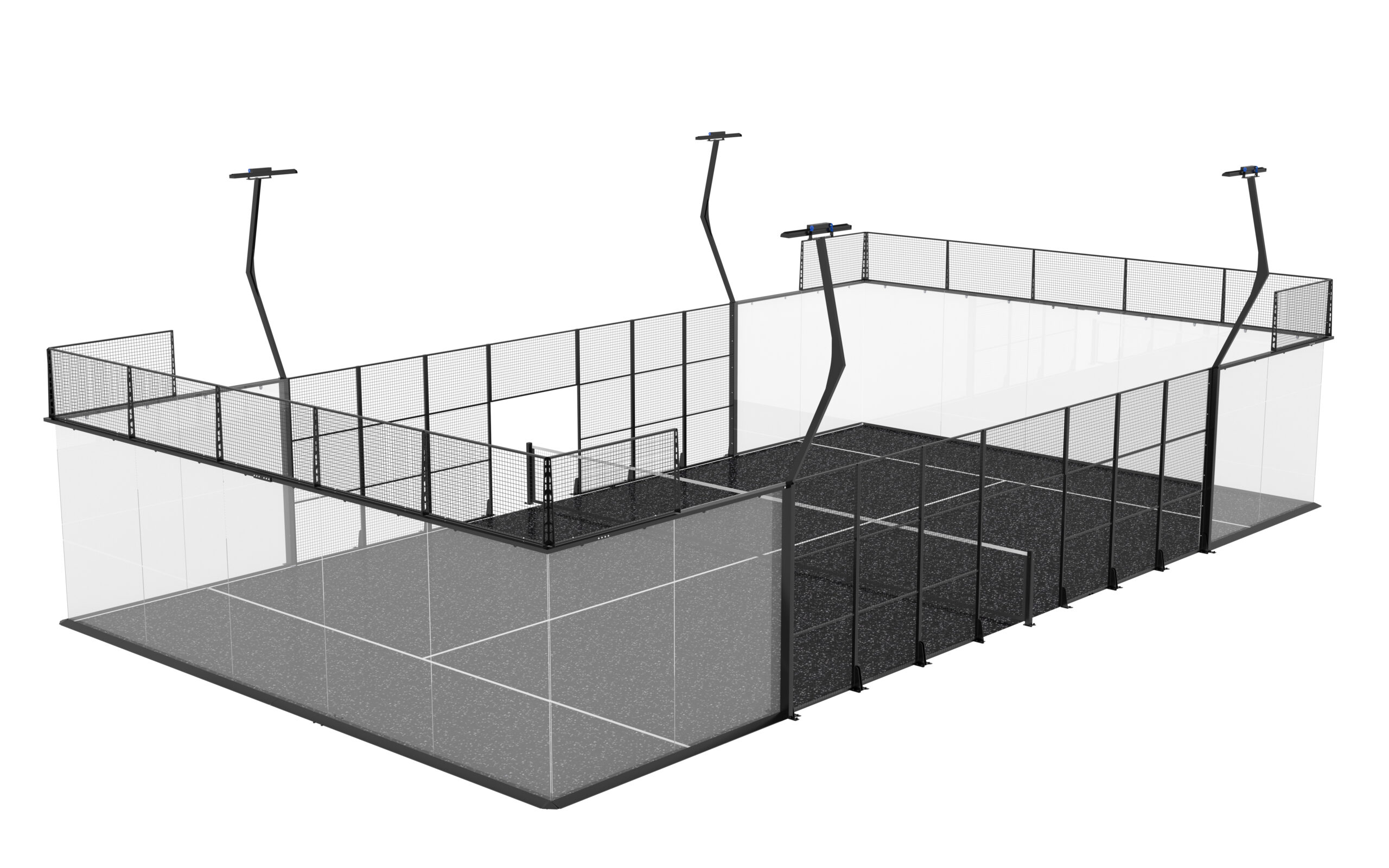
Shipment parameters: 4 × panoramic padel court · 1 × 40HQ · approx. 24 t gross · HS 9506919000 · production 20–30 days · port-to-port transit 50–68 days.
| Stage | Cost item | Basis | Total (USD) | Per court (USD) |
|---|---|---|---|---|
| FOB | Padel court systems | 4 courts × FOB unit price | 43,400 | 10,850 |
| CIF | Ocean freight | 1 × 40HQ, base case | 6,800 | 1,700 |
| CIF | Marine cargo insurance | 110% × (FOB + freight) × 0.40% | 191 | 48 |
| CIF | CIF destination port subtotal | FOB + freight + insurance | 50,391 | 12,550 |
| Destination | Import terminal handling (THC) | 40′ dry container | 194 | 49 |
| Destination | Carrier local charges | 40′ GP container | 262 | 66 |
| Destination | Container inspection | Per container | 15 | 4 |
| Destination | Import seal | Per container | 6 | 2 |
| Destination | Container maintenance | 40′ container | 20 | 5 |
| Destination | Container scan | €25 mandatory scan fee | 29 | 7 |
| Destination | Expedition & monitoring | €100 local trucking ops fee | 114 | 29 |
| Destination | Port → city inland trucking | €675, 23 t tariff cap | 771 | 193 |
| Destination | Logistics contingency | 10% of port + inland logistics | 141 | 35 |
| DAP | DAP-equivalent budget to site city | CIF + destination logistics | 51,943 | 12,940 |
| Import | Customs broker / declaration | €250 allowance | 286 | 71 |
| Import | Customs duty | 2.7% × CIF customs value | 1,177 | 294 |
| Import | Import VAT taxable base | DAP budget + broker + duty | 53,406 | 13,305 |
| Import | Import VAT (21% standard rate) | 21% × taxable base | 9,787 | 2,447 |
| Landed | Total cash landed cost | DAP + broker + duty + VAT | 63,193 | 15,752 |
| Landed | Net economic cost if VAT recoverable | Total cash less import VAT | 56,606 | 13,651 |
Because freight and local charges move, the same model was run as a planning range rather than a single point. Current market direction is easy to track against a published benchmark such as the Drewry World Container Index.
| Scenario | Ocean freight (USD/40HQ) | Local-cost factor | Total cash landed (USD) | Per court (USD) |
|---|---|---|---|---|
| Faible | 4,926 | 0.9× | 53,832 | 13,458 |
| Base | 6,800 | 1.0× | 56,393 | 14,098 |
| Élevé | 7,800 | 1.2× | 58,086 | 14,521 |
Analyse approfondie : the planning range is only about US$1,060 per court wide — roughly 7.5%. That is the honest headline of this whole exercise. Once you have a firm FOB price and a realistic freight band, china padel court factory cost is a predictable modelling exercise, not a gamble. The volatility people fear lives almost entirely in the freight line, and freight is only 12% of the total. For a second data point on the equipment line itself, see our comparaison réelle des devis.
Which Parts of the China Padel Court Factory Cost Does the Supplier Handle?
An established China padel court manufacturer handles export documentation, packing, container loading, booking and — under CIF or DAP — freight and insurance. What it cannot handle is anything that requires legal presence in your country: import clearance, duty, VAT, and site works.
This is worth saying plainly, because a lot of buyers hesitate over logistics complexity that the supply chain solved years ago. China’s export infrastructure for sports facility equipment is mature. Padel courts move on the same steel-and-glass export lanes as greenhouse structures, curtain walling and stadium seating. A competent China padel court factory has:
- A standing relationship with forwarders who book the Tianjin, Qingdao and Shanghai lanes weekly
- Export-grade packing designed for 50–70 days of sea transit and multiple handlings
- Purpose-built steel A-frames for tempered glass, not improvised timber crates
- A controlled packing list with per-package weights, dimensions and a loading diagram
- Spare-part protocols — extra glass panels, fixings and turf offcuts shipped in the same container
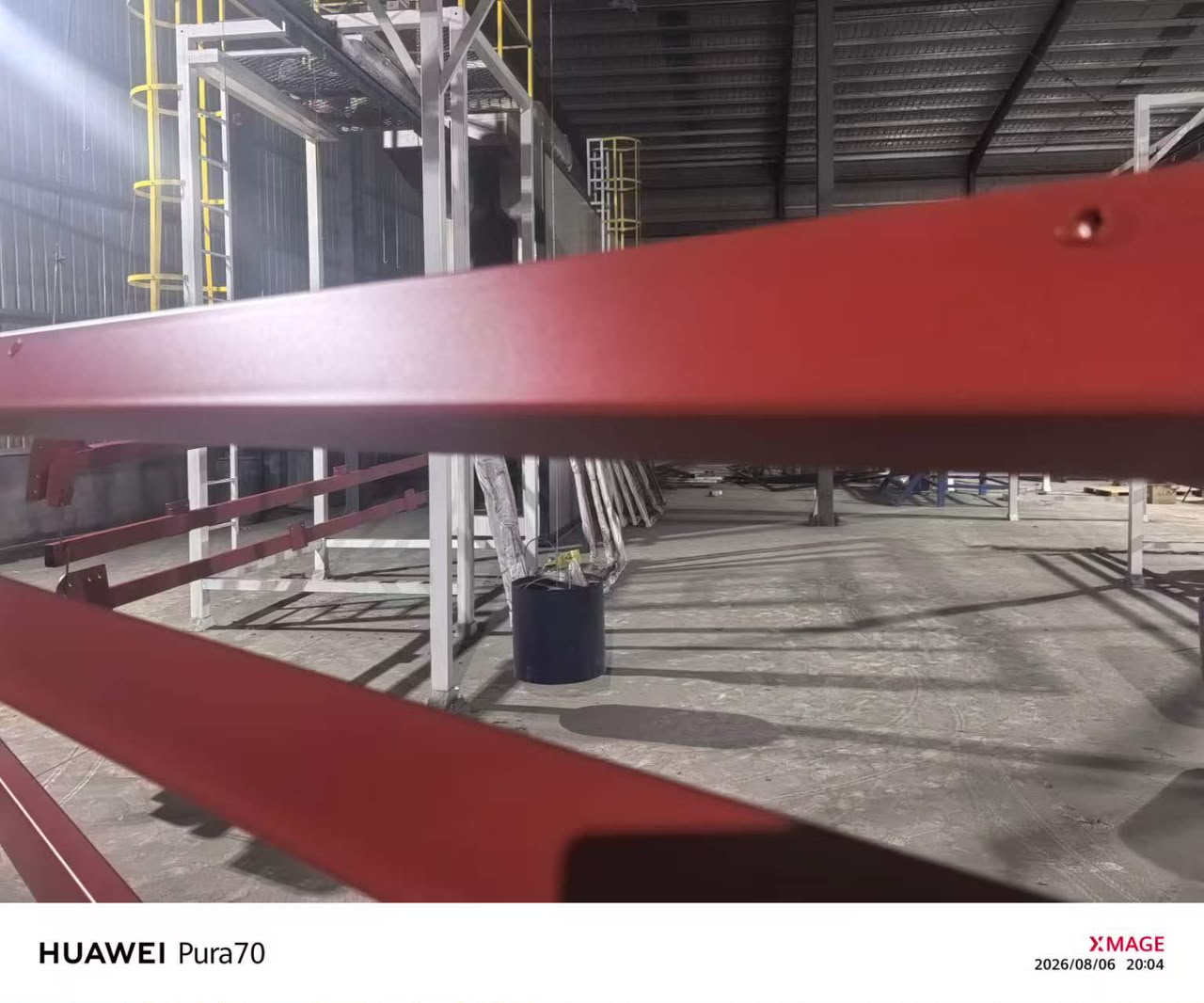
Real-world insight on spares: tempered glass occasionally breaks in transit or during installation. This is normal and every experienced factory plans for it. Ask, before you order, how many spare glass panels are included and what the replacement lead time is. Shipping one replacement panel by air after the fact costs more than shipping two spares in the original container. On a four-court order, one or two spare panels of each size is the sensible ask.
What you must own locally: appoint a freight forwarder and a licensed customs broker in your own country before you place the order, and ask your tax adviser two questions — what is our import VAT position, and is it recoverable? Those two answers change your cash requirement by five figures. No China padel court factory, including us, can answer them for you.
Is Importing From China Cheaper Than Buying From a Spanish Padel Court Manufacturer?
On net economic cost, yes — typically 35–50% lower for an equivalent panoramic specification delivered into Central or Eastern Europe. On cash flow and lead time, Spain wins: no import VAT to fund, no duty, and delivery in weeks rather than months. Which matters more depends on your project timeline and your VAT position. Our factory-level China vs Spain comparison covers the material and process differences behind these numbers.
Below is the same four-court project, modelled as if sourced ex-works from a Spanish manufacturer and trucked to the same destination. Spanish ex-works panoramic pricing spans roughly €15,000–€28,000 per court depending on brand and specification; we have used a conservative low-end €15,000 so the comparison is not stacked. Road freight assumes two standard tautliners over approximately 2,900 km at European FTL benchmark rates. EUR/USD 1.1426.
| Cost line (4 courts) | China — FOB Tianjin | Spain — EXW Spain |
|---|---|---|
| Equipment | US$43,400 | US$68,556 (€60,000) |
| International transport | US$6,800 (ocean, 40HQ) | US$8,615 (2 × FTL, ~2,900 km) |
| Cargo insurance | US$191 | US$212 |
| Destination port & terminal charges | US$1,412 | US$0 (door-to-door truck) |
| Customs brokerage | US$286 | US$0 (intra-EU) |
| Customs duty | US$1,177 (2.7%) | US$0 (free circulation) |
| Import VAT — cash out | US$9,787 (21%, recoverable) | US$0 (reverse charge) |
| Total cash required | US$56,393 | US$77,383 |
| Net economic cost (ex-VAT) | US$46,606 | US$77,383 |
| Net cost per court | US$11,651 | US$19,346 |
| Indicative lead time | 12–16 weeks | 4–6 weeks |
On these assumptions the China route is US$30,777 lower in net economic cost across four courts — about US$7,700 per court, or 40%. Against a mid-range Spanish price of €18,000 ex-works, the gap widens to roughly 49%. Against a premium Spanish brand at €25,000+, it exceeds 60%.
Where Spain genuinely wins:
- Cash flow. You never fund import VAT. On this project that is a US$9,787 cash difference held for weeks or months until recovery.
- Speed. Four to six weeks versus three to four months. If you are racing a season opening, that is decisive.
- Small orders. Below two courts, ocean freight and fixed clearance costs do not amortise, and the china padel court factory cost advantage narrows sharply.
- Rework and after-sales. A replacement part from Valencia arrives in days.
The condition on all of this: the comparison only holds if the specifications match. Comparing a €15,000 Spanish court against a US$9,150 Chinese court is meaningless unless both use 12 mm tempered glass with polished edges, hot-dip galvanised steel to EN ISO 1461, a genuine 80–100 µm powder coat, and a stated warranty. Ask both suppliers for the same spec sheet and compare line by line. Price advantage that comes from thinner glass or a 40 µm coating is not an advantage — it is deferred cost. If the court will host sanctioned play, also confirm the geometry against the International Padel Federation rules before ordering.
What Costs Are Always Excluded From a Padel Court Quotation?
Every equipment quotation — Chinese, Spanish or otherwise — excludes site works. They sit outside the china padel court factory cost entirely. Budget them separately, in local currency, with local contractors. They frequently add 30–60% on top of the landed equipment cost for an outdoor project.
- Foundation and civil works — a level reinforced concrete slab, typically 20–25 cm, with correct falls and drainage
- Drainage — perimeter channels and connection to site drainage
- Electrical supply — cabling from the distribution board to the lighting columns, plus any transformer or metering work
- Unloading and handling — crane or rated forklift, plus labour, on the day the container arrives
- Installation labour — typically 1–2 weeks per court for a trained crew once the slab is cured (see our Guide d'installation d'un terrain de padel for regional labour rates)
- Permits and inspections — planning consent, structural sign-off, federation homologation where required
- Demurrage and storage — the cost of not being ready when the container lands
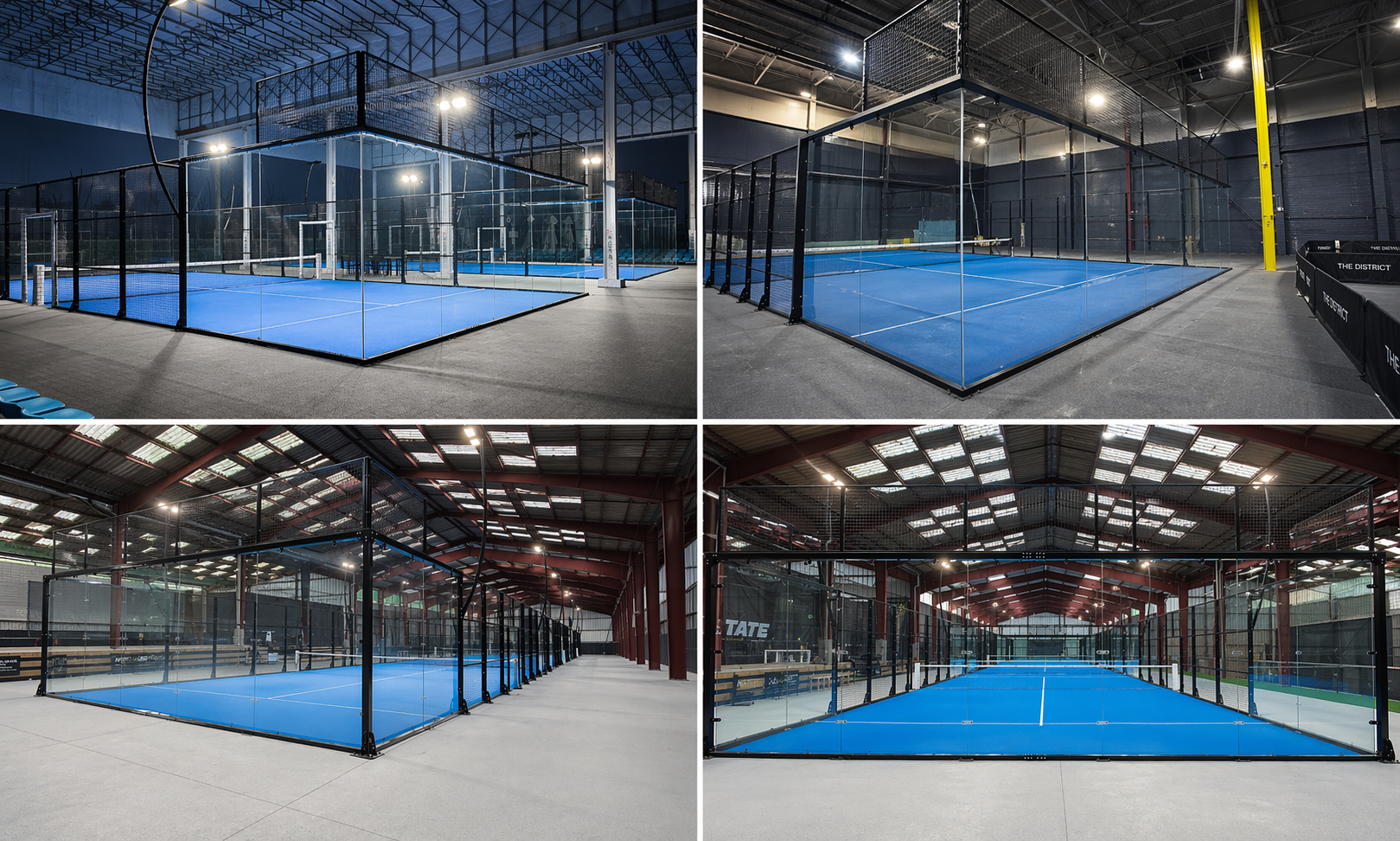
Perspective tirée de la réalité : the most expensive mistake we see is starting the foundation after the container is booked. Concrete needs curing time, and slab tolerances have to be right before steel arrives. Start civil works during production, not during transit. The 50–68 days a container spends at sea is exactly the window in which a slab should be poured, cured and surveyed.
How Do You Choose a China Padel Court Factory That Can Handle the Logistics?
Judge a supplier on documentation, not on marketing. A China padel court factory that can produce a controlled packing list, a verified gross weight, a loading diagram, material certificates and a written warranty is a factory that has shipped courts before. One that cannot is learning on your project — and learning on your project is the most expensive line item there is.
Ask for these seven documents before you pay a deposit:
- Itemised FOB quotation with the HS code stated
- Packing list with per-package dimensions and weights, plus total CBM and VGM
- Container loading diagram
- Steel grade and hot-dip galvanising certificate (EN ISO 1461 or equivalent), with coating thickness
- Glass certificate — thickness, tempering standard, edge finish
- Powder coating specification, including brand and dry film thickness in microns
- Written warranty terms and a stated spare-parts policy
If you are still at the shortlisting stage, our guide to verifying a real China padel court manufacturer and the broader Guide d'achat pour les fournisseurs de terrains de padel cover the audit process in detail, including how to tell a source factory from a trading company.
At PanoCourt we build panoramic, full panoramic, classic and single padel courts in Tianjin for export, and we prepare a project-specific landed-cost worksheet like the one above for buyers who ask for it — with sources cited for every freight, duty and local-charge assumption, so your own forwarder can check our work rather than take it on faith. We would rather you go into a project knowing the total number than be surprised at the terminal.
Frequently Asked Questions About China Padel Court Factory Cost
How much does it cost to import a padel court from China?
Budget 45–60% above the FOB equipment price for a European destination. In a July 2026 four-court project to Romania, FOB was US$9,150 per court and the total china padel court factory cost landed was US$14,098 per court, including ocean freight, terminal charges, brokerage, 2.7% duty and 21% import VAT. Net of recoverable VAT, the cost was US$11,651 per court.
Does CIF mean the padel courts are delivered to my site?
No. CIF covers goods, ocean freight and marine insurance to the named destination port only. You remain responsible for terminal handling charges, import declaration, customs duty, import VAT, inland transport to your site, and unloading. Those items added roughly US$3,200 per court in our worked example.
How many padel courts fit in a 40HQ container?
Typically three to four panoramic courts, at roughly 22–25 tonnes gross. The binding constraint is weight, not volume — tempered glass and galvanised steel are dense. Always request a controlled packing list with verified gross weight before booking inland trucking, because many European road tariffs are capped at 23 tonnes.
What is the import duty on padel courts into the EU?
Padel court structures are commonly declared under HS 9506919000, which carries a third-country duty rate of approximately 2.7% in the EU TARIC. You can check the current rate for your country on the European Commission’s Access2Markets portal. Final classification is the importer’s legal responsibility, and a licensed customs broker in the destination country must confirm the code and applicable rate before clearance.
Is import VAT on padel courts recoverable?
Usually yes, for a VAT-registered business importer with compliant records — but it is a cash-flow requirement regardless. In our example, 21% import VAT was US$9,787 on a four-court shipment, payable at clearance and recovered later. Confirm your specific position with a local tax adviser before budgeting.
How long does it take to get padel courts from China?
Plan 12–16 weeks door to door: 20–30 days production, 50–68 days port-to-port sailing on Asia–Europe routes, plus one to two weeks for clearance and inland delivery. Shorter transits apply to Middle East and Southeast Asian destinations. Use the sailing window to complete foundation works.
Is it cheaper to buy padel courts from China or Spain?
China is typically 35–50% lower on net economic cost for equivalent panoramic specification, even after freight, duty and destination charges. Spain wins on lead time, cash flow (no import VAT to fund) and after-sales speed. Below two courts, the Chinese advantage narrows considerably because fixed shipping and clearance costs do not amortise.
What is not included in a padel court quotation?
Foundation and civil works, drainage, electrical supply, unloading equipment, installation labour, permits and any demurrage or storage. These sit outside the china padel court factory cost and are always excluded from equipment pricing. They are commonly 30–60% of landed equipment cost for an outdoor project. Budget them separately with local contractors in local currency.
Should I buy FOB or ask the factory for a delivered price?
Ask for FOB when comparing suppliers — it isolates the value of the court and lets you compare a Chinese factory against a European one fairly. Then build the remaining layers with quotations from your own forwarder and broker. Delivered prices bundle tax assumptions that may not match your position.
Do Chinese factories supply spare parts for padel courts?
Established exporters do. Ask before ordering how many spare glass panels, fixings and turf offcuts are included and what the replacement lead time is. Shipping spares in the original container costs a fraction of air-freighting a single replacement panel later. On a four-court order, one to two spares per glass size is standard practice.
Conclusion: Model the Total, Not the Quotation
The buyers who get burned importing padel courts are not the ones who chose the wrong country. They are the ones who budgeted on an FOB number and discovered duty, VAT, terminal charges and inland trucking at the point of clearance. The costs are not hidden — nobody itemised them.
Once you do itemise them, the picture is stable. Our four-court model varied by only about 7.5% across a low-to-high freight and local-cost range, and the equipment itself was two-thirds of the total. That is a manageable, financeable, plannable number — which is precisely why china padel court factory cost has become a mainstream procurement calculation rather than an adventure. The logistics are solved. The packing is solved. The spare-parts question is solved. What is left is arithmetic you can do before you commit.
Three things to do next: get an itemised FOB quotation with the HS code stated; ask a licensed customs broker in your country to confirm classification, duty rate and your VAT recoverability; and get an all-in destination quotation from a local forwarder. Those three inputs turn this framework into your project’s actual number.
Need the worksheet for your own project? Send us your destination port, court quantity and specification, and we will prepare an itemised china padel court factory cost estimate with every assumption and source shown, so your forwarder and broker can verify it. Request a project landed-cost estimate.
Disclaimer. All figures in this article are budget estimates prepared in July 2026 for illustration and preliminary project evaluation. They are not a binding freight, customs, tax or delivery quotation. Actual duty, VAT, customs value, port charges and inland costs are determined by the authorities, carriers, terminals and service providers in your destination country at the time of import. Ocean freight rates and exchange rates change continuously and the figures here will go out of date. Always confirm current pricing with the manufacturer, a licensed customs broker and a freight forwarder in your own country before making a purchase decision.