
Pertanyaan pertama yang selalu diajukan setiap investor kepada saya selalu sama: berapa biaya pembangunan lapangan padel di Johannesburg? Dan jawaban jujurnya adalah, hal ini lebih sulit untuk ditentukan dengan tepat daripada yang seharusnya, karena sebagian besar informasi harga yang tersedia di internet tidak lengkap, menyesatkan, atau keduanya. Pemasok lokal menawarkan harga lapangan yang terdengar wajar sampai Anda mulai menanyakan apa saja yang sudah termasuk di dalamnya. Setelah Anda menambahkan biaya pekerjaan sipil, PPN, penerangan, dan semua biaya khusus lokasi yang tidak tercantum dalam angka utama, biaya sebenarnya untuk membangun lapangan padel di Johannesburg akan terlihat sangat berbeda dari perkiraan awal Anda.
Panduan ini memberikan rincian yang jujur dan terperinci mengenai biaya lapangan padel di Johannesburg untuk tahun 2026. Bukan sekadar harga yang tertera — melainkan investasi total sesungguhnya yang mencakup setiap komponen utama proyek. Saya juga akan membahas perbedaan harga antara pembelian langsung dari pabrik dan melalui dealer lokal, yang pada proyek dengan banyak lapangan dapat berdampak pada keputusan senilai ratusan ribu Rand.
Mengapa Harga Lapangan Padel di Johannesburg Sulit Dibandingkan
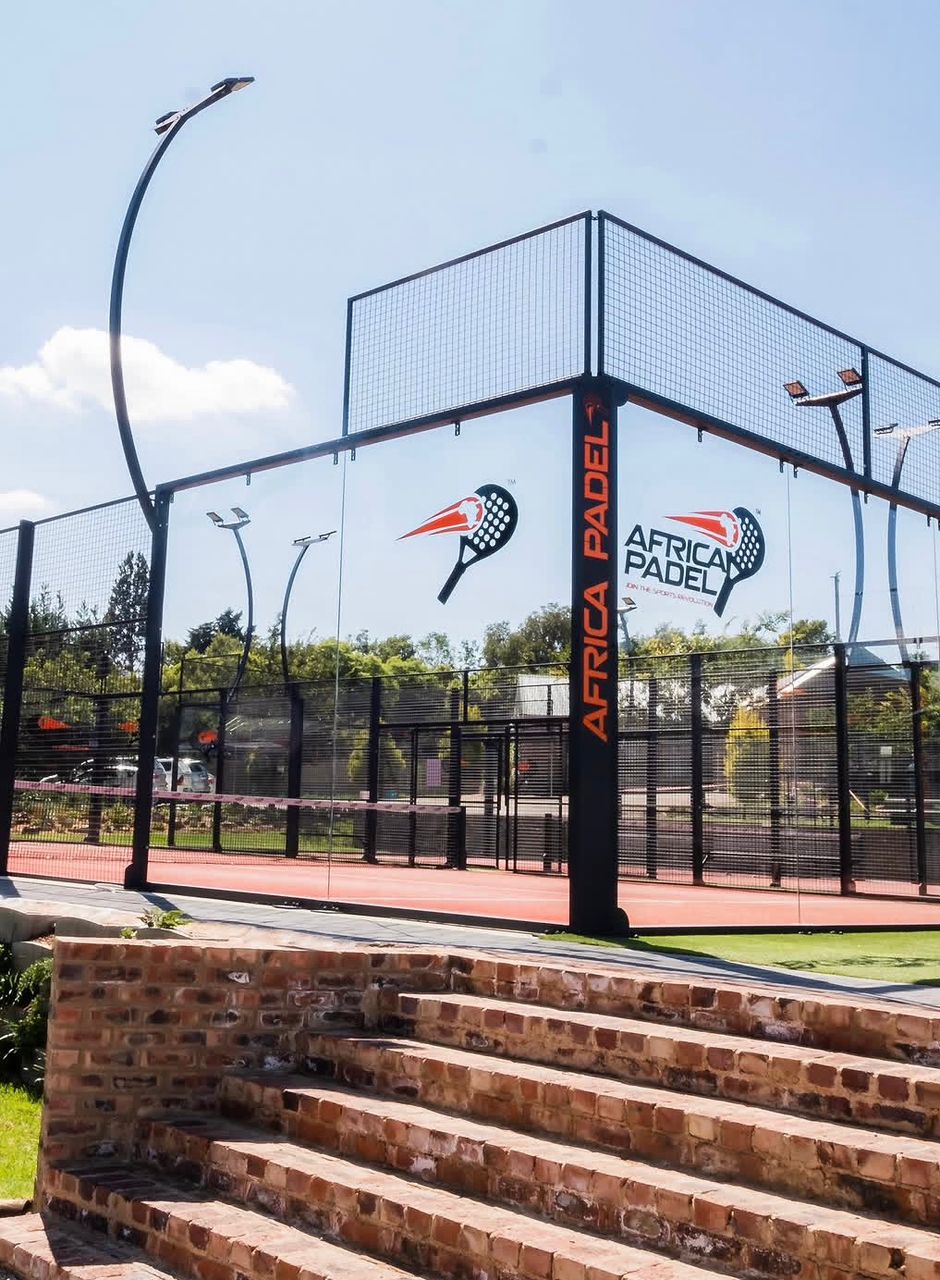
Pasar lapangan padel di Afrika Selatan menghadapi masalah transparansi. Sebagian besar penyedia lokal tidak mempublikasikan harga, dan mereka yang melakukannya mencantumkan angka yang tidak mencakup komponen biaya yang signifikan. Ketika pemasok lapangan padel terkemuka di Afrika Selatan mengumumkan harga satu lapangan panoramik sebesar R498.000, angka tersebut memang nyata — namun tidak termasuk pelat beton dan sistem drainase, infrastruktur pasokan listrik, perlengkapan lampu sorot LED, PPN sebesar 15 persen, biaya pengiriman, serta biaya pemasangan di lokasi.
Bagi pembeli yang melakukan riset daring, hal ini menimbulkan kesan bahwa lapangan padel merupakan investasi sebesar R500.000. Pada kenyataannya, satu lapangan padel tertutup yang sepenuhnya beroperasi di Johannesburg — siap digunakan sejak hari pertama — membutuhkan modal total sebesar R750.000 hingga R1,1 juta, tergantung pada kondisi lokasi dan pilihan spesifikasi. Memahami selisih ini sebelum memulai adalah pembeda antara proyek yang sesuai dengan rencana keuangannya dan proyek yang melebihi anggaran di setiap tahap. Untuk konteks pasar dan investasi yang lengkap, mulailah dengan Panduan Lengkap bagi Investor Lapangan Padel di Johannesburg.
Total Biaya Lapangan Padel di Johannesburg: Rincian Komponen Tahun 2026
Berikut ini adalah model perkiraan biaya yang realistis untuk satu lapangan padel panorama di Johannesburg, yang dirinci berdasarkan komponennya. Semua angka dinyatakan dalam Rand Afrika Selatan tahun 2026 berdasarkan data proyek yang sedang berjalan di Johannesburg.
Komponen 1: Struktur Lapangan — Baja, Kaca, Rumput Sintetis, dan Perlengkapan
Struktur lapangan — rangka baja, panel kaca, rumput sintetis, sistem jaring, dan perlengkapan — merupakan komponen yang dijadikan acuan oleh pemasok dalam penawaran harga utama mereka. Di pasar Johannesburg saat ini, struktur lapangan kaca panorama dari distributor lokal Afrika Selatan yang mewakili merek-merek Eropa berkisar antara R420.000 hingga R620.000 per lapangan, tergantung pada spesifikasi kaca, kualitas lapisan baja, dan tingkat ketahanan rumput sintetis terhadap sinar UV.
Khusus untuk Johannesburg, mengalokasikan anggaran di kisaran atas struktur biaya untuk mendapatkan spesifikasi yang sesuai dengan kondisi Highveld merupakan keputusan investasi yang tepat. Menetapkan spesifikasi yang kurang memadai sejak awal — seperti stabilisasi UV yang tidak memadai, atau penggunaan kaca tempered standar alih-alih kaca laminasi pengaman untuk ketahanan terhadap hujan es — akan menimbulkan biaya pemeliharaan dan penggantian dalam waktu lima tahun yang jauh melebihi penghematan awal.
Komponen 2: Pekerjaan Sipil — Pondasi, Lantai Beton, dan Drainase
Pekerjaan sipil merupakan komponen biaya yang paling bervariasi dalam proyek lapangan padel di Johannesburg, sekaligus yang paling sering diremehkan. Biaya pembuatan pelat beton bertulang dengan sistem drainase bawah permukaan untuk satu lapangan berkisar antara R80.000 hingga R180.000, tergantung pada kondisi tanah, akses ke lokasi, dan spesifikasi pelat.
Geologi Johannesburg menimbulkan pertimbangan khusus dalam bidang teknik sipil yang secara langsung memengaruhi biaya. Sebagian wilayah metropolitan ini berada di atas lapisan dolomit — suatu kondisi yang menimbulkan risiko lubang ambles dan mengharuskan dilakukannya penilaian khusus Manajemen Risiko Dolomit dengan biaya sebesar R15.000 hingga R40.000 sebelum konstruksi dapat dilanjutkan. Tanah liat hitam yang ditemukan di berbagai bagian Highveld akan mengembang secara signifikan saat basah dan menyusut saat kering, sehingga memerlukan modifikasi desain pondasi untuk mencegah retak dan pengangkatan pelat lantai seiring berjalannya waktu.
Penyelidikan geoteknik sebelum memutuskan lokasi pembangunan biayanya berkisar antara R8.000 hingga R20.000. Ini adalah langkah uji tuntas yang paling hemat biaya yang dapat Anda lakukan. Menemukan kondisi tanah yang bermasalah setelah konstruksi dimulai dapat menambah biaya proyek Anda sebesar R150.000 hingga R300.000 dan menunda pembukaan hingga berbulan-bulan. Seluruh proses pondasi dan urutan konstruksi dibahas dalam Panduan Pemasangan Lapangan Padel untuk Johannesburg.
Komponen 3: Pasokan Listrik dan Penerangan LED
Lapangan padel memerlukan pencahayaan yang andal dan tersebar merata untuk menghasilkan pendapatan selama jam-jam sibuk antara pukul 17.00 hingga 22.00. Biaya listrik terbagi menjadi dua bagian, yaitu infrastruktur pasokan listrik dan perlengkapan pencahayaan.
Infrastruktur pasokan untuk satu lapangan: R30.000 hingga R60.000, tergantung pada jarak dari titik pasokan utama. Penerangan sorot LED untuk satu lapangan sesuai standar iluminansi minimum 300 lux yang direkomendasikan oleh Federasi Padel Internasional (FIP): R45.000 hingga R90.000 untuk spesifikasi berkualitas. Spesifikasi 400 lux untuk tingkat turnamen harganya lebih mahal secara proporsional.
Pemadaman bergilir di Johannesburg menambah pertimbangan biaya yang sering diremehkan dalam sebagian besar anggaran proyek. Waktu pertandingan malam hari dari pukul 17.00 hingga 22.00 justru merupakan rentang waktu yang paling terdampak oleh pemadaman bergilir Tahap 2 hingga Tahap 4, yang tetap menjadi kenyataan operasional bagi bisnis di Johannesburg. Sistem cadangan daya berbasis inverter yang dirancang untuk satu lapangan dengan beban pencahayaan penuh selama 2 hingga 3 jam berharga antara R40.000 hingga R80.000. Untuk fasilitas dengan empat lapangan, sistem yang dirancang dengan tepat harganya berkisar antara R150.000 hingga R400.000. Bagi usaha padel yang perlu menjaga keandalan pendapatan pada jam-jam puncak, hal ini bukanlah pilihan yang bisa diabaikan.
Komponen 4: Struktur Atap
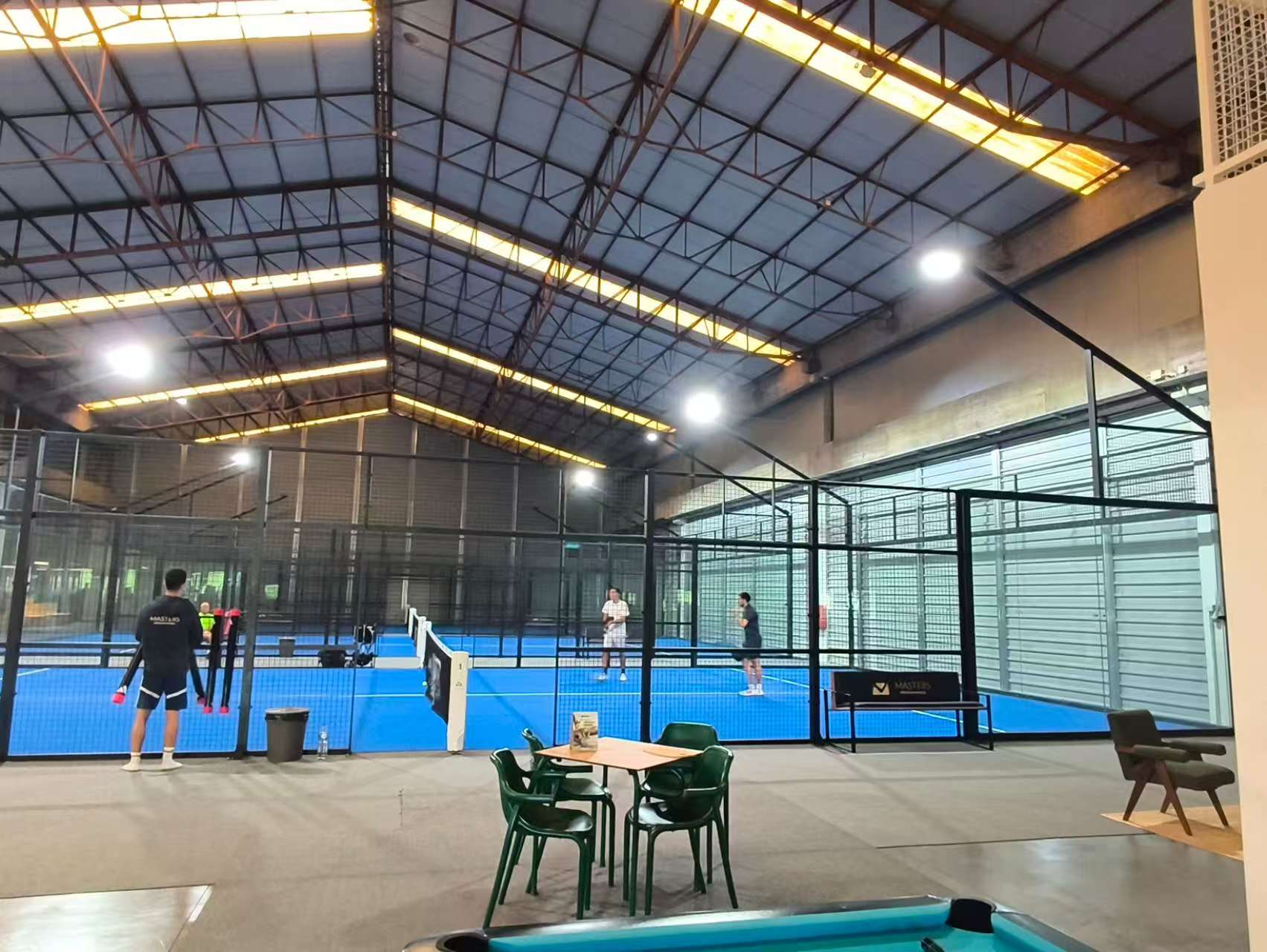
Iklim Johannesburg — sinar UV yang intens, badai es di musim panas, dan badai petir sore hari dari Oktober hingga Februari — menjadikan lapangan tertutup sebagai rekomendasi yang sangat dianjurkan, bukan sekadar pilihan mewah. Lapangan tertutup melindungi investasi dari kerusakan akibat cuaca, memperpanjang musim operasional, dan mendukung penetapan harga premium. Pemasangan atap menambah biaya proyek sebesar R150.000 hingga R350.000 per lapangan, tergantung pada jenis strukturnya.
Komponen 5: PPN dan Biaya Jasa Profesional
PPN Afrika Selatan sebesar 15 persen berlaku untuk semua barang dan jasa dalam proyek ini. Dengan total biaya proyek sebesar R700.000 sebelum PPN, hal ini menambah beban sebesar R105.000. Banyak penawaran dari pemasok disajikan tanpa termasuk PPN — pastikan untuk mengonfirmasi perlakuan PPN dalam setiap penawaran. Biaya persetujuan rencana bangunan dari pemerintah kota, biaya insinyur profesional untuk persetujuan struktural yang diperlukan, serta biaya manajemen proyek menambah total biaya sebesar R25.000 hingga R65.000, tergantung pada tingkat kompleksitas lokasi.
Komponen 6: Infrastruktur Keamanan
Setiap fasilitas olahraga komersial di Johannesburg memerlukan investasi di bidang keamanan. CCTV, sistem keamanan perimeter, dan kontrol akses merupakan kebutuhan operasional yang tak terpisahkan. Siapkan anggaran sebesar R50.000 hingga R150.000 untuk pemasangan infrastruktur keamanan dasar di fasilitas dengan beberapa lapangan.
Ringkasan Biaya Lapangan Padel All-In Per Lapangan
| Komponen Biaya | Rangkaian Single Court (ZAR, 2026) |
|---|---|
| Struktur lapangan (baja, kaca, rumput sintetis, jaring) — distributor lokal | R420.000 – R620.000 |
| Struktur lapangan — langsung dari pabrik (PanoCourt) | R280.000 – R420.000 (harga sudah termasuk tanah) |
| Pekerjaan sipil: pelat lantai, drainase, geoteknik | R90.000 – R200.000 |
| Pasokan listrik + pencahayaan LED (300 lux) | R75.000 – R150.000 |
| Listrik cadangan saat pemadaman bergilir (per bagian lapangan) | R40.000 – R100.000 |
| Struktur atap (opsional, namun disarankan) | R150.000 – R350.000 |
| Biaya jasa profesional, izin, manajemen proyek | R25.000 – R65.000 |
| Infrastruktur keamanan (per saham pengadilan) | R15.000 – R40.000 |
| Total: biaya pengadilan yang tidak ditanggung (termasuk PPN 15%) | R620.000 – R900.000 |
| Total: lapangan tertutup (termasuk PPN 15%) | R850.000 – R1,3 juta |
Jika menjumlahkan semua komponen, biaya realistis untuk lapangan padel lengkap di Johannesburg melalui dealer lokal berkisar antara R620.000 hingga R900.000 ditambah PPN untuk lapangan terbuka, dan R850.000 hingga R1,3 juta ditambah PPN untuk lapangan tertutup. Spesifikasi yang sama yang dibeli langsung dari pabrik produsen seperti PanoCourt — sehingga menghilangkan margin distributor pada struktur lapangan — menghasilkan penghematan biaya sebesar R100.000 hingga R250.000 per lapangan.
Proyek Pengadilan Ganda: Di Mana Aspek Ekonominya Menjadi Lebih Baik
Satu lapangan padel saja jarang menjadi investasi komersial yang tepat. Batas atas pendapatan dari satu lapangan terlalu rendah untuk menutupi total biaya tetap yang terdiri dari gaji karyawan, pengelolaan fasilitas, dan pembayaran utang. Proyek padel komersial yang layak secara minimal di Johannesburg harus terdiri dari dua hingga empat lapangan.
Pembangunan kompleks lapangan yang terdiri dari beberapa lapangan dapat menghasilkan penghematan biaya yang signifikan per lapangan melalui pemanfaatan infrastruktur sipil bersama, pasokan listrik bersama, dan struktur atap bersama. Biaya pelat lantai untuk fasilitas empat lapangan yang dirancang dengan baik sekitar 60 persen dari biaya empat pelat lantai terpisah. Satu panel distribusi listrik dapat melayani empat lapangan. Satu struktur atap yang dirancang dengan tepat dapat menaungi empat lapangan dengan biaya yang jauh lebih rendah dibandingkan empat proyek atap terpisah.
Patokan harga pasar saat ini untuk pengembangan lapangan tenis multi-lapangan di Johannesburg: fasilitas terbuka dengan dua lapangan, termasuk struktur lapangan, pekerjaan sipil, instalasi listrik, dan penerangan, berkisar antara R1,4 juta hingga R2,2 juta (sudah termasuk PPN). Fasilitas tertutup dengan empat lapangan, dilengkapi penerangan profesional dan klub rumah dasar: berkisar antara R3,5 juta hingga R5,5 juta. Klub tujuan dengan enam lapangan tenis yang memiliki spesifikasi premium dan fasilitas lengkap: R6 juta hingga R9 juta.
Penjualan Langsung dari Pabrik vs Dealer Lokal: Perbedaan Biaya yang Berpengaruh pada Proyek di Johannesburg
Setiap lapangan padel yang dipasang di Afrika Selatan diproduksi di negara lain — terutama di Spanyol atau Tiongkok. Perusahaan-perusahaan lokal yang menawarkan jasa pemasangan lapangan padel adalah distributor dan kontraktor integrasi, bukan produsen. Mereka memberikan nilai tambah yang sesungguhnya melalui manajemen proyek lokal dan pengelolaan garansi, namun mereka menambahkan margin distribusi sebesar 25 hingga 45 persen antara harga pabrik dan harga yang Anda bayarkan.
Pada proyek pembangunan empat lapangan tenis di mana biaya konstruksi lapangan mencapai R2 juta dari total anggaran sebesar R4 juta, menghilangkan margin distributor melalui pembelian langsung dari pabrik dapat menghemat antara R500.000 hingga R900.000. Ini bukanlah angka yang kecil — hal ini berpotensi menjadi pembeda antara proyek yang mencapai target pengembalian investasinya dan proyek yang gagal mencapainya.
Untuk analisis lengkap mengenai perbandingan antara pembelian langsung dari pabrik dan pembelian melalui dealer lokal — termasuk cara memverifikasi kredibilitas produsen serta hal-hal yang perlu diperhatikan dalam proses pengadaan langsung — silakan lihat panduan di produsen lapangan padel di Johannesburg. Yang Perbandingan lapangan padel Spanyol dan Tiongkok memberikan gambaran konteks manufaktur yang lebih luas.
Biaya Berkelanjutan: Angka-angka yang Sering Terlewatkan dalam Model-model Investasi
Biaya modal untuk membangun lapangan tenis hanyalah setengah dari gambaran keuangan secara keseluruhan. Biaya operasional yang berkelanjutan sangat memengaruhi keuntungan jangka panjang.
Penggantian Rumput Sintetis
Rumput sintetis lapangan padel memiliki masa pakai yang terbatas. Di lingkungan Johannesburg yang memiliki tingkat sinar UV dan suhu tinggi, rumput sintetis dengan spesifikasi yang tepat dapat bertahan selama 6 hingga 8 tahun. Sebaliknya, rumput sintetis dengan spesifikasi buruk — seperti stabilisasi UV yang tidak memadai dan kepadatan serat yang rendah — akan mengalami degradasi yang terlihat dalam waktu 3 hingga 4 tahun. Biaya penggantian rumput sintetis untuk satu lapangan berkisar antara R35.000 hingga R70.000, termasuk pemasangan. Menghemat R15.000 per lapangan dengan menggunakan rumput sintetis kelas yang lebih murah pada tahap konstruksi biasanya akan mengakibatkan biaya penggantian dini sebesar R50.000 hingga R70.000 dalam waktu lima tahun. Spesifikasi teknis lengkapnya dijelaskan dalam panduan bahan lapangan padel.
Pemeliharaan Rutin
Sisihkan anggaran sebesar R2.000 hingga R5.000 per bulan per lapangan untuk pemeliharaan rutin: menyikat rumput sintetis dan menambahkan bahan pengisi, membersihkan kaca, memeriksa jaring dan perlengkapannya, memeriksa sistem drainase, serta melakukan pemeriksaan visual terhadap struktur lapangan. Hal ini bukanlah pilihan — ini merupakan persyaratan minimum untuk menjaga standar permainan lapangan dan mencegah masalah kecil berkembang menjadi perbaikan yang mahal.
Model Pendapatan: Berapa Sebenarnya Pendapatan Lapangan Padel di Johannesburg
Tarif sewa lapangan di pasar Johannesburg saat ini berkisar antara R150 hingga R250 per orang per jam untuk permainan rekreasi, atau R400 hingga R800 per jam untuk sewa lapangan penuh. Fasilitas premium yang dilengkapi dengan pelatih profesional dan merek ternama mematok tarif di kisaran tertinggi.
Satu ruang sidang yang menggelar 10 sidang perdata per hari dengan tarif rata-rata R500 per jam menghasilkan R5.000 per hari atau R150.000 per bulan. Fasilitas dengan empat ruang sidang yang dimanfaatkan dengan tingkat pemanfaatan serupa menghasilkan pendapatan kotor ruang sidang sebesar R600.000 per bulan. Tingkat pemanfaatan di dunia nyata sepanjang satu tahun penuh — dengan memperhitungkan periode di luar jam sibuk dan variasi musiman — biasanya menghasilkan 60 hingga 75 persen dari pendapatan maksimum teoretis.
Untuk fasilitas dengan empat lapangan yang memiliki total investasi sebesar R3,5 juta dan menghasilkan pendapatan operasional bersih sebesar R350.000 per bulan setelah dikurangi biaya langsung, masa pengembalian modalnya sekitar 30 bulan. Panduan lengkap untuk membangun model klub yang memaksimalkan keuntungan ini terdapat di Cara mendirikan klub padel di Johannesburg.
Pertanyaan yang Sering Diajukan: Biaya Lapangan Padel di Johannesburg
Dapatkan Penawaran Biaya yang Akurat untuk Proyek Lapangan Padel Anda di Johannesburg
Investasi lapangan padel di Johannesburg memberikan keuntungan nyata bagi para investor yang merencanakan dengan matang dan melakukan pengadaan bahan secara cerdas. Langkah pertama yang paling penting adalah menyusun model biaya yang lengkap dan terperinci, yang mencerminkan lokasi, spesifikasi, dan pendekatan pengadaan Anda — bukan sekadar angka harga utama yang tidak memperhitungkan setengah dari total biaya proyek.
PanoCourt menyediakan penawaran harga langsung dari pabrik untuk proyek lapangan padel di Johannesburg, termasuk dokumentasi pasokan yang lengkap, spesifikasi teknis yang disesuaikan dengan kondisi lingkungan di Johannesburg, serta perkiraan biaya pengiriman dan logistik ke lokasi pengiriman yang Anda tentukan. Tidak ada margin distributor antara Anda dan pabrik.
Hubungi tim proyek PanoCourt melalui panocourt.com/kontak untuk mendapatkan penawaran biaya terperinci terkait proyek Anda di Johannesburg. Siapkan detail lokasi Anda, jumlah lapangan yang direncanakan, dan spesifikasi yang diinginkan — kami akan memberikan gambaran lengkap mengenai biaya langsung dari pabrik beserta harga pasar yang telah Anda terima.