Ecuador’s padel boom is no longer a trend—it’s a structural shift. From Quito’s upscale sports clubs to the coastal courts of Guayaquil, demand for high-quality padel courts is outpacing local supply. That creates a defining question for every developer, investor, and club operator entering the market: how do you choose the right padel court manufacturer?
The wrong choice can mean courts that fail FIP certification, steel structures that corrode within three years, or suppliers who disappear after the wire transfer clears. The right choice means a 15–20 year asset delivering consistent ROI. This guide gives you the framework to get it right—backed by industry data, import logistics, and on-the-ground Ecuador market intelligence.
Why Ecuador’s Padel Market Demands Careful Supplier Selection
وفقًا لـ التقرير العالمي عن رياضة البادل لعام 2026 published by Playtomic and PwC, padel is the world’s fastest-growing racquet sport, with Latin America representing the second-largest regional growth corridor after Europe. Ecuador specifically has seen padel court installations grow at an estimated 35–40% CAGR since 2022, driven by rising middle-class leisure spending and the sport’s accessibility relative to tennis.
The International Padel Federation (FIP) reports that Ecuador now has over 180 registered padel clubs, with projections suggesting that number will exceed 350 by 2028. Club developers and real estate investors are moving quickly—but many are sourcing padel courts without the due diligence frameworks appropriate for a significant capital expenditure.
A single padel court represents a USD $25,000–$55,000 investment (CIF Guayaquil). A multi-court facility can easily reach USD $200,000–$400,000 in total project cost. At that scale, choosing the wrong مورد ملاعب البادل is not just an inconvenience—it can be a business-ending mistake.
The Global Padel Court Manufacturing Landscape in 2026
Understanding where padel courts are manufactured is the first step to making an informed sourcing decision. The global شركة مصنعة لملاعب البادل ecosystem in 2026 is concentrated in three primary geographies:
Spain and Southern Europe
Spanish brands like MejorSet, AFP, and Portico Sport represent the heritage tier of the padel court industry. These manufacturers benefit from proximity to FIP’s founding markets, strong brand recognition in Europe, and long installation track records. However, for Ecuador buyers, European suppliers present significant cost and logistics challenges:
- FOB prices typically 40–65% higher than comparable Chinese-manufactured courts
- Shipping transit times of 25–35 days from Spanish ports to Guayaquil
- After-sales support limited by time zone and language barriers
- Spare parts lead times of 4–8 weeks for structural components
China: The Dominant Manufacturing Hub
China has become the world’s dominant شركة مصنعة لملاعب البادل hub, accounting for an estimated 60–70% of global padel court production by volume as of 2025. Chinese factories offer:
- Full vertical integration from steel fabrication to glass processing to turf production
- FIP-certified systems at 30–45% lower landed cost than European equivalents
- 15–20 day transit times to Guayaquil via direct Pacific shipping lanes
- Engineering customization capabilities for non-standard site dimensions
- Spanish-speaking sales and technical support increasingly available
China’s manufacturing advantage is validated by Ecuador’s own import data. According to Ecuapass customs records analyzed for 2024–2025, the majority of padel court components entering Ecuador under HS code 9506.99 originated from Chinese manufacturers, with an average CIF value of approximately $28,000–$32,000 per court set.
Emerging Regional Suppliers
Argentina and Mexico have developed nascent padel court manufacturing industries, primarily serving their domestic markets. These suppliers rarely have the production capacity, quality certifications, or export infrastructure to service Ecuador’s growing demand reliably.
Core Criteria for Evaluating Padel Court Manufacturers
Whether you’re sourcing a single ملعب الباديل البانورامي or building a 10-court complex, the evaluation framework should cover five non-negotiable dimensions.
1. FIP Certification and Technical Compliance
The International Padel Federation publishes mandatory technical standards for padel courts used in sanctioned competition. Even for non-tournament club courts, FIP compliance signals quality benchmarking that protects your investment. Key FIP standards to verify:
- Court dimensions: 20m × 10m playing surface (±0.5%), with minimum 3m run-off zones at each end
- مواصفات الزجاج: 12mm tempered safety glass panels (ESG), minimum Brinell hardness 550 HB for panoramic wall sections
- الهيكل الفولاذي: Hot-dip galvanized steel with minimum 85 micron zinc coating, or equivalent corrosion protection
- Turf: FIP-approved artificial grass with 10–12mm sand-filled pile height, 60–75mm total pile
- Lighting: Minimum 300 lux average for recreational play; 500 lux for competition (EN 12193 standard)
Request factory certification documents—not just marketing materials. A legitimate مورد ملاعب البادل should provide ISO 9001:2015 quality management certification, CE marking for European-compliant components (which signals engineering rigor even for non-EU markets), and traceable material test reports for glass and steel.
2. Panoramic vs. ملعب بادل كلاسيكي: Understanding the Product Range
One of the most important decisions in your sourcing process is the court type. The two primary configurations are the ملعب الباديل البانورامي وـ ملعب بادل كلاسيكي, and they serve different market positions.
الـ ملعب بادل كلاسيكي uses a combination of solid walls (typically concrete or brick) at the rear and metal mesh fencing on the sides. It’s the traditional format and remains common in established European and Latin American markets. Classic courts typically cost 15–25% less than panoramic equivalents and are easier to retrofit into existing facilities.
الـ ملعب الباديل البانورامي replaces solid rear walls with full-height tempered glass panels, creating 360-degree visibility. This is now the premium standard globally, preferred by commercial clubs for three reasons:
- تجربة المشاهد: Full visibility enables better viewing for tournaments and social media content
- Lighting efficiency: Natural light penetration reduces daytime energy costs by 20–30%
- Marketing premium: Panoramic courts command higher hourly court rental rates (typically 15–25% premium over classic courts in comparable Ecuador markets)
For Ecuador’s emerging premium club segment—particularly in Quito’s Cumbayá valley and Guayaquil’s Samborondón district—the ملعب الباديل البانورامي is increasingly the baseline investor expectation. A manufacturer that cannot deliver FIP-compliant panoramic systems is limiting your market positioning from the outset.
For a deeper analysis of court type selection factors, see our guide: How to Choose a Padel Court: 2026 Guide for Investors and Club Owners.
3. Manufacturing Capacity and Lead Time Reliability
Ecuador’s import logistics add a layer of complexity that makes factory capacity planning critical. The typical Ecuador padel court project timeline from purchase order to court-ready looks like this:
- Weeks 1–2: Engineering drawings approval and material procurement
- Weeks 3–8: Factory production (varies significantly by manufacturer and order queue)
- Weeks 9–11: Factory quality inspection, packing, and FOB loading
- Weeks 12–13: Sea freight transit, China to Guayaquil
- Weeks 14–16: Ecuador customs clearance (Ecuapass DAV process, SENAE inspection)
- Weeks 17–20: Site delivery and installation
A manufacturer with unreliable production schedules can turn a 20-week project into a 32-week nightmare—with real financial consequences if your club’s grand opening has been marketed. Ask prospective مصنعو ملاعب البادل for verifiable project references in Latin America with documented delivery timelines.
4. Ecuador Import Compliance and Documentation
Ecuador’s customs authority (SENAE) requires specific documentation for padel court imports. Your مورد ملاعب البادل should be familiar with Ecuador’s trade requirements and able to provide:
- Commercial invoice with unit values per component (steel structure, glass panels, turf, accessories)
- Packing list with net/gross weights and dimensions per package
- Certificate of Origin (to access China–Ecuador preferential tariff rates under applicable trade arrangements)
- Technical specifications document for customs classification under HS 9506.99
- Pre-shipment inspection certificate (if required by your customs broker)
Ecuador’s most-favored-nation (MFN) tariff rate for padel court components under HS 9506.99 is currently 10–15% on CIF value, with additional VAT (IVA) of 12% and potential FODINFA surcharges. An experienced شركة مصنعة لملاعب البادل with active Ecuador export history can structure documentation to minimize customs friction and accurately forecast your total landed cost.
For a complete cost breakdown including Ecuador-specific import duties and taxes, see: تكلفة بناء ملعب باديل كورت الإكوادور 2026.
5. After-Sales Support and Warranty Terms
A padel court is a 15–20 year asset. The warranty and after-sales support structure of your مورد ملاعب البادل will determine the true cost of ownership. Evaluate:
- Structural warranty: Minimum 5 years on steel frame against manufacturing defects; 10 years is industry best practice
- Glass warranty: Minimum 2 years on tempered glass panels; breakage replacement lead time
- Turf warranty: 5–8 years typical; UV stability certification for Ecuador’s equatorial solar intensity
- Spare parts availability: Confirm that replacement components (hinges, glass clips, corner profiles, door mechanisms) are stockable or available with <4 week lead time
- Installation supervision: Does the manufacturer provide on-site technical supervision, or remote guidance only?
Red Flags: Warning Signs When Evaluating Padel Court Suppliers
The expansion of the padel industry has attracted low-quality traders masquerading as manufacturers. Here are the most common red flags Ecuador buyers encounter when vetting موردو ملاعب البادل:
No Factory Audit Access
A genuine شركة مصنعة لملاعب البادل operates production facilities and welcomes buyer visits or third-party factory audits (SGS, Bureau Veritas, TÜV). If a supplier deflects factory visit requests or cannot provide verifiable factory registration documentation, they are likely a trading company without manufacturing capability—meaning you lose quality control, pricing leverage, and supply chain transparency.
Unrealistically Low Pricing
A complete FIP-compliant ملعب الباديل البانورامي system (steel structure + glass + turf + lighting + door + accessories) has verifiable raw material costs. As of Q2 2026, hot-dip galvanized steel prices in China run approximately $800–$950/ton, and 12mm tempered glass is $45–$65/m². A supplier quoting a panoramic court FOB below $18,000 USD is either using substandard materials, cutting structural specifications, or misrepresenting what’s included. This is the single most expensive mistake Ecuador buyers make.
No Latin America Reference Projects
Ecuador has specific climate, logistics, and regulatory characteristics. A مورد ملاعب البادل with no verifiable installations in Ecuador, Colombia, Peru, or Chile is asking you to be their market entry experiment. Request reference client contacts in Latin America and call them.
Vague or Missing Technical Documentation
Engineering drawings, material specifications, load calculation reports, and installation manuals should be standard deliverables—not requests. A supplier who cannot provide these documents before order placement is signaling systemic quality management gaps.
Comparing Panoramic and Classic Padel Court Suppliers: What Ecuador Buyers Need
Not all مصنعو ملاعب البادل offer the same product depth. The following comparison reflects the specification requirements Ecuador’s premium club segment is increasingly demanding:
| المواصفات | ملعب بادل كلاسيكي | ملعب البانوراما البانورامي |
|---|---|---|
| Rear wall construction | Solid wall (concrete/brick) + top mesh | Full 12mm tempered glass panels |
| Side wall construction | Metal mesh panels | Metal mesh or partial glass |
| Spectator visibility | محدود | 360° full visibility |
| FIP compliance | Yes (both types) | Yes (both types) |
| Typical FOB price range (China) | $14,000–$22,000 | $19,000–$32,000 |
| Lighting cost premium | قياسي | +10–15% (larger illuminated area) |
| Club rental rate premium | Baseline | +15–25% |
| الأفضل لـ | Municipal facilities, budget projects | Commercial clubs, premium facilities |
For Ecuador’s rapidly professionalizing club market, the ملعب الباديل البانورامي delivers superior ROI despite higher upfront cost, primarily through rental rate premiums and the growing spectator culture around the sport. See our detailed analysis: ملعب البادل البانورامي: تحليل نقدي لما يحتاجه أصحاب النوادي فعليًّا في عام 2026.
The China Advantage: Why Ecuador Buyers Are Choosing Chinese Padel Court Manufacturers
Ecuador’s customs import data tells a clear story. Analysis of Ecuapass filings for HS 9506.99 over 2023–2025 shows a consistent shift toward Chinese-origin padel court components, driven by three converging factors:
Total Landed Cost Advantage
A ملعب الباديل البانورامي from a top-tier Chinese شركة مصنعة لملاعب البادل typically arrives at Guayaquil port with a total landed cost (FOB + freight + insurance + Ecuador duties + customs broker fees) of approximately $32,000–$42,000 per court. Comparable European systems land at $50,000–$70,000+ per court. Over a 6-court facility, that cost differential funds an entire seventh court—or represents pure additional margin.
Production Scale and Customization
China’s padel court manufacturing base has scaled to serve global demand. Leading Chinese factories now operate CNC plasma cutting systems for steel precision fabrication, automated tempering lines for glass panels, and dedicated R&D teams developing FIP-compliant innovations. This production scale enables customization—non-standard court lengths, covered canopy integration, LED perimeter lighting packages—that smaller European manufacturers often cannot cost-effectively deliver.
Pacific Shipping Efficiency
China-to-Ecuador shipping routes via the Pacific are increasingly efficient. Direct services from Shanghai, Ningbo, or Guangzhou to Guayaquil run 18–22 days transit time, with weekly departures from major carriers. This compares favorably to 28–35 day transit times from European ports, giving China-sourced موردو ملاعب البادل a logistics flexibility advantage that becomes meaningful across multi-court project timelines.
For a comprehensive comparison of global padel court manufacturers, see: Top 3 Padel Court Manufacturers in 2026: A Complete Investment Guide for Padel Clubs.
Ecuador-Specific Considerations for Padel Court Installation
Ecuador’s geography and climate create installation requirements that your شركة مصنعة لملاعب البادل must be equipped to address. Buyers who overlook these factors often face expensive post-installation remediation.
Altitude and Wind Load Engineering
Quito sits at 2,850 meters above sea level. At this altitude, wind behavior is different from sea-level installations, and the reduced air density affects aerodynamic load calculations on glass panels and mesh structures. Your مورد ملاعب البادل should provide structural engineering calculations validated for the specific installation altitude. The NEC-SE-CG (Ecuador Structural Engineering Code for wind loads) provides the applicable reference standard.
Seismic Zone Compliance
Ecuador is located on the Pacific Ring of Fire and is classified as a high seismicity zone under the NEC-SE-DS standard. Padel court steel foundations and anchor bolt specifications must be designed for seismic load cases. Reputable مصنعو ملاعب البادل with Ecuador installation experience will have adapted their foundation drawings to NEC requirements. Request these documents explicitly—they are not standard export deliverables from factories without Ecuador experience.
Equatorial UV Exposure
Ecuador’s equatorial position means UV Index levels of 11–14 are common at altitude—among the highest in the world. This affects:
- Turf UV stability: Specify turf with UV stabilizer treatment and request fade test certification (minimum 2,000 hours per ISO 4892-3)
- Paint and powder coating: Structural steel powder coating should meet QUALICOAT Class 2 or equivalent for high UV environments
- Polycarbonate components: Any transparent polycarbonate elements (canopy panels, door windows) must be UV-stabilized grade
Coastal Corrosion (Guayaquil and Salinas)
Coastal Ecuador installations face aggressive salt air corrosion. For Guayaquil, Salinas, and other coastal sites, specify:
- Hot-dip galvanized steel with minimum 100 micron zinc coating (vs. standard 85 micron)
- Stainless steel (316L grade) for all fasteners, hinges, and door hardware
- Marine-grade powder coating over galvanizing for structural members
How to Structure Your Supplier Evaluation Process
A systematic RFQ (Request for Quotation) process will surface the differences between موردو ملاعب البادل quickly. Here is a recommended evaluation sequence:
Step 1: Initial Qualification (Week 1)
Send a standardized RFQ to 4–6 manufacturers covering: court type (panoramic or classic), quantity, site location and altitude, timeline requirements, and request for: company profile, factory certification, reference project list (Latin America priority), and preliminary pricing.
Step 2: Technical Deep Dive (Weeks 2–3)
For the 2–3 suppliers who pass initial qualification, request: detailed engineering drawings, material specification sheets (steel grade, glass specification, turf data sheet), FIP compliance documentation, warranty terms in writing, and Ecuador-specific adaptations (seismic, UV, coastal if applicable).
Step 3: Reference Check (Week 3)
Contact at least two Latin American reference clients per shortlisted شركة مصنعة لملاعب البادل. Ask specifically about: actual delivery timeline vs. promised, installation quality, post-delivery support responsiveness, and any hidden costs discovered after contract signing.
Step 4: Factory Audit or Third-Party Inspection (Week 4–5)
For orders above $100,000 USD total value, a factory audit is worth the investment. Third-party inspection firms including SGS, Bureau Veritas, and Intertek operate in China’s manufacturing regions and can conduct factory capability assessments for approximately $800–$1,500 per audit. This step is especially critical for first-time China sourcing buyers.
Step 5: Contract Negotiation and Payment Structure
Industry standard payment terms for مصنعو ملاعب البادل exporting to Latin America are typically 30–40% deposit on order placement, with 60–70% balance against Bill of Lading (B/L) copy or LC at sight. Avoid 100% upfront payment under any circumstances. Negotiate a pre-shipment inspection right explicitly into the contract.
For a detailed analysis of how top manufacturers compare on these dimensions, see: أفضل مصنعي ملاعب البادل في الإكوادور 2026.
PanoCourt: China’s Dedicated Padel Court Manufacturer for Ecuador
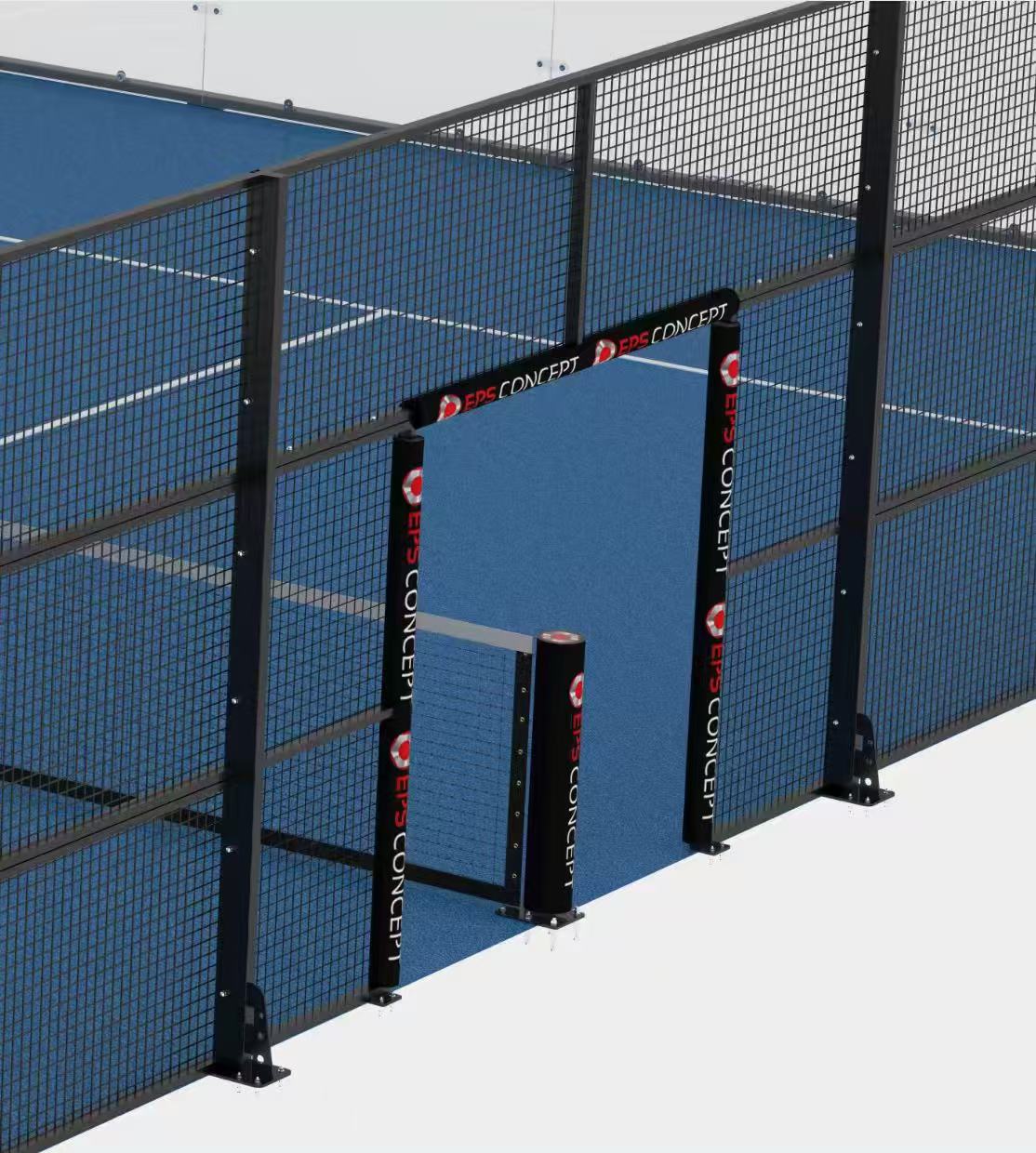
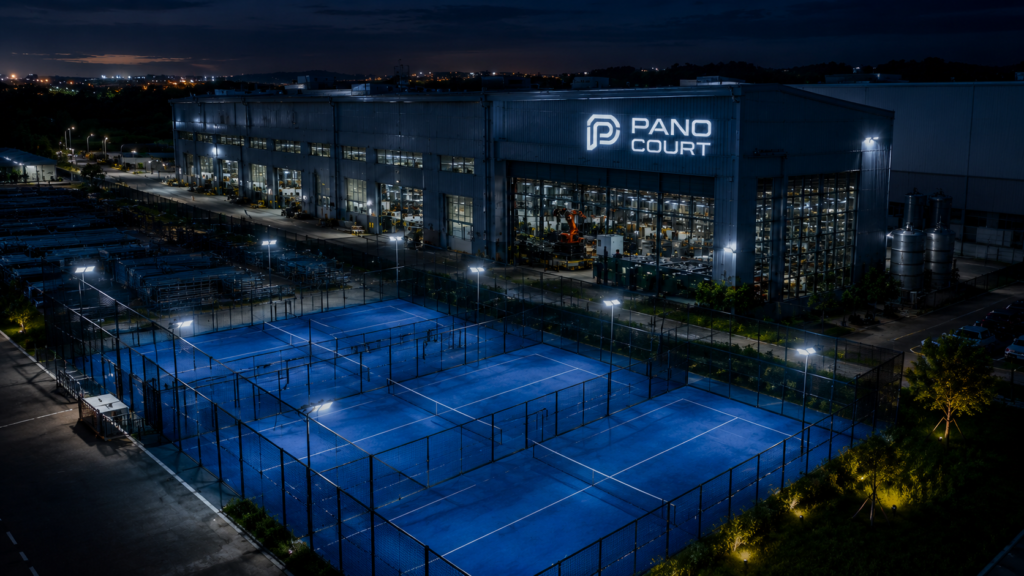
PanoCourt is a China-based شركة مصنعة لملاعب البادل specializing in FIP-certified panoramic padel court systems for international markets, with active supply chain operations serving Ecuador, the United States, France, and the UAE.
Our Ecuador-specific capabilities include:
- FIP-certified panoramic padel courts with 12mm tempered ESG glass, hot-dip galvanized steel (85–100 micron), and UV-stabilized turf rated for equatorial exposure
- NEC-adapted engineering drawings for Ecuador’s seismic zones and high-altitude wind load requirements
- Spanish-language technical support throughout the project lifecycle—from site assessment to post-installation warranty management
- Ecuador customs documentation expertise, including HS classification support, Certificate of Origin, and Ecuapass-formatted commercial invoices
- Guayaquil port CIF pricing with transparent freight, insurance, and logistics cost visibility
- 5-year structural warranty with committed spare parts availability and documented lead times
We have supplied ملاعب باديل بانورامية and ملاعب الباديل الكلاسيكية to Ecuador club developers, sports facility investors, and municipal sports authorities. Our team understands Ecuador’s import process, installation environment, and the expectations of the country’s growing premium club segment.
Get a Customized Quote for Your Ecuador Padel Court Project
Ready to source FIP-certified ملاعب البادل for your Ecuador project? PanoCourt’s team will provide a detailed CIF Guayaquil quotation—including court specifications, customs documentation package, and project timeline—within 48 hours of your inquiry.
→ Request Your Ecuador Project Quote
Frequently Asked Questions: Choosing Padel Court Manufacturers in Ecuador
What is the average price of a padel court delivered to Ecuador?
A complete FIP-compliant ملعب الباديل البانورامي system delivered CIF Guayaquil from a Chinese شركة مصنعة لملاعب البادل typically costs between $32,000 and $42,000 USD, inclusive of the steel structure, 12mm tempered glass, artificial turf, الإضاءة LED, door hardware, and all accessories. A ملعب بادل كلاسيكي configuration runs approximately $24,000–$33,000 CIF. These figures do not include Ecuador import duties (10–15% on CIF value), VAT (12%), customs broker fees, inland transport, foundation works, or installation labor. Total project cost per court for a Quito installation typically lands in the $38,000–$55,000 range depending on site conditions.
How long does it take to receive a padel court from China to Ecuador?
From purchase order to court-ready installation, plan for 18–22 weeks as a realistic baseline. Production lead time at the factory is typically 6–8 weeks, sea freight from China to Guayaquil adds 18–22 days, and Ecuador customs clearance adds 2–4 weeks. Installation of a single ملعب البادل takes 5–8 working days once components are on site. Buffer for unforeseen customs delays is recommended, particularly during Q4 peak shipping season.
Do I need FIP certification for padel courts in Ecuador?
FIP certification is not legally mandated for recreational club courts in Ecuador, but it is commercially important for two reasons. First, the Federación Ecuatoriana de Pádel (FEP) requires FIP-compliant courts for any sanctioned tournament or ranking event—without FIP compliance, your facility cannot host organized competitions. Second, FIP compliance is the most reliable quality benchmark available to buyers, signaling that the شركة مصنعة لملاعب البادل meets internationally recognized engineering and materials standards. For any commercial investment, FIP compliance is a baseline requirement.
What is the difference between a panoramic padel court and a classic padel court?
A ملعب الباديل البانورامي uses full-height tempered glass panels on all four sides, maximizing spectator visibility and natural light. A ملعب بادل كلاسيكي uses solid walls (concrete or brick) at the rear and metal mesh fencing on the side panels. Panoramic courts cost 15–25% more than classic equivalents but command higher rental rates and deliver superior tournament hosting capability. For new commercial facilities in Ecuador’s premium club segment, panoramic is now the de facto standard. Classic courts remain relevant for municipal sports facilities and lower-budget projects where rental rate premium is secondary to construction economy.
Can I visit the factory before placing an order with a Chinese padel court manufacturer?
Yes, and PanoCourt actively welcomes factory visits from Ecuador buyers. Our manufacturing facility in China can be visited by appointment, with full production transparency including material testing, welding quality inspection, and glass tempering process observation. For buyers who cannot travel, we facilitate third-party factory audits through SGS or Bureau Veritas at the buyer’s request and cost. Factory audit access is a non-negotiable marker of a genuine شركة مصنعة لملاعب البادل vs. a trading company.
How do I handle padel court warranty claims from Ecuador?
PanoCourt’s warranty process for Ecuador clients includes Spanish-language documentation, WhatsApp-based technical support for rapid diagnosis, and airfreight dispatch of small replacement components (hinges, glass clips, door mechanisms) with 7–10 day delivery to Quito or Guayaquil. For structural warranty claims, our engineering team conducts video assessment and coordinates with Ecuador-based installation partners for on-site resolution. All warranty terms are documented in the sales contract with explicit response time commitments.
What documentation do I need to import a padel court from China to Ecuador?
The core documentation set required for Ecuador padel court imports includes: commercial invoice (with unit values by component), packing list (with dimensions and weights per package), Bill of Lading, Certificate of Origin, technical specifications document for HS classification, and a pre-shipment inspection certificate if required by your customs broker. PanoCourt prepares all export documentation in the format specified by Ecuador’s SENAE customs authority and works with experienced Ecuador freight forwarders to minimize clearance delays.
About PanoCourt: PanoCourt is a China-based FIP-certified شركة مصنعة لملاعب البادل supplying ملاعب باديل بانورامية, ملاعب الباديل الكلاسيكية, and complete facility solutions to international buyers across Latin America, North America, Europe, and the Middle East. Learn more about our manufacturing capabilities: أفضل 3 مصانع لملاعب البادل في الصين: دليل المشتري لعام 2026.