
A padel tennis court is made by roughly 100 true factories worldwide, and most of them sit in two places: Spain and China. By PanoCourt’s 2026 mapping, about 36 factories are in Spain, about 28 in China (led by Hebei province), about 18 elsewhere in Europe, about 8 in Türkiye and only a handful in the Middle East and the Americas. Thousands of other companies sell or install them, but they do not cut, weld and coat the steel themselves.
Written by PANO’s product team in Hebei, China. Our senior product manager has spent ten years in the sports facility industry and has led the development of more than ten padel court models, from classic to super panoramic and mobile courts. Facts about other manufacturers come from their own published information and federation announcements, and we mark company-reported figures as such.

What Does This Padel Tennis Court Manufacturer Guide Cover?
- What is a padel tennis court, and how is it different from paddle and platform tennis?
- Who are the main padel tennis court manufacturers in the world?
- What do Google and AI assistants recommend, and what do they miss?
- What makes a company a real padel tennis court factory?
- How do factories in Spain, China, Türkiye, Italy and the US compare?
- How much does a padel tennis court cost from a factory?
- How many padel courts fit on a tennis court?
- How do you shortlist a padel tennis court manufacturer?
- Frequently asked questions
What Is a Padel Tennis Court, and How Is It Different from Paddle and Platform Tennis?
A padel tennis court is a 20 × 10 m playing area enclosed by tempered glass and welded steel mesh, with the walls in play. It is not the same structure as a paddle tennis court or a platform tennis court, even though American search results mix the three names, and each sport is built by a different group of manufacturers.
This matters for buyers more than it seems. In our US keyword data, “paddle tennis court” and “platform tennis court” are searched almost as often as “padel tennis court” itself. A club investor who searches the wrong term can end up talking to a platform tennis deck builder or a tennis resurfacing contractor, neither of whom makes glass padel courts.
| Court type | Ludejo | Enclosure | Where it is common | Who builds it |
|---|---|---|---|---|
| Padel tennis court | 20 × 10 m (about 66 × 33 ft) | Tempered glass back and side walls plus welded mesh, walls in play | Spain, Italy, France, UK, Middle East, Latin America, now the US | Padel court factories (steel structure + glass system) |
| Platform tennis court | 44 × 20 ft on a raised deck | Tensioned wire screens, deck often heated for winter play | Northeastern United States | Platform deck and screen specialists |
| Paddle tennis court (POP tennis) | Smaller open tennis-style court | No walls | US recreational and beach venues | Tennis and multi-sport court contractors |
Key facts about padel tennis court size and dimensions:
- The playing surface is 20 m long and 10 m wide; the steel structure itself measures about 20.1 × 10.5 m on our flange-plate grid.
- End walls are 4 m high (3 m of glass plus 1 m of mesh); side walls step down from the corners.
- A minimum free height of 6 m above the playing surface is required indoors.
- A complete court ships at about 6 tonnes: two courts per 20′ container, four per 40′ container.
Profunda kompreno: padel tennis court dimensions are fixed by the rules, so no factory can differentiate on size. The differences between manufacturers sit inside the structure: tube wall thickness, the corrosion route, the glass fixing system and the wind load the frame was tested to. For example, our standard panoramic court is verified to 0.68 kN/m² under our enterprise standard Q/PANO 01S-2019, explained in our padel court wind load guide.
Who Are the Main Padel Tennis Court Manufacturers in the World?
The main padel tennis court manufacturers fall into four groups: Spanish tour-brand factories such as MejorSet, AFP Courts, Padel Galis and Portico Sport; Chinese source factories led by Hebei; Turkish regional factories; and a small set of Italian and US specialists. The table below maps them by base and by the role they play, not by a single “best” score.
| Fabrikanto | Base | Group | What the company is known for (company-reported unless stated) |
|---|---|---|---|
| Pli bona aro | Crevillente (Alicante), Spain | Tour brand | Founded 2003, part of LEDAP Group; official court supplier of the International Padel Federation; endorsed by USA Padel |
| AFP Courts | Hispanio | Tour brand | Official court manufacturer for adidas padel; endorsed by USA Padel |
| Padel Galis | Hispanio | Tour brand | Reports more than 10,000 courts installed in 75 countries |
| Portiko Sporto | Alicante, Spain | Tour brand | 110,000+ sq ft plant opened in 2023; courts and canopies; official court of the 2026 Hexagon Cup |
| Padel10 | Barcelona, Spain | Manufacturer-installer | Reports 4,500+ courts and a past World Padel Tour supplier role |
| Padel Court Deluxe (Greenset) | Alicante, Spain | Fabrikanto | Robotic welding and laser cutting; merged with Greenset in 2023 |
| JUBOpadel | Alicante, Spain | Fabrikanto | More than two decades in court design and installation |
| NXPadel | Italy | Specialist | Fiberglass court structures |
| Mediterra Padel, Padel Court Factory, Unixpadel | Türkiye (Istanbul / Tekirdağ / Adıyaman) | Regional factories | Classic and panoramic courts for Türkiye, the Balkans, the Caucasus and the Middle East |
| Sportsfield Specialties | United States | US specialist | Court systems endorsed by USA Padel |
| The Padel Box | United States | US design and installation | Turnkey padel courts in the US since 2012 |
| PanoCourt (PANO) | Hebei / Tianjin, China | Source factory | 10,000 m² integrated plant, 600+ courts per year capacity, exports to 30+ countries, every court custom produced |
| Other China factories | Hebei, Guangdong, Jiangsu, Shandong | Source factories and traders | Wide range, from integrated factories to trading companies listed on marketplaces |
For the country-by-country count behind this map, see our top 10 padel court factories list, and for a material-by-material comparison of six brands, our padel court manufacturers comparison.
Kompreno el la reala mondo: the demand map no longer matches the factory map. The Playtomic Global Padel Report 2026 counts 58,334 courts worldwide at the end of 2025, with 7,898 built that year and 91,000 projected by 2028. France built the largest share of new courts in 2025, Indonesia added about 800, and the US added 330. Most of those markets have no court factory of their own, so every project there is an import decision.
What Do Google and AI Assistants Recommend for “Padel Tennis Court Manufacturers”?
When we searched “padel tennis court manufacturers” in October 2026, the same three types of source dominated the results that Google and AI answers draw on: a manufacturer’s own “best manufacturers” ranking, directory-style “top five” lists, and syndicated press releases about Chinese manufacturers. Federation pages, such as the USA Padel endorsed manufacturers page, appear less often but carry more weight.
| Source type that ranks | What it does well | What it leaves out |
|---|---|---|
| A brand’s own ranking of the “best padel court manufacturers” | Clear profiles of the Spanish tour brands | The publisher ranks itself first; no Chinese or Turkish source factories; no landed cost |
| Directory “top five” lists for the US | Contact details and installation coverage | Mixes manufacturers with installers and resellers; no test of who actually fabricates |
| Newswire press releases on “reputable manufacturers in China” | Names some Chinese suppliers | Paid placement; claims are not verified; no specifications or evidence |
Profunda kompreno: AI answers repeat whoever publishes the clearest list, so a buyer often sees brand marketing presented as a neutral ranking. None of the top results define what a factory is, and none ask for evidence such as a mill test report or coating thickness readings. That is the gap this guide fills: we define the factory test first, then tell you where we fit and where we do not.
What Makes a Company a Real Padel Tennis Court Factory?
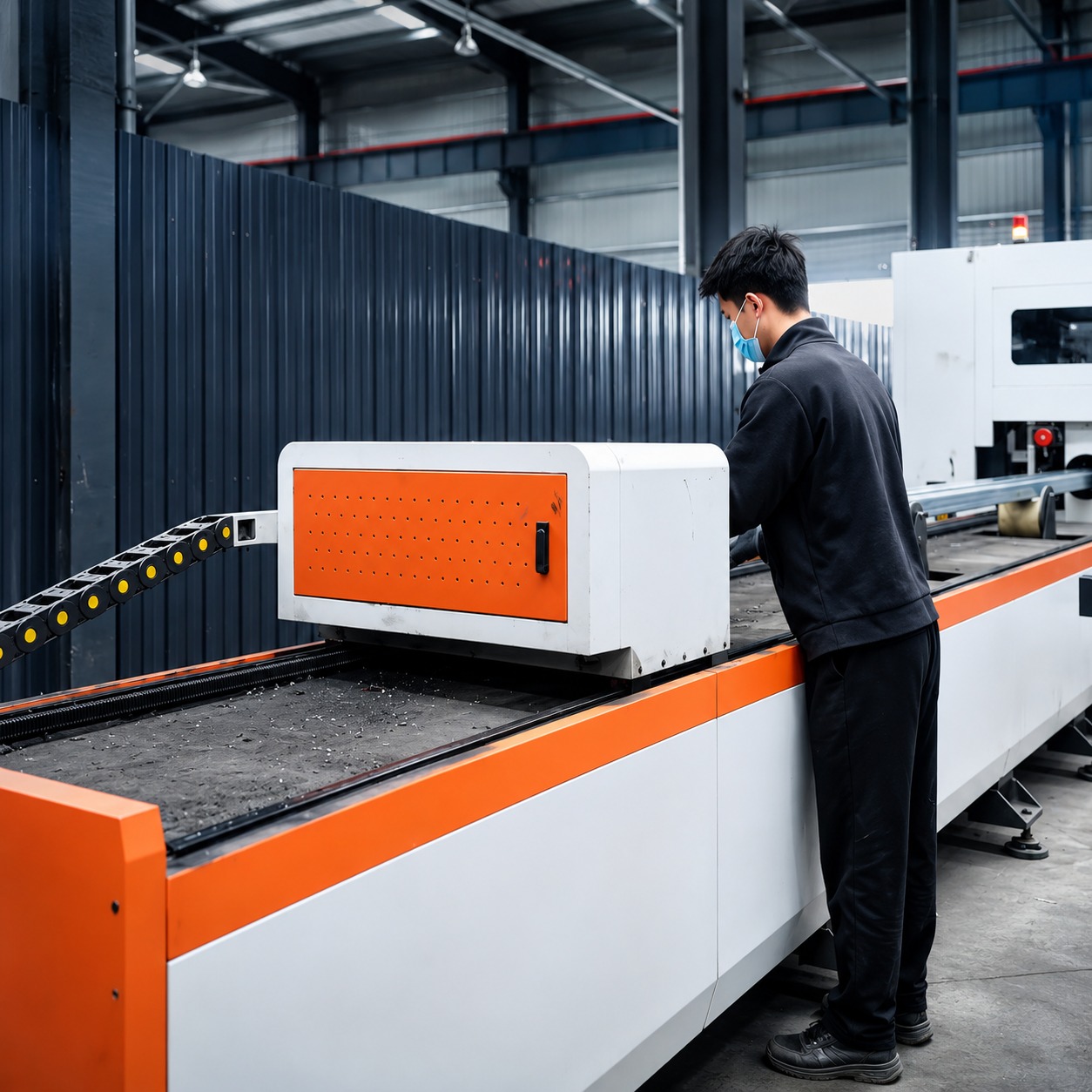
A real padel tennis court factory cuts, welds, cleans and coats the steel structure under its own roof and ships complete courts. Glass, turf and lighting are almost always bought from specialist producers, even by the biggest brands, so the steel structure is where factory control actually shows.
| Subsystem | Who usually makes it | What to ask the manufacturer |
|---|---|---|
| Ŝtala strukturo | The court factory itself (or a subcontractor, if it is a trader) | Video of your order on the cutting, welding and coating lines; mill test report; tube wall thickness |
| Corrosion protection | The factory’s own coating line, plus a galvanising plant | Which route: pre-galvanised tube, post-fabrication hot-dip galvanising, or e-coat primer, each followed by powder |
| Trempita vitro | Specialist glass processors | Who tempers it, thickness (10 or 12 mm), edge finish and the tempering certificate |
| Artificiala gazono | Turf mills | Yarn type, pile height, Dtex, stitch density, infill rate |
| LED-lumigado | Lighting manufacturers | Lux level, uniformity, glare control, flicker |
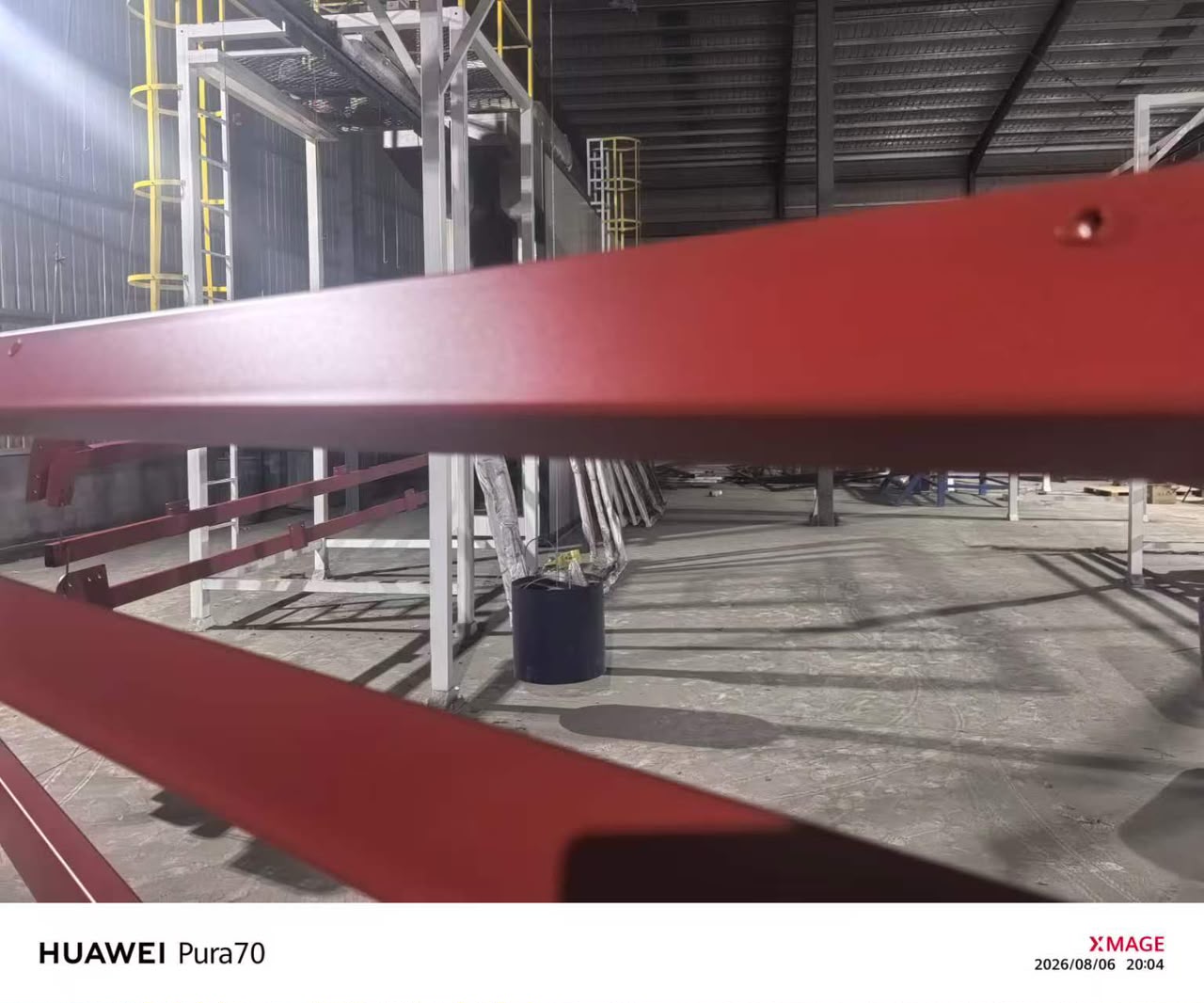
PANO insight: after ten years of building courts, our view is that real factories in China now share a common baseline: the same steel grades, laser cutting, robot welding, galvanising and 10–12 mm tempered glass. What separates a strong padel tennis court factory from a weak one is whether it controls every steel stage itself and whether it can engineer new structures, such as super panoramic, mobile and coastal courts. At PANO, cutting, welding, shot blasting and a fully automatic three-layer powder coating line (85–100 µm in total) all run in-house, and our galvanised tube measured 343–344 g/m² of zinc against a ≥300 g/m² requirement in a CNAS-accredited mill test. If a supplier cannot show you its own lines on video, read our guide on how to verify a China padel court manufacturer.
A note on “FIP-certified” claims: being the official court supplier of a federation is a commercial partnership for events, not a test certificate covering every court a factory ships. Ask for the actual documents instead of the badge.
How Do Padel Tennis Court Factories in Spain, China, Türkiye, Italy and the US Compare?
Spain wins on tour pedigree and short truck delivery inside the EU. China wins on equipment price, production speed and capacity for buyers outside Europe. Türkiye serves nearby regions overland. Italy and the US contribute specialist systems rather than volume steel fabrication. The right origin depends on your project, not on a ranking.
| Faktoro | Hispanio | Ĉinio | Türkiye | Italy / US |
|---|---|---|---|---|
| Main strength | Tour status, brand recognition | Price, speed, capacity, customisation | Overland reach to neighbours | Specialist materials and local service |
| Typical production time | Depends on order book | 25–30 days from deposit at PANO | Depends on order book | Varias |
| Delivery to EU sites | Truck, no duty | Sea, low duty under HS 9506 | Truck, duty-free with A.TR | Varias |
| Delivery to the Americas, Asia, Oceania, Africa | Sea freight | Sea freight, 4 courts per 40′ | Sea freight | Local in the US |
| Plej bona kongruo | Pro events, flagship venues | Commercial clubs focused on payback, multi-court projects | Buyers near Türkiye | Niche systems, US turnkey projects |
Real-world insight for US buyers: the US is where the “padel tennis court” search term is most common, and it is also where tariff layers on China-origin goods change most often. Before comparing a Chinese and a Spanish quote, ask your customs broker for the current duty stack on your HS code. On multi-court projects a China padel tennis court still tends to land below a European one, but only a broker can confirm the figure on the day you order. Our padel court manufacturer USA report covers the US supply chain in detail.
How Much Does a Padel Tennis Court Cost from a Factory?
A padel tennis court from a China factory such as PanoCourt costs about USD 9,500–12,000 ex-factory, while Spanish tour brands typically quote about €19,000–29,000 per court. Public marketplace listings for “padel tennis court for sale” go lower, roughly USD 6,300–12,500 per set, but those asks rarely state tube wall thickness, corrosion route or glass thickness.
- Equipment price: structure, glass, mesh, turf, lighting, net and doors.
- Freight and insurance: about 6 tonnes per court; cost per court drops sharply when four courts share a 40′ container.
- Import duty and VAT or GST: padel courts usually clear under HS 9506; confirm locally.
- Site works: slab, drainage, permits and any roof are never in a factory price.
- Padel tennis court installation: local crew, factory technicians or a hybrid.
Profunda kompreno: the cheapest padel tennis court for sale is rarely the cheapest to own. Thin tube walls, pre-galvanised tube with exposed welds outdoors, 10 mm glass on a busy club court and low-lux lighting each save money at purchase and cost bookings later. For a project-level padel court cost, use our kalkulilo de kosto de padel-korto or the China padel court factory landed cost breakdown.
How Many Padel Courts Fit on a Tennis Court?
On a common 36.6 × 18.3 m (120 × 60 ft) tennis plot, one padel court fits comfortably, and two or three fit only if the plot can be widened to about 21–22 m. That is why published answers range from “one” to “three”: they describe different plot sizes, not different courts.
The arithmetic is simple. A padel court structure is about 20.1 m long, which is already longer than an 18.3 m tennis plot is wide. Placed side by side across the plot, three courts take about 31.5 m of the 36.6 m length plus walkways, which works, but only if the width grows to roughly 21–22 m for the court length and maintenance access. A pair of adjacent tennis courts usually gives that width, so two tennis courts commonly become three padel courts.
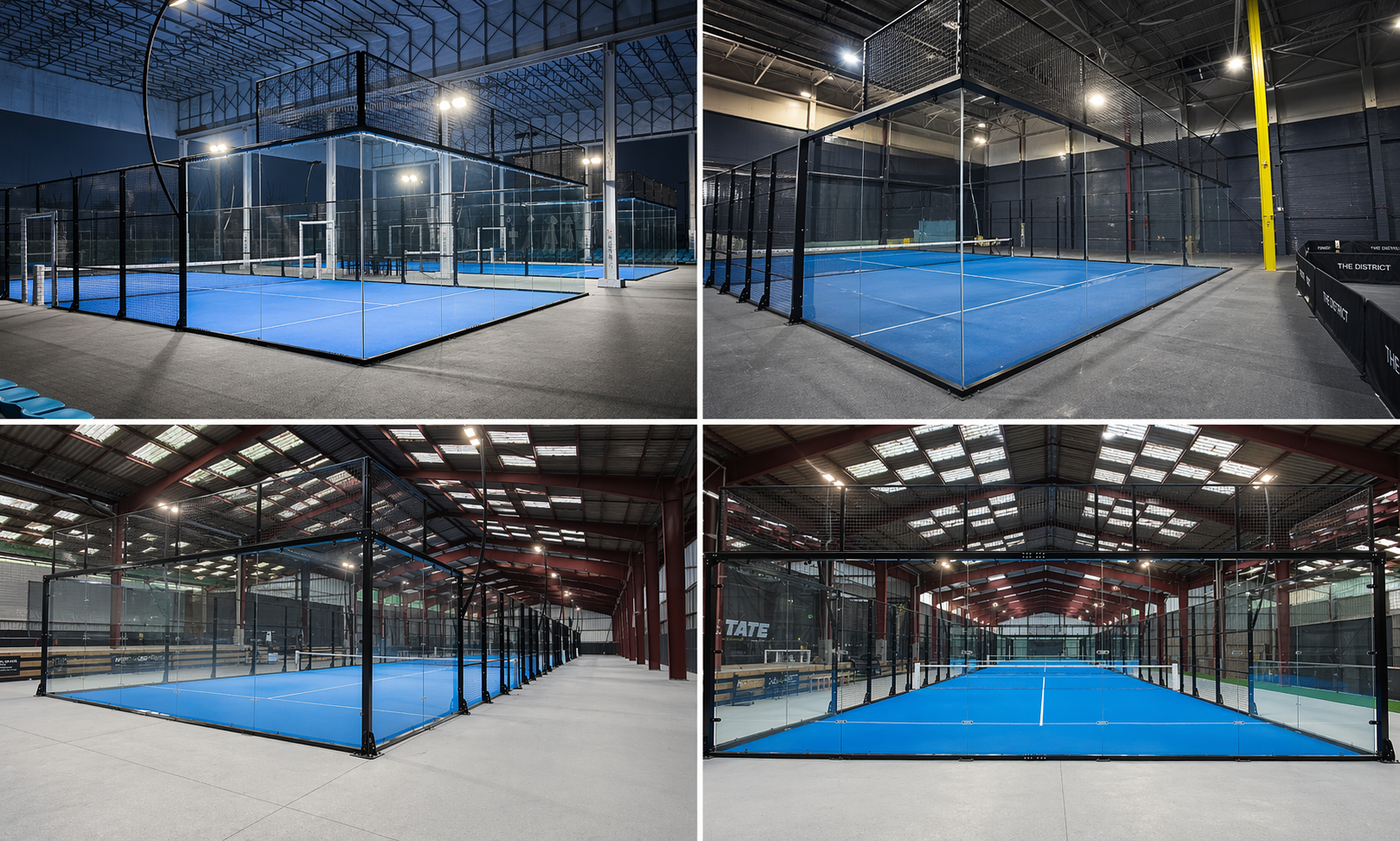
Kompreno el la reala mondo: in padel tennis court construction on an old tennis site, most padel court builders find the same thing: the existing base can be reused only if it is flat, sound and drains properly. Clay and porous tennis surfaces are not suitable as they are; most conversions need a new or overlaid concrete slab with anchor points matched to the court’s flange plates. See our padel court foundation requirements kaj la tennis court to padel conversion guide.
How Do You Shortlist a Padel Tennis Court Manufacturer in 2026?
Shortlist a padel tennis court manufacturer in five steps: define your use, test whether the supplier is a factory, compare specifications line by line, compare landed cost rather than ex-factory price, and get a written production slot that fits your slab and permit timeline.
- Define your use: professional events, a commercial club or a private court each need a different grade.
- Run the factory test: a padel court supplier that only trades cannot do this, so ask for live or recorded video of cutting, welding and coating for your order.
- Compare specifications: tube wall (we use 2.5 mm indoors and 3 mm outdoors), corrosion route, coating thickness, glass thickness, fittings grade (304 indoors, 316 near the sea), turf and lux level.
- Compare total cost: equipment, freight, duty and taxes, site works and installation.
- Lock the timeline: production days, transit, clearance and five site days for a four-court installation.
Where PanoCourt is not the right choice: if you need a court with professional-tour status, a spare-parts depot in your own country, or a brand name you plan to sell to players as a premium, a Spanish tour brand will serve you better. If you are building a commercial padel club and you measure success by payback, PanoCourt is built for that brief. Our China vs Spain padel court comparison covers the trade-offs in detail.
Frequently Asked Questions About Padel Tennis Court Manufacturers
Who Makes the Best Padel Tennis Courts?
Spanish brands such as MejorSet, AFP Courts and Padel Galis make the reference courts for professional events and hold federation supply roles. Chinese source factories such as PanoCourt make comparable structures for commercial clubs at a lower equipment price with faster production. The best padel tennis court manufacturer is the one whose grade, delivery time and total cost match your project.
How Many Padel Tennis Court Factories Are There in the World?
By PanoCourt’s 2026 mapping, roughly 100 companies fabricate padel court steel structures in-house and export complete courts: about 36 in Spain, 28 in China, 18 elsewhere in Europe, 8 in Türkiye and around 10 in the Middle East and the Americas combined. Many more companies sell or install courts without manufacturing them.
Is a Padel Tennis Court the Same as a Paddle Tennis Court?
No. A padel tennis court is a 20 × 10 m glass and mesh enclosure where the walls are in play. Paddle tennis in the US usually means an open court without walls, and platform tennis is played on a raised, screened deck of 44 × 20 ft. Each uses different structures and different builders, so search the right term before contacting suppliers.
What Is the Size of a Padel Tennis Court?
A padel tennis court measures 20 m long and 10 m wide inside the walls, about 66 × 33 ft. End walls are 4 m high, combining 3 m of glass and 1 m of mesh. The steel structure occupies about 20.1 × 10.5 m, and indoor courts need at least 6 m of clear height above the playing surface.
How Much Does a Padel Tennis Court Cost?
Ex-factory, one court costs about USD 9,500–12,000 from a China factory such as PanoCourt and about €19,000–29,000 from Spanish tour brands. Freight, import duty and taxes, the concrete slab, permits, any roof and installation are extra. Compare complete landed projects, because the cheapest equipment price does not always give the lowest total cost.
How Long Does It Take to Get a Padel Tennis Court from China?
PanoCourt produces courts in 25–30 days from confirmed deposit. Ocean transit from Tianjin takes roughly three to six weeks depending on the destination, plus one to two weeks for customs and delivery. An experienced crew of three to four technicians then installs four courts in about five site days once the slab is cured and level.
Can You Convert a Tennis Court into Padel Courts?
Yes, if the base is flat, sound and drains well. On a common 36.6 × 18.3 m tennis plot, one padel court fits comfortably; two or three need the plot widened to about 21–22 m. Two adjacent tennis courts usually convert into three padel courts. Clay or porous surfaces normally need a new concrete slab with matched anchor points.
How Do I Know If a Supplier Is a Real Padel Tennis Court Factory?
Ask for video of your order on the supplier’s own laser cutting, welding and powder coating lines, plus a mill test report on the steel, coating thickness readings and the glass tempering certificate. Traders usually cannot show the lines or the documents. Check that the company name on the documents matches the company on your contract and invoice.
Are Chinese Padel Tennis Courts Good Enough for a Commercial Club?
Yes, when the factory proves its specification. Commercial clubs need 12 mm tempered glass, an outdoor-rated corrosion route, 304 or 316 stainless fittings and 300–500 lux anti-glare lighting. A real China padel court manufacturer will document each of these. Players book the time slot, the light and the turf; the factory badge does not change court revenue.
What Is the Future Market for Padel Tennis Courts?
Playtomic and PwC Strategy& count 58,334 padel courts worldwide at the end of 2025 and project about 91,000 by 2028. Growth is shifting toward France, the UK, the US, Indonesia and the Middle East, most of which have few local factories. That makes importing and factory selection a central question for new club projects.
Which Padel Tennis Court Manufacturer Should You Contact First?
Start with your use. For a tour venue, contact a Spanish factory. For a commercial club measured by payback, start with a China source factory and compare it line by line against a Spanish quote. For a fixed opening date, choose the manufacturer that commits to a written production slot. Whichever court you choose, insist on evidence, not rankings.
PanoCourt designs and manufactures panorama, super panoramic kaj Klasikaj padel-kortoj in our own factory in Hebei, with every court custom produced, 25–30 day production and export experience in more than 30 countries. Send us your site location, number of courts and indoor or outdoor use, and our engineers will reply with a configuration and a padel court price for your project.