There are roughly 100 padel court equipment factories in the world that fabricate the steel structure in-house and export complete courts. By PanoCourt’s 2026 market mapping, about 36 are in Spain (≈36%, led by brands such as MejorSet), about 28 in China (≈28%, including PanoCourt / PANO in Hebei), about 18 elsewhere in Europe (≈18%), about 8 in Türkiye (≈8%), about 5 in the Middle East (≈5%) and about 5 in the Americas and other regions (≈5%). Thousands of other companies sell padel courts, but most of them are distributors, traders or installers, not factories.
| Región | Approx. factories (2026) | Share of factories | Typical role in the market |
|---|---|---|---|
| España | ~36 | ~36% | Brand leaders, professional-tour courts, EU supply by truck |
| China | ~28 | ~28% | Volume export factories, commercial-club and investor projects worldwide |
| Rest of Europe (Italy, Portugal, Sweden, Germany, UK) | ~18 | ~18% | Domestic and regional supply, niche systems |
| Türkiye | ~8 | ~8% | Regional supply to Türkiye, the Balkans, the Caucasus and parts of the Middle East |
| Middle East (UAE, Saudi Arabia, Egypt) | ~5 | ~5% | Local fabrication and assembly; much of the market is still imported |
| Americas and other regions | ~5 | ~5% | Local fabricators in Argentina, Mexico, Brazil and the US |
How we count: a company counts as a padel court equipment factory only if it cuts, welds and coats the steel structure under its own control, sells complete courts and exports. Installers, traders, resellers, turf-only producers and racket brands are excluded, and all figures are rounded.
What Does This Padel Court Equipment Guide Cover?
- Where are the world’s padel court equipment factories located?
- Which are the top 10 padel court equipment factories in 2026?
- How do you choose the right padel court equipment factory?
- What does padel court equipment include?
- How much does padel court equipment cost?
- What do buyers ask about padel court equipment?
Where Are the World’s Padel Court Equipment Factories Located?
Padel court equipment factories cluster in three places: Spain, China and a smaller group in Italy and Türkiye. Demand keeps reshaping that map. The Playtomic and PwC Strategy& Global Padel Report 2026 counts 58,334 courts worldwide at the end of 2025, 7,898 of them built in 2025 alone, and projects 91,000 courts by 2028.
Spain: The Tournament Benchmark for Padel Court Equipment
Spain is where padel court equipment was standardised, and its factories still set the design language the rest of the world follows. MejorSet (Crevillente, Alicante) is the official court supplier of the International Padel Federation for the 2025 and 2026 seasons and of the Premier Padel tour, and built its name on full panoramic show courts. Padel Galis (Valencia) focuses on tournament-grade courts with a large installed base abroad. ManzaSport has specialised in padel since 2003 and runs four production sites around Valencia with in-house laser cutting and its own paint booth, building to FIP specifications and Spain’s NIDE 2021 sports-facility rules.
Portico Sport pairs courts with sports canopies and offers a patented mobile court that needs no ground anchoring, plus a reinforced Tournament+ model designed for hurricane-force winds. Padel10 in Barcelona manufactures and installs with no third parties, and Padel Court Deluxe in Alicante, merged with Greenset in 2023, uses robotic welding and laser cutting. What buyers pay for with Spanish padel court equipment is tour pedigree, brand recognition, EU logistics and installation crews close to European sites.
China: Hebei Leads Padel Court Equipment Manufacturing
The view of senior industry insiders is that China’s padel court equipment manufacturing has reached a common level: real factories use the same steel grades, the same laser cutting, welding, galvanising and powder coating, and the same 10–12 mm tempered glass. The difference between a strong and a weak China padel court factory is therefore not one machine. It is whether the factory controls every production stage itself instead of outsourcing cutting, welding or coating, and whether it can innovate: engineer new structures such as super panoramic, mobile and coastal courts, and customise steel profiles for each site.
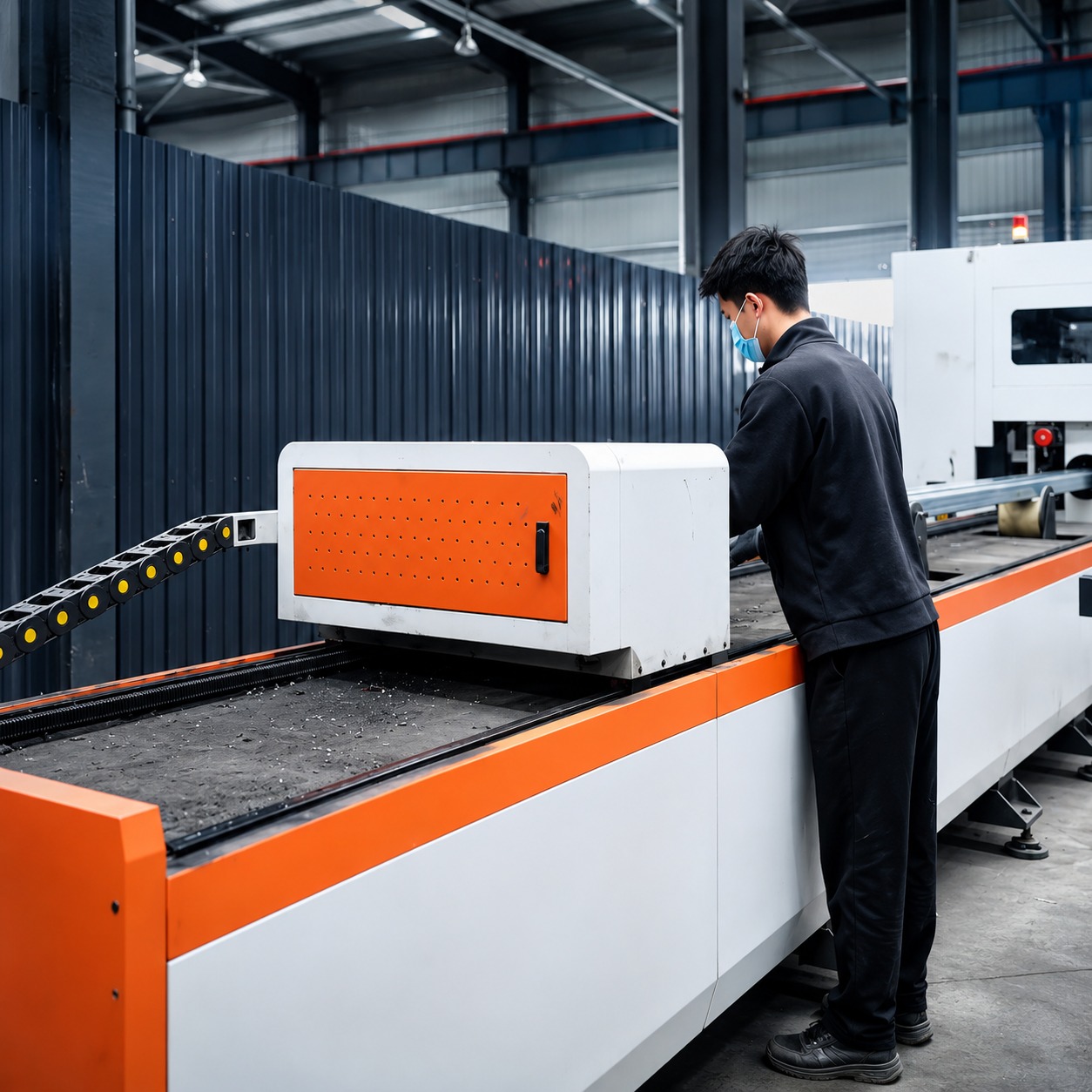
The leading factories are concentrated in Hebei, China’s largest steel-producing province and its steel structure manufacturing base, with PANO among them, and most keep their offices in Shijiazhuang, the provincial capital. Hebei holds a clear advantage on both quality and price: steel tube, galvanising, glass and skilled welders are all sourced within the province, and Tianjin Port is only a few hours away by truck. PANO, for example, runs laser cutting, welding, shot blasting and a fully automatic three-layer powder coating line in-house, and has produced OEM padel court equipment for European brands.
Italy and Türkiye: Padel Court Equipment Specialists and Regional Suppliers
Italy contributes materials and design to padel court equipment rather than volume steel fabrication. NXPadel develops fiberglass court structures from its own moulds, an option for buyers who want a lighter frame that cannot rust, although its production is subcontracted rather than made in its own factory. Mondo, the Italian surfaces group, supplies Premier Supercourt X3, the official turf of Premier Padel and the FIP, so Italian technology often sits on courts whose frames come from Spain or China.
Türkiye has built a compact, export-minded padel industry. Unixpadel manufactures in its own factory in Adıyaman, offers indoor and outdoor models with FIP-approved turf and ships worldwide, and Turkish turf producers such as Izolsport also make padel surfaces. Türkiye’s advantages are geography and trade access: overland delivery to the Balkans, the Caucasus and the Middle East, and duty-free entry of industrial goods into the EU customs union with an A.TR certificate.
Which Are the Top 10 Padel Court Equipment Factories in 2026?
The ten padel court equipment factories below are the names buyers most often shortlist in 2026: eight Spanish manufacturers, one Turkish manufacturer and one China padel court manufacturer. The list is grouped by country, not ranked by quality, because the “best” factory depends on your project.
| # | Factory | Base | Known for | La mejor opción |
|---|---|---|---|---|
| 1 | MejorSet | Crevillente (Alicante), Spain | Official court supplier of the International Padel Federation for the 2025 and 2026 seasons and official court of the Premier Padel tour | Professional events, flagship clubs |
| 2 | Padel Galis | Valencia, Spain | Long-established tournament-grade courts with a large international installed base | Premium clubs, tournament venues |
| 3 | ManzaSport | Beniparrell and Silla (Valencia), Spain | Specialised in padel courts since 2003, four production sites, in-house laser cutting and paint booth | European commercial clubs |
| 4 | Portico Sport | España | 4,000+ courts in 35 countries, large factory opened in 2023, courts plus sports canopies | Clubs that want courts and roofs from one source |
| 5 | Padel10 | Barcelona, Spain | Manufacturer and installer with no third parties in the chain, active since 2007 | European clubs wanting factory installation |
| 6 | Padel Court Deluxe (Greenset) | Alicante, Spain | Spanish-made structures with robotic welding and laser cutting; merged with Greenset in 2023 | Premium commercial and private courts |
| 7 | JUBOpadel | Alicante, Spain | Decades of court design and installation with a strong domestic base | Spanish and EU club projects |
| 8 | Padel Tech | Madrid, Spain | Fully integrated production in Spain | EU commercial clubs |
| 9 | Unixpadel | Adıyaman, Türkiye | Own factory in Türkiye, indoor and outdoor models, worldwide delivery | Türkiye, Balkans, Caucasus, nearby Middle East |
| 10 | PanoCourt (PANO) | Hebei / Tianjin, China | Source factory, 10,000 m² integrated plant, 600+ courts per year capacity, exports to 30+ countries, custom panoramic and super panoramic courts | Commercial clubs focused on ROI, multi-court and time-critical projects |
Disclosure: this list is published by PanoCourt, and PanoCourt is on it. We include it because we are one of the factories buyers compare, and we tell you below where a Spanish factory is the better choice. Factory facts for other brands come from their own published information and official federation announcements, such as the FIP’s renewal of MejorSet as official court supplier. For a deeper side-by-side on materials, processes and certification, see our padel court manufacturers comparison.
Análisis en profundidad: the Middle East has very few true padel court equipment factories even though Saudi Arabia, the UAE, Kuwait and Qatar host Premier Padel events. Most “suppliers” there import from Spain or China and handle installation. If a Gulf supplier calls itself a manufacturer, ask to see the welding line and the coating line. If they cannot show both, you are buying from a reseller, and the factory price sits one step behind them.
How Do You Choose the Right Padel Court Equipment Factory?
Choose a padel court equipment factory with four filters, in this order: total landed cost, total time to an open court, the quality grade your use actually needs, and the use itself (professional events, commercial club or private court). A factory that wins on product price can lose on freight, duty or delay, so compare complete projects, never ex-factory prices alone.
Total Landed Cost of Padel Court Equipment: Price, Freight and Import Taxes
The landed cost of padel court equipment is everything you pay until the court stands on your slab. It has five layers: the factory price, freight and insurance, import duty and VAT or GST, port and inland charges, and installation.
- Product price: the ex-factory price of the court package (structure, glass, mesh, turf, lighting, net). This is where China has its largest advantage.
- Freight: one complete court weighs about 6 tonnes. From China, a 20′ container carries 2 courts and a 40′ container carries 4, so freight per court falls quickly on multi-court orders.
- Import duty and taxes: padel courts usually clear under HS 9506 (sports goods). In the EU, the duty on China-made courts is low (we used 2.7% in our Romania worksheet) and import VAT is usually recoverable for a VAT-registered club. Spanish courts move inside the EU with no duty, and Turkish industrial goods enter the EU customs union duty-free with an A.TR certificate. US buyers must check the current tariff layers on China-origin goods with their broker, because those rates change.
- Port, trucking and unloading: terminal handling, customs broker, delivery and a forklift or crane on site.
- Installation: your own crew, a local installer or factory technicians.
Perspectiva del mundo real: on a four-court project the ex-factory gap between Spain and China is usually larger than the entire freight and duty bill on the China side. That is why, outside Spain and its neighbours, a China padel court factory almost always lands cheaper. Inside Europe the gap narrows, so run the numbers. Our China padel court factory landed cost breakdown shows a full four-court worksheet, and our FOB, CIF, DAP and DDP guide explains who pays for what.
Delivery Time: Padel Court Equipment Production, Shipping and Installation
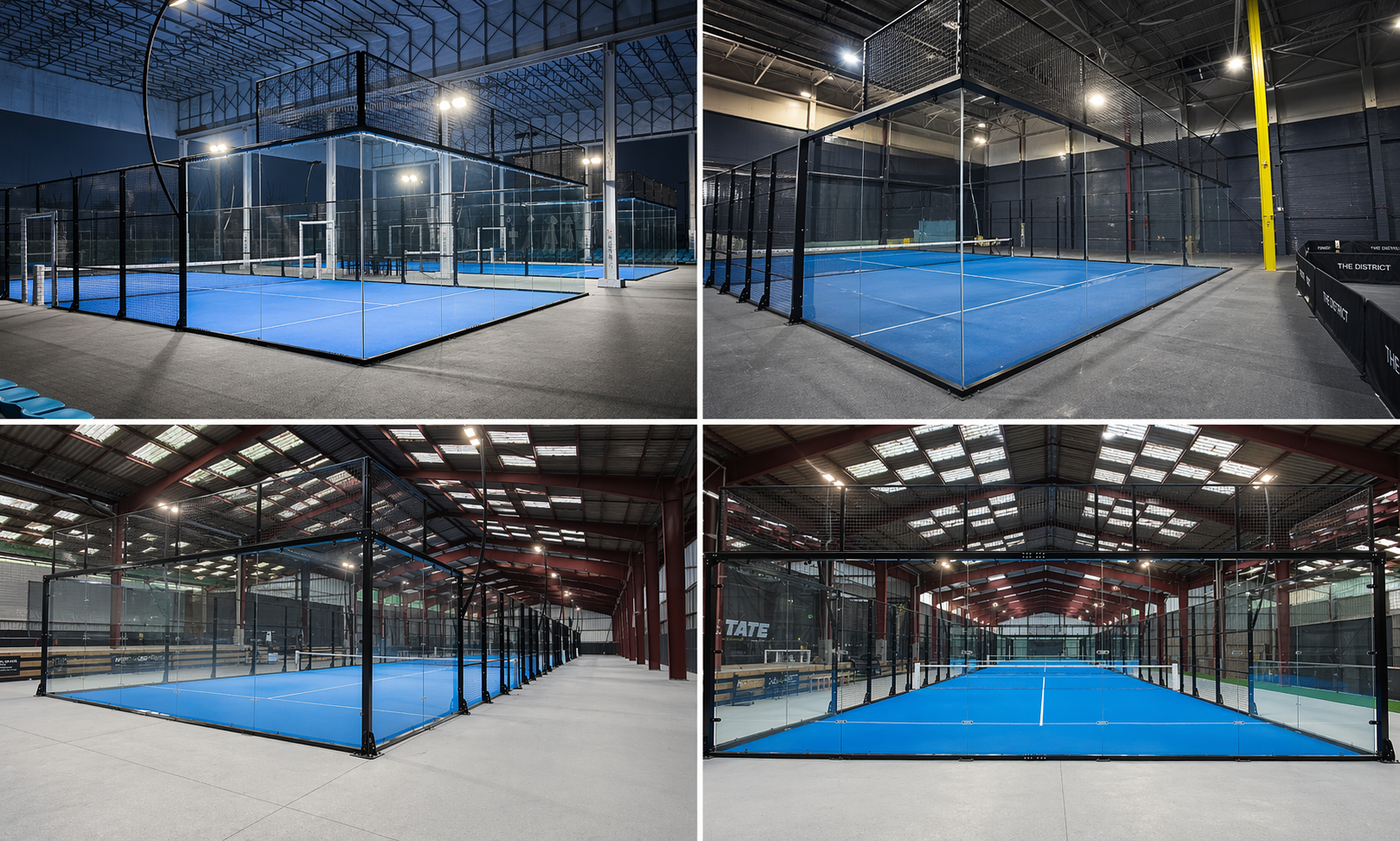
Time to an open court equals padel court equipment production time plus transit plus customs clearance plus installation. Each day before opening is a day with no court bookings.
- Producción: PanoCourt produces in 25–30 days from confirmed deposit. Spanish and Turkish lead times depend on each factory’s order book, so ask for a written production slot.
- Ocean transit from Tianjin: roughly 3–6 weeks depending on the port, plus 1–2 weeks for customs and delivery.
- Road delivery inside Europe: a Spanish factory can reach most EU sites by truck within days once the court is built.
- Installation: an experienced crew of 3–4 technicians installs four courts in about five site days once the slab is cured and level.
Análisis en profundidad: the critical path on most padel court equipment projects is not the ocean. It is the foundation, permits and roof. A slab needs to be poured, cured and checked before any court arrives (see our padel court foundation requirements). If you order from China on the day you start civil works, the court usually arrives around the time the slab is ready.
For buyers in the Middle East, Asia, Africa, Oceania and the Americas, a Spanish court also travels by sea, so China’s faster production and higher capacity make it the quicker option. For an EU site, a Spanish factory with an open slot can be quicker, and if Spanish lead times are long in high season, China remains a reliable fallback.
Padel Court Equipment Quality: Match the Grade to the Club
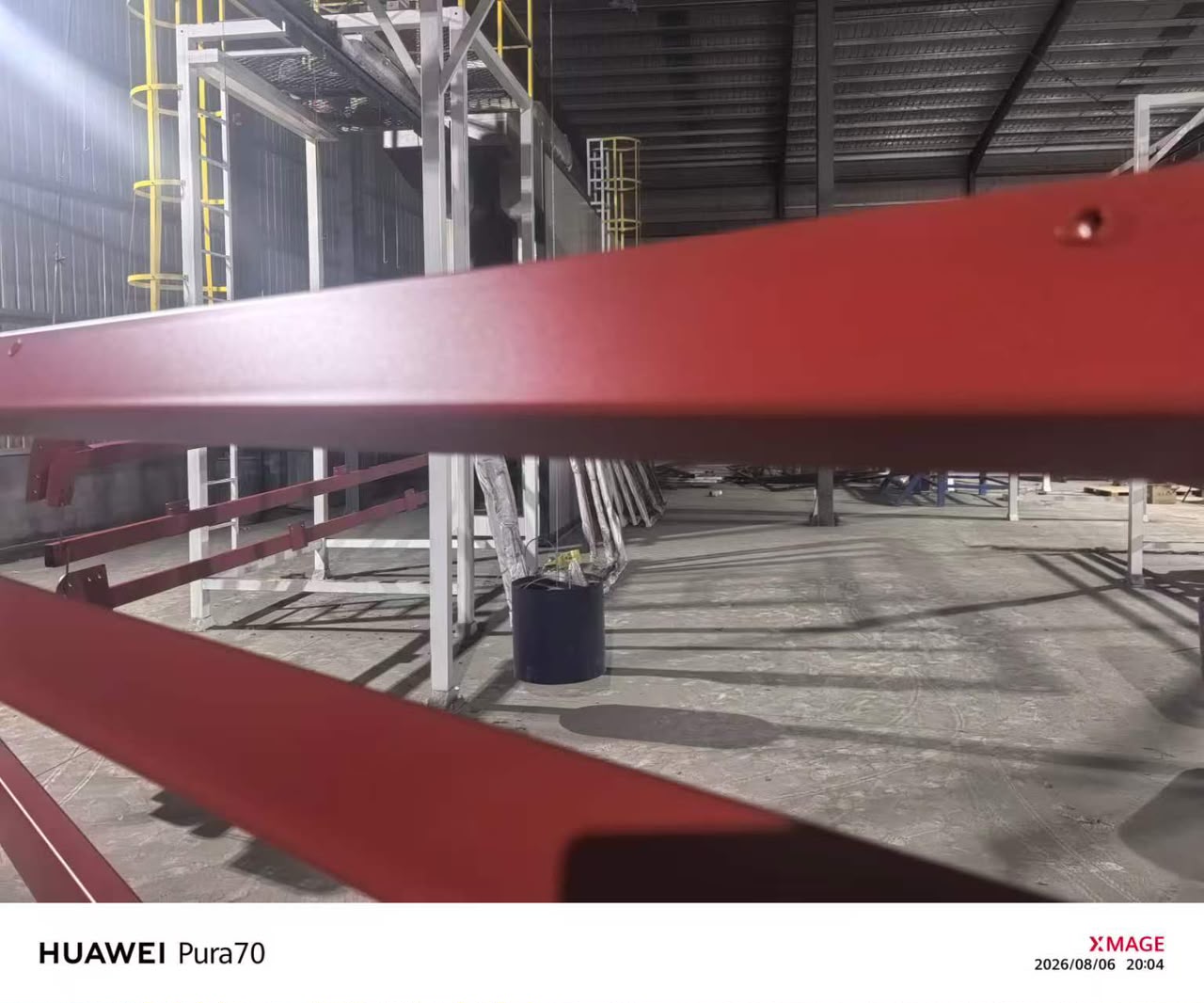
Padel court equipment quality is not one level. A professional tour court, a 16-hour-a-day commercial court and a private garden court carry different loads, different visibility needs and different maintenance budgets. Pay for the grade your use needs, and verify it with documents rather than brochures.
- Acero: ask for the tube wall thickness (we use 2.5 mm for indoor and 3 mm for outdoor courts) and the corrosion route: pre-galvanised tube, post-fabrication hot-dip galvanising, or e-coat primer, each followed by powder coating.
- Recubrimiento: ask for the coating thickness report. Our three-layer powder system measures 85–100 µm in total.
- Vidrio: tempered safety glass, 10 mm or 12 mm. Ask for the tempering certificate and edge finish.
- Fittings: 304 stainless steel indoors, 316 near the sea.
- Proof: mill test reports, coating thickness readings and glass certificates. Our galvanised tube, for example, measured 343–344 g/m² of zinc against a ≥300 g/m² requirement in a CNAS-accredited mill test.
Choose Padel Court Equipment by Use: Pro Events, Commercial Clubs or Private Courts
| Use | What matters most | Tribunal recomendado | Recommended factory origin |
|---|---|---|---|
| Professional events and tour venues | Federation approval, broadcast-grade visibility, event logistics, brand recognition | Super panoramic court, 12 mm glass, tournament lighting | España |
| Commercial club (ROI-driven) | Capital cost per court, durability under heavy use, fast opening, spare parts | Panoramic court, 12 mm glass, outdoor-rated corrosion route, 300–500 lux LED | China (PANO) |
| Private, residential or hotel court | Budget, appearance, low maintenance | Panoramic or classic court, 10–12 mm glass, standard LED | China for budget, Spain for brand prestige |
Perspectiva del mundo real: a club’s revenue per court-hour from its padel court equipment is the same whether the frame was welded in Valencia or in Hebei. Players book the time slot, the light and the turf, not the factory badge. What changes is the capital you must recover. As an illustrative assumption, if a court nets €2,500 a month and a Spanish court costs about €12,000 more than a comparable Chinese one, the Spanish court adds roughly five months to payback, per court.
Spain vs China vs Türkiye: Which Padel Court Equipment Origin Wins?
| Factor | España | China (PANO) | Türkiye |
|---|---|---|---|
| Ex-factory price per court | €19,000–29,000 | USD 9,500–12,000 | €19,000–29,000 |
| Tiempo de producción | Depends on order book | 25–30 days from deposit | Depends on order book |
| Delivery to EU sites | Truck, days, no duty | Sea, about 4–8 weeks port-to-site, low duty | Truck or ro-ro, duty-free with A.TR |
| Delivery outside Europe | Sea freight | Sea freight, 2 courts per 20′, 4 per 40′ | Sea or overland to neighbouring countries |
| Professional-tour status | Yes (official FIP and Premier Padel supplier) | No | No |
| Customisation (colour, glass, steel, profile) | High, at a premium | High, all courts custom produced | Medio |
| Ideal para | Pro events, flagship venues, brand-led clubs | Commercial clubs, multi-court ROI projects, tight timelines | Buyers near Türkiye wanting overland delivery |
Our clear position:
- Professional tournaments: choose a Spanish factory. Tour approval, event logistics and brand recognition are worth the premium.
- Commercial clubs focused on ROI: choose padel court equipment from a China padel court factory such as PanoCourt. Same playing experience, roughly half the equipment cost, faster payback.
- Time-critical projects: consider China first, especially outside Europe or for multiple courts, because production takes 25–30 days and capacity is not the bottleneck.
- Türkiye: makes sense mainly for buyers close to Türkiye who value overland delivery and EU customs-union access.
Where PanoCourt is not the right choice: if you need a court with professional-tour status, a local spare-parts depot in your country, or a brand name you plan to resell to players as a premium, a Spanish brand will serve you better. Our China vs Spain padel court comparison goes into the details.
What Does Padel Court Equipment Include?
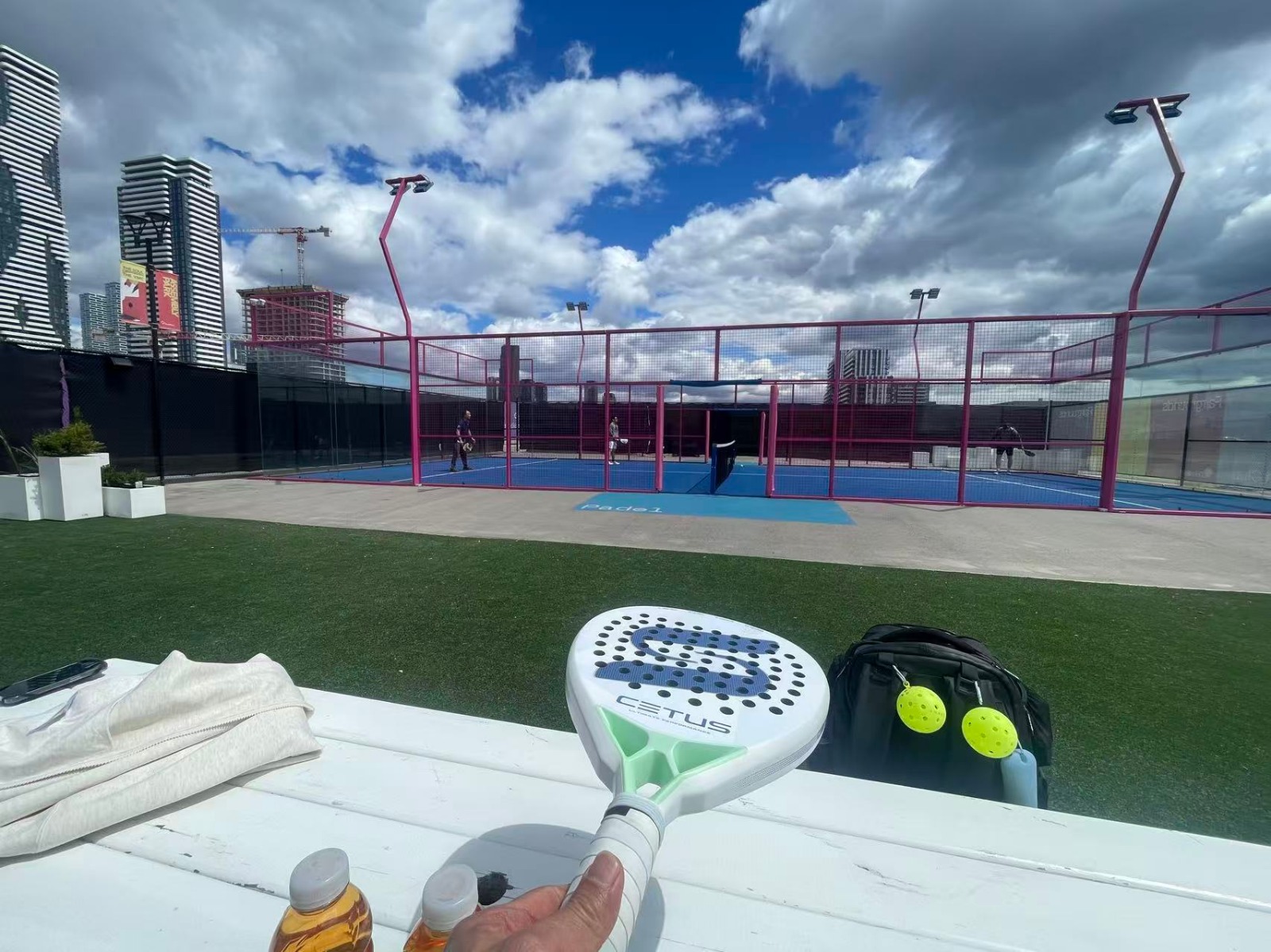
Padel court equipment is a complete structural system, not a single material: a steel frame, tempered glass walls, welded mesh panels, artificial turf with sand infill, LED lighting, the net and posts, access doors and all stainless fittings. These parts are engineered together, so the glass, the bolts and the frame must match each other and the wind load at your site.
- Size: a standard court plays on 20 × 10 m; singles courts are 20 × 6 m.
- Peso: about 6 tonnes per complete court.
- Vidrio: a panoramic court uses about 18 glass panels, roughly 108 m² in total.
- Interfaces: the court bolts to a concrete slab (see instalación de una cancha de pádel) and may sit under a cubierta para cancha de pádel.
Recommended Padel Court Equipment Specifications for Commercial Clubs
| Componente | Recommended configuration for commercial clubs | What to check |
|---|---|---|
| Estructura de acero | Q235B hot-dip galvanised tube, 2.5 mm wall indoors, 3 mm outdoors, thicker wall and larger profile near the sea; three-layer powder coating 85–100 µm | Mill test report, zinc weight, coating thickness readings, weld quality |
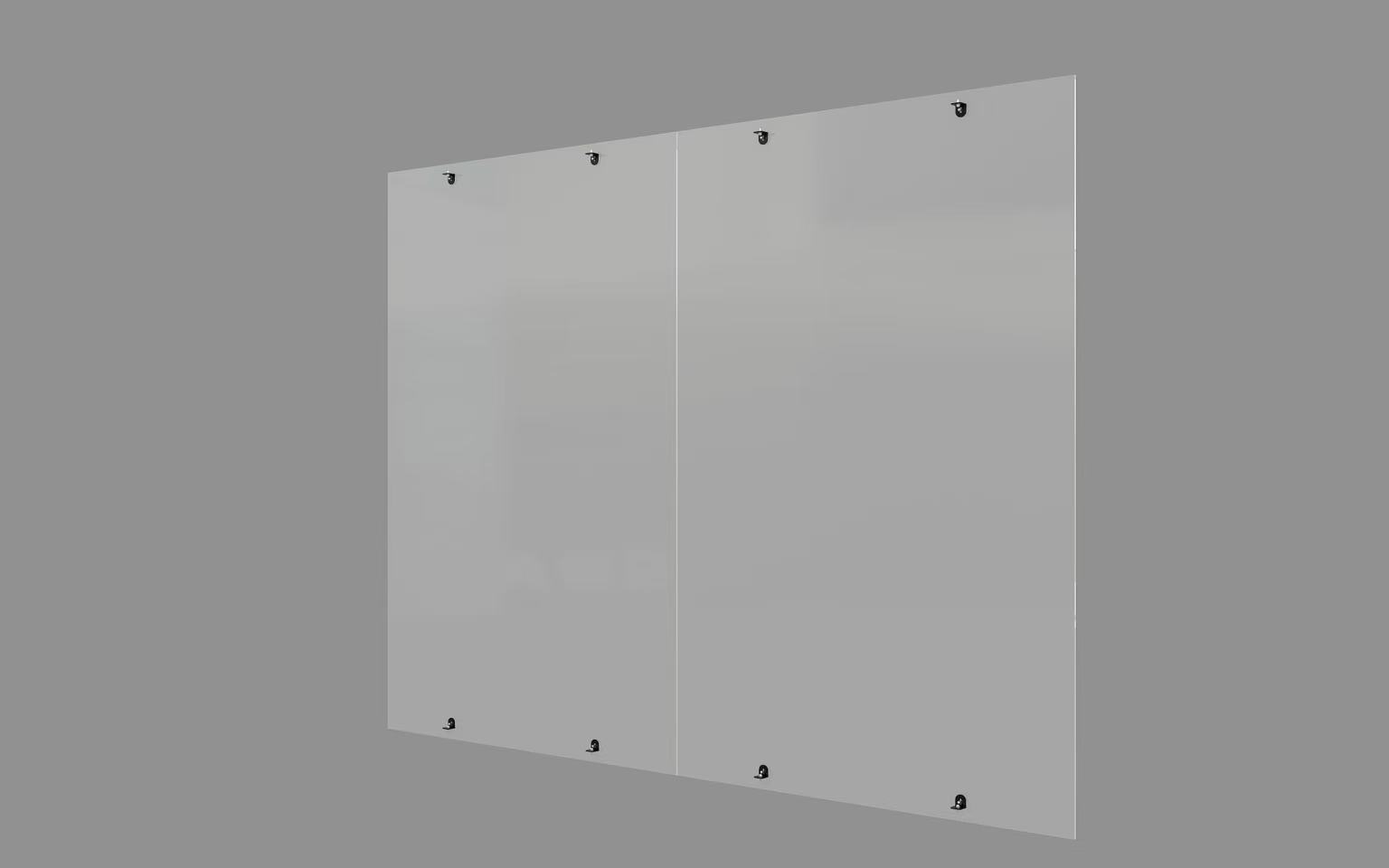
| Vidrio | 12 mm tempered safety glass (10 mm for budget or indoor private courts), polished edges, 2-, 4- or 8-hole fixing | Tempering certificate, edge finish, hole tolerance |
| Malla | Hot-dip galvanised welded mesh, 50 × 50 mm, powder coated | Wire diameter, weld points, flatness |
| Césped | Monofilament + curled hybrid, 12 mm pile, Dtex 9,500, 63,000 stitches/m², silica sand 0.3–0.8 mm at 8–10 kg/m² | Yarn type, density, backing, drainage holes |
| Iluminación | 8 × 200 W or 4 × 400 W LED, or halo lighting; 300–500 lux, anti-glare | Lux level, uniformity, glare, flicker |
| Fittings and hardware | 304 stainless indoors, 316 stainless for coastal or humid sites | Grade marking, isolating washers at glass |
| Net, posts, doors | Regulation net and posts, one or two access doors per side | Net height, door width, hinge quality |
Panoramic vs Super Panoramic Padel Court: Which Structure Should You Choose?

A cancha de pádel con vistas panorámicas removes the posts behind the side glass, so players and spectators get a clear view while the frame keeps the corner posts. A super panoramic padel court (also called full panoramic) removes the corner posts as well and carries the load through a top beam system. It looks spectacular for events and premium clubs, but the larger glass surface catches more wind, so outdoor and coastal sites need a stronger design. A cancha clásica de pádel with full posts remains the most economical and the most robust in very windy locations.
Perspectiva del mundo real: most commercial clubs we supply with padel court equipment choose panoramic for their main courts and add one super panoramic show court for events and social media. That gives the club a “centre court” without paying the super panoramic premium on every court.
How Much Does Padel Court Equipment Cost?
Padel court equipment from a Spanish factory costs about €19,000–29,000 per court, from a China factory such as PanoCourt about USD 9,500–12,000 per court, and from a Turkish factory about €19,000–29,000 per court. These are ex-factory equipment prices; the right configuration and final padel court price depend on the model, glass, steel, turf, lighting, quantity and site conditions of each project.
| Origen | Equipment price per court | What usually drives the top of the range |
|---|---|---|
| España | €19,000–29,000 | Super panoramic design, tournament lighting, brand and installation package |
| China (PanoCourt) | USD 9,500–12,000 | Super panoramic structure, 12 mm glass, outdoor or coastal corrosion route, premium turf and lighting |
| Türkiye | €19,000–29,000 | Model, glass and lighting choices |
What Is Not Included in the Padel Court Equipment Price?
Not included in the padel court equipment price: the concrete slab, drainage, permits, roof or canopy, ocean freight, import duty and VAT, port and inland delivery, unloading equipment and installation labour. For a project-level estimate, use our Calculadora de costos de canchas de pádel.
Análisis en profundidad: the cheapest padel court for sale is rarely the cheapest court to own. Thin tube walls, pre-galvanised steel with exposed weld seams outdoors, 10 mm glass on a busy club court or low-lux lighting all save money at purchase and cost more in repairs, downtime and lost bookings. Compare quotes line by line on steel wall thickness, corrosion route, coating thickness, glass thickness, fittings grade, turf spec and lighting, not on the headline price.
What Do Buyers Ask About Padel Court Equipment?
What Is Padel Court Equipment?
Padel court equipment is the complete court system a club installs: the steel structure, tempered glass walls, welded mesh panels, artificial turf with sand infill, LED lighting, net and posts, access doors and stainless fittings. It is different from player equipment such as rackets, balls and shoes. Most courts are supplied as one package by a padel court factory and bolted onto a concrete slab.
How Many Padel Court Equipment Factories Are There in the World?
By PanoCourt’s 2026 mapping, there are roughly 100 factories that fabricate padel court steel structures in-house and export complete courts: about 36 in Spain, 28 in China, 18 elsewhere in Europe, 8 in Türkiye, 5 in the Middle East and 5 in the Americas and other regions. Thousands more companies sell or install courts without manufacturing them.
Which Country Makes the Best Padel Court Equipment?
Spain makes the reference courts for professional tournaments, and its leading brands supply the official FIP and Premier Padel courts. China makes the best-value courts for commercial clubs, with comparable structural specifications at roughly half the equipment price and fast production. The best country is the one that matches your use: tour events, a commercial club or a private court.
How Much Does Padel Court Equipment Cost per Court?
Padel court equipment costs about €19,000–29,000 per court from Spanish factories, about USD 9,500–12,000 per court from China factories such as PanoCourt, and about €19,000–29,000 per court from Turkish factories. The price excludes foundation, freight, import taxes and installation, and it moves with the model, glass thickness, steel specification, turf and lighting you choose.
How Long Does It Take to Get Padel Court Equipment from China?
PanoCourt produces courts in 25–30 days from confirmed deposit. Ocean transit from Tianjin takes roughly three to six weeks depending on the destination port, plus one to two weeks for customs and delivery. Installation of four courts takes an experienced crew about five site days. Ordering when civil works start usually lines the delivery up with a cured slab.
Is Chinese Padel Court Equipment Good Enough for a Commercial Club?
Yes, if the factory proves its specification. Ask for the mill test report on the steel, the zinc weight, coating thickness readings, the glass tempering certificate and the stainless fittings grade. A real China padel court manufacturer will show its own cutting, welding and coating lines on video. Many commercial clubs worldwide run on China-made courts under heavy daily use.
What Glass Thickness Should Padel Court Equipment Use?
Most commercial padel courts use 12 mm tempered safety glass because it gives a consistent rebound and more safety margin under heavy play and wind. 10 mm tempered glass is common on budget, residential and some indoor courts. Whatever the thickness, the glass must be fully tempered, edge-polished and fixed with hardware designed for that thickness.
What Is the Difference Between a Panoramic and a Super Panoramic Padel Court?
A panoramic padel court removes the posts behind the side glass for a clearer view while keeping corner posts. A super panoramic padel court removes the corner posts too and carries loads through a top beam, giving an almost frameless look. Super panoramic suits event and show courts; panoramic is the usual choice for commercial club courts.
Is It Worth Buying Used Padel Court Equipment?
Used padel court equipment can work for a temporary or low-budget project, but check it carefully. Glass cannot be re-tempered, scratched or chipped panels are a safety risk, steel may hide corrosion at welds, fittings are often missing, and turf has limited remaining life. For events or seasonal use, a mobile padel court designed for repeated assembly is usually the safer choice.
What Padel Court Maintenance Equipment Does a Club Need?
A club needs a turf brush or power brush to redistribute sand infill, spare silica sand for top-ups, glass cleaning tools, a torque wrench to re-check bolts and glass fixings, and a few spare fittings and glass clips. Brushing weekly on busy courts, checking bolts every few months and inspecting the coating each year keep the court playable and protect the warranty.
Which Padel Court Equipment Factory Should You Contact First?
Start your padel court equipment search with your use. If you are building a tour venue, contact a Spanish factory. If you are building a commercial club and you measure success by payback, start with a China padel court factory and compare it line by line with a Spanish quote. If your opening date is fixed, choose the factory that can commit to a written production slot that fits your slab and permit timeline.
PanoCourt manufactures panorámico, super panoramic and classic padel courts in our own factory in Hebei, with every court custom produced, 25–30 day production and export experience in 30+ countries. Send us your site location, number of courts and indoor or outdoor use, and our engineers will reply with a configuration and a padel court price for your project.